To ensure the alignment of economic and foreign policies, to position the Department of State to reflect that economic security is national security, and for other purposes.
Sponsor
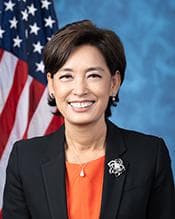
Full profile: /officials/K000397
Source: Congress.gov · FEC
Cosponsors (2)
Members who have signed on to support this bill since introduction. Source: Congress.gov.
2 cosponsors on record at Congress.gov. The named list is syncing into Govwatch and will appear here shortly — view on Congress.gov in the meantime.
Latest Action
The most recent step in the bill's legislative path. Committee Activity below shows referrals and reports; the full action-by-action history including floor proceedings lives at Congress.gov →
Committee Activity
Previously
- House Committee on Foreign AffairsMarkup By · 2025-09-17
- House Committee on Foreign AffairsReferred To · 2025-09-10
Plain-English Summary
This bill restructures the Department of State's Office of the Under Secretary for Economic Affairs, dividing the office into four bureaus and two offices. ( The current structure is here. ) The bill also specifies the functions of these organizations and the responsibilities of the organizations' leaders. Under the bill, the following organizations fall under the Office of the Under Secretary for Economic Affairs: the Bureau of Commercial Diplomacy covers trade and investment promotion and policy, international finance and development, and transportation affairs; the Bureau of Water, Environment, and Space Affairs covers space, oceans, environmental quality, fisheries, wildlife, wildlife trafficking, and conservation affairs; the Bureau of Energy Security and Diplomacy formulates and implements international energy, energy technology, critical minerals, and relevant supply chain policies; the Bureau of Sanctions Policy develops policies governing the imposition of sanctions and sanctions strategies; the Office of the Chief Economist provides expert economic advice and analysis; and the Office of Subnational Diplomacy enables the department’s work with state and local governments within the United States to improve the ability of those governments to attract foreign investment, counter foreign malign influence within the United States, and contribute to U.S. foreign policy priorities. An assistant secretary with specified responsibilities leads each of the four bureaus. The heads of the two offices also have specified responsibilities. The Office of the Under Secretary for Economic Affairs shall administer and oversee the International Technology Security and Innovation Fund, which provides for technology security and semiconductor supply chain activities.
Plain-English rewrite of the Congressional Research Service summary published on Congress.gov. Cached and reviewed.
Subjects
Related legislation
Bills by the same sponsor or covering overlapping subjects.
- HR7037Developing Overseas Mineral Investments and New Allied Networks for Critical Energies ActPassed House · 2026-06-08
- HR9062BOOST American Business ActReferred to Committee · 2026-05-29
- HR3350To designate the facility of the United States Postal Service located at 340 East 1st Street in Tustin, California, as the "Ursula Ellen Kennedy Post Office Building".Reported by Committee · 2026-05-20
- HR8693Deter PRC Aggression Against Taiwan ActReferred to Committee · 2026-05-07