Restoring Accountability in Appropriations Act
Sponsor
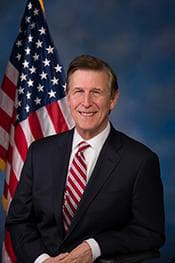
Full profile: /officials/B001292
Source: Congress.gov · FEC
Cosponsors (0)
Members who have signed on to support this bill since introduction. Source: Congress.gov.
No cosponsors on record. Bills can pass without cosponsors — this often means the sponsor introduced the bill alone, either because it's a messaging bill, a chairman's mark, or simply early in the legislative cycle.
Latest Action
The most recent step in the bill's legislative path. Committee Activity below shows referrals and reports; the full action-by-action history including floor proceedings lives at Congress.gov →
Referred to the Committee on the Budget, and in addition to the Committee on Rules, for a period to be subsequently determined by the Speaker, in each case for consideration of such provisions as fall within the jurisdiction of the committee concerned.
2026-08-03
Source: Congress.gov
Committee Activity
Currently in
- House Committee on the BudgetReferred To · 2026-08-03
- House Committee on RulesReferred To · 2026-08-03
Plain-English Summary
The proposal would allow private citizens and members of Congress to sue the federal government if it violates rules about how it spends money that Congress has already approved. Currently, only Congress as a whole can challenge when the president or agencies refuse to spend appropriated funds, but this change would give individuals and lawmakers the power to take legal action directly. The change aims to strengthen enforcement of spending laws by creating more ways to hold the government accountable when it withholds money Congress has already decided to allocate.
AI-assisted summary generated from the official bill metadata (title, subjects, actions) sourced from Congress.gov. Cached and reviewed. Always verify against the official text linked below.
Full Bill Text
Verbatim text published on Congress.gov via GovInfo. Use Cmd+F / Ctrl+F to search within this excerpt.
[Congressional Bills 119th Congress] [From the U.S. Government Publishing Office] [H.R. 10014 Introduced in House (IH)] <DOC> 119th CONGRESS 2d Session H. R. 10014 To amend the Impoundment Control Act of 1974 to establish a private and congressional right of action for violations of such Act, and for other purposes. _______________________________________________________________________ IN THE HOUSE OF REPRESENTATIVES August 3, 2026 Mr. Beyer introduced the following bill; which was referred to the Committee on the Budget, and in addition to the Committee on Rules, for a period to be subsequently determined by the Speaker, in each case for consideration of such provisions as fall within the jurisdiction of the committee concerned _______________________________________________________________________ A BILL To amend the Impoundment Control Act of 1974 to establish a private and congressional right of action for violations of such Act, and for other purposes. Be it enacted by the Senate and House of Representatives of the United States of America in Congress assembled, SECTION 1. SHORT TITLE. This Act may be cited as the ``Restoring Accountability in Appropriations Act''. SEC. 2. PRIVATE AND CONGRESSIONAL CIVIL ACTIONS FOR IMPOUNDMENT CONTROL ACT VIOLATIONS. (a) Application.--Section 1001 of the Impoundment Control Act of 1974 (2 U.S.C. 681) is amended-- (1) in paragraph (3), by striking ``or'' at the end; (2) by redesignating paragraph (4) as paragraph (5); and (3) inserting after paragraph (3) the following: ``(4) affecting or precluding in any way private rights of action concerning any impoundment established by provision of law other than this Act; or''. (b) Private and Congressional Actions.--Such Act is further amended by adding after section 1017 the following: ``suits by private aggrieved parties ``Sec. 1018. (a) In General.--Any person aggrieved by a violation of this title with respect to the withholding of budget authority that is required to be made available under such title may institute a civil action in a United States district court against the United States and any Federal employee for preventive relief, including an application in a United States district court for a permanent or temporary injunction, restraining order, or other order. ``(b) Relief.--Such court is hereby expressly empowered to enter in such civil action, against any department, agency, officer, or employee of the United States, any decree, judgment, or order, which may be necessary or appropriate to make such budget authority available for obligation. ``action by congress ``Sec. 1019. (a) In General.-- ``(1) If the Comptroller General makes a report available to both Houses of Congress under section 1015(a) of this Act, the House of Representatives shall initiate civil actions if the resolution described in this section is adopted by the House. ``(2)(A) If a covered individual believes that the President has failed to transmit a special message with respect to a reserve or a deferral of budget authority, such individual may submit a request (in writing) to the Comptroller General for a report to be issued under section 1015(a) with respect to such reserve or deferral. Such request shall include-- ``(i) a description of the budget authority so reserved or deferred and the reasons why such a report is necessary; and ``(ii) the date by which such report shall be issued by the Comptroller General, which shall be no earlier than 90 calendar days after the submission of the request. ``(B) If such a report is not issued by the date described in clause (ii), the covered individual who submitted the request under paragraph (A) may introduce a resolution as described in this section, except that the following shall be substituted for section 1(c)(3) of the matter described in subsection (b)(3) of this section: `(3) which…
Show the remaining 935 wordsHide the remaining 935 words
is the subject of a request made to the Comptroller General by ___ on ___, but for which no report has been made available by the Comptroller General to both Houses of Congress under section 1015(a) of the Congressional Budget and Impoundment Control Act of 1974.' (The blank spaces being filled in with the applicable name of the covered individual and the date, respectively). ``(C) In this paragraph, the term `covered individual' means the Speaker of the House of Representatives, the majority or minority leader of the House, the chair or ranking member of the Committee on the Budget of the House, or the chair or ranking member of the Committee on Oversight and Government Reform of the House. ``(b) Resolution.--For the purpose of this section, the term `resolution' means a resolution that is introduced in the House of Representatives not later than 45 calendar days after the date on which the Comptroller General makes such a report available and-- ``(1) which does not have a preamble; ``(2) the title of which is `Providing for authority to initiate litigation for actions inconsistent with the Impoundment Control Act.'; and ``(3) the matter after the resolving clause is as follows: ```SEC. 1. CIVIL ACTIONS REGARDING IMPROPER DEFERRAL OF BUDGET AUTHORITY. ```(a) Civil Actions.--The Speaker is directed to initiate or intervene in one or more civil actions on behalf of the House of Representatives in the United States District Court for the District of Columbia to require that budget authority described in subsection (c) to be made available for obligation. ```(b) OGC.--The Office of the General Counsel of the House of Representatives, at the direction of the Speaker, shall represent the House in any civil action initiated, or in which the House intervenes, pursuant to this resolution, and may employ the services of outside counsel and other experts for this purpose. ```(c) Budget Authority.--Budget authority described in this subsection is any budget authority that-- ```(1) is required to be made available for obligation; ```(2) is not made available for obligation on or before the date on which this resolution is introduced; and ```(3) which is the subject of a report made available on __ by the Comptroller General to both Houses of Congress under section 1015(a) of the Congressional Budget and Impoundment Control Act of 1974.'. (The blank space being filled in with the applicable date). ``(c) Fast Track Consideration in House of Representatives.-- ``(1) Referral and discharge.--Any committee of the House of Representatives to which a resolution is referred under this section shall report it to the House of Representatives without amendment not later than 2 legislative days after the date of introduction of the resolution. If a committee fails to report the resolution within that period, the committee shall be discharged from further consideration of the resolution and the resolution shall be referred to the appropriate calendar. ``(2) Proceeding to consideration.--After each committee authorized to consider the resolution reports it to the House of Representatives or has been discharged from its consideration under paragraph (1), it shall be in order to move to proceed to consider the resolution in the House. All points of order against the motion are waived. Such a motion shall not be in order after the House has disposed of a motion to proceed on the resolution. The previous question shall be considered as ordered on the motion to its adoption without intervening motion. The motion shall not be debatable. A motion to reconsider the vote by which the motion is disposed of shall not be in order. ``(3) Consideration.--The resolution shall be considered as read. All points of order against the resolution and against its consideration are waived. The previous question shall be considered as ordered on the resolution to its passage without intervening motion except two hours of debate equally divided and controlled by the proponent and an opponent. A motion to reconsider the vote on passage of the resolution shall not be in order. ``(d) Timely Action by the Speaker.--The Speaker shall, in coordination with the Office of the General Counsel of the House of Representatives, initiate or intervene in one or more civil actions as directed by a resolution not later than 20 calendar days after passage of such resolution. ``(e) Application.--Nothing contained in this section shall be construed as to limit the authority of the Government Accountability Office to initiate its own process for issuing a report under section 1015(a), or to limit the authority of Members of Congress other than covered individuals to submit requests to the Comptroller General to initiate such process. ``(f) Rules of House of Representatives.--This section is enacted by Congress-- ``(1) as an exercise of the rulemaking power of the House of Representatives and as such it is deemed a part of the rules of the House but applicable only with respect to the procedure to be followed in that House in the case of a resolution, and it supersedes other rules only to the extent that it is inconsistent with such rules; and ``(2) with full recognition of the constitutional right of the House to change the rules (so far as relating to the procedure of the House) at any time, in the same manner, and to the same extent as in the case of any other rule of the House.''. (c) Clerical Amendment.--The table of contents of the Congressional Budget and Impoundment Control Act of 1974 set forth in section 1(b) of such Act is amended by inserting after the item relating to section 1017 the following: ``Sec. 1018. Suits by private aggrieved parties. ``Sec. 1019. Action by Congress.''. <all>
Related legislation
Bills by the same sponsor or covering overlapping subjects.
- HR9977To exempt certain home building products from certain tariffs imposed on or after January 20, 2025, and for other purposes.Referred to Committee · 2026-07-30
- HR9835Congressional Oversight and Agency Access ActReferred to Committee · 2026-07-22
- HR9730Foreign Service Test-Free Reentry Act of 2026Referred to Committee · 2026-07-16
- HR9729Human Authority over Autonomous Weapons Act of 2026Referred to Committee · 2026-07-16