HR10156Referred to Committee
To authorize workforce development innovation grants for the implementation, expansion, and evaluation of evidence-based workforce programs, and for other purposes.
Introduced
In Committee
3
Passed One Chamber4
Passed Both5
Signed into Law119th
Congress
2026-08-27
Introduced
1
Cosponsors
HR
ⓘType
Sponsor
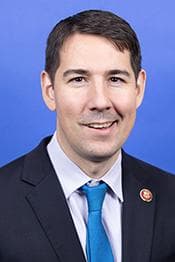
Josh Harder
Democrat · CA · Representative
Votes with party: 94.1% (641 recorded votes)
Full profile: /officials/H001090
Source: Congress.gov · FEC
Cosponsors (1)
Members who have signed on to support this bill since introduction. Source: Congress.gov.
Latest Action
The most recent step in the bill's legislative path. Committee Activity below shows referrals and reports; the full action-by-action history including floor proceedings lives at Congress.gov →
Committee Activity
Currently in
- House Committee on Education and WorkforceReferred To · 2026-08-27
Plain-English Summary
Plain-English summary pending. Introduced on 2026-08-27. Check back soon — summaries are generated as bills progress through Congress.
Full Bill Text
Verbatim text published on Congress.gov via GovInfo. Use Cmd+F / Ctrl+F to search within this excerpt.
[Congressional Bills 119th Congress] [From the U.S. Government Publishing Office] [H.R. 10156 Introduced in House (IH)] <DOC> 119th CONGRESS 2d Session H. R. 10156 To authorize workforce development innovation grants for the implementation, expansion, and evaluation of evidence-based workforce programs, and for other purposes. _______________________________________________________________________ IN THE HOUSE OF REPRESENTATIVES August 27, 2026 Mr. Harder of California (for himself and Mrs. McBath) introduced the following bill; which was referred to the Committee on Education and Workforce _______________________________________________________________________ A BILL To authorize workforce development innovation grants for the implementation, expansion, and evaluation of evidence-based workforce programs, and for other purposes. Be it enacted by the Senate and House of Representatives of the United States of America in Congress assembled, SECTION 1. SHORT TITLE. This Act may be cited as the ``Better Jobs through Evidence and Innovation Act''. SEC. 2. EVALUATIONS AND RESEARCH. (a) In General.--Section 169 of the Workforce Innovation and Opportunity Act (29 U.S.C. 3224) is amended-- (1) by redesignating subsection (c) as subsection (d); and (2) by inserting after subsection (b) the following: ``(c) Workforce Development Innovation Fund.-- ``(1) Program authorized.-- ``(A) In general.--The Secretary may, on a competitive basis and in accordance with subparagraph (B), award workforce development innovation grants described in subparagraph (C) to eligible entities to enable such entities to-- ``(i) establish, implement, replicate, or take to scale evidence-based, field-initiated innovation programs or services for improving the design and delivery of employment and training services-- ``(I) that generate demonstrated sustained improvements in earnings and employment outcomes for participants (including participants who are individuals with barriers to employment); and ``(II) that may demonstrate improvements in-- ``(aa) the performance or impact of the workforce development system with respect to the purposes of this Act described in section 2 (29 U.S.C. 3101), such as increasing access to and opportunities for employment, education, training, and support services for individuals with barriers to employment; ``(bb) addressing employer and labor market needs; or ``(cc) the cost- effectiveness of such innovation programs or services, particularly for participants and communities not sufficiently served by existing models such as participants and communities in rural areas; and ``(ii) except with respect to an expansion grant described in subparagraph (C)(iii) for which the Secretary waives an evaluation because the Secretary determines there are multiple compelling examples of high-level evidence, perform-- ``(I) a well-designed, well- implemented, and rigorous impact evaluation, through a partnership with a third-party research organization or a third-party researcher, of such innovation programs or services that-- ``(aa) assesses for effectiveness in achieving any demonstrated long-term improvements in earnings and employment outcomes for participants and for improvements in other relevant outcomes, such as the outcomes described in item (aa), (bb), and (cc) of clause (i)(II); and ``(bb) is accompanied by a process or implementation evaluation for the purpose of programmatic improvement and supporting scale-up; or ``(II) in the case of an early- phase grant described in subparagraph (C)(i), an early-stage evaluation (such as a feasibility study, pilot, or rapid-cycle evaluation) that prepares the innovation program or service for an evaluation described in subclause (I) for a potential subsequent grant. ``(B) Grant awards.-- ``(i) In general.--The Secretary-- ``(I) shall award grants under subparagraph (A) on the primary basis of-- ``(aa) reliable evidence presented with respect to potential achievements of the innovation program or service proposed by the eligible entity with respect to demonstrated, long-term improvements in an outcome described in subclause (I) or (II) of subparagraph (A)(i); ``(bb) the anticipated cost of the program or service relative to anticipated earnings and employment outcomes for participants; ``(cc) the anticipated contribution of the evaluation of the program or service…
Show the remaining 1,391 wordsHide the remaining 1,391 words
to the overall evidence base, including evidence on cost- effectiveness; and ``(dd) the existence of supporting projects in geographically diverse sites, including rural areas, or that serve populations with diverse needs; and ``(II) may award, under subparagraph (A), different types of grants described under subparagraph (C) to an eligible entity for separate innovation programs or services that meet the relevant criteria for such different types of grants. ``(ii) Duration of award.--A grant awarded under subparagraph (A) shall be awarded for a period determined appropriate by the Secretary. ``(iii) Amount of award.--The Secretary shall ensure that any grants awarded under subparagraph (A) shall include sufficient funding for the cost of the evaluation and program implementation. ``(iv) Use of award.--An eligible entity that receives a grant awarded under subparagraph (A) shall use not less than 60 percent of such award for direct program implementation. ``(C) Description of grants.--The grants described in subparagraph (A) shall, to the extent feasible, include-- ``(i) early-phase grants for an innovation program or service supported by any level of evidence described in clause (i), (ii), or (iii) of subparagraph (D), for the purposes of funding the development, implementation, and evaluation of such program or service; ``(ii) mid-phase grants for an innovation program or service supported by a moderate level of evidence or a high level of evidence (as described in clause (ii) or (iii) of subparagraph (D), respectively) for the purposes of funding the operation, refinement, expansion, and continued evaluation (as described in subparagraph (A)(ii)(I)) of such innovation program or service at a single site that would, if successful, prepare the program or service for a subsequent expansion grant; and ``(iii) expansion grants for an innovation program or service supported by a high level of evidence, as described in subparagraph (D)(iii), for the purposes of-- ``(I) funding the operation of such innovation program or service at an existing site; ``(II) expansion or such innovation program or service to another site; ``(III) implementation of a multi- site experimental rigorous impact evaluation of such innovation program or service; and ``(IV) if necessary, continued refinement and adaption of the program or service model to address new contexts or needs. ``(D) Level of evidence standards.--The levels of evidence described in this subparagraph are the following: ``(i) Low level of evidence.--An innovation program or service is supported by a low level of evidence if such program or service has demonstrated, through a reasonable hypothesis and credible research findings (such as a correlational study with statistical controls for selection bias), a descriptive study (such as a case study), or evidence review and needs assessment, the-- ``(I) ability to achieve positive effects on earnings and employment outcomes for participants (including participants who are individuals with barriers to employment) and earnings for employers; or ``(II) potential to achieve such effect on such outcomes. ``(ii) Moderate level of evidence.--An innovation program or service is supported by a moderate level of evidence if such program or service has demonstrated the ability to achieve sizable, but not yet conclusive, positive effects on earnings and employment outcomes for participants (including participants who are individuals with barriers to employment) and earnings for employers, through-- ``(I) a well-designed and well- implemented experimental study of such program or service, such as a randomized controlled trial; or ``(II) a rigorous quasi- experimental study of such program or service capable of drawing causal conclusions about the effectiveness of such program or service. ``(iii) High level of evidence.--An innovation program or service is supported by a high level of evidence if such program or service has demonstrated, through replication of studies, the ability to achieve a substantial and statistically significant, positive impact on earnings and employment outcomes for participants (including participants who are individuals with barriers to employment) and earnings for employers, through-- ``(I) 2 or more well-designed and well-implemented experimental studies of such program or service conducted at different implementation sites; or ``(II) through a well-designed and well-implemented large, multi-site, experimental study. ``(E) Funding allocation.--Of the funds made available to carry out this subsection for a fiscal year, the Secretary shall, except when determined that there is not a sufficient number of qualifying applications to do so, use-- ``(i) not less than 50 percent of such funds to award expansion grants described in subparagraph (C)(iii); and ``(ii) not more than 25 percent of such funds to award early-phase grants described in subparagraph (C)(i). ``(2) Technical assistance and evaluation research.--Of the funds made available to carry out this subsection for a fiscal year, the Secretary shall reserve not more than 10 percent of the funds to-- ``(A) provide technical assistance to eligible entities, which may include preapplication workshops, web-based seminars, support for conducting feasibility studies and other planning activities, assistance with methods and requirements for purposes of evaluation research under subparagraph (D), and support for improving grant implementation and the quality and effectiveness of activities and services funded by grants awarded under paragraph (1)(A), including the use of administrative data and information to improve outcomes for participants; ``(B) disseminate information on low-, moderate-, and high-evidence-based practices; ``(C) fund staffing and other costs related to such activities; and ``(D) conduct evaluation research regarding activities or services funded by grants awarded under subparagraph (A). ``(3) Definitions.--In this subsection: ``(A) Eligible entity.--The term `eligible entity' means an entity that is any of the following: ``(i) A State workforce development board established under section 101 (29 U.S.C. 3111). ``(ii) A local workforce development board established under section 107 (29 U.S.C. 3122). ``(iii) An Indian tribe, tribal organization, Alaska Native entity, Indian- controlled organization serving Indians, or Native Hawaiian organization that is eligible to receive an award under section 166 (29 U.S.C. 3221). ``(iv) An institution of higher education (as defined in section 101 of the Higher Education Act of 1965 (20 U.S.C. 1001)). ``(v) A State workforce agency. ``(vi) An organization-- ``(I) that-- ``(aa) is a community-based organization, a nonprofit organization, or a nongovernment organization, including a labor organization (as defined in section 2 of the National Labor Relations Act (29 U.S.C. 152)); and ``(bb) serves an underserved population; or ``(II) that is a national or regional organization that intends to use funds awarded under this Act to make direct grants to an organization described in subclause (I). ``(vii) A consortium of any entities described in clause (i) through (vi). ``(B) Field-initiated.--The term `field-initiated', with respect to a program or service, means a program or service in which the elements of the program or service have been developed by practitioners or researchers in the policy area, including such a program or service model that is-- ``(i) a sectoral employment program; ``(ii) an employment social enterprise or other revenue-generating workforce program serving people overcoming barriers to employment; ``(iii) a registered apprenticeship; ``(iv) a re-entry initiative; ``(v) a career pathway model; ``(vi) an industry and sector partnership; or ``(vii) on-the-job or incumbent worker training. ``(C) Innovation program or service.--The term `innovation program or service' means a program or service designed to demonstrate innovative and cost- effective ways to augment and improve employment, licensure, or training services. ``(D) Well-designed and well-implemented experimental study.--The term `well-designed and well- implemented experimental study' means a study that-- ``(i) is replicable; ``(ii) uses programmatic and control groups that are representative of the type of population served by the program or service that is subject to the study, including by avoiding over-selection of participants who are highly skilled prior to participation for such programmatic group; ``(iii) uses controls for aggregate shifts that might affect baseline numbers; ``(iv) does not have problems with attrition of participants from the study; ``(v) is conducted in a manner that is consistent with applicable evaluation, data, and privacy standards and practices described in the Foundations for Evidence-Based Policymaking Act of 2018 (Public Law 115-435; 132 Stat. 5529) and the amendments made by that Act; and ``(vi) to the extent feasible, is aligned with the standards for experimental studies conducted pursuant to the education innovation and research program under section 4611 of the Elementary and Secondary Education Act of 1965 (20 U.S.C. 7261). ``(4) Authorization of appropriations.--There are authorized to be appropriated to carry out this subsection, such sums as may be necessary for each of the fiscal years 2027 through 2031.''. (b) Conforming Amendment.--Section 132(a)(2)(A) of the Workforce Innovation and Opportunity Act (29 U.S.C. 3172(a)(2)(A)) is amended by striking ``169(c)'' and inserting ``169(d)''. <all>
Related legislation
Bills by the same sponsor or covering overlapping subjects.
- HR10124Mail Theft and Postal Key Crime Prevention Act of 2026Referred to Committee · 2026-08-20
- HR9406To amend title 38, United States Code, to eliminate the cap on the number of waivers to certain pay limitations that the Secretary of Veterans Affairs may issue for critical health care personnel of the Department of Veterans Affairs.Referred to Committee · 2026-07-06
- HR9243Wildfire Smoke Emergency Declaration Act of 2026Referred to Committee · 2026-06-10
- HRES1311Expressing support for the designation of May 2026 as "Necrotizing Fasciitis Awareness Month".Referred to Committee · 2026-05-21