HR10469Referred to Committee
To amend the Energy Policy and Conservation Act to provide financial assistance, through States and Indian Tribes, to establish and maintain energy hubs to increase awareness and access to energy and energy efficiency programs and opportunities to improve energy affordability, and for other purposes.
Introduced
In Committee
3
Passed One Chamber4
Passed Both5
Signed into Law119th
Congress
2026-09-16
Introduced
0
Cosponsors
HR
ⓘType
Sponsor
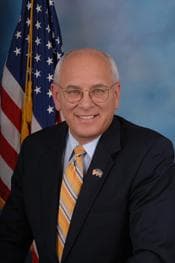
Paul Tonko
Democrat · NY · Representative
Votes with party: 98.3% (663 recorded votes)
Full profile: /officials/T000469
Source: Congress.gov · FEC
Cosponsors (0)
Members who have signed on to support this bill since introduction. Source: Congress.gov.
No cosponsors on record. Bills can pass without cosponsors — this often means the sponsor introduced the bill alone, either because it's a messaging bill, a chairman's mark, or simply early in the legislative cycle.
Latest Action
The most recent step in the bill's legislative path. Committee Activity below shows referrals and reports; the full action-by-action history including floor proceedings lives at Congress.gov →
Committee Activity
Currently in
- House Committee on Energy and CommerceReferred To · 2026-09-16
Plain-English Summary
Plain-English summary pending. Introduced on 2026-09-16. Check back soon — summaries are generated as bills progress through Congress.
Full Bill Text
Verbatim text published on Congress.gov via GovInfo. Use Cmd+F / Ctrl+F to search within this excerpt.
[Congressional Bills 119th Congress] [From the U.S. Government Publishing Office] [H.R. 10469 Introduced in House (IH)] <DOC> 119th CONGRESS 2d Session H. R. 10469 To amend the Energy Policy and Conservation Act to provide financial assistance, through States and Indian Tribes, to establish and maintain energy hubs to increase awareness and access to energy and energy efficiency programs and opportunities to improve energy affordability, and for other purposes. _______________________________________________________________________ IN THE HOUSE OF REPRESENTATIVES September 16, 2026 Mr. Tonko introduced the following bill; which was referred to the Committee on Energy and Commerce _______________________________________________________________________ A BILL To amend the Energy Policy and Conservation Act to provide financial assistance, through States and Indian Tribes, to establish and maintain energy hubs to increase awareness and access to energy and energy efficiency programs and opportunities to improve energy affordability, and for other purposes. Be it enacted by the Senate and House of Representatives of the United States of America in Congress assembled, SECTION 1. SHORT TITLE. This Act may be cited as the ``Regional Energy Hubs Act of 2026''. SEC. 2. REGIONAL ENERGY HUBS. (a) In General.--Part D of title III of the Energy Policy and Conservation Act (42 U.S.C. 6321 et seq.) is amended by adding at the end the following: ``SEC. 367. REGIONAL ENERGY HUBS. ``(a) Financial Assistance.--Upon request from a State that has in effect an approved State energy conservation plan under this part, or an Indian Tribe, the Secretary shall provide financial assistance to such State or Indian Tribe to designate and provide funding to energy hubs pursuant to this section. ``(b) Regional Energy Hubs.-- ``(1) In general.--Each State or Indian Tribe receiving financial assistance under this section shall designate and provide funding to one or more energy hubs to serve a specific geographic region within such State or under the jurisdiction of such Indian Tribe to build local capacity by leveraging multidisciplinary partnerships within its designated region to increase awareness of and access to energy and efficiency programs and opportunities to improve energy affordability, including tax credits, grants, loans, rebates, financing, and other private, Federal, State, local, and utility-administered programs and incentives. ``(2) Geographic distribution and equitable access to energy hub services.--When designating an energy hub under paragraph (1), each State or Indian Tribe shall provide for an appropriate geographic distribution of energy hubs to ensure equitable access to services provided by the energy hubs in disadvantaged communities and underserved rural communities within such State or under the jurisdiction of such Indian Tribe. ``(c) Energy Hub Responsibilities.--Each energy hub designated under subsection (b)(1) shall-- ``(1) support regionally specific efforts that improve energy affordability, community resilience, and energy security to respond to potential energy disruptions within the region; ``(2) provide evidence-based outreach and education to raise public awareness of the benefits, availability, and eligibility requirements of energy and energy efficiency programs and opportunities to improve energy affordability with the goals of increasing participation in such programs and access to private, Federal, State, local, and other energy and energy efficiency programs and opportunities; ``(3) conduct regionally specific community engagement with rural individuals, service-disabled veteran-owned businesses, low- and moderate-income individuals, nonprofit organizations, local governments, small businesses, minority- and women-owned enterprises, affordable housing owners, and other entities that may face challenges in accessing energy and energy efficiency programs and opportunities; ``(4) analyze and advance solutions to regional barriers to accessing energy and energy efficiency programs and opportunities; ``(5) coordinate with entities, including nonprofit organizations, local governments, planning organizations, and agricultural cooperative extension systems, that conduct community outreach and education and provide relevant services within the region; ``(6) address energy affordability challenges by…
Show the remaining 1,264 wordsHide the remaining 1,264 words
supporting participation of low- and moderate-income community members in relevant assistance programs, including assistance provided pursuant to the Low-Income Home Energy Assistance Act of 1981 (42 U.S.C. 8621 et seq.), the Weatherization Assistance Program carried out under part A of title IV of the Energy Conservation and Production Act, a program administered by a State or Indian Tribe as described in section 50121(c) or section 50122(c) of Public Law 117-169 (commonly known as the `Inflation Reduction Act'), utility-administered programs, energy affordability programs administered by States and Indian Tribes, and other programs and opportunities to reduce energy use and costs; ``(7) facilitate connections between community members and local energy professionals, contractors, installers, and consultants to perform energy assessments, make better informed energy decisions, and install energy and energy efficiency measures; ``(8) support access to nonenergy efficiency building rehabilitation resources, including lead and mold abatement resources, to enable energy and energy efficiency measures and reduce project deferrals; and ``(9) coordinate with workforce development organizations, labor organizations, educational institutions, and businesses to enhance local workforce development efforts to ensure the availability of a local workforce capable of supporting energy and energy efficiency programs and opportunities within the region, including by connecting community members to job training, pre-apprenticeships, apprenticeships, educational, and employment resources and opportunities. ``(d) Partner Organizations.--Each energy hub designated under subsection (b)(1) shall consist of several partner organizations to fulfill the responsibilities under subsection (c). Each such energy hub shall have partner organizations that-- ``(1) have expertise with energy, energy efficiency, workforce development, economic development, housing, educational and public awareness campaigns for underserved community members within the region, and other areas needed to fulfill the responsibilities under subsection (c); ``(2) have existing relationships with, or the ability to form relationships with, entities within the region served by the energy hub to increase access to and participation in energy and energy efficiency programs and opportunities, which may include-- ``(A) nonprofit organizations; ``(B) affordable housing owners and developers; ``(C) community action agencies; ``(D) land-grant universities managing a cooperative extension system and other educational institutions; ``(E) rural development organizations; ``(F) social service providers; ``(G) local governments; ``(H) labor organizations; ``(I) workforce development organizations; ``(J) economic development organizations; ``(K) local businesses; and ``(L) electric and natural gas utilities; ``(3) ensure services provided by the energy hub are adequately available throughout the entire geographic region covered by the energy hub; and ``(4) commit to specific activities, administrative capacity, staffing, and resources that such organizations shall undertake or provide for the operation of the energy hub. ``(e) Lead Organization.-- ``(1) In general.--Each energy hub designated under subsection (b)(1) shall be led by a community-based organization located within such region that has demonstrated existing relevant partnerships, or the ability to develop relevant multidisciplinary partnerships, to carry out the responsibilities under subsection (c). ``(2) Responsibilities.--The lead organization of each energy hub designated under subsection (b)(1) shall be responsible for-- ``(A) coordination of partner organizations within the energy hub; ``(B) provision of administrative capacity to ensure the effective management and operation of the energy hub; and ``(C) meeting any data collection and reporting requirements determined by the Secretary and the State or Indian Tribe receiving financial assistance under this section. ``(f) Reporting.--Each calendar year, the lead organization of each energy hub designated under subsection (b)(1) shall submit a written report to the Secretary and the relevant State or Indian Tribe on the activities of the energy hub during the previous calendar year, which shall include-- ``(1) a description of the partnerships of the energy hub, including the effectiveness of and barriers to leveraging other Federal and non-Federal sources of funding; ``(2) a description of the outreach, educational, and public awareness activities undertaken by the energy hub, including any evaluations conducted of the effectiveness of such activities; ``(3) a description of activities undertaken by the energy hub to support local workforce development, educational, and job training activities; ``(4) a description of activities undertaken by the energy hub to enable greater participation in energy and energy efficiency programs and opportunities to improve energy affordability, including estimates of participation in affordability programs within the region served by the energy hub, energy savings and utility bill savings for community members accessing such programs, and opportunities as a result of energy hub activities; and ``(5) a regional assessment that identifies the needs, barriers, and opportunities to fulfill the responsibilities under subsection (c) within the region served by the energy hub. ``(g) Regional Energy Hub Advisory Committee.--The Secretary, in coordination with other relevant Federal agencies, shall establish a Regional Energy Hub Advisory Committee consisting of States, Indian Tribes, energy hubs, and other relevant stakeholders to provide information and technical assistance for the establishment, operation, and improvement of energy hubs, including through the development of best practices, standards, recommendations, tools, and educational resources to be applicable to the management and operation of energy hubs across States and Indian Tribes. ``(h) Coordination.-- ``(1) Interagency coordination.--The Secretary shall consult and coordinate with relevant Federal agencies, including the Secretary of Agriculture, the Secretary of Housing and Urban Development, the Administrator of the Environmental Protection Agency, the Secretary of Health and Human Services, the Secretary of Commerce, the Secretary of Labor, the Secretary of the Treasury, and the Administrator of the Small Business Administration, that administer programs and opportunities relevant to energy hubs fulfilling responsibilities under subsection (c). ``(2) Coordination of state and local programs.--Each State and Indian Tribe receiving financial assistance under this section shall carry out consultation and coordination between the energy hubs and relevant programs administered by each State or Indian Tribe, including programs related to energy, energy efficiency, environmental remediation, community outreach and education, housing, agriculture, economic development, and workforce development. ``(3) Braiding of funding.--The Secretary shall advise energy hubs designated under subsection (b)(1) on and, to the extent possible, reduce barriers to the braiding or otherwise combining of funding from various Federal and non-Federal sources to leverage additional resources and better enable energy hubs to fulfill responsibilities under subsection (c). ``(i) Funding.-- ``(1) Allocation to states.--Except as provided in paragraph (2), to the extent practicable, the Secretary shall allocate funding made available to carry out this section in accordance with the formula used for distribution of financial assistance provided pursuant to this part to States that have in effect an approved State energy conservation plan under this part. ``(2) Indian tribes.--To the extent practicable, the Secretary shall set aside and distribute not less than 5 percent of amounts made available for each fiscal year to carry out this section to provide financial assistance to Indian Tribes. ``(j) Definitions.--In this section: ``(1) Community-based organization.--The term `community- based organization' means a public or private nonprofit organization that-- ``(A) provides educational or other related services to community members; ``(B) is representative of the community or significant segments of the community; ``(C) has a physical presence in the community; and ``(D) seeks input from community members. ``(2) Indian tribe.--The term `Indian Tribe' has the meaning given the term in section 4 of the Indian Self- Determination and Education Assistance Act (25 U.S.C. 5304).''. (b) Conforming Amendment.--The table of contents for the Energy Policy and Conservation Act is amended by adding after the item related to section 366 the following: ``Sec. 367. Regional energy hubs.''. (c) Authorization of Appropriations.--Section 365(f) of the Energy Policy and Conservation Act (42 U.S.C. 6325(f)) is amended by adding at the end the following: ``(3) Regional energy hubs.--In addition to the authorization of appropriations under paragraph (1), for the purposes of carrying out section 367, there are authorized to be appropriated $50,000,000 for each of fiscal years 2027 through 2031.''. <all>
Related legislation
Bills by the same sponsor or covering overlapping subjects.
- HR10467To amend the Clean Air Act to require the Environmental Protection Agency to impose and collect a charge on the total annual electricity consumption by certain facilities from the owners or operators of such facilities.Referred to Committee · 2026-09-16
- HRES1555Supporting the designation of September 20, 2026, as "Pharmacy Workforce Suicide Awareness Day" to raise awareness of, and promote a national discussion about, pharmacy workforce suicide and to reduce the stigma of mental health conditions, and for other purposes.Referred to Committee · 2026-09-16
- HR10468To provide financial and technical assistance to State utility commissions to improve the oversight and regulation of energy utilities and ensure the provision of safe and reliable energy utility services at just and reasonable rates, and for other purposes.Referred to Committee · 2026-09-16
- HR10466To direct the Secretary of Energy to provide funding to electric and natural gas utility service providers to eliminate the arrears of residential customers of such service providers, support implementation of and participation in percentage of income payment programs and other energy affordability measures, and for other purposes.Referred to Committee · 2026-09-16