HR10475Referred to Committee
To protect the independence of the Smithsonian Institution, the National Museum of African American History and Culture, and other Federally supported cultural institutions, to preserve accurate and inclusive American history, to reaffirm the mission fiduciary authority of the NMAAHC Council, and to ensure that no executive action may limit their ability to research, present, and educate the public through exhibits and programming, and for other purposes.
Introduced
In Committee
3
Passed One Chamber4
Passed Both5
Signed into Law119th
Congress
2026-09-16
Introduced
0
Cosponsors
HR
ⓘType
Sponsor
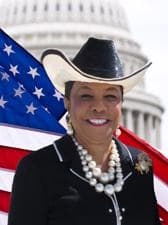
Frederica S. Wilson
Democrat · FL · Representative
Votes with party: 99.0% (480 recorded votes)
Full profile: /officials/W000808
Source: Congress.gov · FEC
Cosponsors (0)
Members who have signed on to support this bill since introduction. Source: Congress.gov.
No cosponsors on record. Bills can pass without cosponsors — this often means the sponsor introduced the bill alone, either because it's a messaging bill, a chairman's mark, or simply early in the legislative cycle.
Latest Action
The most recent step in the bill's legislative path. Committee Activity below shows referrals and reports; the full action-by-action history including floor proceedings lives at Congress.gov →
Referred to the Committee on House Administration, and in addition to the Committee on Natural Resources, for a period to be subsequently determined by the Speaker, in each case for consideration of such provisions as fall within the jurisdiction of the committee concerned.
2026-09-16
Source: Congress.gov
Committee Activity
Currently in
- House Committee on House AdministrationReferred To · 2026-09-16
- House Committee on Natural ResourcesReferred To · 2026-09-16
Plain-English Summary
Plain-English summary pending. Introduced on 2026-09-16. Check back soon — summaries are generated as bills progress through Congress.
Full Bill Text
Verbatim text published on Congress.gov via GovInfo. Use Cmd+F / Ctrl+F to search within this excerpt.
[Congressional Bills 119th Congress] [From the U.S. Government Publishing Office] [H.R. 10475 Introduced in House (IH)] <DOC> 119th CONGRESS 2d Session H. R. 10475 To protect the independence of the Smithsonian Institution, the National Museum of African American History and Culture, and other Federally supported cultural institutions, to preserve accurate and inclusive American history, to reaffirm the mission fiduciary authority of the NMAAHC Council, and to ensure that no executive action may limit their ability to research, present, and educate the public through exhibits and programming, and for other purposes. _______________________________________________________________________ IN THE HOUSE OF REPRESENTATIVES September 16, 2026 Ms. Wilson of Florida introduced the following bill; which was referred to the Committee on House Administration, and in addition to the Committee on Natural Resources, for a period to be subsequently determined by the Speaker, in each case for consideration of such provisions as fall within the jurisdiction of the committee concerned _______________________________________________________________________ A BILL To protect the independence of the Smithsonian Institution, the National Museum of African American History and Culture, and other Federally supported cultural institutions, to preserve accurate and inclusive American history, to reaffirm the mission fiduciary authority of the NMAAHC Council, and to ensure that no executive action may limit their ability to research, present, and educate the public through exhibits and programming, and for other purposes. Be it enacted by the Senate and House of Representatives of the United States of America in Congress assembled, SECTION 1. SHORT TITLE; TABLE OF CONTENTS. (a) Short Title.--This Act may be cited as the ``Protecting Our History Act of 2026''. (b) Table of Contents.--The table of contents for this Act is as follows: Sec. 1. Short title; table of contents. DIVISION A--PROTECTION OF FEDERALLY SUPPORTED CULTURAL INSTITUTIONS Sec. 101. Short title. Sec. 102. Findings. Sec. 103. Purposes. Sec. 104. Protection of independence. Sec. 105. Affirmation of historical integrity. Sec. 106. Funding protections. Sec. 107. Enforcement. Sec. 108. Rule of construction. Sec. 109. Definitions. DIVISION B--SMITHSONIAN INDEPENDENCE AND HISTORICAL INTEGRITY PROTECTION ACT OF 2026 Sec. 201. Short title. Sec. 202. Findings with respect to National Museum of African American History and Culture. Sec. 203. Statutory designation of the National Museum of African American History and Culture. Sec. 204. NMAAHC Council mission fiduciary authority and enforcement standing. Sec. 205. Protection of scholarly and curatorial independence. Sec. 206. Protection against historical erasure. Sec. 207. Annual reporting requirement. Sec. 208. Authorization of appropriations for NMAAHC. DIVISION C--GENERAL PROVISIONS Sec. 301. Severability. Sec. 302. Effective date. Sec. 303. Relationship to other laws. DIVISION A--PROTECTION OF FEDERALLY SUPPORTED CULTURAL INSTITUTIONS SEC. 101. SHORT TITLE. This division may be cited as the ``Cultural Institutions Independence and Historical Integrity Act of 2026''. SEC. 102. FINDINGS. Congress finds the following: (1) The Smithsonian Institution, established by an Act of Congress in 1846, is a trust instrumentality of the United States, operating under the supervision of the Board of Regents and funded in part by Federal appropriations. (2) The National Museum of African American History and Culture, established by an Act of Congress in 2003 (Pub. L. 108-184; 117 Stat. 2677) and opened to the public in 2016, is the Nation's principal institution documenting the central role that African Americans have played in building, defending, and advancing the United States, and represents the paradigmatic case of a Federally supported cultural institution whose independence this Act is designed to protect. (3) Across the United States, Federally supported cultural institutions--including African American museums, Indigenous cultural centers, Latino heritage museums, Asian American cultural institutions, and other community-based museums--play a vital role in preserving and presenting the full and inclusive story of…
Show the remaining 3,400 wordsHide the remaining 3,400 words
America. (4) The mission of the Smithsonian is ``the increase and diffusion of knowledge'', which includes the preservation of American history in all its dimensions, including scientific, cultural, social, and political. (5) Efforts to restrict or dictate the content of Smithsonian exhibits based on political ideology undermine academic freedom, distort the historical record, and deny Americans access to truthful and inclusive education. (6) Inclusive and comprehensive history strengthens democracy by ensuring all Americans see their contributions and experiences reflected in the national story. (7) Congress has both the constitutional power of the purse and the duty to safeguard Federally supported museums and cultural institutions from political interference. SEC. 103. PURPOSES. The purposes of this division are to-- (1) reaffirm the Smithsonian Institution's independence and its authority to make curatorial, scholarly, and operational decisions free from undue political or executive interference; (2) protect Federally supported cultural institutions, including those with mandates to preserve historically marginalized narratives, from efforts to restrict or distort evidence-based historical scholarship; (3) promote national unity and democratic health by ensuring that the history of all American communities remains visible, accessible, and safeguarded for future generations; and (4) provide enforceable legal remedies for institutions, officers, employees, and designated bodies whose statutory authorities are frustrated by unlawful executive action. SEC. 104. PROTECTION OF INDEPENDENCE. (a) Prohibition on Executive Interference.--No executive order, presidential directive, or other action of the executive branch shall have force or effect to-- (1) restrict, limit, or prohibit any Institution from researching, developing, or presenting exhibits and programs; (2) direct the content of exhibits or educational programming of any Institution; or (3) condition Federal appropriations on adherence to political or ideological requirements with respect to any Institution. (b) Preservation of Governing Authority.--Any decision with respect to the content of exhibits and programs of any Institution shall rest exclusively with-- (1) in the case of the Smithsonian Institution, the Board of Regents of the Smithsonian Institution, subject to division B of this Act with respect to the National Museum of African American History and Culture; and (2) in the case of any other Institution, the governing bodies of such Institution, in collaboration with the professional staff of the Institution and consistent with the founding charter and mission of the Institution. (c) Anti-Retaliation.--The Board of Regents of the Smithsonian Institution shall adopt and implement written policies that-- (1) prohibit retaliation, coercion, or interference against any museum director, scholar, curator, archivist, or researcher based on the substance of historical, scientific, or curatorial work; and (2) establish internal procedures for reporting and addressing violations of this subsection. SEC. 105. AFFIRMATION OF HISTORICAL INTEGRITY. (a) Commitment to Truthful History.--It is the policy of the United States that the Smithsonian Institution and other Federally supported cultural Institutions have the right and responsibility to present history that is factual, evidence-based, and inclusive of the diverse experiences and contributions of all people in the United States. (b) Protection of Inclusive Programming.--Congress affirms that Federally supported Institutions may research, curate, and present exhibitions addressing-- (1) the history of racism, sexism, classism, and other forms of structural inequality; (2) the contributions of African Americans, women, Indigenous peoples, immigrants, and other historically underrepresented groups; (3) the intersections of art, science, culture, and democracy; and (4) contemporary challenges to liberty, equality, and justice, consistent with each Institution's mission. SEC. 106. FUNDING PROTECTIONS. (a) Prohibition on Content-Based Funding Conditions.--Federal funds may not be denied, reduced, or conditioned to any Institution on the basis of the subject matter of exhibits or programming with respect to any such Institution. (b) Limitation on OMB Authority.--The Office of Management and Budget shall have no authority to withhold, restrict, reprogram, or impound Federal funds appropriated by Congress for any Institution on the basis of exhibit content or curatorial independence with respect to any such Institution. (c) Affirmative Authorization.--There are authorized to be appropriated such sums as may be necessary to carry out this division and to support the independence and operations of Federally supported cultural Institutions. SEC. 107. ENFORCEMENT. (a) Judicial Review.--Any Institution, or any employee, contractor, officer, or advisory body of an Institution, subjected to retaliation, coercion, or interference for protected scholarly, curatorial, or educational activity in violation of this division may bring a civil action in the United States District Court for the District of Columbia to seek-- (1) declaratory relief; (2) injunctive relief, including preliminary injunctive relief; (3) mandamus; or (4) such other relief as the court deems appropriate. (b) Presumption of Irreparable Harm.--In any action brought under subsection (a), a credible showing that an executive action threatens the content, programming, collections, or operations of an Institution shall create a rebuttable presumption of irreparable harm. (c) Whistleblower Protections.--Federal whistleblower protections under chapter 23 of title 5, United States Code, are hereby extended to museum directors, curators, archivists, researchers, and advisory council members of any Institution who report violations of this division to Congress or any Inspector General. (d) Inspector General Oversight.--The Inspector General of the Smithsonian Institution shall conduct an annual audit of any attempts to improperly influence or restrict the content, programming, or operations of any Smithsonian Institution unit and shall transmit the results of each audit to the Committees on Appropriations of the House of Representatives and the Senate and the Committees on the Judiciary of the House of Representatives and the Senate. (e) Administrative Discipline.--Any Federal officer or employee found by the Inspector General or a court of competent jurisdiction to have knowingly directed, required, or prohibited the content of exhibitions, educational programming, or curatorial decisions in violation of this division shall be subject to administrative discipline, up to and including removal, consistent with Federal employment law. SEC. 108. RULE OF CONSTRUCTION. Nothing in this division may be construed to-- (1) authorize censorship of the Smithsonian Institution, African American museums, or other cultural Institutions; (2) prevent Institutions from developing or curating exhibits in consultation with scholars, communities, and stakeholders; or (3) limit Congressional oversight of appropriations or the fiduciary responsibilities of governing boards. SEC. 109. DEFINITIONS. In this division, the following definitions apply: (1) Institution.--The term ``Institution'' means the Smithsonian Institution or any museum, cultural center, or heritage institution that receives Federal funding, Federal recognition, or Federal partnership support. (2) Exhibit or program.--The term ``exhibit or program'' means any research, exhibition, museum, educational initiative, cultural preservation project, or heritage program undertaken by an Institution. DIVISION B--SMITHSONIAN INDEPENDENCE AND HISTORICAL INTEGRITY PROTECTION ACT OF 2026 SEC. 201. SHORT TITLE. This division may be cited as the ``Smithsonian Independence and Historical Integrity Protection Act of 2026''. SEC. 202. FINDINGS WITH RESPECT TO NATIONAL MUSEUM OF AFRICAN AMERICAN HISTORY AND CULTURE. Congress finds the following: (1) The National Museum of African American History and Culture Act (20 U.S.C. 80r et seq.), established the National Museum of African American History and Culture (hereinafter the ``NMAAHC'') as a unit of the Smithsonian Institution, created the NMAAHC Council, and directed the Smithsonian to develop a national collection, exhibitions, and educational programming documenting the African American experience. (2) The NMAAHC was established pursuant to decades of advocacy, including by Representative John Lewis, who introduced predecessor legislation for nearly twenty years before bipartisan consensus was achieved in the 108th Congress. The museum's bipartisan founding reflects an enduring national consensus that African American history is American history. (3) The House and Senate Reports accompanying the National Museum of African American History and Culture Act--H. Rept. 108-429 and S. Rept. 108-340--establish that Congress intended the NMAAHC Council to exercise substantive subject matter authority over the museum's collections, exhibitions, interpretive frameworks, educational programming, and scholarly integrity, and that the Board of Regents was expected to defer to the Council on all interpretive matters absent a legal or institutional conflict. (4) The NMAAHC's exhibitions, collections, and scholarship affirm that Black history is American history, and that the comprehensive telling of America's story requires the preservation and protection of African American history, culture, and lived experience. (5) The Federal Government has a compelling national interest in ensuring that the NMAAHC remains a trusted, nonpartisan steward of truthful historical documentation, interpretation, and public education, consistent with the congressional mandate of the National Museum of African American History and Culture Act. (6) Attempts at censorship, political manipulation, or the erasure of historically documented facts from the NMAAHC's exhibitions and programming undermine public trust, weaken democratic institutions, and distort the educational mission entrusted to the Smithsonian by Congress and the American people. (7) When the executive branch conditions Federal funding or directs curatorial content at the NMAAHC without the authority of an Act of Congress, it usurps the legislative prerogatives of Congress, contravenes the Impoundment Control Act, and inflicts direct injury on the NMAAHC Council whose statutory mission fiduciary duties are thereby frustrated. SEC. 203. STATUTORY DESIGNATION OF THE NATIONAL MUSEUM OF AFRICAN AMERICAN HISTORY AND CULTURE. (a) Primary National Institution.--The National Museum of African American History and Culture is hereby designated the primary national institution of the United States for-- (1) collecting, preserving, and interpreting artifacts and archival materials documenting the African American experience across all periods of American history; (2) conducting and disseminating research and scholarship on African American history, culture, art, and contributions to the United States; (3) educating the public through exhibitions, programming, digital content, and community outreach that present African American history as central to the national narrative; and (4) promoting accurate, comprehensive, and evidence-based historical understanding of the role of African Americans in building, defending, and advancing the United States. (b) Relationship to Existing Statute.--This section supplements and does not supersede the National Museum of African American History and Culture Act (20 U.S.C. 80r et seq.). In any conflict between this division and any provision of such Act, including as subsequently amended, the provision most protective of the NMAAHC's independence and the Council's mission fiduciary authority shall control. SEC. 204. NMAAHC COUNCIL MISSION FIDUCIARY AUTHORITY AND ENFORCEMENT STANDING. (a) Reaffirmation of Congressional Intent.--Congress reaffirms the governance framework established in the National Museum of African American History and Culture Act and its legislative history, which created a dual-layer governance model for the NMAAHC such that-- (1) the Board of Regents retains institutional authority, including legal, financial, and administrative oversight of the Smithsonian Institution as a whole; and (2) the NMAAHC Council holds subject matter authority over the museum's interpretive, cultural, and scholarly direction, including collections, exhibitions, educational programming, curatorial frameworks, and the selection and evaluation of the museum's director, and is expected to exercise that authority as a mission fiduciary of the Congress. (b) Mission Fiduciary Designation.-- (1) In general.--The NMAAHC Council is hereby designated a mission fiduciary of the United States with respect to the congressionally mandated purposes of the National Museum of African American History and Culture Act (20 U.S.C. 80r et seq.). (2) Duties.--In its capacity as mission fiduciary, the Council shall-- (A) safeguard the historical accuracy, scholarly rigor, and interpretive integrity of NMAAHC exhibitions, collections, and educational programs; (B) ensure that the NMAAHC's programming reflects African American leadership and community accountability consistent with the congressional mandate; (C) monitor and report to Congress any attempt-- internal or external--to improperly influence, restrict, alter, or direct the content, collections, or programs of the NMAAHC; and (D) take such lawful action as is necessary and appropriate to protect the NMAAHC's independence, including initiating civil enforcement proceedings under subsection (c). (c) Express Statutory Standing and Private Right of Action.--The NMAAHC Council, acting through a majority vote of its members, is hereby granted express statutory standing to bring a civil action in the United States District Court for the District of Columbia against any Federal officer, agency, or instrumentality that-- (1) directs, requires, or prohibits the content of NMAAHC exhibitions, educational programming, curatorial decisions, or research findings in violation of this Act or the National Museum of African American History and Culture Act (20 U.S.C. 80r et seq.); (2) withholds, restricts, impounds, or conditions Federal appropriations for the NMAAHC based on exhibit content or curatorial decisions, in violation of the Impoundment Control Act of 1974 (2 U.S.C. 681 et seq.) or this Act; (3) retaliates against NMAAHC directors, scholars, curators, archivists, researchers, or Council members for the substance of protected scholarly or curatorial activity; or (4) otherwise frustrates the Council's mission fiduciary duties as established by the National Museum of African American History and Culture Act (20 U.S.C. 80r et seq.) or this Act. (d) Injury-in-Fact.--For purposes of establishing standing under Article III of the Constitution, the frustration of the Council's mission fiduciary duties under the National Museum of African American History and Culture Act (20 U.S.C. 80r et seq.) or this Act by any Federal officer or agency shall constitute a concrete and particularized injury in fact to the Council, distinct from the generalized interests of the public in accurate historical preservation. (e) Remedies.--In an action brought under subsection (c), the Court may award-- (1) declaratory relief establishing the unlawfulness of the challenged Federal action; (2) preliminary and permanent injunctive relief, including orders requiring the restoration of withheld appropriations, the reinstatement of altered or removed exhibition content, or the cessation of executive interference; (3) mandamus directing a Federal officer to perform a duty owed under this Act or the National Museum of African American History and Culture Act (20 U.S.C. 80r et seq.); (4) attorney's fees and costs pursuant to the Equal Access to Justice Act (5 U.S.C. 504; 28 U.S.C. 2412); and (5) such other equitable relief as the Court deems appropriate. (f) Presumption of Irreparable Harm.--In any action brought under subsection (c), a showing by the Council that Federal action threatens the integrity, content, collections, programming, or funding of the NMAAHC shall create a rebuttable presumption of irreparable harm, and the Court shall weigh the balance of harms with full recognition that threatened loss of historically documented content represents injury to the public interest that cannot be adequately remedied by money damages. (g) No Limitation on Other Remedies.--Nothing in this section shall be construed to limit the rights of any employee, donor, contractor, or organizational partner of the NMAAHC to pursue claims available under any other provision of Federal law, including title VII of the Civil Rights Act of 1964 (42 U.S.C. 2000e et seq.), sections 1981, 1982, 1985, and 1986 of title 42, United States Code, or the Constitution of the United States. (h) Relationship to Board of Regents.--Nothing in this section shall be construed to diminish the authority of the Board of Regents under the National Museum of African American History and Culture Act (20 U.S.C. 80r et seq.) or any other provision of law. The Council's standing under this section is supplementary to, and not in substitution for, any authority of the Board of Regents to bring claims on behalf of the Smithsonian Institution. SEC. 205. PROTECTION OF SCHOLARLY AND CURATORIAL INDEPENDENCE. (a) Exclusive Curatorial Authority.--Notwithstanding any other provision of law, the NMAAHC shall retain exclusive authority over its scholarly, curatorial, research, and exhibition activities. No officer or employee of the United States shall direct, require, or prohibit the content of NMAAHC exhibitions, educational programming, curatorial decisions, or research findings. (b) Limitation on Federal Oversight.--Federal oversight of the NMAAHC shall not extend to editorial, curatorial, or scholarly judgments, except where necessary to address violations of Federal law unrelated to content. (c) Board of Regents Governance Obligations.--The Board of Regents shall-- (1) implement written policies, consistent with the Council's mission fiduciary authority under section 204, safeguarding NMAAHC directors, scholars, and curators from retaliation, coercion, or interference based on the substance of historical or scientific work; (2) defend, from NMAAHC institutional resources and Smithsonian general funds as appropriate, against any executive action seeking to alter, restrict, or condition NMAAHC programming or appropriations in violation of this Act; and (3) transmit to the NMAAHC Council, within 5 business days of receipt, any communication from the executive branch that purports to direct, restrict, or condition NMAAHC content, programming, or appropriations. SEC. 206. PROTECTION AGAINST HISTORICAL ERASURE. (a) Preservation of Black History.--The Smithsonian Institution shall maintain and strengthen its commitment to the preservation, research, and presentation of African American history across all relevant museums, archives, and programs. (b) Prohibition on Content Restrictions.--No Federal officer or political appointee may restrict, reduce, alter, remove, or impede the ability of the NMAAHC or any Smithsonian unit to display, interpret, or disseminate historically documented information concerning African American history or any other protected historical narrative. (c) Preservation Protocol.--In the event that the Board of Regents, in consultation with the Council, determines that Federal action poses an imminent threat to the integrity of NMAAHC collections, exhibitions, or programming, the Smithsonian shall-- (1) coordinate with partner institutions, including historically Black colleges and universities, Association of African American Museums members, and other cultural institutions, to arrange temporary custody of at-risk collections; (2) archive digital records, curatorial materials, and educational content with multiple partner institutions and, where appropriate, international partners; and (3) document all retaliation claims and coordinate legal response with the NMAAHC Council consistent with section 204. SEC. 207. ANNUAL REPORTING REQUIREMENT. (a) Secretary's Report.--The Secretary of the Smithsonian shall submit an annual report to the Committees on Appropriations and the Committees on the Judiciary of the House of Representatives and the Senate that describes-- (1) any attempt, internal or external, to improperly influence or restrict NMAAHC content, programming, collections, or appropriations during the preceding year; (2) actions taken by the Board of Regents, the NMAAHC Council, or the Smithsonian legal staff to address any such attempts; and (3) the status of any litigation brought by or on behalf of the NMAAHC or the Council under this Act. (b) Council's Report.--The NMAAHC Council shall submit an annual report to the Committees on Appropriations and the Committees on the Judiciary of the House of Representatives and the Senate that describes-- (1) the Council's exercise of its mission fiduciary duties during the preceding year; (2) any instances in which the Council determined that executive action frustrated or threatened to frustrate its mission fiduciary obligations; and (3) any civil actions initiated or pending under section 204(c). SEC. 208. AUTHORIZATION OF APPROPRIATIONS FOR NMAAHC. There are authorized to be appropriated to the Smithsonian Institution for the National Museum of African American History and Culture the following amounts for fiscal year 2026 and each fiscal year thereafter: (1) $40,000,000 for collections expansion, including new acquisitions, conservation, and oral history programs; (2) $15,000,000 for digitization and public access, including scanning, metadata development, and digital exhibitions; (3) $10,000,000 for research and scholarship, including fellowships and academic collaborations; (4) $12,000,000 for education and community engagement, including K-12 programs and traveling exhibitions; (5) $8,000,000 for security and preservation, including environmental controls and storage upgrades; and (6) $5,000,000 for independence protections, including legal staff, reporting systems, and training. DIVISION C--GENERAL PROVISIONS SEC. 301. SEVERABILITY. (a) Division A.--If any provision of division A of this Act, or the application of any such provision to any person or circumstance, is held unconstitutional or otherwise invalid, the remainder of division A shall not be affected. (b) Division B.--If any provision of division B of this Act, or the application of any such provision to any person or circumstance, is held unconstitutional or otherwise invalid, the remainder of division B shall not be affected. (c) Cross-Division Independence.--A judicial determination that any provision of division A is invalid shall not affect the validity or enforceability of any provision of division B, and vice versa. This Act is designed so that each division may operate independently as a complete statutory instrument. SEC. 302. EFFECTIVE DATE. This Act shall take effect on the date of the enactment of this Act. SEC. 303. RELATIONSHIP TO OTHER LAWS. (a) Preservation of Civil Rights Remedies.--Nothing in this Act shall be construed to diminish, preempt, or supersede any right or remedy available under-- (1) title VII of the Civil Rights Act of 1964 (42 U.S.C. 2000e et seq.); (2) sections 1981, 1982, 1985, and 1986 of title 42, United States Code; (3) the Impoundment Control Act of 1974 (2 U.S.C. 81 et seq.); (4) the Administrative Procedure Act (5 U.S.C. 706); or (5) any other provision of Federal law protecting civil rights, curatorial independence, or the separation of powers. (b) Supplementary Effect.--The rights, remedies, and standing established by this Act are supplementary to and cumulative with any rights, remedies, or standing available under existing law. A plaintiff need not exhaust administrative remedies before bringing a civil action under division A, section 107, or division B, section 204(c). <all>
Related legislation
Bills by the same sponsor or covering overlapping subjects.
- HR10476To require coverage of annual glaucoma screenings for certain individuals, and for other purposes.Referred to Committee · 2026-09-16
- HR10202High School Voter Empowerment Act of 2026Referred to Committee · 2026-08-31
- HR10200Family Leave for Parental Involvement in Education ActReferred to Committee · 2026-08-31
- HR10201COMPASS ActReferred to Committee · 2026-08-31