HR10741Referred to Committee
Free Child Care for America Act
Introduced
In Committee
3
Passed One Chamber4
Passed Both5
Signed into Law119th
Congress
2026-10-05
Introduced
2
Cosponsors
HR
ⓘType
Sponsor
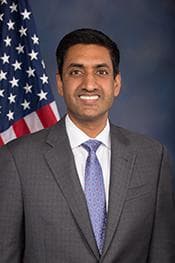
Ro Khanna
Democrat · CA · Representative
Votes with party: 97.4% (661 recorded votes)
Full profile: /officials/K000389
Source: Congress.gov · FEC
Cosponsors (2)
Members who have signed on to support this bill since introduction. Source: Congress.gov.
Latest Action
The most recent step in the bill's legislative path. Committee Activity below shows referrals and reports; the full action-by-action history including floor proceedings lives at Congress.gov →
Referred to the Committee on Education and Workforce, and in addition to the Committees on Ways and Means, Agriculture, Energy and Commerce, and Financial Services, for a period to be subsequently determined by the Speaker, in each case for consideration of such provisions as fall within the jurisdiction of the committee concerned.
2026-10-05
Source: Congress.gov
Committee Activity
Currently in
- House Committee on Financial ServicesReferred To · 2026-10-05
- House Committee on AgricultureReferred To · 2026-10-05
- House Committee on Energy and CommerceReferred To · 2026-10-05
- House Committee on Ways and MeansReferred To · 2026-10-05
- House Committee on Education and WorkforceReferred To · 2026-10-05
Plain-English Summary
Plain-English summary pending. Introduced on 2026-10-05. Check back soon — summaries are generated as bills progress through Congress.
Full Bill Text
Verbatim text published on Congress.gov via GovInfo. Use Cmd+F / Ctrl+F to search within this excerpt.
[Congressional Bills 119th Congress] [From the U.S. Government Publishing Office] [H.R. 10741 Introduced in House (IH)] <DOC> 119th CONGRESS 2d Session H. R. 10741 To enhance the supply of child care, and for other purposes. _______________________________________________________________________ IN THE HOUSE OF REPRESENTATIVES October 5, 2026 Mr. Khanna (for himself, Ms. Norton, and Ms. Crockett) introduced the following bill; which was referred to the Committee on Education and Workforce, and in addition to the Committees on Ways and Means, Agriculture, Energy and Commerce, and Financial Services, for a period to be subsequently determined by the Speaker, in each case for consideration of such provisions as fall within the jurisdiction of the committee concerned _______________________________________________________________________ A BILL To enhance the supply of child care, and for other purposes. Be it enacted by the Senate and House of Representatives of the United States of America in Congress assembled, SECTION 1. SHORT TITLE; TABLE OF CONTENTS. (a) Short Title.--This Act may be cited as the ``Free Child Care for America Act''. (b) Table of Contents.--The table of contents of this Act is the following: Sec. 1. Short title; table of contents. TITLE I--CHILD CARE FOR AMERICA Sec. 101. Definitions. Sec. 102. Funding. Sec. 103. Child Care for America Grant Program. Sec. 104. Child Care Facilities Grant Program. Sec. 105. Home-Based Child Care Training and Support Fund. Sec. 106. Child Care Innovation Fund. Sec. 107. Research and evaluation. Sec. 108. Head Start supplemental funding. Sec. 109. National Advisory Board. Sec. 110. Local community advisory boards. Sec. 111. Rule of construction on Child Care and Development Block Grant Act of 1990. Sec. 112. Other requirements. TITLE II--STAY-AT-HOME PARENT CHILD CARE SUPPORT PROGRAM Sec. 201. Definitions. Sec. 202. Establishment of stay-at-home parent support benefit program. Sec. 203. Funding authorization and allocation. Sec. 204. Application process. Sec. 205. Responsibilities of the Secretary of the Treasury. Sec. 206. Responsibilities of the Secretary. Sec. 207. Coordination. Sec. 208. Outreach and education. Sec. 209. Evaluation metrics. Sec. 210. Interaction with other benefits. Sec. 211. Benefit structure and payment mechanism. TITLE III--KIN CARE: FAMILY, FRIEND, AND NEIGHBOR CARE PROGRAM Sec. 301. Definitions. Sec. 302. Appropriations. Sec. 303. Parent roles and responsibilities in the Family, Friend, and Neighbor Care Program. Sec. 304. Responsibilities of FFN providers in the Family, Friend, and Neighbor Care Program. Sec. 305. Procedures for verification and ongoing monitoring. Sec. 306. Payment of FFN providers. Sec. 307. Data privacy and security measures. Sec. 308. Transition to licensed family child care. Sec. 309. Supports for serving children with special needs. Sec. 310. Collaboration with other early childhood programs. Sec. 311. Evaluation and research. Sec. 312. Community engagement for the Family, Friend, and Neighbor Care Program. Sec. 313. State applicability. TITLE I--CHILD CARE FOR AMERICA SEC. 101. DEFINITIONS. For purposes of this Act: (1) Eligible child.--The term ``eligible child'' means a child who has not attained the age of 6 years and is not yet in kindergarten. (2) Eligible child care provider.--The term ``eligible child care provider'' is an entity licensed, regulated, or registered under State law. (3) Income eligible family.--The term ``income eligible family'' means a family with an eligible child and a gross family income that does not exceed the greater of-- (A) 200 percent of the State median income for a family of the same size; and (B) $250,000. (4) Priority populations.--The term ``priority populations'' includes infants, toddlers, children with disabilities, children from low-income families, families residing in rural or geographically isolated areas, children experiencing homelessness, children in foster care or kinship care, and children from communities facing persistent barriers to access to early childhood services. (5) Secretary.--The term ``Secretary''…
Show the remaining 22,696 wordsHide the remaining 22,696 words
means the Secretary of Health and Human Services. (6) State median income.--The term ``State median income'' has the meaning specified in the Child Care and Development Block Grant Act of 1990. (7) Tribal organization.--The term ``Tribal organization'' means the recognized governing body of any Native tribe, or any legally established organization of Natives, which is controlled, sanctioned or chartered by such governing body or which is democratically elected by the adult members of the Native community to be served by such organization and which includes the maximum participation of Natives in all phases of its activities. SEC. 102. FUNDING. (a) Appropriations.--Out of any money in the Treasury not otherwise appropriated, there are appropriated to carry out this title-- (1) $78,000,000,000, to remain available until expended, for each of fiscal years 2026 through 2030; and (2) $78,000,000,000, to remain available until expended, for each of fiscal years 2031 through 2035. (b) Use of Funds.-- (1) Fiscal years 2026 through 2030.--Funds appropriated for fiscal years 2026 through 2030 shall be distributed to States under section 658O(b) of the Child Care and Development Block Grant Act of 1990 (42 U.S.C. 9858m(b)). (2) Requirements.-- (A) Matching funds.--To be eligible to receive funds under this title-- (i) in fiscal years 2028 and 2029, a State shall agree to match at least 5 percent of Federal funds; and (ii) in fiscal years 2030 through 2035, a State shall agree to match at least 10 percent. (B) Maintenance of effort.--To be eligible to receive funds under this title for a fiscal year, a State shall-- (i) agree to spend at least as much as the average of the expenditures on child care services by the State over the previous 3 fiscal years; (ii) use such funds to supplement, and not supplant, other Federal, State, or local public funds to support child care services; and (iii) continue spending funds on child care services from State funds and not just Federal funds. (C) No reduction, replacement, or displacement of child care and development block grant act funds.-- Nothing in this title shall be construed to reduce or replace amounts otherwise made available under the Child Care and Development Block Grant Act of 1990 or to reduce, limit, or diminish access to child care services for children and families that receive assistance under such Act. (c) Allocation of Funds.--To carry out this Act-- (1) funds appropriated to carry out this section shall be allocated to carry out a child care program to ensure fee reduction, operating grants to eligible child care providers, and supplemental grants for wages for child care workers as described in this title; (2) to implement a Child Care Facilities Fund, with $250,000,000 annually every fiscal year from fiscal year 2026 through fiscal year 2035; (3) to implement a Home-Based Child Care and Training and Support Fund, with $250,000,000 annually every fiscal year from fiscal year 2026 through fiscal year 2035; and (4) to implement a Child Care Innovation Fund, with $250,000,000 annually every fiscal year from fiscal year 2026 through fiscal year 2035. SEC. 103. CHILD CARE FOR AMERICA GRANT PROGRAM. (a) Establishment of Program.--The Secretary shall establish and carry out a grant program entitled the ``Child Care for America Grant Program'' to make grants to States and Tribal organizations to provide child care services in accordance with this section. (b) Allocation of Funds.--Of the funds appropriated for a fiscal year, the Secretary shall-- (1) reserve for Tribal organizations a portion of such funds based on the number of eligible children served by the Tribal organization and the demonstrated need for child care services in the Tribal community; and (2) allocate the remainder of such funds for grants to eligible States to provide child care services, in accordance with the formula used for the allotment of funds to the States under section 658O(b) of the Child Care and Development Block Grant Act of 1990 (42 U.S.C. 9858m(b)). (c) Eligibility of States.--To be eligible to receive a grant under this section, a State shall submit to the Secretary an application that includes the following: (1) Identification of the lead agency for the State and key contact information. If the lead agency is different from the State's Child Care and Development Fund lead agency, coordination and alignment between agencies is required. (2) A description of the roles, responsibilities, and organizational structure of the lead agency for administering the grant program. (3) A certification that the State shall comply with all requirements of this section and applicable Federal laws and regulations. (4) An assurance that the State shall administer the program in a manner that supports equal access, parental flexibility, and developmentally appropriate, culturally relevant child care services pursuant to assurances made by the State to receive such funds. (5) The detailed plan for the State under subsection (e). (6) A certification that the lead agency for the State shall comply with the following requirements: (A) Establish and administer a system for making subgrants to eligible child care providers in the State to cover annual operational expenses in accordance with this section. (B) Adhere to the prioritization of populations to ensure that programs serving Priority Populations receive subgrants first. (C) Ensure parity of access to child care services under this section between children or families receiving assistance under the Child Care and Development Block Grant Act of 1990 or the Head Start Act and children or families not receiving such assistance. (D) Establish or enhance a wage and benefits ladder for staff of eligible child care providers in the State that receives a subgrant under this section. (E) Within 12 months after the date of the enactment of this Act, establish a system for the State to provide wage supplements to all full-time and part- time staff members of eligible child care providers in the State that receives a subgrant under this section. (F) Within 12 months after the date of the enactment of this Act, provide every eligible provider receiving a subgrant under this section with supplemental funds to implement the Fee Reduction Program. (G) Take measures to ensure that family child care, faith-based care, care during non-traditional hours, care for infants and toddlers, and care for children with disabilities are available, equitable, and viable options for families, including by offering an incentive for providers to expand care offerings during non-traditional hours. (H) Attest to nonduplicative measures for monitoring, standards, wage ladders, and other components of the Child Care for America grants and demonstrate alignment with existing health, safety, quality and monitoring efforts. (I) Respond to inquiries from the Secretary with respect to this section. (d) Eligibility of Tribal Organizations.-- (1) In general.--A Tribal organization may receive funding under this section if the Tribal organization submits to the Secretary an application in accordance with the requirements for an application of a State under subsection (c). (2) Allotment.--The Secretary shall reserve a portion of the total appropriation for the program each fiscal year that shall be allocated to Tribal organizations based on the number of eligible children served by a Tribal organization and the demonstrated need for child care services in the communities served by a Tribal organization. (3) Compliance with state requirements.--A Tribal organization that receives funding under this section shall comply with the requirements imposed on a State under subsection (h), except that the Tribal organization may use licensing, regulatory, or monitoring systems of the Tribal organization in the place of such systems of a State if the Secretary determines that the systems of the Tribal organization are comparable to the systems of a State. (4) Administrative costs.--In recognition of the unique challenges and costs associated with administering child care programs in Tribal communities, a Tribal organization that receives funding under this section may reserve not more than 15 percent of the total grant allocation each fiscal year to the Tribal organization for administrative costs. (e) State Plan.-- (1) In general.--A State shall submit a State plan after developing such plan with meaningful consultation with stakeholders, child care providers (including licensed, registered or regulated center- and home-based providers), parents, employers, child care workers, unions, and local government representatives, in the development and implementation of the program. (2) Development of plan.--In developing the plan under paragraph (1), a State shall-- (A) establish multiple channels for ongoing community feedback; (B) review all such feedback on a quarterly basis; (C) incorporate the feedback into program improvement efforts; and (D) provide public responses to major themes in the feedback. (3) Contents.--A State plan under paragraph (1) shall include the following: (A) A plan to ensure that an eligible child care provider receiving assistance under this Act may also receive assistance under the Child Care and Development Block Grant Act of 1990 by eliminating administrative redundancies and reducing barriers to receiving assistance in accordance with this Act and the Child Care and Development Block Grant Act of 1990. (B) A proposed timeline for implementing key components of the program. (C) A description of the process used by the State to determine eligibility and prioritize eligible child care providers for subgrants and other funding under this section, ensuring equitable distribution of funds across eligible child care centers and eligible family child care homes. (D) The proposed formula used by the State to allocate subgrants to eligible providers in accordance with this section. (E) The plan for the State to establish or enhance and implement a wage and benefits ladder for licensed, registered or regulated centers and family child care receiving assistance under the program. (F) A plan for providing wage supplements to staff of eligible providers within 12 months after the initial implementation of the program. (G) A description of the strategies for the State to increase access to high-quality child care services for priority populations as defined in section 101. (H) A description of the outreach plan and agreements with trusted community-based organizations to families likely to be eligible for one or more of the programs in this legislation, and child care providers likely to be eligible for one or more of the programs in this legislation, to assist them in enrolling, applying or registering for such a program. This process may include subgrants to appropriate community-based organizations. (I) A plan for the State to conduct data collection and report on the use of funds and the effectiveness of the program. (f) Use of Funds.--Funds appropriated to carry out the program under this section shall be used to support the provision of high- quality, affordable child care services for eligible, children and families, in accordance with the requirements and priorities established in this section. (1) Specific allocations.--A State or Tribal organization shall allocate funds under this section in accordance with the following requirements: (A) At least 70 percent of the funds shall be used to provide direct services to eligible children and families, including through grants and subgrants with eligible child care providers and other initiatives designed to expand access and affordability. (B) At least 10 percent of the funds shall be used for developmentally appropriate and culturally relevant quality improvement activities that are defined and co- created with families and the child care workforce, in consultation with early childhood development experts. (C) At least 7 percent of the funds shall be used for subgrants to trusted, community-based organizations to support outreach, navigation, and participation for families and child care providers for programs under this Act. (D) Not more than 5 percent of the funds may be used for administrative costs. (E) Remaining funds may be used for other activities that support the goals and requirements of this section, as approved by the Secretary. (2) Prohibited uses.--Funds under this section may not be used for any of the following: (A) The purchase or improvement of land, or the purchase, construction, or permanent improvement of any building or facility, except as authorized under section 104. (B) Any sectarian purpose or activity, including religious worship or instruction. (C) Any lobbying or political activity, as such activity is defined by the Secretary. (D) Any other purpose or activity that is not consistent with the goals and requirements of this section, as determined by the Secretary. (3) Reporting and accountability.-- (A) In general.--A State or tribal organization receiving funds under this title shall maintain detailed records on the use of funds and shall submit annual reports to the Secretary on the allocation and impact of these funds. (B) Establishment of requirements.--The Secretary shall establish reporting requirements and performance measures to ensure that funds are being used effectively and in accordance with the requirements of this Act. (C) Authority in case of noncompliance.--The Secretary shall have the authority to withhold or recapture funds from a State or Tribal organization that does not comply with the requirements of this Act or does not demonstrate adequate progress toward meeting the goals and priorities established in the plan of the State or Tribal organization. (g) Initial Funding for Eligible Child Care Providers.-- (1) Base level of funds.--The amounts provided in this section shall serve as the base level of bridge funding for each eligible child care provider on an annual basis until the provider enters a permanent subgrant with the State under this Act. The Secretary shall issue guidance within 6 months of enactment establishing the methodology for calculating the base level of bridge funding for each eligible provider, which shall take into account the provider's size, enrollment, and operating costs. (2) Disbursement of funds.--Each State shall disburse the funds described in subsection (a) to eligible child care providers within 12 months of the date of enactment of this Act, regardless of whether the provider's application for a permanent subgrant is still pending review or approval. The initial disbursement under this subsection shall serve as bridge funding and shall operate independently of the subgrant program established under subsection (h). (3) Amounts.--Each State shall establish procedures through which an eligible child care provider that has cause to believe that an error or miscalculation has affected the amounts given to the provider may appeal, or petition for reconsideration of, the initial funding amounts determined under this section. (4) Guidance.--The Secretary shall prescribe regulations and issue guidance as the Secretary determines is necessary to ensure consistent and equitable implementation of this section by the States, including standards for documentation, verification, and calculation of initial funding amounts. (h) Requirements for States Administering Subgrants to Eligible Child Care Providers.-- (1) Subgrants.--To receive funds under this subsection, each State shall establish a program for subgranting with eligible child care providers within 12 months of enactment of this section. (2) Purpose.--The purpose of this program is to ensure affordable, accessible, and high-quality child care options for families. (3) Definition of state.--For the purpose of this subsection the term ``State'' includes Tribal organizations. Tribal organizations that receive funding under this subsection shall comply with all requirements outlined in this subsection, except that they may use Tribal licensing, regulatory, or monitoring systems in lieu of State systems, provided that such Tribal systems meet minimum Federal standards as established by the Secretary. (4) Formula.--Within the first 12 months after the date of the enactment of this Act, each State shall develop and publish a formula for allocating subgrant amounts to eligible child care providers. The formula developed under this paragraph shall govern the allocation of permanent subgrants under this subsection and shall not affect the initial disbursement of bridge funding under subsection (g)(2). (5) Subgrants program.--To receive funds under this subsection, each State shall establish a program for subgrants to eligible child care providers within 12 months of enactment of this Act. Each State shall ensure all eligible, participating child care providers seeking a subgrant are being served within 3 years of enactment of this section. The purpose of this program is to ensure affordable, accessible, and high- quality child care options for families. (6) Allocation of subgrants.--Within the first 12 months after the date of the enactment of this Act, each State shall develop and publish a formula for allocating subgrant amounts to eligible child care providers which shall be used to calculate the operational costs necessary for providers to operate sustainably while maintaining high-quality standards. (7) Guidance.--The Secretary shall issue guidance and minimum standards for States to follow in developing the formula described in paragraph (6) which shall include consideration of the following: (A) Personnel costs, including wages, health care and paid leave benefits. (B) Professional development appropriate and accessible to all eligible program settings. (C) Facility maintenance and improvement costs, including indoor and outdoor environments. (D) Developmentally appropriate curricular materials, educational resources, and other supplies. (E) Costs associated with meeting the needs of enrolled children with disabilities or special needs. (F) Food costs. (G) Administrative and operational costs including insurance. (8) Submission of subgrant formula.--Each State shall submit the proposed subgrant allocation formula under paragraph (6) to the Secretary for the review and approval of the Secretary. (i) Publication of Application Process for Subgrants.-- (1) In general.--The lead agency in each State shall make available on a website under the authority of the agency the application for child care providers to apply for and receive subgrants under this program, and the State shall process and disburse subgrants to the providers on a rolling and continuous basis in accordance with procedures established under this title. (2) Content of application.--The application shall be available in multiple languages and include at minimum the following: (A) The assurances outlined in subsection (l). (B) An assurance that advanced disbursement of funds shall proceed in accordance with subsection (g). (C) A budget and description of the amounts needed for operating funds, compliance with the wage ladder, and compliance with the Fee Reduction Program. (j) Priority.--Each State shall establish and implement procedures to prioritize the disbursement of funds and the awarding of subgrants to eligible child care providers with a majority of the enrolled children in priority populations. (k) Monitoring and Compliance.--Each State shall demonstrate that the monitoring and oversight system to ensure that subgranted child care providers maintain compliance with the terms of their subgrants, quality standards, and all applicable requirements under this section, are nonduplicative of Child Care and Development Block Grant systems. (l) State Subgrants to Eligible Child Care Providers.-- (1) In general.--To be eligible to receive a subgrant funded under this section, a child care provider shall-- (A) be licensed, regulated or registered under State law to provide child care services; and (B) submit an application to the State lead agency and agree to the provider requirements in subsection (c). (2) Child care provider application and selection.--To receive funds from the State, a child care provider shall make the following certifications or assurances in the application to the State: (A) Provide documentation of a current license or other authorization conveying status as a licensed, regulated, or registered provider of child care services. (B) Use subgrant funds solely for allowable expenses under this title. (C) Cap total executive compensation at not more than 25 times the median employee wage. (D) Prohibit the use of such funds to pay interest or dividends to investors. (E) Maintain or increase wage and benefits in accordance with this Act. (F) Ensure that no tuition or ancillary fees are charged to income-eligible families. (G) Refrain from any sale-leaseback transaction, with respect to a location used by the provider in providing child care services, that results in the provider with more debt than before the transaction. (H) If a child care company or its affiliate brands hold more than 20 licenses across all States, agree to submit detailed annual financial reports to the Department of Health and Human Services, the specifics of which will be determined by the Secretary. (3) Budget estimates.--A child care provider applying for a subgrant under this section shall include in the application for such subgrant a budget estimate with respect to the operations of the provider for the period covered by the duration of the subgrant. (4) Duration of subgrant.--Each subgrant under this section shall be for a duration of 2 years and renewable. (5) Purpose.--Funds provided to eligible child care providers through State subgrants shall be used to support the provision of high-quality child care services and to meet the requirement outlined in the subgrant, such as improving compensation for workers, reducing fees for families and meeting quality standards established by the State. (6) Allowable uses of subgrant funds.-- (A) Required uses.--An eligible child care provider that receives a subgrant will use the funds of the subgrant for personnel costs, including wages in accordance with the Wage Ladder described in subsection (o), health care and paid leave benefits. (B) Permitted uses.--An eligible child care provider that receives a subgrant may use the funds of the subgrant for the following: (i) Professional development appropriate and accessible to all eligible program settings. (ii) Mortgage, rent, and facility maintenance and improvement, including housing costs for licensed, registered or regulated home-based child care programs. (iii) Educational materials, supplies and technology. (iv) Food service. (v) Administrative and general operating expenses including insurance. (vi) Transportation related to the services of the provider. (vii) Equipment or materials related to providing services to children with disabilities. (viii) The Secretary will establish guidance for State on categories of additional allowable expenses. (ix) The Secretary will establish procedures for regularly getting feedback from States, parents, and providers and adjust the guidance as needed in response. (C) Prohibition.--An eligible child care provider that receives a subgrant may not-- (i) increase the fees for an enrolled family that is not income-eligible for the period that begins on the date of the effective date of the subgrant and ends through the date that is 1 year after such effective date; and in the period covered by the first year of the subgrant; and (ii) increase the fees for such an enrolled family by more than 3 percent per year, and in any case not more than an amount necessary to cover any shortfall in the budget estimate of the provider. (7) Requirements.-- (A) In general.--The Secretary shall establish requirements applicable to the States for the monitoring of child care providers in the State to ensure the compliance of the providers to the requirements applicable to the providers. Such requirements will not duplicate or create conflict with Child Care and Development Block Grant Federal or State requirements for monitoring requirements applicable to the providers. (B) Responsibility of states.--Each State shall establish and implement procedures for enforcement of the requirements under this title applicable to the child care providers receiving assistance under this title. Such requirements will not duplicate or create conflict with Child Care and Development Block Grant Federal or State requirements. (C) Appeals.-- (i) In general.--Each State shall implement procedures through which a child care provider that is subject to an enforcement action, including a termination of a subgrant or another adverse action, or a payment dispute with the State may appeal the action taken against the provider. (ii) Continuity during appeal.--A child care provider that pursues an appeal under this subparagraph shall continue to operate while the appeal is pending and, if the provider continues to operate, shall receive such assistance and payments due to provider but for the enforcement action being reviewed under the appeal while the appeal is pending. (m) Subgrants to Community-Based Organizations.-- (1) In general.--Each State or Tribal organization receiving funds under this section shall establish formal partnerships with community-based organizations with the option to subcontract with existing provider-led networks or to invest in establishing new support networks. (2) Subgrantee application.--An applicant shall demonstrate experience with, and alignment with, the community it serves; the ability to deliver services in participants' preferred language and at accessible hours and days; and the ability to build community trust. (3) Allowable uses.--A subgrant may be used to provide outreach, navigation support, and technical assistance to parents, families, and child care providers, and to make information about the programs under all three titles of this Act accessible to diverse populations. (n) Wage and Benefits Ladder and Workforce Protections.-- (1) Workforce support and compensation.-- (A) A Wage and Benefits Ladder shall require as a condition of receiving funding under section that States shall establish or enhance their existing wage and benefits ladder for staff of eligible child care providers receiving assistance. (B) The Wage and Benefits Ladder will, at minimum-- (i) provide a clear pathway for licensed, regulated or registered family child care or child care center staff to increase their compensation and benefits, based on factors such as education, training, experience, and performance, which shall take into account alignment with compensation levels for similarly credentialed early childhood and elementary education professionals in the public sector; (ii) ensure that staff wages and benefits meet or exceed the minimum wage and benefit standards established by the Secretary under this Act; (iii) be developed through meaningful consultation and engagement with child care providers, individuals providing child care services as, or on behalf of, a child care provider, labor organizations representing such individuals, and the State agency administering assistance under this section, with priority of consultation and engagement especially with respect to the individuals providing child care services and the organizations representing such individuals; (iv) require States to submit their proposed wage and benefits ladder to the Secretary for approval as part of their application for a grant under this section; (v) require the Secretary to provide guidance and technical assistance to State in developing and implementing their wage and benefits ladders that is applicable to child care centers and family child care programs; and (vi) be designed to support recruitment, retention, and professional advancement of the early childhood workforce. (C) Minimum wage requirements will require wage supplements sufficient to ensure that-- (i) the wage rate for eligible child care providers is not less than the area living wage, as detailed by a widely used and reliable living wage calculator; and (ii) that rate is adjusted annually based on Cost of Living Adjustment (COLA). (D) Eligible child care providers receiving assistance under this section will-- (i) comply with the wage and benefits ladders established by their State; (ii) provide documentation to the State demonstrating compliance with the minimum wage requirements outlined in this section; and (iii) report data on staff wages, benefits and turnover to the State as required for program monitoring and evaluation. (E) States will-- (i) disburse wage supplement funds to eligible child care providers within 12 months of the enactment of this Act; (ii) monitor provider compliance with the wage and benefits ladder and minimum wage requirements and take appropriate action in cases of non-compliance; (iii) report data on staff wages, benefits and turnover to the Secretary annually, as a condition of continued funding under the program under this section; and (iv) within 24 months of the passage of this Act, develop a plan for integrating wage supplements into Child Care for America subgrant awards. (F) The Secretary shall-- (i) review and approve State wage and benefits ladders as part of the application process under this section; (ii) provide guidance and technical assistance to States in designing and implementing their wage and benefits ladders inclusive of both center- and home-based child care programs, and minimum wage requirements, including guidance issued on an annual basis with respect to reasonable adjustments to wage scales that take into account inflation, regional economic conditions, and workforce recruitment needs; and (iii) compile and report to Congress annually on the impact of the workforce support and compensation provisions on staff wages, benefits and turnover in the child care sector. (G) Nothing in this subsection may be construed to prevent a State from establishing higher wage benchmarks or adopting compensation standards aligned with pay scales for professionals in early childhood or elementary education. (2) Labor standards and workforce protections.-- (A) Right to organize.--Providers receiving funds under this title shall inform their employees of their rights under the National Labor Relations Act (29 U.S.C. 151 et seq.), including the right to organize and collectively bargain. (B) Neutrality.--No provider receiving funds under this title shall use any funds to deter union organizing or shall in any way interfere with employees' rights to form, join, or assist labor organizations. (C) Employee classification.-- (i) In general.--For purposes of this title and any other Federal labor laws, all individuals employed by providers receiving funds under this title shall be considered employees rather than independent contractors, unless they meet all criteria for independent contractor status under applicable Federal law. (ii) Applicability to state law.--Nothing in this clause shall be construed to supersede or preempt the distinction between employees and independent contractors under State law, and nothing in this clause shall affect, impair, or invalidate any collective bargaining agreements between a State and an eligible child care provider. (D) Enforcement.--The Secretary of Labor shall have authority to investigate and enforce compliance with this section. Violations may result in civil penalties and ineligibility for funds under this title. (E) Professional development.--The Secretary shall establish a comprehensive professional development program for workers, developed in consultation with labor unions representing such workers. This program shall include-- (i) ongoing training opportunities; (ii) career ladder programs to support professional advancement; and (iii) mentoring and leadership development initiatives. (F) Whistleblower protections.--No provider receiving funds under this title may discharge or discriminate against any employee because such employee has filed any complaint or instituted or caused to be instituted any proceeding under or related to this title, or has testified or is about to testify in any such proceeding. (G) Workforce and program participation protections.-- (i) Labor protections.--Nothing in this Act shall be construed to interfere with, preempt, or diminish a collective bargaining agreement, labor protection, or an organizing right applicable to child care workers under Federal or State law. (ii) Due process and continuity of care.-- The Secretary, in administering any program under this Act, and any entity receiving funding under this Act shall ensure that applicable procedures with respect to participation in a program under this Act shall provide adequate notice, opportunity for appeal, and, where feasible, continuity of care for participating children and families. (H) Existing labor arrangements.--Nothing in this Act may be construed to-- (i) alter the classification or status of any child care provider or individual who is represented by a labor organization; (ii) interfere with or limit the ability of a labor organization to collectively bargain with a State or a child care provider; or (iii) preempt, supersede, or invalidate a collective bargaining agreement in effect on the date of the enactment of this Act. (I) State option to establish collective bargaining rights for self-employed family child care providers.-- (i) In general.--A State participating in a program under this title may elect to designate, by State law, the State (or a public authority created by the State for this purpose) as the employer of self-employed family child care providers receiving a subgrant under this section, solely for purposes of collective bargaining under this clause. (ii) Limited purpose; no change in provider status.--A designation under clause (i) shall apply only for purposes of collective bargaining under this clause. Notwithstanding any other provision of law, a family child care provider shall not, by reason of such designation or of participation in collective bargaining under this clause, be considered an employee of the State or of the United States for any purpose other than collective bargaining under this clause, including for purposes of unemployment insurance, workers' compensation, Federal or State tax withholding, or liability. Nothing in this clause shall affect the classification under subparagraph (C) of any individual employed by such a provider. (iii) Scope of bargaining.--Collective bargaining under this subparagraph shall be limited to payment rates and subgrant amounts; cost-of-living adjustment methodology; wage and benefits ladder implementation; training and professional development funding; contributions to health insurance and retirement benefits; and grievance procedures. Collective bargaining under this subparagraph shall not extend to the terms of care between a provider and the family the provider serves, and nothing in this subparagraph shall be construed to limit a family's right to select or terminate a provider of the family's choosing. (iv) Representation.--A State that makes a designation under clause (i) shall establish a process for such providers to select an exclusive bargaining representative by majority sign-up or election, and a process for resolving bargaining impasses, including mediation or fact-finding, in lieu of a right to strike. (v) Access to provider information.--A State that makes a designation under clause (i) shall make available to a certified exclusive bargaining representative the name, address, phone number, and email address of self- employed family child care providers receiving a subgrant under this section, on the same terms and subject to the same privacy protections applicable to the State's disclosure of such information for other program purposes. (vi) Joint bargaining units.--A State may include self-employed family child care providers designated under this clause and family, friend, and neighbor care providers designated under section 304(a)(10) in a single bargaining unit. (o) Nondiscrimination.--No person in the United States may, on the ground of race, color, national origin, sex, disability, or religion, be excluded from participation in, be denied the benefits of, or be subjected to discrimination under any program or activity under this Act. (p) Federal Administration.--The Secretary will reserve up to 1 percent of the total appropriation for the program under this section each fiscal year for Federal administrative costs, including activities such as providing technical assistance to States and Tribal organizations, conducting monitoring and oversight, and implementing the research and evaluation agenda. (q) Child Care and Development Block Grant.--The Child Care and Development Block Grant Act of 1990 shall apply to this section except as otherwise provided or specified by a provision in this section. SEC. 104. CHILD CARE FACILITIES GRANT PROGRAM. (a) Establishment and Purpose.-- (1) Establishment.--The Secretary shall establish the ``Child Care Facilities Grant Program'' to support the acquisition, improvement, renovation, and construction of child care facilities. (2) Purpose.--The purpose of the fund is to address the need for facilities improvements in the child care sector and to expand access to safe, healthy and high-quality learning environments for children. (b) Funding Allocation and Grant Types.-- (1) In general.--Out of amounts appropriated for the purposes of this title, $250,000,000 shall be allocated for the Child Care Facilities Grant Program for each fiscal year. (2) Grant duration.--A grant under this section shall be for a period of 3 years. (c) Eligibility and Application Process.-- (1) Eligibility.--The following may apply for a grant under this section: (A) A State. (B) A Tribe or Tribal organization. (C) A municipality of a State or a Tribe. (D) A non-profit organization. (2) Applications.--An entity described in paragraph (1) may apply for a grant under this section by submitting to the Secretary an application which shall include the following: (A) A comprehensive project plan that describes the proposed facility improvements, the need for the project, the target population to be served, and the expected outcomes. (B) A detailed budget that outlines the costs associated with the proposed project, including any matching funds or other sources of support. (C) A time estimate for completion of the proposed project, including key milestones and deliverables, with documentation of the experience or expertise of the applicant in developing or financing child care facilities. (3) Prioritization.--The Secretary shall prioritize the making of grants to applicants under this section based on the following: (A) Serving priority populations to address urgent health and safety needs or other critical facility deficiencies. (B) Demonstrating strong partnerships and collaboration with stakeholders, including child care providers, community organizations and families. (C) Proposing projects that will result in a significant expansion of child care capacity or improvement in the quality of child care facilities. (D) Committing to use at least 30 percent of their funding to improve home-based child care programs. (4) Prohibition.--An applicant that receives a grant under this section may not use the funds of the grant for any of the following: (A) Paying dividends or distributions to an entity with an ownership interest in a recipient of such funds. (B) Compensation of an officer or employee of a recipient of such funds with management responsibilities who is not directly supervising an individual who provides child care services to a child, except to make reasonable and necessary payments to entities directly engaged in the management and oversight of a facilities grant award and nonprofit entities performing administrative, financial, or fiduciary functions in connection with the grants or acting as a subrecipient for services related to the administration, distribution, or management of such funds. (5) Assurances.--An applicant for a grant under this section shall include assurances that the applicant will ensure that eligible child care providers receiving funds of the grant comply with the following conditions: (A) Serve families with low income. (B) Provide care of children under the age of 6 years. (C) Have a strong demonstrable record of health and safety, based on inspection records made by an independent inspector of child care facilities. (D) Provide child care services outside of normal business hours. (E) Serve regions with few child care options, including rural areas. (F) Not be owned, directly or indirectly by a for- profit corporation with an annual operating budget that is not less than $1,000,000. (d) Use of Funds.-- (1) Permissible uses.--Grant funds may be used for the following purposes: (A) Renovation grants for repair, renovation, and modernization of existing child care facilities, including upgrades to meet the health and safety standards, improve energy efficiency, enhance learning environments, and modify classrooms to serve different age groups. (B) Construction grant for new construction of child care facilities serving priority populations, including site acquisition, design, engineering, and construction costs. (C) Planning grants for needs assessments to determine the demand for child care facilities in a given area, feasibility studies to assess viability of proposed facilities projects, and pre-development activities such as site selection and preliminary design. (D) Purchase of land or buildings-- (i) to construct a new child care facility; or (ii) with an existing child care facility. (2) Prohibited uses.--Grant funds may not be used for the following purposes: (A) Lobbying or political activities. (B) Supplanting other Federal, State, or local funds. (3) Limit on administrative expenses.--Not more than 15 percent of grant funds may be used for administrative expenses. (4) Limit on grant amount.--A grant under this section may not include more than $15,000,000. (e) Technical Assistance for Prevailing Wage Compliance.--The Secretary of Labor shall provide technical assistance to recipients of grants under this section with prevailing wage requirements under section 112, with priority given to nonprofit organizations, community development financial institutions, and applicants serving rural or geographically isolated communities. (f) Zoning and Land Use Review.-- (1) In general.--Each State receiving funds under this section shall, not later than 2 years after the date of enactment of this Act, conduct a review of zoning laws, land use regulations, and permitting requirements applicable to child care facilities in the State. (2) Content of review.--The review conducted under paragraph (1) shall identify-- (A) barriers to the siting, construction, renovation, or expansion of child care facilities, including center-based and home-based programs; (B) local zoning classifications that restrict or prohibit child care facilities in residential, commercial, or mixed-use zones; and (C) permitting, inspection, or approval processes that impose disproportionate burden on child care facility development relative to other comparable uses. (3) Report to the secretary.--Not later than 2 years after the date of enactment of this Act, each State shall submit to the Secretary a report on the findings of the review and the steps the State intends to take to address identified barriers. (4) Report to congress.--The Secretary shall compile the State reports and submit to Congress a national report on zoning and land use barriers to child care facility development and recommendations for further action not later than 3 years after the date of enactment of this Act. (g) Preference.--Preference is to be given to those with a proven track record in financing child care, can help States and local governments develop child care places, and propose to focus on facilities for children under 5, homecare-based programs and low-income families. SEC. 105. HOME-BASED CHILD CARE TRAINING AND SUPPORT FUND. (a) Establishment of Program.-- (1) Establishment.--A fund called the ``Home-Based Child Care Training and Support Fund'' is hereby established through which the Secretary may make grants to address the unique challenges faced by licensed, registered or regulated family child care providers and to promote the success and sustainability of such providers. (2) Allocation.--Out of amounts appropriated for the purposes of this title, $250,000,000 shall be allocated for this section for each fiscal year. (b) Eligibility and Application Process.-- (1) Eligible entities.--The following may apply for a grant under this section: (A) Institutions of higher education, with priority to community colleges. (B) Nonprofit organizations with expertise in supporting and advocating for family child care providers. (C) State and local government agencies responsible for child care licensing and regulation. (2) Application.--An entity described in paragraph (1) may apply for a grant under this section by submitting to the Secretary an application which shall include-- (A) a description of the proposed activities to support family child care providers, including but not limited to coaching, mentoring, and business training; (B) a plan for engaging and recruiting family child care providers, particularly those that serve, or are from, historically priority populations; (C) partnership with relevant stakeholders, such as local child care resources and referral agencies, business development organizations and other regulatory bodies; (D) a description of the applicant's demonstrated track record of providing culturally responsive training, technical assistance, or support services to licensed, registered, or regulated family child care providers, including documentation of prior partnerships with family child care provider associations or networks; and (E) a budget and sustainability plan. (c) Use of Funds.--An entity that receives a grant under this section may use the funds of the grant to support the success and sustainability of family child care providers through activities like-- (1) developing and implementing coaching and mentoring programs that provide individualized guidance and support to family child care providers; (2) offering high-quality certificate and degree programs aimed at enhancing child care educator training and preparation; (3) offering business training and classes on topics such as financial management, marketing and record-keeping; (4) providing resources and technical assistance to help family child care providers navigate licensing and regulatory requirements; (5) creating online platforms and resources to connect family child care providers with relevant support services; (6) establishing networks or cooperatives that offer shared services and benefits to family child care providers such as retirement plans, insurance, and bulk purchasing; and (7) offering business training and classes to scale child care facilities. (d) Grantee Responsibilities.--An entity that receives a grant under this section shall carry out the following: (1) Design and implement high-quality programs and services that meet the unique needs of family child care providers and are developmentally appropriate and culturally relevant. (2) Engage and recruit a diverse range of family child care providers, particularly those that serve, or are from, historically priority populations. (3) Collaborate with relevant stakeholders, including parents and child care providers who participate in the child care assistance program, to leverage resources and expertise. (4) Collect and report data on program outcomes and impact to the Secretary annually. (5) Establish a 20-member advisory council consisting of 10 parents who utilize home-based child care and 10 home-based child care providers who participate in the Child Care for America program to-- (A) inform the lead agency of program improvements; (B) provide feedback on program development and new initiatives; and (C) center their expertise in program decisions. (6) Compensate participants in the advisory council using the quality set-aside funds. (e) Secretary Responsibilities.--The Secretary shall carry out the following: (1) Establish an application process and criteria for awarding grants from the Home-Based Child Care and Training and Support Fund. (2) Review and approve applications based on their alignment with the purposes and requirements of this section. (3) Provide guidance and technical assistance to grantees in developing and implementing their programs. (4) Monitor grantee compliance and performance and take appropriate action in cases of non-compliance or under- performance. (5) Gather leading practices and lessons learned on a publicly available website. (6) Report to appropriate congressional committees annually on the outcomes and impact of funding under this section. SEC. 106. CHILD CARE INNOVATION FUND. (a) Establishment; Allocation.-- (1) Establishment.--There is established in the Department of Health and Human Services a fund called the ``Child Care Innovation Fund'' which shall be administered by the Secretary in order to support the development and implementation of innovative pilots, strategies and models that aim to improve the quality, accessibility, affordability, and sustainability of child care programs. (2) Allocation.--Out of amounts appropriated for the purposes of this title, $250,000,000 shall be allocated to the Child Care Innovation Fund for each of fiscal years 2026 through 2035. (b) Funding Allocation and Grant Types.--60 percent of funds for the Child Care Innovation Fund shall be allocated for grants to pilot innovative approaches to child care delivery that address one or more of the following key areas: (1) Improving the quality of child care services in ways that are developmentally appropriate and culturally relevant. (2) Increasing accessibility of child care, particularly for priority populations. (3) Enhancing affordability of child care for families. (4) Supporting workforce development and retention in the child care sector. (5) Improving child care facilities and infrastructure. (c) Eligibility and Application Process.-- (1) Eligibility.--The following entities shall be eligible to apply for a grant under the Child Care Innovation Fund: (A) Municipalities. (B) State and local government agencies. (C) Tribal organizations. (D) Nonprofit organizations. (E) Institutions of higher education. (F) For-profit organizations. (G) Consortia of the above entities. (2) Applications.--An eligible entity applying for a grant under the Child Care Innovation Fund shall submit an application to the Secretary that includes the following: (A) A description of the proposed project, including its objectives, target population, and anticipated outcomes. (B) A plan for implement the pilot, including key activities, time lines, and partnering organizations. (C) A description of how the pilot project addresses one or more of the following areas: (i) Developmentally appropriate and culturally relevant quality improvement. (ii) Accessibility. (iii) Affordability. (iv) Workforce development. (v) Facility improvement. (D) Evidence supporting the effectiveness of the pilot, such as research findings or results from previous pilots. (E) A plan for evaluating the innovation, including key metrics and data collection methods. (F) A budget proposal and sustainability plan. (3) Selection criteria.--In selecting recipients of grants under this section, the Secretary shall consider the following factors: (A) The potential of the innovation to significantly improve the quality, accessibility, affordability or sustainability of child care programs. (B) The strength of the evidence base support the proposal. (C) The capacity of the application to implement the innovation effectively and efficiently. (D) The potential for the proposal to be scaled or replicated in other settings. (E) The needs of priority populations or areas. (F) The level of collaboration and partnerships proposed. (d) Use of Funds.-- (1) In general.--A recipient of a grant under this section shall use the funds to develop, implement and evaluate innovative approaches to child care delivery that aims to improve the following: (A) Access to child care, particularly for priority populations and areas. (B) Affordability of child care for families. (C) Workforce development, compensation, and retention in the child care sector of child care facilities and infrastructure. (2) Other permissible uses.--A recipient of a grant under this section may use funds in the grant for planning and design, training and professional development of child care providers, facility improvement and construction, technology and infrastructure development, community outreach and engagement, data collection, and evaluations. (3) Administrative costs.--A recipient of a grant under this section may use not more than 15 percent of the amounts awarded in the grant for administrative costs. (4) Innovative approaches.--The innovative approaches referred to in subsection (b) may include the following: (A) Shared services models that help providers reduce costs and improve quality. (B) Technology solutions that streamline enrollment, pay and reporting processes. (C) Alternative financing mechanisms, such as pay- for-success or social impact bonds. (D) Strategies for integrating child care with other family support services, such as health care or housing assistance. (E) Competency-based assessment models for home- based educators without credentials (including so- called ``care blocks'') or partnerships that provide integrated supports for caregivers of young children, including parenting education, workforce training, wellness services, or connections to early childhood resources, particularly where such hubs or partnerships leverage existing community institutions or public facilities. (5) Other requirements.--A recipient of a grant under this section shall carry out the following: (A) Design and implement the proposal for which the grant was awarded in accordance with the approved application and time line. (B) Collect and report data on project outcomes and impact to the Secretary annually. (C) Participate in knowledge-sharing activities and contribute to the ``What Works Clearinghouse for Early Care and Education''. (D) Develop plans for scaling and sustaining successful approaches beyond the grant period. (6) Requirements of the secretary.--The Secretary shall carry out the following: (A) Establish an application process and criteria for awarding grants from the Child Care Innovation Fund. (B) Review and approve applications based on their alignment with the purposes and requirements of this subsection. (C) Provide guidance and technical assistance to grantees in developing and implementing their projects. (D) Monitor grantee compliance and performance and take appropriate action in cases of non-compliance or under-performance. (E) Compile and disseminate best practices and lessons learned from grantees. (F) Establish and maintain the ``What Works Clearinghouse for Early Care and Education'' to facilitate knowledge sharing and replication of successful approaches. (G) Report to Congress annually on the outcomes and impact of the Child Care Innovation Fund. SEC. 107. RESEARCH AND EVALUATION. (a) In General.-- (1) The Secretary will conduct research, demonstrations and evaluations that are directly relevant to the program under this section and the overall goals of expanding access to high- quality, affordable child care. (2) The Secretary may award grants or subgrants to eligible entities to conduct research, demonstrations and evaluations. (3) Eligible entities include State agencies, Tribal organizations, institutions of higher education, and other nonprofit or for-profit organizations with expertise in child care research and evaluation. (b) Priority Areas.--The Secretary will prioritize research, demonstrations and evaluations that focus on the following areas: (1) Identifying leading practices and strategies for improving the quality of child care services, including those related to workforce development, curriculum and instruction, family engagement, and program administration. (2) Evaluating the impact of the child care policies, programs and mechanisms in this section on child outcomes, family well-being, and the overall supply and quality of child care services. (3) Examining the factors that contribute to the disparities in access to high-quality child care, particularly for the priority populations. (4) Analyzing the costs and benefits of different approaches to child care financing, including the program under this section and other Federal, State, and local funding streams. (5) Explore the use of technology and data systems to improve the delivery, coordination, and evaluation of child care services. (6) Evaluating the feasibility and projected cost of expanding the age eligibility for assistance under this title to children who have not attained the age of 13 years, consistent with the age eligibility under the Child Care and Development Block Grant Act of 1990, including an assessment of-- (A) the funding levels necessary to maintain the income eligibility thresholds established under this title for such an expanded population; (B) the impact of such expansion on the availability and quality of care for children under the age of 6 years; (C) mechanisms to ensure that any expansion of age eligibility under this title would complement and not supplant, duplicate, or diminish access to assistance under the Child Care and Development Block Grant Act of 1990 for children in the expanded age range; and (D) recommendations for any legislative changes necessary to achieve such expansion while preserving the integrity of the Child Care and Development Block Grant Act of 1990. The Secretary shall submit the findings of the evaluation under this subparagraph to the Committee on Education and Workforce of the House of Representatives and the Committee on Health, Education, Labor, and Pensions of the Senate not later than 7 years after the date of enactment of this Act, in sufficient time to inform the reauthorization of this Act. The report shall include a specific legislative recommendation regarding the feasibility of expanding age eligibility to children who have not attained the age of 13 years for inclusion in any reauthorization legislation. (c) Dissemination.--The Secretary will make sure-- (1) the results of research, demonstrations, and evaluations conducted under this section are publicly available through various means, such as websites, reports and conferences; and (2) the results from the research, demonstrations, and evaluations to inform the administration of the program under this section and provide technical support. The Secretary will provide assistance to States, Tribal organizations, and other entities involved in the delivery of child care services. (d) Coordination.-- (1) The Secretary will coordinate the research, demonstrations and evaluations conducted under this section with other relevant Federal research and evaluation activities, including those carried out by the Department of Education, the Department of Labor, and other agencies as appropriate. (2) The Secretary can use funds reserved under this section to support cross-agency research and evaluation initiatives that align with the goals of the program under this section. (e) Funding.--The Secretary will reserve and use 1 percent of the total appropriation for the program under this section each fiscal year to carry out the activities described in this subsection. (f) Use of Funds.--Funds allocated for research and evaluation activities under this section shall be used to support studies, assessments and other activities that inform the implementation, improvement, and impact of the program under this subsection and its various initiatives, as determined by the Secretary. SEC. 108. HEAD START SUPPLEMENTAL FUNDING. (a) In General.--Out of any amounts in the Treasury not otherwise appropriated, there is appropriated $10,000,000,000 over the period of fiscal years 2026 through 2035 for additional funding to carry out the Head Start Act. (b) Supplement Not Supplant.--Amounts appropriated under this section shall be used to supplement amounts otherwise made available to carry out the Head Start Act and may not be used to supplant such amounts. SEC. 109. NATIONAL ADVISORY BOARD. (a) National Advisory Board.-- (1) In general.--The Secretary shall convene a National Advisory Board to provide to the Secretary ongoing advice and input with respect to the implementation, evaluation, and improvement of the programs under this title. (2) Access.--The National Advisory Board established under paragraph (1) shall have access to relevant program information. (3) Composition.--The National Advisory Board established under paragraph (1) shall be composed of individuals who represent the diversity of perspectives and experiences in the provision, financing, and evaluation of child care services, including the following: (A) Child care providers, including center-based and family child care providers. (B) Parents of children enrolled in a program under this title. (C) Early childhood educators. (D) Representatives of labor organizations representing child care workers and construction workers. (E) State and local child care administrators. (F) Community development financial institutions. (G) Researchers with expertise in early childhood development. (b) Responsibilities.--The National Advisory Board established under subsection (a) shall carry out the following: (1) Consult with local advisory boards and incorporate input from such bodies. (2) Develop recommendations to ensure complementary and equitable use of funding streams and approaches to prevent duplication or fragmentation of services. (3) Identify evaluation priorities and interpretations of findings. (4) Identify barriers to participation and recommend strategies to improve access and equity. (c) Consultation.--The Secretary shall consult with the National Advisory Board in carrying out this title and may direct the Board to advise the Secretary on matters relating to the development of guidance and best practices, evaluation, and efforts for continuous improvement. SEC. 110. LOCAL COMMUNITY ADVISORY BOARDS. (a) Local Community Advisory Boards.-- (1) Establishment.--Each State shall establish not fewer than one local community advisory board in the State to provide input on the implementation and operation of the Child Care for America Grants. (2) Number and geographical extent.--The number and geographical extent of local community advisory boards established by a State shall be based on the reach of Child Care for America Grants in that State. (b) Composition.--Each local community advisory board shall composed of members drawn from the following and shall reflect, to the extent practicable, diversity in race, ethnicity, cultural background, geography, language, and lived experience: (1) Eligible child care providers receiving a Child Care for America subgrant. (2) Parents with a child in child care programs participating in a Child Care for America subgrant. (3) Representatives of local community-based organizations, local government, and provider-led organizations. (c) Appointment and Terms.--Each State shall establish procedures for the fair and transparent appointment of members of a local community advisory board in the State. (d) Responsibilities.--Each local community advisory board shall meet, on a regular basis as determined by the State, to review local implementation, provide recommendations to the State agency on program improvements; assist in identifying and addressing barriers to program participation; support community outreach efforts; and submit an annual report to the State agency summarizing their activities and recommendations. SEC. 111. RULE OF CONSTRUCTION ON CHILD CARE AND DEVELOPMENT BLOCK GRANT ACT OF 1990. Nothing in this title shall be construed to alter eligibility for assistance under the Child Care and Development Block Grant Act of 1990, reduce access to child care services for a child or family receiving assistance under such Act, or discourage or limit the participation of child care providers in programs under such Act. SEC. 112. OTHER REQUIREMENTS. (a) In General.--All laborers and mechanics employed by contractors or subcontractors in the performance of construction, alteration, or repair work that is carried out, in whole or in part, with assistance made available under this Act shall be paid wages at rates not less than those prevailing on projects of a character similar in the locality, as determined by the Secretary of Labor in accordance with subchapter IV of chapter 31 of title 40, United States Code. (b) Authority and Function of the Secretary of Labor.--With respect to the labor standards specified in this section, the Secretary of Labor shall have the authority and functions set forth in Reorganization Plan Numbered 14 of 1950 (64 Stat. 1267; 5 U.S.C. App.) and section 3145 of title 40, United States Code. TITLE II--STAY-AT-HOME PARENT CHILD CARE SUPPORT PROGRAM SEC. 201. DEFINITIONS. In this title: (1) Stay-at-home parent child care stipend program.--The term ``stay-at-home parent child care stipend program'' means the program established under section 202. (2) Benefit.--The term ``benefit'' means a stay-at-home parent support benefit received under the support program. (3) Eligible child.--The term ``eligible child'' means a child less than 3 years of age who does not participate in a child care program implemented under title I or title III for more than 10 hours a week. (4) Eligible parent.--The term ``eligible parent'' means a stay-at-home parent in a family with a family income that does not exceed 100 percent of the State median income for a family of the same size. (5) Secretary.--The term ``Secretary'' means the Secretary of Health and Human Services. (6) Stay-at-home parent.--The term ``stay-at-home parent'' means an individual who is a biological parent, adoptive parent, foster parent, or legal guardian of an eligible child who-- (A) is the primary daytime caregiver of the child; (B) provides care to the child in the home of the individual during daytime hours; and (C) is not engaged in any paid employment outside of the home of the individual. SEC. 202. ESTABLISHMENT OF STAY-AT-HOME PARENT SUPPORT BENEFIT PROGRAM. The Secretary shall establish the stay-at-home parent support benefit program to provide financial assistance to eligible parents who opt to directly care for their eligible children at home. SEC. 203. FUNDING AUTHORIZATION AND ALLOCATION. (a) Appropriations.--Out of amounts in the Treasury not otherwise appropriated, there is appropriated $12,000,000,000, to remain available until expended, for each of fiscal years 2026 through 2035 to carry out this title. (b) Use of Funds.--Of the amounts appropriated for a fiscal year under this section: (1) 95 percent of the amounts shall be allocated among the States based on the proportion of children under the age of 3 years in each State who live with families with a family income that is not above 100 percent of the State median income for a family of the same size. (2) 3 percent of the amounts shall be available to the Secretary of the Treasury for administration of the stipend program. (3) 2 percent of the amounts shall be available to the Secretary for administrative expenses related to the stipend program, including providing support to organizations that provide assistance to stay-at-home parents and program evaluation. SEC. 204. APPLICATION PROCESS. (a) In General.--Except as otherwise provided in this Act, the stay-at-home parent child care stipend program shall be administered in the same manner as the child tax credit under section 24 of the Internal Revenue Code of 1986. (b) Self-Certification.--Eligible applicants shall annually self- certify their eligibility through the Internal Revenue Service as part of the individual's annual income tax return. (c) Penalty of Perjury.--Eligible applicants shall attest under penalty of perjury that the applicants meets the eligibility criteria to receive the stipend. (d) Availability of Benefits for Parents Without Social Security Numbers.--Notwithstanding any other provision of law, a parent may not be prevented from receiving assistance under this title on the basis that the parent does not have a social security number. (e) One Eligible Parent Per Eligible Child.--Only one parent of an eligible child may receive benefits under this title at any time. SEC. 205. RESPONSIBILITIES OF THE SECRETARY OF THE TREASURY. The Secretary of the Treasury shall, with respect to the stay-at- home parent child care stipend program-- (1) modify relevant tax forms and systems to allow for claiming the stipend; (2) develop and implement systems for processing claims and distributing payments; (3) utilize existing programs and databases to verify eligibility based on income and dependent information; (4) distribute monthly advanced payments of the stipend using direct deposit; (5) verify eligible children and eligible parents; (6) process claims and distribute monthly payments; (7) conduct periodic audits to ensure program integrity; (8) establish procedures for handling overpayments and underpayments; (9) implement a system for reconciliation of payments through annual income tax returns; and (10) develop a process for mid-year changes in eligibility including, but not limited to, the birth of a child or change in income status. SEC. 206. RESPONSIBILITIES OF THE SECRETARY. The Secretary shall-- (1) develop and maintain education resources for parents; (2) work with States and relevant nonprofit organizations, and, subject to the availability of appropriations, support the provision of optional, voluntary resources for families enrolled in the stay-at-home parent child care stipend program, including home visiting services, access to child development expertise, facilitated play groups, and parenting support groups; (3) conduct research on the impact of the support program on child development and the well-being of the families of eligible children whose parents receive benefits, and coordinate the support program with other Federal early childhood programs; and (4) conduct research to understand the impact of the benefit on diverse families including those with single heads of households and recommend changes to better meet the needs of diverse families. SEC. 207. COORDINATION. In carrying out the support program, the Secretary and the Secretary of the Treasury shall-- (1) coordinate their activities, (2) work with the Social Security Administration, to verify the eligibility of children whose parents receive benefits, and (3) ensure that the Social Security Administration or the Secretary of the Treasury, as appropriate, shall-- (A) send notifications to parents via letter and email, 2 months prior to their child's third birthday and 1 month prior to their child's third birthday, informing them that their eligibility is ending; and (B) assume responsibility for pausing payments upon the child's third birthday. SEC. 208. OUTREACH AND EDUCATION. (a) In General.--The Secretary of the Treasury, in collaboration with the Secretary of Health and Human Services, shall develop and implement a comprehensive outreach strategy within 6 months of the date of the enactment of this Act to inform families of options available for childcare. (b) Program Requirements.--At minimum, the strategy must include: (1) Targeted messaging for potentially eligible families. (2) Partnerships with State and local agencies, community organizations and tax preparation services. (3) Multilingual materials and outreach effort including the use of multiple mediums of communication delivery including online, mail, and print. (c) Educational Resources.-- (1) Internal revenue service.--Pursuant to such strategy, the Internal Revenue Service shall develop and maintain-- (A) a dedicated website with program information, eligibility calculator, and answers to frequently asked questions (FAQ), (B) printed materials for distribution at Internal Revenue Service offices, community centers, and health care facilities, and (C) a toll-free help line for program inquiries. (2) Health and human services.--The Secretary shall develop-- (A) resources on child development and effective home-based early learning practices, and (B) guides on transitioning children to formal childcare, including services described in title I of this Act, title III of this Act, or other early childhood programs, or preschool programs, including making connections to relevant State agencies. (3) Tax preparer training.--The Internal Revenue Service shall provide training materials and guidance to tax preparers on the program and its interaction with other tax credits. (4) Annual awareness campaign.--The Secretary of the Treasury shall conduct an annual awareness campaign prior to tax filing season to remind eligible parents about the program. SEC. 209. EVALUATION METRICS. (a) Establishment of Metrics.--Not later than 6 months after the date of the enactment of this Act, the Secretary shall establish a set of evaluation metrics that includes, to the extent practicable, measures relating to the following: (1) Family sociodemographic characteristics and family structure. (2) Ages and developmental stages of children served. (3) The emotional well-being, stress, and caregiving stability of parents. (4) Family economic security and employment outcomes. (5) Parent-child engagement and activities. (6) Child well-being, development, and school readiness. (7) Labor force participation rates and employment outcomes of benefit recipients, including rates of workforce re-entry following benefit expiration, changes in employment status during the benefit period, and variation in outcomes across income levels, family structures, and demographic groups. (b) Data Collection.--The Secretary shall establish a data collection system to gather information on these metrics. (c) Annual Evaluation.--The Secretary shall conduct an annual evaluation of the program using these metrics and submit a report to Congress. (d) Longitudinal Study.--The Secretary shall initiate a longitudinal study to track long-term outcome for child and families participating in the program. (e) Independent Review.--Not later than 3 years after the Secretary establishes the metrics described in subsection (a), and every 3 years thereafter, the Comptroller General shall conduct an independent review of the effectiveness of the support program based on the metrics and submit a report to the Congress on such review. (f) Public Dissemination.--The Secretary shall make publicly available summaries of reports, findings, and other publications under this section in formats accessible and available to stakeholders of the program and the general public. SEC. 210. INTERACTION WITH OTHER BENEFITS. (a) Child Tax Credit.--The stay-at-home parent support program benefit will be in addition to any child tax credit for which a family is eligible and not a substitute. Receipt of the stay-at-home parent child care stipend shall not affect child tax credit eligibility or amount. (b) Earned Income Tax Credit.--For the purposes of calculating the earned income tax credit, the stay-at-home parent support program stipend will not be considered earned income or counted as income for determining earned income tax credit eligibility. (c) Head Start and Early Head Start.--Receipt of the benefit will not affect eligibility for Head Start or Early Head Start programs, including the home-based option under Early Head Start, although the decision to enroll in Head Start or Early Head Start for more than 10 hours a week will render a family ineligible for the benefit under this title. (d) Child Care and Development Block Grant Act of 1990.--Receipt of a benefit under this title shall not affect eligibility for assistance under the Child Care and Development Block Grant Act of 1990, except that an eligible stay-at-home parent may not receive benefits under this title during any period in which the family of the parent enrolls an eligible child in a licensed child care program for more than 10 hours per week. (e) Title I.--Receipt of a benefit under this title shall not affect eligibility for assistance under title I, except that a stay-at- home parent of an eligible child may not receive benefits under this title during any period in which an eligible family with respect to the eligible child receives assistance under title I for child care services provided by a licensed child care provider for more than 10 hours per week. (f) Temporary Assistance for Needy Families.--States shall not take into account the stay-at-home parent support program stipend for purposes of determining TANF eligibility or benefit amounts. (g) Supplemental Assistance for Needy Families.--The stay-at-home parent support program stipend shall not be counted as income for SNAP eligibility or benefit calculation purposes. (h) Medicaid and CHIP.--The stay-at-home parent support program stipend shall not be counted as income for determining eligibility for Medicaid or the Children's Health Insurance Program (CHIP). (i) Housing Assistance.--The stay-at-home parent support program stipend shall not be counted as income for determining eligibility for Federal housing assistance programs. (j) Annual Review.--The Secretary of the Treasury, the Secretary, and other relevant agency heads shall conduct an annual review of the program's interaction with other Federal benefits and tax credits, and report to Congress any unintended consequences or recommended adjustments. SEC. 211. BENEFIT STRUCTURE AND PAYMENT MECHANISM. (a) Benefit Amount.-- (1) In general.--Eligible stay-at-home parents shall receive $1,000 per month per eligible child. (2) Cost-of-living adjustment.--The Secretary of the Treasury shall have the authority to adjust the benefit amount annually based on cost-of-living increases, subject to congressional approval. (3) Review of benefit amount.--Not later than 2 years after the date of the enactment of this Act, the Secretary shall submit to the appropriate congressional committees a report that contains-- (A) an assessment of the adequacy of the benefit amount under this section; and (B) recommendations with respect to any appropriate adjustments to the benefit amount, which may include recommendations for additional increases for families with lower income. (b) Payment Distribution.-- (1) Monthly.--The Internal Revenue Service shall distribute payments monthly through accessible payment methods to families including but not limited to direct deposit to the bank account designated by the parent, prepaid debit cards for parents without bank accounts, or paper checks as a last resort if neither of the above options is feasible. Payments shall be made on a set date each month, to be determined by the Secretary of the Treasury. (2) First payment.--The first payment shall be made within 30 days of the eligibility determination or recertification. (c) Duration of Benefits.-- (1) In general.--Benefits will continue until the eligible child reaches the age of 3 or enters another childcare program funded by the Child Care for America Grant Program or the program under title III for more than 10 hours a week, whichever comes first. (2) Annual recertification.--Annual recertification shall be completed not later than the due date (determined without regard to any extensions) for the income tax return of the eligible recipient of the benefits. (d) Recertification Process.-- (1) Reminders.--The Internal Revenue Service shall provide multiple reminders to parents about the recertification requirement, including but not limited to the following: (A) Notices with monthly benefit payments starting 3 months before the tax filing deadline. (B) Email and text message reminders if parents have opted in for such communications. (2) Suspension of benefits.--Parents who fail to recertify by the deadline may have their benefits suspended 30 days after the due date referred to in subsection (c)(2). (3) Recertifications within 90 days of deadline.--If recertification is completed within 90 days after the deadline: (A) Benefits shall be reinstated prospectively from the date of recertification. (B) Any missed payments due to late recertification shall be paid retroactively in a lump sum within 1 year after the original deadline. (4) Methods of recertification.--The Internal Revenue Service shall provide multiple channels for recertification including but not limited to: (A) Automatic recertification on income tax returns other relevant tax documents during tax filing season. (B) A process for recertification and disclosure of change of status that may make a parent ineligible throughout the calendar year in the form of a website or other accessible service delivery channel. (e) Mid-Year Changes.-- (1) In general.--Benefits will continue until the eligible child reaches the age of 3 or enters another childcare program funded by the Child Care for America Grant Program or the program under title III for more than 10 hours a week, whichever comes first: (A) Child enrolling in a childcare program for more than 10 hours a week that makes them ineligible for the benefit. (B) Changes in income affecting eligibility. (2) Online portal and dedicated phone line.--The Internal Revenue Service shall provide an online portal and a dedicated phone line for reporting changes. (3) Benefits.--Benefits shall be adjusted or terminated as appropriate based on reported changes, effective from the month following the change. (f) Appeals Process.-- (1) In general.--Benefit recipients will have the right to appeal decisions regarding benefit amounts, eligibility determinations or recoupment of overpayments. (2) Deadline.--Appeals must be filed within 60 days of receiving notice of the decision. (3) Expedited appeals.--The Internal Revenue Service shall establish an expedited review process for such appeals. (g) Report to Congress.--The Secretary of the Treasury shall submit an annual report to Congress describing the number of families receiving the benefit, total amount distributed and any significant issues or challenges in benefit distribution. (h) Program Evaluation.--The Secretary of the Treasury and the Secretary shall conduct an annual evaluation of the payment mechanism and benefit structure. The evaluation must also assess the efficiency of benefit distribution, impact on eligible families and any recommended improvements. TITLE III--KIN CARE: FAMILY, FRIEND, AND NEIGHBOR CARE PROGRAM SEC. 301. DEFINITIONS. In this title: (1) The term ``designated non-governmental entity'' means a nonprofit organization, or a consortium of such organizations, designated by the Secretary to-- (A) develop, maintain, or improve a national platform or interface used with respect to the implementation of this title; (B) provide technical assistance, tools, and support to other entities, including States, with respect to this title; or (C) support data standards, interoperability, or system functionality. (2) The term ``eligible child'' means a child who has not attained the age of 6 years, is not yet in kindergarten, and resides with, or is under the care and supervision of, a parent referred to in section 303. (3) The term ``eligible entity'' includes a nonprofit organization designated or approved by a State to provide services under this title. (4) The term ``FFN care'' means child care services provided by an FFN provider. (5) The term ``Family, Friend, and Neighbor provider'' or ``FFN provider'' means an individual who-- (A) provides child care services for a child in a home setting, which may include the home of the individual or the home of the child; (B) has a pre-existing relationship with the child; and (C) is exempt from licensing under State law, consistent with the requirements of this title. (6) The term ``high-need care'' means child care provided to any of the following: (A) A child with disabilities or special health care needs. (B) A child who requires care during nontraditional hours. (C) A child in such circumstances, as determined by the State in which the child resides, that requires additional assistance to be provided to the child while in child care or imposts additional costs to provide child care. (7) The term ``non-traditional hours'' means any period of time in a week that is not within the period that begins at 6:00 a.m. and ends on 6:00 p.m. on each of Monday, Tuesday, Wednesday, Thursday, and Friday. (8) The term ``trusted non-relative caregiver'' means, with respect to a child, an individual who is not related to the child by blood, marriage, or adoption and who has an emotionally significant relationship with the child or the family of the child irrespective of the individual providing child care services to the child. SEC. 302. APPROPRIATIONS. (a) In General.--Out of any money in the Treasury not appropriated, there is appropriated to carry out this title $5,000,000,000, to remain available until expended, for each of fiscal years 2026 through 2035. (b) Uses of Funds.--Of the amounts appropriated for a fiscal year under this section: (1) Not less than 75 percent of the amounts shall be used for direct payments to verified FFN providers. (2) Not more than 15 percent of the amounts may be used for costs related to program administration and support services by States or eligible entities. (3) Not more than 8 percent of the amounts may be used for Federal administration, including costs associated with the designation or contracting of a designated non-governmental entity to develop, maintain, or improve a national platform or interface used with respect to the implementation of this title and to provide technical assistance to other entities, including States. (4) Not more than 2 percent of the amounts may be used for research, evaluation, and continuous improvement initiatives. SEC. 303. PARENT ROLES AND RESPONSIBILITIES IN THE FAMILY, FRIEND, AND NEIGHBOR CARE PROGRAM. (a) Eligibility and Initial Enrollment.-- (1) Eligibility criteria.--To be eligible for the FFN Care Program, a parent shall have a family income that does not exceed 100 percent of the State median income for a family of the same size. (2) Application process.-- (A) In general.--An eligible parent shall-- (i) complete the FFN care subsidy application through the Kin Care Interface; and (ii) provide information required in the application that includes-- (I) proof of income, which may be self-attested; (II) number and ages of children needing care; and (III) hours of care needed. (B) Alternative process.--The State in which a parent resides may use information available to the State to verify the information provided by the parent under subparagraph (A) or, with the consent of the parent, use the information to complete the application of the parent on behalf of the parent. (C) One eligible parent per eligible child.--Only one parent of an eligible child may complete the application under this paragraph. (3) Provider selection.--An eligible parent shall-- (A) nominate a FFN provider to the Interface for verification, after which time the FFN provider may voluntarily join the Interface and seek verification as set out in the provider section; and (B) confirm the care arrangement with the chosen provider through the Kin Care Interface. (4) State assistance.--The State in which a parent resides may provide assistance to the parent in carrying out this subsection, either directly by the State or through an eligible entity designated by the State. (b) Care Arrangement Requirements.-- (1) In general.--As a condition for receiving assistance under this title, a parent with a child shall-- (A) make a care arrangement with an FFN provider with respect to child care services for the child; and (B) submit documentation of the care arrangement to the State or an entity designated by the State. (2) Basic conditions.--The care arrangement referred to in paragraph (1) shall include the following: (A) An attestation that the parent knows the FFN provider and that the FFN provider has an existing relationship with the child of the parent or the family of the child. (B) An attestation from the FFN provider that the provider is able to provide care in a safe and appropriate environment. (C) An attestation that the parent and the FFN provider agree to other conditions specified in the care arrangement. (3) Documentation.--Documentation of a care arrangement may be in the form of a simple attestation that complies with the requirements in paragraph (2). (4) Ongoing responsibilities.-- (A) Provider evaluation and feedback.--The parent shall-- (i) complete semi-annual care quality surveys through the Kin Care Interface; (ii) provide additional feedback or concerns as they arise; and (iii) any major safety incidents involving the child while under the care of an FFN provider. (B) Reporting changes.--The parent shall report the following changes within 60 days of occurrence-- (i) income changes that may affect eligibility; (ii) employment or education/training status changes; (iii) family size or composition changes; and (iv) relocation or contact information updates. (C) Health and safety.--Promptly before the commencement of child care services and regularly from time to time as circumstances require, the parent shall provide to the FFN provider-- (i) immunization records of the child cared for by the provider, regularly updated from time to time; and (ii) any health concerns, allergies, or special needs of the child. (c) Supportive Services.--A State or an eligible entity designated by the State may provide assistance to parents and FFN providers with respect to enrollment, compliance with program requirements, and resolution of issues that may arise with respect to assistance provided under this title, and the State may not impose a requirement that the parents and FFN providers must make use of such assistance. SEC. 304. RESPONSIBILITIES OF FFN PROVIDERS IN THE FAMILY, FRIEND, AND NEIGHBOR CARE PROGRAM. (a) Eligibility and Initial Registration.-- (1) Eligibility criteria.--An individual shall be eligible to be an FFN provider if the individual meets the following requirements: (A) Attain the age of 18 years at the time of applying to be an FFN provider. (B) Be a family member or a trusted non-relative caregiver of the child for whom the individual would provide child care services. (C) Does not have a record of committing a violent offense, a finding of a credible report of committing child abuse, or being required to register with a sex offender registry. (D) Meet other requirements specified with respect to an FFN provider under this title. (2) Special rule for same-household providers.--An FFN provider may not be deemed ineligible for participation in the Family, Friend, and Neighbor Care Program solely on the basis of the FFN provider residing in the same household as an eligible child, but such a provider may not receive payment under any other program under this Act for providing care to the same child for whom the provider receives payment under this title. (3) Coordination with title ii.-- (A) In general.--An individual who receives benefits under title II of this Act may participate as an FFN provider under this title if the individual-- (i) provides care for a child who is not a child of the individual; and (ii) meets the requirements applicable to all FFN providers. (B) Regulations to prevent duplication of benefits.--The Secretary shall prescribe regulations to ensure that benefits or assistance provided respectively under title II and title III are not duplicative. (4) Interaction with the child care and development block grant act of 1990.-- (A) Voluntary transition.-- (i) In general.--A family, friend, or neighbor caregiver participating in a program under the Child Care and Development Block Grant Act of 1990 may elect to participate in the Family, Friend, and Neighbor Care Program under this title. (ii) State responsibility.--Each State shall establish procedures under which a caregiver described in clause (i) carries out the election to participate in the Family, Friend, and Neighbor Care Program under this title. (B) Family transition protections.--Each State shall-- (i) ensure that an interruption in the care of a child shall not occur for a child who, having received child care services through assistance under the Child Care and Development Block Grant Act of 1990, begins receiving child care services through assistance under this title; and (ii) provide for a transition period of not less than 90 days during which a child may receive child care services through an existing care arrangement under the Child Care and Development Block Grant Act of 1990. (C) Continued participation.--This title may not be construed-- (i) to reduce access to, or displace participation in, a program under the Child Care and Development Block Grant Act of 1990; (ii) to prevent participation, whether as a provider of child care services or a beneficiary of such services, in a program under the Child Care and Development Block Grant Act of 1990 and in a program under this title, subject to such laws enacted by a State or regulations prescribed by the Secretary to prevent duplication of payment for the same provision of child care services; or (iii) to require a provider of child care services or a family receiving assistance under this title to terminate, forego, or otherwise limit participation in a program under the Child Care and Development Block Grant Act of 1990 as a condition of participation under this title. (5) Registration process.--The provider shall-- (A) complete the online registration form through the Kin Care Interface within a reasonable period of time after being identified by an eligible parent to provide child care services for a child of the parent as an FFN provider; (B) provide accurate and complete information as required by the Kin Care Interface; and (C) complete comprehensive background checks before providing care under this title. (6) Care setting and safety.-- (A) In general.--An FFN provider may provide child care services in a setting that is a safe and appropriate environment for a child. (B) Health and safety practices.--An FFN provider shall comply with healthy and safety requirements determined by the State which shall be appropriate for the provision of child care services in a home setting and not inconsistent with the nature of home- and relationship-based care of a child. (7) Training and support.-- (A) In general.--Each State and each eligible entity designated by a State for such purpose shall provide an initial orientation and ongoing support with respect to basic health and safety to FFN providers receiving assistance under this title. (B) Initial orientation.--The initial orientation described in subparagraph (A) shall-- (i) cover core health and safety topics that include child development, safe environments, and emergency response; and (ii) include certification in providing pediatric first aid and cardiopulmonary resuscitation. (C) Format and delivery.--The orientation described in subparagraph (A) and training sessions in accordance with the support described in the subparagraph shall be in such formats, use such delivery methods, and include such information, which may use community-based or peer-led models, as each State shall determine. (D) Ongoing support.--A State or eligible entity may provide additional training, resource, and supports on an ongoing basis in carrying out subparagraph (A), but a State may not require the completion of a specified number of hours of training, meeting of testing standards, or the completion of a certification requirement as conditions for an FFN provider to receive assistance under this title. (E) Accessibility.--Each State and eligible entity carrying out this paragraph shall provide the orientation described in subparagraph (A) and training sessions in accordance with the support described in the subparagraph in an accessible manner and in such ways that do not create barriers to participation for any individual interested in becoming an FFN provider. (8) Operational requirements.-- (A) Limit on number of cared children.-- (i) In general.--Subject to this subparagraph, an FFN provider that receives assistance under this title may provide care, without a license or permit issued by the State in which the provider operates, for-- (I) not including any child that has attained the age of 13 years who is a child of the provider, not more than 5 children at the same time; and (II) not more than 2 children who have not attained the age of 2 years at the same time, unless they are triplets in which case 3 children under the age of 3 may be cared for by a FFN provider. (ii) Providing care for more children.--An FFN provider that receives assistance under this title may provide care for more than 5 children at the same time if the FFN provider has approval to provide such care under the laws of the State in which the FFN provider operates. Exceptions to exceed 5 children may be allowable for siblings or school-age children. (B) Other requirements.--An FFN provider shall comply with the following: (i) Maintain a daily log of all children in care. (ii) Maintain direct sight or sound supervision of all children at all times. (iii) Make reasonable efforts to implement daily activities that support child's development and early learning, including reading and outdoor play. (C) Health and safety standards.--An FFN provider shall carry out the following: (i) Maintain a smoke-free environment at all times when providing child care services. (ii) Comply with applicable standards taking into account the number of children and the age of each child under the care of the provider. (iii) Ensure that all areas used in providing child care services are free from visible safety hazards, including barriers to prevent a child from entering a body of water or a public street, and any unfenced areas are monitored to ensure the security of each child cared for by the provider. (iv) Implement safe sleep practices for an infant or toddler under the care of the provider. (v) Keep any medication or hazardous material in a locked container and away from the reach of a child. (vi) Maintain a first aid kit and emergency preparedness plan, in accordance with applicable State law. (vii) Maintain functioning carbon monoxide detectors, smoke detectors, and fire extinguishers, in accordance with applicable State law. (D) Nutrition and meals.-- (i) In general.--An FFN provider that provides meals to children under the care of the provider-- (I) shall ensure that any individual who prepares the meals complies with applicable certification for food handling; (II) shall follow proper food safety and hygiene practices; and (III) may implement weekly meal plans that meet guidelines established under the Child and Adult Care Food Program under section 17 of the Richard B. Russell National School Lunch Act (42 U.S.C. 1766). (ii) State assistance.--Each State shall provide technical assistance and enrollment support to an FFN provider that carries out clause (i)(III) which requests such assistance and support. (E) Program administration and accountability.-- (i) Payment confirmation.--A State may require confirmation from time to time of the ongoing effect of a care arrangement between an FFN provider and an eligible parent of a child under the care of the provider for the purpose of issuing payments related to the care of the child, but the State may not require detailed reporting of hours, schedules, or daily attendance for such purpose. (ii) Simplified processes.--A State that imposes a reporting requirement under this subparagraph shall design the requirement in such manner to be simple, accessible, and without imposing undue administrative burden on an FFN provider or an eligible parent of a child under the care of the provider. (iii) Safety reporting.--An FFN provider shall report any incident involving the safety, injury, abuse, or neglect of a child under the care of the provider in accordance with applicable State law. (iv) Cooperation.--An FFN provider shall cooperate with any investigation carried out in accordance with State law related to a report under clause (iii). (F) State assistance.--In consultation with eligible and non-governmental entities, each State participating in a program under this title shall make available to the general public information about enrollment in the Family, Friend, and Neighbor Care Program and offer technical assistance to applicants which shall be available in English and Spanish. (9) Right to organize and engage in collective bargaining.-- (A) In general.--Nothing in this title may be construed to limit, discourage, or prohibit an FFN provider from forming, joining, or participating in a labor organization or engaging in collective bargaining. (B) Sense of congress on proactive engagement.--It is the sense of the Congress that FFN providers are explicitly permitted, affirmatively encouraged, and actively supported in their right to organize and collectively bargain, including through associations, cooperatives, or other representative bodies of their choosing. (C) State compliance.--Each State shall inform the FFN providers in the State of the sense of the Congress under subparagraph (B) and the rights under this paragraph, provide information on available organizing resources on the request of an FFN provider, and may not use any funds under this title to interfere with, discourage, or retaliate against, any FFN provider in the exercise of the rights under this paragraph. (D) No retaliation permitted.--An FFN provider may not be penalized, disqualified, or otherwise disadvantaged with respect to participating in any program under this title on the basis of membership in, or association with, a labor organization. (E) Enforcement.--The Secretary of Labor shall have authority to investigate and enforce compliance with this paragraph, including by imposing civil penalties and ruling ineligibility for funds under this title. (F) Whistleblower protections.--No State, and no entity receiving funds under this title, may penalize, disqualify, or otherwise disadvantage an FFN provider with respect to participation in any program under this title because such provider has filed any complaint or instituted or caused to be instituted any proceeding under or related to this title, or has testified or is about to testify in any such proceeding. (G) Existing labor arrangements.--Nothing in this title may be construed to-- (i) alter the classification or status of any FFN provider or individual who is represented by a labor organization; (ii) interfere with or limit the ability of a labor organization to collectively bargain with a State or an FFN provider; or (iii) preempt, supersede, or invalidate a collective bargaining agreement in effect on the date of the enactment of this Act. (10) State option to establish collective bargaining rights.-- (A) In general.--A State participating in a program under this title may elect to designate, by State law, the State (or a public authority created by the State for this purpose) as the employer of FFN providers in the State, solely for purposes of collective bargaining under this paragraph. (B) Limited purpose; no change in provider status.--A designation under subparagraph (A) shall apply only for purposes of collective bargaining under this paragraph. Notwithstanding any other provision of law, an FFN provider shall not, by reason of such designation or of participation in collective bargaining under this paragraph, be considered an employee of the State, of the United States, or of any family the provider serves, for any purpose under Federal or State law, including for purposes of unemployment insurance, workers' compensation, Federal or State tax withholding, the Fair Labor Standards Act of 1938, the National Labor Relations Act, liability, or any other purpose. An FFN provider shall retain the provider's status as a self-employed independent contractor for all purposes other than collective bargaining under this paragraph. (C) Scope of bargaining.--Collective bargaining under this paragraph shall be limited to: payment rates in excess of the national base rate established under section; cost-of-living adjustment methodology; training and professional development funding; contributions to health insurance and retirement benefits; and grievance procedures. Collective bargaining under this paragraph shall not extend to the terms of care between an FFN provider and the family the provider serves, and nothing in this paragraph shall be construed to limit a family's right to select or terminate an FFN provider of the family's choosing. (D) Representation.--A State that makes a designation under subparagraph (A) shall establish a process for FFN providers to select an exclusive bargaining representative by majority sign-up or election, and a process for resolving bargaining impasses, including mediation or fact-finding, in lieu of a right to strike. (E) Access to provider information.--A State that makes a designation under subparagraph (A) shall make available to a certified exclusive bargaining representative the name, address, phone number, and email address of FFN providers registered through the Kin Care Interface under section 305, on the same terms and subject to the same privacy protections applicable to the State's disclosure of such information for other program purposes under section 305(e). (F) Existing agreements and arrangements.--Nothing in this paragraph shall be construed to alter, supersede, preempt, invalidate, or diminish-- (i) any collective bargaining agreement covering FFN providers or family child care providers in effect on the date of enactment of this Act; or (ii) any State law, certification, or bargaining relationship establishing collective bargaining rights for such providers that is in effect on such date. A State with a collective bargaining agreement or bargaining relationship described in this subparagraph shall be treated as having made a designation under subparagraph (A). (G) Coordination with title i.--A State may include FFN providers designated under this paragraph and self- employed family child care providers designated under section 103 in a single bargaining unit. (H) No effect on family eligibility.--Nothing in this paragraph shall affect the eligibility of a family for assistance under this title. (b) Child-to-Provider Ratio.-- (1) Reporting.--An FFN provider shall periodically submit information relating to the number, age, and initials of the children under the care of the provider through the Kin Care Interface in a manner consistent with the data minimization principles established in section 305(e). (2) Children with special needs.--An FFN provider that provides care to a child with special needs shall adjust the total number of children under the care of the provider as required by the care arrangement between the provider and the eligible parent of the child. SEC. 305. PROCEDURES FOR VERIFICATION AND ONGOING MONITORING. (a) The Kin Care Interface.-- (1) Designation of entity.--The Secretary shall choose a designated non-governmental entity which shall have the responsibility to-- (A) develop and operate a website known as the ``Kin Care Interface''; and (B) provide technical assistance to all entities referred to in this title. (2) Purpose.--The purpose of the Kin Care Interface is to facilitate the administration of programs under this title in a simple, accessible, and appropriate manner for the provision of child care services by families, friends, and neighbors of children, including the following: (A) FFN provider registration. (B) Parent enrollment. (C) Payment administration. (D) Communication between parties. (E) Other functions necessary to carry out this title. (3) State implementation.--Each State participating in a program under this title-- (A) may designate an eligible entity to assist the State in the administration of the program; and (B) shall be responsible for the implementation, administration, oversight, and data management of, and issuance of payments related to, a program under this title. (4) Accessibility, data security, and data minimization.-- The designated non-governmental entity-- (A) may collect only the minimum amount of information necessary for the Kin Care Interface to operate in compliance with the requirements under this title; (B) shall incorporate robust security measures, including end-to-end encryption and multi-factor authentication; (C) shall design the Kin Care Interface-- (i) to be accessible to users with limited proficiency with respect to computers, digital devices and platforms, and other forms of technology; and (ii) to include user-friendly interfaces for each of FFN providers, parents, and State administrators; (D) shall ensure that the Kin Care Interface is web-based and available through a mobile application; and (E) shall implement the Kin Care Interface to use-- (i) the English and Spanish languages; (ii) not later than 1 year after the Kin Care Interface becomes available to the general public, any language that is spoken by at least 1 percent of the population of the United States; and (iii) not later than 2 years after the Kin Care Interface becomes available to the general public, any language spoken by at least 0.1 percent of the population of the United States. (5) Availability to the general public.--The designated non-governmental entity shall make the Kin Care Interface available to the general public not later than 1 year after the date of the enactment of this Act. (6) Development agreement.--Not later than 100 days after being chosen under subsection (a), the designated non- governmental entity may enter into an agreement with a reputable software development firm to provide assistance in developing the Kin Care Interface. (7) Compliance with uniform standards.--In coordination with the Secretary and each State participating in a program under this title, the designated non-governmental entity shall develop uniform standards for the Kin Care Interface so that the Kin Care Interface provides a consistent, secure, and platform-agnostic user experience across multiple jurisdictions. (8) Capability requirements.--The designated non- governmental entity shall implement the Kin Care Interface to include the following capabilities: (A) Registration and profile management of FFN providers and parents of children under the care of FFN providers. (B) Secure uploading, verification, processing, and use of digital copies of documents, including identification documents, background check results, and training certificates. (C) A secure messaging platform for communication among FFN providers, parents, and State administrators. (D) Automated reminders to address the expiration of documents and for reverification of information. (E) Integration with State and Federal databases for background check verification. (F) A secure payment system that includes a method for providing compensation to entities that do not have a bank account. (G) Platforms to provide training modules to users of the Kin Care Interface, including training modules to FFN providers pursuant to section 304(a)(7). (H) Such other capabilities required to carry out this title. (9) Ongoing maintenance.--The non-governmental entity shall update the Kin Care Interface from time to time to improve the functionality of the Kin Care Interface, perform security audits that may include penetration testing, and maintain a helpline that shall always be available at all hours of the day for users of the Kin Care Interface. (b) Establishment of State Guidelines for Identity Verification and Monitoring.-- (1) Identity verification.--Each State shall establish, with respect to FFN providers and parents in the State-- (A) acceptable forms of identification for the verification of the identity of an individual; and (B) requirements for the use or third-party identify verification services. (2) Background checks.-- (A) Standards.--Each State shall determine the criminal offenses which may cause an individual, upon conviction of such offenses, to-- (i) be disqualified from providing child care services as or through an FFN provider; or (ii) undergo additional examination before the individual may provide child care services as or through an FFN provider. (B) Conducting background checks.--Each State-- (i) shall conduct a background check with respect to an FFN provider in accordance with applicable State law and this Act; and (ii) may establish procedures for periodic review of an FFN provider, which-- (I) may include additional background checks; and (II) may not impose an undue burden on the provider. (3) Care setting assessment standards.--Each State shall establish procedures to conduct an assessment of the safety of the areas in which an FFN provider may provide child care services, which shall include-- (A) a standard checklist for the assessment which shall not impose an undue burden to FFN providers; (B) minimum photographic or video documentation requirements for assessment of the areas in which an FFN provider may provide child care services; (C) procedures under which an FFN provider may-- (i) address concerns raised by the State through the assessment; and (ii) undergo a reassessment within a reasonable period of time; and (D) measures to ensure that eligibility shall not be affected by whether the home of the FFN provider is owned or rented by the FFN provider and that landlords may not discriminate against tenants for participation in the Family, Friend, and Neighbor Care Program. (4) Training and education standards.--Each State shall determine the training and support content with respect to health and safety, which-- (A) shall be designed to be accessible and appropriate for the care settings expected of an FFN provider; (B) may be provided through a variety of formats, using in-person, virtual, or community-based models; and (C) shall not require completion of specific hours, testing thresholds, or standardized assessments as conditions for participation. (5) Ongoing monitoring.--Each State shall establish procedures to ensure child safety which shall-- (A) be appropriate for the care settings expected of an FFN provider; (B) not impose a burden on an FFN provider, either through a frequent number of verification procedures or such procedures that impose significant burdens on compliance; and (C) prioritize safety and accountability while minimizing administrative burden. (6) Incident reporting.--Each State shall establish procedures with respect to the reporting of, and the response to, an incident affecting the safety of a child in the care of an FFN provider, which shall-- (A) be consistent with applicable State law; (B) not impose an undue administrative burden on FFN providers; and (C) ensure a timely response to address the incident. (7) Simplification.--In carrying out this title, the Secretary and each State participating in a program under this title shall take such steps necessary to simplify procedures, reduce administrative burden, and remove unnecessary documentation or procedural requirements that may limit participation of FFN providers. (8) Voluntary quality supports for ffn care.-- (A) In general.--The Secretary, in consultation with States, eligible entities, and FFN providers, shall support the development of voluntary quality supports that are appropriate for care settings expected of FFN providers and do not create barriers to participation. (B) Areas of support.--The voluntary quality supports referred to in subparagraph (A) may include the following: (i) Basic health and safety practices, including pediatric first aid, cardiopulmonary resuscitation, and safe sleep practices. (ii) Developmentally appropriate and culturally responsive interactions with children, including infants and toddlers. (iii) Arrangement of safe and engaging indoor and outdoor environments. (iv) Developmentally appropriate activities that support learning, individualization, and peer interaction across age groups. (v) Strategies to support communication and relationship-building between families and providers, including balancing flexibility and responsiveness with appropriate boundaries. (vi) Developmental screening and facilitating referrals to appropriate services and supports. (vii) Other supports identified by States or advisory bodies as relevant to the provision of child care services by FFN providers. (C) Delivery.--A State or eligible entity designated by a State may provide such supports through a variety of approaches, including in-person or virtual training, peer mentorship, coaching, home visiting, support groups, or community-based settings such as libraries or other accessible locations. (D) Voluntary participation.--Participation in activities described in this paragraph shall be voluntary and may not be required as a condition with respect to eligibility, participation, or receipt of payment under this title. (E) Supports and incentives.--A State may provide a stipend, materials, or other supports to promote participation in voluntary quality activities and to enhance the safety and quality of care environments. (c) State Responsibilities.--Each State participating in a program under this title shall designate a State agency which shall carry out the following: (1) Implement the program under this title with respect to the State, including coordination with eligible entities. (2) Establish simple and accessible processes for FFN provider registration, parent enrollment, and payment administration. (3) Conduct identity verification and background checks. (4) Ensure timely payment to FFN providers. (5) Establish processes to receive and respond to safety concerns, complaints, and feedback from parents and providers. (6) Investigate and respond to serious safety incidents in accordance with applicable State law. (7) Provide or make available outreach, navigation support, and technical assistance to parents and FFN providers, whether directly or through eligible entities. (8) Make information about the program accessible to diverse populations, including individuals with limited proficiency in the English language. (9) Support access to voluntary quality supports described in subsection (b). (10) Submit periodic reports to the Secretary on program implementation and outcomes. (11) Establish an advisory body, which shall have access to relevant program information and shall be composed of individuals who represent the diversity of perspectives and experiences in the provision of child care services through FFN providers, to provide input on program implementation and improvement. Each State shall ensure the advisory body established under this paragraph coordinates with the National Family, Friend, and Neighbor Care Advisory Board established under subsection (g) and with any local community advisory boards established under section 312. (d) Reporting and Evaluation.-- (1) In general.--The Secretary shall conduct periodic evaluations with respect to the effectiveness of carrying out this title and may make recommendations for improvements. (2) State reports.--To assist the Secretary in carrying out paragraph (1), each State shall submit to the Secretary, at intervals prescribed by the Secretary, a report on program implementation and outcomes. (3) Participant experience.--The report submitted by a State pursuant to paragraph (2) shall include feedback from parents and FFN providers in the State with respect to barriers to participation, the effect of administrative burden, and access to services provided under this title. (4) Advisory input.--The Secretary shall prescribe regulations to carry out this subsection after consulting with advisory bodies established under this title. (e) Data Governance and Privacy.-- (1) State control of records.--Each State shall have exclusive control of the information and records with respect the administration of a program under this title in the State. (2) Limited data collection.--The Secretary, each State, and the designated non-governmental entity may collect and hold only the information reasonably necessary to determine eligibility of FFN providers, administer payments, ensure program integrity, and evaluate program outcomes. (3) Restrictions on data use.--Any entity that receives any information pursuant to this title may use the information only to carry out this title and may not be used for any other purpose, and the Secretary and each State shall ensure that any information under the control of the Secretary or the State, as the case may be, is not used in any manner that discourages or deters participation among parents and FFN providers in a program under this title. (4) Privacy safeguards.--The Secretary shall ensure that the Kin Care Interface incorporates robust privacy protections, including data minimization, access controls, and clear limitations on interagency data sharing. (f) Continuity Safeguards for FFN Providers.--The Secretary and each State shall ensure, to the extent practicable, that-- (1) FFN providers and families of children cared for by FFN providers receive sufficient notice of any proposed suspension or termination of participation in a program under this title to make new arrangements for child care before the imposition of such suspension or termination; and (2) the care of a child shall continue during any period during which a review or appeal related to participation in a program under this title is pending, unless there is an immediate risk to the health or safety of the child. (g) National Advisory Board.-- (1) Establishment.--The Secretary shall establish a board known as the ``National Family, Friend, and Neighbor Care Advisory Board'' to provide the Secretary ongoing advice and input with respect to the implementation, evaluation, and improvement of the programs under this title. (2) Composition.--The Secretary shall appoint the members of the National Family, Friend, and Neighbor Care Advisory Board, which shall-- (A) reflect diversity in race, ethnicity, cultural background, geography, language, and lived experience with care in the setting of an FFN provider; and (B) include members among the following: (i) FFN providers. (ii) Parents of children who receive child care services from FFN providers. (iii) Representatives of community-based organizations that serve families. (iv) Researchers and experts in early childhood development and the care of children by family, friends, and neighbors. (v) Other stakeholders, as determined by the Secretary. (3) Responsibilities.--The National Family, Friend, and Neighbor Care Advisory Board shall advise the Secretary by-- (A) making recommendations to the Secretary with respect to program design, implementation, and improvement; (B) providing feedback on the development and refinement of the Kin Care Interface; (C) stating evaluation priorities and interpretations of findings; and (D) identifying barriers to participation and recommending strategies to improve access and equity. (4) Consultation.--The Secretary shall consult with the National Family, Friend, and Neighbor Care Advisory Board in carrying out this title and may direct the Board to advise the Secretary on matters relating to the development of guidance and best practices, evaluation, and efforts for continuous improvement. (5) Coordination with state and local advisory bodies.--The National Family, Friend, and Neighbor Care Advisory Board may consult with State advisory bodies established pursuant to subsection (c)(11) or local community advisory boards established under section 312 and incorporate input from such bodies and boards in carrying out this subsection. SEC. 306. PAYMENT OF FFN PROVIDERS. (a) No Parent Co-Payment.--A parent with a child under the care of an FFN provider that receives payment under this title for providing the care shall not be responsible for any co-payment with respect to the care. (b) Payment Rates.-- (1) National base rate.--Prior to the start of each fiscal year, the Secretary shall establish for the fiscal year a national base rate for the provision of child care services by an FFN provider that is based on available State cost analyses, expert consultation, and other relevant information, which-- (A) shall not be determined solely by market rates or set as a fixed percentage of other provider types; and (B) shall be sufficient to support a living wage for an FFN provider, taking into account, where appropriate, the provision of full-time equivalent care and access to basic benefits such as health insurance coverage and retirement benefits. (2) State adjustment.--A State may adjust the base rate applicable to an FFN provider in the State based on the following: (A) Cost-of-living differences based on geographic area. (B) The number and ages of children in care. (C) Relevant training or experience. (D) Whether care is provided during non-traditional hours. (E) Whether care is provided to a child with special needs. (3) State cost studies.--Not later than 3 years after the date of the enactment of this Act, each State shall submit to the Secretary a report containing an analysis that determines an appropriate payment rate to an FFN provider in the State which shall be not lower than the national base rate under paragraph (1). (c) Structure of Payments.-- (1) In general.--A State making a payment under this title to an FFN provider shall make such payment on a prospective or periodic basis, as determined by the State. (2) Payment basis.--A payment by a State under this title-- (A) shall not be based on the weekly reporting of hours of service or attendance; and (B) may be based on enrollment, expected child care needs, or another method which shall be established by the State in such a manner that provides a stable and predictable schedule of payments to an FFN provider. A State shall not reduce or withhold payment to an FFN provider solely because of minor or temporary fluctuations in care hours that are consistent with the nature of informal child care arrangements. (3) Confirmation of services.--A State may require an FFN provider or the parent of a child receiving care from an FFN provider to confirm, from time to time, the ongoing effectiveness of the care arrangement with respect to the child as a condition for making a payment under this title, but the State may not require detailed reporting of the hours or schedules of the provision of child care services or another requirement that may cause undue burden. (4) Payment delivery.-- (A) In general.--A State making a payment to an FFN provider under this title shall offer the payment through a method that shall be timely, accessible, and in a manner that does not require traditional banking services, if the FFN provider is unable to obtain such services. (B) Methods of payment.--A State shall make a payment under this title to an FFN provider using the method of payment chosen by the provider, and the State shall offer multiple methods of payment, including by paper check, automated clearinghouse deposit, debit card, or electronic payment. (5) Review by the secretary.--The Secretary may review the procedures used by the States in making payments under this title and issue recommendations to improve such procedures with respect to the goal of providing stable, timely, and low-burden payments. (d) Compensation for Care of Own Child.--An FFN provider who provides care for a child who is a child of the FFN provider shall be eligible for payments for providing care to the child if the child is counted against the limit on the number of children cared for by an FFN provider established under this title and if the FFN provider also provides care for a child who is not a child of the FFN provider. (e) Processing of Payments.-- (1) Timeliness.--Each State shall ensure that a payment to an FFN provider under this title shall be issued on a regular and predictable schedule. (2) Payment statements.--Each State shall ensure that a payment to an FFN provider under this title corresponds to a detailed payment statement available to the provider under the Kin Care Interface. (3) Short-term changes in care arrangements.--The stable and predictable schedule of payments to an FFN provider under subsection (b)(2)(B) shall not be subject to frequent adjustment in response to short-term changes in care arrangements involving the FFN provider. (4) Social security numbers.--An FFN provider may not be required to provide a social security number as a condition for receiving a payment under this title. (f) Payment With Respect to Voluntary Quality Activities.--A State may make a payment under section 305(b)(10) for the benefit of an FFN provider undertaking a voluntary quality support activity under the section to the entity that administers or operates the activity to cover the cost of the provider undertaking the activity. (g) Tax Reporting.--Any entity that makes a payment under this title to any other entity shall make available any tax document related to the payment to the other entity using the Kin Care Interface. (h) Payment Disputes.--Each State shall establish procedures for an FFN provider to report a dispute with respect to a payment under this title, and the State shall adjudicate the dispute within a reasonable period of time, the calculation of which may be determined in accordance of a regulation prescribed by the Secretary, and afford the provider an opportunity to appeal the adjudication of the dispute before a neutral tribunal. SEC. 307. DATA PRIVACY AND SECURITY MEASURES. (a) Data Protection Standards.--The Secretary shall prescribe regulations specifying data protection standards in accordance with this title with which the designated non-governmental entity shall comply in operating the Kin Care Interface. (b) Data Collection and Use.-- (1) In general.--Any entity that receives information from an FFN provider or a parent of a child who receives child care services from an FFN provider may only use the information for the administration and evaluation of a program under this title. (2) Personal identifying information.--Any information that may identify an individual may be used only for the following purposes: (A) Verifying eligibility for assistance under this title. (B) The processing or facilitation of payments under this title. (C) Background checks. (D) Communication to the individual. (3) Data integration.--The Secretary may prescribe regulations specifying the circumstances under, and the purposes for, which a State or an eligible entity designated by the State may use existing information from other data systems used for early childhood or human services to assist an FFN provider or a parent of a child who receives child care services from an FFN provider with respect to verifying the identify of the provider or parent or pre-populating a form for submission through the Kin Care Interface. (4) State data responsibility.-- (A) In general.--Each State shall have sole control or authority over the information obtained by the State with respect to a FFN provider or parent of a child who receives child care services from an FFN provider in the State. (B) Kin care interface.--The designated non- governmental entity shall comply with the applicable State law with respect to access and use of information under the sole control or authority of the State in the Kin Care Interface. (C) Access of the secretary.--The Secretary may not access information under the sole control or authority of a State except to the extent necessary to carry out this title and in accordance with a data sharing agreement with the State. (c) Data Privacy and Research.-- (1) State-federal data sharing.--Except as provided under subsection (b)(4)(C), a State shall not be required to share or exchange any information under the sole control or authority of the State pursuant to this title with an entity in the Federal Government unless the State enters into a data sharing agreement with the entity that is consistent with this title. (2) Anonymity for research purposes.--A State may not provide any information pursuant to a data sharing agreement referred to in paragraph (1) for research purposes unless the information excludes personally identifiable information. (d) User Rights.--Each FFN provider and each parent of a child who receives child care services from an FFN provider shall have authority with respect to the following: (1) Accessing the personal data of the provider or parent, as the case may be, in the Kin Care Interface. (2) Making requests for corrections to incorrect information in the personal data. (3) Receiving notification of any breach of data or information related to the personal data within 72 hours of discovery of the breach. (e) Data Retention and Disposal.--The Secretary shall prescribe regulations to establish-- (1) in consultation with the designated non-governmental entity, data retention schedules taking into account the different types of data or information held or used pursuant to a program under this title; and (2) procedures for the disposal of data that include methods to prevent reconstruction or reassembly of information contained in the data. SEC. 308. TRANSITION TO LICENSED FAMILY CHILD CARE. (a) Transition Support Program.--The Secretary shall establish a transition support program, to assist FFN providers in voluntarily becoming licensed family child care providers, which shall include-- (1) guidance on State licensing requirements; (2) financial assistance to meet licensing requirements; and (3) mentorship from experienced licensed providers. (b) Eligibility.--An FFN provider with not less than 1 year of experience providing child care services to a child in a setting expected of an FFN provider shall be eligible for the transition support program referred to in subsection (a). (c) Financial Assistance.--The financial assistance referred to in subsection (a)(2) to an FFN provider shall be in the form of a grant of not more than $5,000 which may be used to cover costs incurred to meet licensing requirements, which may include the following: (1) Modifications to a home environment to comply with safety requirements. (2) Purchase of required equipment and materials. (3) Fees for required training and certifications. (d) Training and Education.--A State that receives assistance from the transition support program referred to in subsection (a) may provide training under the program that includes the following: (1) Business management for family child care. (2) Advanced child development courses. (3) Courses to teach curriculum planning and implementation. (e) Licensing Process Support.--A State that receives assistance from the transition support program referred to in subsection (a) shall assign a licensing navigator for each FFN provider participating in the program to assist the provider in becoming a licensed family child care provider. SEC. 309. SUPPORTS FOR SERVING CHILDREN WITH SPECIAL NEEDS. (a) Specialized Training.-- (1) Required training and support resources.--In accordance with the applicable standards and requirements established by the State concerned, the Secretary shall provide to the FFN providers in the State a training course, which each such FFN provider shall be required to complete as a condition for receiving assistance under this title, and supplemental support resources on identifying and supporting children with developmental delays or disabilities. (2) Additional training.--Each State may make available to the FFN providers in the State resources, in addition to the resources described in paragraph (1), for the providers with respect to disabilities, special needs, special health care needs, and other specific care needs. (3) Training content.--The training course specified in paragraph (1) shall include the following curriculum goals: (A) Understanding common disabilities and developmental delays. (B) Adapting activities and environments. (C) Collaborating with early intervention specialists. (D) Supporting families of children with special needs. (b) Enhanced Payment Rates.--An FFN provider that provides child care services to a child with special needs shall be paid at an enhanced payment rate, based on the specific needs of the child, established by the State in which the FFN provider provides the child care services. (c) Equipment and Materials Grants.--Each State shall establish a grant program under which an FFN provider in the State described in subsection (b) may receive a grant of not more than $1,000 per year for the purchase of specialized equipment or materials required for the care of a child with special needs. (d) Support Network.--A State may facilitate access to peer support, coaching, or community-based networks for FFN providers providing child care services to a child with special needs by establishing an agency to provide such access or by cooperating with eligible entities or organizations with relevant experience. SEC. 310. COLLABORATION WITH OTHER EARLY CHILDHOOD PROGRAMS. (a) No Reduction of Access to Services Under the Child Care and Development Block Grant Act of 1990.--The Secretary and each State participating in a program under this title shall ensure that the eligibility of a parent who receives assistance under this title, including through the provision of child care services to a child of the parent by an FFN provider who receives assistance under this title, with respect to assistance under the Child Care and Development Block Grant Act of 1990 shall not be affected by the assistance under this title. (b) Coordination Requirement.--Each State shall coordinate, to the extent practicable, with Federal, State, and local entities administering the following: (1) Early Head Start and Head Start programs. (2) State pre-kindergarten programs. (3) Early intervention programs under part C of the Individuals with Disabilities Education Act. (4) State Child Care Resource and Referral Agencies. (5) Home visiting programs. (6) Public health, behavioral health, and mental health programs that serve families and children. (c) Shared Services.--The Secretary shall encourage and facilitate shared services among the programs under this title and other programs related to early childhood that include-- (1) joint professional development opportunities; (2) shared curriculum resources; and (3) coordinated developmental screening services. (d) Transition Support.--Each State shall develop procedures to support the transition of the provision of child care services between the services of an FFN provider and the services of another early childhood program. (e) Data Sharing.--The Secretary may prescribe guidance on appropriate data sharing to carry out this section which shall be consistent with the requirements under this title with respect to information collected or used for a program under this title. SEC. 311. EVALUATION AND RESEARCH. (a) Annual Program Evaluation.--The Secretary shall conduct periodic evaluations of the Family, Friend, and Neighbor Care Program, at intervals determined by the Secretary through regulation, which shall assess the following: (1) Program reach and participation rates. (2) Care practices. (3) Family outcomes, including parental employment and economic stability. (4) Provider outcomes, including job satisfaction and financial stability. (b) Longitudinal Study.--The Secretary shall carry out a 10-year longitudinal study to assess the long-term impacts of participation in FFN care through the Family, Friend, and Neighbor Care Program. (c) Innovation Research.--The Secretary shall establish a research grant program to study innovative approaches to supporting and enhancing FFN care. (d) Data Collection.--The authority of the Secretary to collect data and information under this section shall be only to the extent necessary to carry out this section with no undue administrative burden imposed on an FFN provider or a parent with a child who receives child care services from an FFN provider. (e) State Cooperation.-- (1) Annual reports.--Each State shall submit to the Secretary an annual report on the implementation and operation of the programs under this title. (2) Content of report.--The Secretary shall prescribe regulations to specify the contents of the report described in paragraph (1). (3) Community engagement.--In addition to the contents specified pursuant to paragraph (2), the report described in paragraph (1) shall include a section on community engagement which shall describe-- (A) activities by, and recommendations from, local community advisory boards in the State; (B) outcomes of community partnerships established under section 312; (C) the effect and reach of the outreach efforts conducted by the State; (D) the community feedback received by the State; and (E) changes made by the State to the programs under this title based on community input. (4) Additional assistance.--Each State shall assist the Secretary in carrying out this section in accordance with regulations prescribed by the Secretary specifying the assistance. (f) Dissemination of Findings.--The Secretary shall submit to the Congress a report on each of the evaluations and studies specified in this section and shall ensure wide dissemination of findings identified through research under this section that may include-- (1) additional reports to Congress; (2) publications in peer-reviewed research journals; (3) presentations at national conferences; and (4) summaries of the findings on a website available to the general public under the authority of the Secretary. (g) Continuous Improvement.--The Secretary shall continuously improve implementation of the programs under this title based on the evaluations, studies, and research under this section and an annual review and update of the policies and practices related to the programs based on the best evidence available to the Secretary at the time of such annual review and update. (h) Consultation With FFN Advisory Bodies.--In carrying out an evaluation under this section, the Secretary shall consult with the advisory bodies established pursuant to section 305-- (1) on evaluation priorities, interpretation of findings, and dissemination of results; and (2) to ensure that the evaluation reflects the experiences of FFN providers and families. SEC. 312. COMMUNITY ENGAGEMENT FOR THE FAMILY, FRIEND, AND NEIGHBOR CARE PROGRAM. (a) Establishment of Local Community Advisory Boards.-- (1) Local community advisory boards.--Each State shall establish not fewer than one local community advisory board in the State to provide input on the implementation and operation of the Family, Friend, and Neighbor Care Program. (2) Establishment.--The number and geographical extent of local community advisory boards established by a State shall be based on the geographic and population characteristics of the State. (3) Composition.--Each local community advisory board shall include the following members: (A) At least 2 FFN providers participating in the Family, Friend, and Neighbor Care Program. (B) At least 2 parents with a child who receives child care services from an FFN provider. (C) 1 representative from a local child care resource and referral agency in the geographical bounds of the Board. (D) 1 early childhood education expert from a college or university in or near the geographical bounds of the Board. (E) 1 representative from a local community-based organization serving families in the geographical bounds of the Board. (F) 1 representative from the local business community in the geographical bounds of the Board. (G) 1 representative from a municipal government in the geographical bounds of the Board. (H) 1 representative from an organization with experience providing support to FFN providers. (I) 1 representative of an FFN provider-led network, workforce organization, or other group led by caregivers of children. (4) Diverse representation.--Reasonable efforts shall be made to ensure that a local community advisory board has diverse representation of perspectives and experiences around FFN care, and each such Board shall be composed in a manner that reflects, to the extent practicable, diversity in race, ethnicity, cultural background, geography, language, and lived experience with FFN care, including representation from FFN providers and families receiving FFN care. (5) Appointment and terms.--The State shall establish procedures for the fair and transparent appointment of members of a local community advisory board in the State, which shall provide that-- (A) the members shall serve in staggered terms of 3 years each; and (B) each member may be appointed to one additional term after completing the original term of appointment. (6) Responsibilities.--Each local community advisory board shall-- (A) meet, on a regular basis as determined by the State, to review local implementation of the Family, Friend, and Neighbor Care Program; (B) provide recommendations to the State agency on program improvements; (C) assist in identifying and addressing barriers to program participation; (D) support community outreach efforts; and (E) submit an annual report to the State agency summarizing their activities and recommendations. (b) Community Partnerships.-- (1) In general.--Each State shall establish formal partnerships with community organizations to support the implementation of the Family, Friend, and Neighbor Care Program in the State, including the following: (A) Faith-based organizations. (B) Cultural and ethnic community groups. (C) Public libraries. (D) Community centers. (E) Local health departments. (F) School districts. (G) Local businesses. (2) Partnership agreements.--A State shall establish a formal partnership under paragraph (1) in accordance with a written agreement that specifies-- (A) the roles and responsibilities of each party to the agreement; (B) the resources each party to the agreement shall provide through the partnership; (C) the expected outcomes of the partnership; (D) the duration of the partnership and conditions for renewal; and (E) the procedures for the selection of a community organization, which shall include consultation with the local community advisory board and prioritize organizations with a demonstrated and verifiable record of successfully working with FFN providers or delivering related family support services. (3) Collaboration activities.--A formal partnership under paragraph (1) shall operate with the objective of-- (A) outreach to potential FFN providers and families; (B) providing venues for training and support group meetings; (C) offering complementary services to participants in the Family, Friend, and Neighbor Care Program; (D) assisting with culturally and linguistically appropriate program implementation; and (E) supporting program evaluation efforts. (c) Community Outreach and Engagement.-- (1) Plan.--Each State shall develop and implement a comprehensive community outreach and engagement plan that includes the following: (A) Multilingual marketing materials about the Family, Friend, and Neighbor Care Program. (B) Social media campaigns targeting potential FFN providers and families. (C) Information sessions at community events and gatherings. (D) Door-to-door outreach in targeted neighborhoods. (E) Partnerships with local media outlets, including ethnic media. (F) A dedicated community liaison position in the State agency responsible for implementing the Family, Friend, and Neighbor Care Program in the State. (2) Culturally responsive outreach.--In carrying out the plan described in paragraph (1), a State shall ensure the cultural responsiveness and appropriateness of outreach efforts to diverse communities served by the Family, Friend, and Neighbor Care Program. (3) Technology-based engagement.--In carrying out the plan described in paragraph (1), a State shall use technology to enhance community engagement, including-- (A) a mobile-friendly website with program information and resources; (B) text message reminders and updates for program participants; (C) virtual information sessions and webinars; and (D) an online community forum for FFN providers and families. (d) Community Feedback Mechanisms.-- (1) Feedback channels.--Each State shall establish multiple channels for ongoing community feedback, including-- (A) an annual community survey on the Family, Friend, and Neighbor Care Program; (B) focus groups with diverse stakeholders; (C) a dedicated email address and phone line for community input; and (D) public comment periods for proposed program changes. (2) Feedback utilization.--Each State shall-- (A) review all community feedback on a quarterly basis; (B) incorporate relevant feedback into program improvement efforts; and (C) provide public responses to major themes in community feedback. (3) Community-based training and support.--Each State shall collaborate with community partners to offer-- (A) localized training sessions for FFN providers; (B) peer support groups in community settings; (C) family engagement activities; and (D) community-based child development workshops for parents and FFN providers. (e) Funding for Community Engagement.--Out of amounts appropriated to carry out this title: (1) Each State shall allocate not less than 5 percent of the amounts given to the State under this title for the purposes described in section 302(b)(2) to community engagement activities under this section. (2) The Secretary shall provide supplemental grants to State agencies demonstrating innovative and effective community engagement strategies. (3) The Secretary shall use not more than $1,000,000 each fiscal year for grants to organizations with demonstrated experience providing support services to FFN providers for the organizations to-- (A) conduct outreach; (B) support enrollment in the programs under this title; and (C) provide assistance to FFN providers in the form of training, shared services, and peer mentoring. SEC. 313. STATE APPLICABILITY. This title shall apply with respect to a State, and any FFN provider and eligible parent, only if the State elects to participate in a program under this title and only to the extent that the State participates in the program. <all>
Related legislation
Bills by the same sponsor or covering overlapping subjects.
- HR10878Truth and Accountability Commission ActReferred to Committee · 2026-10-22
- HR10879Workers’ Right to Compete ActReferred to Committee · 2026-10-22
- HCONRES124Directing the President pursuant to section 5(c) of the War Powers Resolution to remove United States Armed Forces from hostilities against the Houthis in Yemen that have not been authorized by Congress.Referred to Committee · 2026-10-09
- HR10761Campus Accountability and Safety Act of 2026Referred to Committee · 2026-10-06