Tariff Relief for American Development and Employment Act of 2026
Sponsor
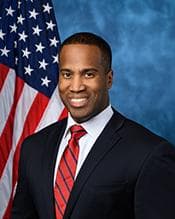
Full profile: /officials/J000307
Source: Congress.gov · FEC
Cosponsors (0)
Members who have signed on to support this bill since introduction. Source: Congress.gov.
No cosponsors on record. Bills can pass without cosponsors — this often means the sponsor introduced the bill alone, either because it's a messaging bill, a chairman's mark, or simply early in the legislative cycle.
Latest Action
The most recent step in the bill's legislative path. Committee Activity below shows referrals and reports; the full action-by-action history including floor proceedings lives at Congress.gov →
Referred to the Committee on Financial Services, and in addition to the Committee on Ways and Means, for a period to be subsequently determined by the Speaker, in each case for consideration of such provisions as fall within the jurisdiction of the committee concerned.
2026-10-06
Source: Congress.gov
Committee Activity
Currently in
- House Committee on Ways and MeansReferred To · 2026-10-06
- House Committee on Financial ServicesReferred To · 2026-10-06
Plain-English Summary
Plain-English summary pending. Introduced on 2026-10-06. Check back soon — summaries are generated as bills progress through Congress.
Full Bill Text
Verbatim text published on Congress.gov via GovInfo. Use Cmd+F / Ctrl+F to search within this excerpt.
[Congressional Bills 119th Congress] [From the U.S. Government Publishing Office] [H.R. 10759 Introduced in House (IH)] <DOC> 119th CONGRESS 2d Session H. R. 10759 To establish a tariff-funded program to protect United States manufacturers, workers, farmers, and supply chains from disproportionate economic harm resulting from tariffs and foreign retaliatory measures, to encourage domestic investment and reshoring, and for other purposes. _______________________________________________________________________ IN THE HOUSE OF REPRESENTATIVES October 6, 2026 Mr. James introduced the following bill; which was referred to the Committee on Financial Services, and in addition to the Committee on Ways and Means, for a period to be subsequently determined by the Speaker, in each case for consideration of such provisions as fall within the jurisdiction of the committee concerned _______________________________________________________________________ A BILL To establish a tariff-funded program to protect United States manufacturers, workers, farmers, and supply chains from disproportionate economic harm resulting from tariffs and foreign retaliatory measures, to encourage domestic investment and reshoring, and for other purposes. Be it enacted by the Senate and House of Representatives of the United States of America in Congress assembled, SECTION 1. SHORT TITLE AND TABLE OF CONTENTS. (a) Short Title.--This Act may be cited as the ``Tariff Relief for American Development and Employment Act of 2026'' or the ``TRADE Act of 2026''. (b) Table of Contents.--The table of contents for this Act is as follows: Sec. 1. Short title and table of contents. Sec. 2. Purposes. Sec. 3. Definitions. TITLE I--TARIFF IMPACT RELIEF PROGRAM Sec. 101. Establishment. Sec. 102. Eligibility requirements. Sec. 103. Types of assistance. Sec. 104. Priority provisions. Sec. 105. Limitation provisions. Sec. 106. Database and audits. Sec. 107. Sunset and evaluation. TITLE II--TRADE FUND Sec. 201. Establishment. Sec. 202. Amounts. Sec. 203. Protection of general revenues. TITLE III--ADMINISTRATIVE PROVISIONS Sec. 301. Report. Sec. 302. Rule of construction. Sec. 303. Sense of Congress. Sec. 304. Regulations. SEC. 2. PURPOSES. The purposes of this Act are-- (1) to preserve tariffs as an instrument of United States trade and national-security policy; (2) to recognize that the costs associated with tariffs and foreign retaliation may fall disproportionately on particular United States manufacturers, farmers, workers, industries, and regions; (3) to prevent otherwise competitive United States businesses from reducing production, delaying investment, relocating production outside the United States, or eliminating United States jobs solely because of extraordinary tariff- related costs; (4) to dedicate a portion of tariff revenue to strengthening United States productive capacity; (5) to provide targeted, temporary assistance to United States businesses that demonstrate actual tariff-related economic injury; (6) to reward businesses that maintain United States employment, expand domestic production, reshore supply chains, and invest in United States facilities; and (7) to ensure that tariff relief strengthens United States industry rather than subsidizing foreign production. SEC. 3. DEFINITIONS. In this Act-- (1) the term ``covered tariff action'' means an increase in a duty, tariff, or other import charge imposed by the United States after January 20, 2025, pursuant to any provision of Federal law, as designated by the Secretary of the Treasury; (2) the term ``Fund'' means the Tariff Relief for American Development and Employment Fund or TRADE Fund established by section 201; (3) the term ``net tariff injury'' includes-- (A) duties actually paid on inputs; (B) losses resulting from foreign retaliatory tariffs; and (C) lost export sales demonstrably attributable to retaliatory trade measures. (4) the term ``person'' means an individual or entity; (5) the term ``Program'' means the Tariff Impact Relief Program established pursuant to section 101; (6) except as otherwise provided, the term ``Secretary'' means the Secretary of Commerce; and (7) the term ``State'' means any State of the…
Show the remaining 2,199 wordsHide the remaining 2,199 words
United States, the District of Columbia, any territory of the United States, Puerto Rico, Guam, American Samoa, the Trust Territory of the Pacific Islands, the Virgin Islands, and the Northern Mariana Islands. TITLE I--TARIFF IMPACT RELIEF PROGRAM SEC. 101. ESTABLISHMENT. (a) In General.--The Secretary, in consultation with the Secretary of the Treasury and the United States Trade Representative, shall establish and administer a program, to be known as the ``Tariff Impact Relief Program'', to provide assistance described in section 103 to persons that meet the eligibility requirements of section 102. SEC. 102. ELIGIBILITY REQUIREMENTS. (a) In General.--To receive assistance under the Program, a person shall demonstrate to the Secretary that-- (1) the person-- (A) conducts substantial production, manufacturing, agricultural, processing, or related productive activity in the United States; (B) has incurred a documented net tariff injury and the injury is material relative to the applicant's revenue, payroll, operating margin, capital expenditures, or cost of production; and (C) is in compliance with applicable Federal tax and labor laws, as determined by the Secretary, in consultation with the Secretary of the Treasury and the United States Trade Representative; and (2) assistance under the program will contribute to the person maintaining or increasing production, employment, investment, or productive capacity in the United States. (b) ``Keep It in America'' Requirements.--To receive assistance under the program, a person shall agree to-- (1) maintain substantially all production receiving the assistance in the United States; (2) not use the assistance to finance the relocation of United States production to a foreign country; (3) maintain employment at domestic facilities, subject to reasonable exceptions for ordinary business fluctuations; (4) use the assistance for working capital, payroll, domestic capital investment, domestic sourcing, worker training, productivity improvements, or other eligible domestic purposes; (5) disclose material relocations of production outside the United States; and (6) repay the assistance, in whole or in part, if the person materially violates any of the requirements of paragraphs (1) through (5). SEC. 103. TYPES OF ASSISTANCE. (a) Refundable Tariff Impact Credit.-- (1) In general.--Assistance may be provided in the form of a refundable credit for net tariff injuries that are a result of covered tariff actions. (2) Limitation.--The amount of assistance provided under this subsection for a net tariff injury, in addition to other assistance provided for the same net tariff injury, may be provided up to the full amount of the person's documented net tariff injury, subject to section 105(b) and availability of funds. (b) Tariff Working-Capital Loans.-- (1) In general.--Assistance may be provided in the form of low-interest loans to persons experiencing short-term liquidity constraints attributable to-- (A) tariffs on manufacturing inputs; (B) retaliatory foreign tariffs; (C) supply-chain disruptions caused by covered tariff actions; or (D) extraordinary inventory, sourcing, or production-transition costs caused by covered tariff actions. (2) Other terms and conditions.--A loan authorized under this subsection shall-- (A) have a term of not more than 10 years; (B) carry an interest rate sufficient to provide for the Federal Government's cost of funds and expected program losses; (C) permit accelerated repayment without penalty; and (D) receive priority consideration for persons who are small- and medium-sized manufacturers. (c) American Investment Credit.--Assistance may be provided for investments that-- (1) establish or expand production in the United States; (2) reshore production or critical supply chains; (3) substitute United States-made inputs for tariff- affected foreign inputs; (4) expand domestic production of critical minerals, metals, components, machine tools, semiconductors, vehicles, defense products, pharmaceuticals, agricultural products, or other strategically important goods; (5) modernize United States manufacturing facilities; or (6) train or retain United States workers necessary for such production. (d) Rapid Relief for Critical Employers.-- (1) In general.--The Secretary may provide assistance in the form of emergency bridge financing if a tariff-related liquidity crisis creates an imminent risk of-- (A) closure of a United States manufacturing facility; (B) substantial layoffs; (C) interruption of a critical domestic supply chain; or (D) loss of productive capacity important to economic or national security. (2) Audit and recapture.--Assistance provided under this subsection shall be subject to auditing and recapture requirements. SEC. 104. PRIORITY PROVISIONS. (a) Tariff Exposure Formula.-- (1) In general.--The Secretary shall provide assistance under the Program to persons according to demonstrated economic exposure rather than geographic or political considerations. (2) Considerations.--In providing assistance under the Program, the Secretary shall, with respect to a person, consider-- (A) tariffs actually paid; (B) exposure to foreign retaliatory tariffs; (C) dependence upon integrated international supply chains; (D) tariff-related increases in production costs; (E) the number of United States jobs at risk; (F) the economic importance of the affected facility to the surrounding community; (G) the difficulty of obtaining economically viable domestic substitutes in the short term; (H) the applicant's plans to increase domestic sourcing or production; and (I) whether tariff costs threaten the competitiveness of United States-made products against finished foreign goods. (b) Regional Concentration.--In providing assistance under the Program, the Secretary may take into account whether tariff-related economic injury is disproportionately concentrated within a State, region, industrial corridor, or labor market. (c) No State Quotas.--Nothing in this section may be construed to establish an entitlement or predetermined allocation for any State. (d) Integrated North American Supply Chains.-- (1) In general.--In evaluating a net tariff injury of a person, the Secretary shall, for persons with manufacturing operating within highly integrated North American supply chains-- (A) evaluate cumulative tariff costs incurred during the production process; (B) avoid treating repeated border crossings of substantially the same intermediate good as separate economic benefits to the person; (C) prioritize investments that reduce unnecessary cross-border exposure while preserving economically efficient United States production; and (D) recognize domestic value added and United States employment when determining eligibility. (2) Rule of construction.--Nothing in this section may be construed to supersede the United States-Mexico-Canada Agreement or applicable rules of origin. (e) Small- and Medium-Sized Firms.-- (1) In general.--In providing assistance under the Program, the Secretary shall ensure that not less than 35 percent of assistance provided annually is provided to persons described in paragraph (2). (2) Persons described.--Persons described in this paragraph are-- (A) small enterprises, which shall mean a business that qualifies as a small business concern under section 3(a) of the Small Business Act (SBA) and the SBA size standard for its primary industry; and (B) medium-sized enterprises, which shall mean a business that exceeds that industry's SBA numerical size standard but does not exceed twice that standard. For each type of enterprise described in subparagraphs (A), (B), and (C), size shall be measured using the applicable employee or annual-receipts test, including affiliates. (3) Terms and conditions.--The Secretary shall, with respect to small- and medium-sized United States manufacturers, agricultural producers, processors, and suppliers that apply for assistance under the Program, establish-- (A) an expedited application process; (B) simplified documentation requirements; (C) technical assistance; (D) a 30-day target for decisions on complete applications involving acute working-capital needs; and (E) reasonable safeguards preventing large enterprises (which shall mean a business that exceeds twice that industry's SBA numerical size standard) from routing applications through subsidiaries solely to obtain small-business preferences. (f) American Worker Protection.--In providing assistance under the Program, priority shall be given to applicants that-- (1) retain United States workers; (2) avoid tariff-related layoffs; (3) increase wages or workforce training; (4) establish apprenticeships or other skills-based training programs; (5) expand production at existing United States facilities; or (6) create new United States manufacturing jobs. SEC. 105. LIMITATION PROVISIONS. (a) Anti-Abuse Provisions.-- (1) In general.--No assistance under the Program may be used for-- (A) stock buybacks; (B) dividends or other capital distributions; (C) increases in executive compensation; (D) acquisition of a competing business unless the Secretary determines the transaction materially expands United States productive capacity; (E) relocation of United States production overseas; (F) reimbursement of tariff costs already reimbursed through drawback, refund, insurance, another Federal program, or another party; or (G) subsidization of imports where a reasonably available and commercially competitive United States substitute exists, except during a reasonable transition period. (2) Recapture provisions.--In carrying out the Program, the Secretary shall establish recapture provisions for fraud, material misrepresentation, and violations of the domestic- production requirements of this title. (b) No Windfalls.-- (1) In general.--Assistance under the Program shall be limited to net economic injury of a person. (2) Calculation of net economic injury.--In calculating the net economic injury of a person under paragraph (1), the Secretary shall-- (A) account for tariff costs passed through to customers; (B) tariff refunds or drawbacks; (C) insurance proceeds; (D) assistance received from other Federal programs; and (E) other recoveries that compensate the person for the same injury. (3) Other terms and conditions.--No person may recover more than the full amount of the person's documented net tariff injury under the Program. SEC. 106. DATABASE AND AUDITS. (a) In General.--The Secretary shall maintain a publicly accessible database for the Program in order to identify-- (1) each recipient of assistance; (2) the amount and form of assistance; (3) the recipient's industry and State; (4) the general nature of the net tariff injury; (5) domestic employment commitments associated with the assistance; and (6) repayments or recaptures of the assistance. (b) Protection of Proprietary Business Information and Trade Secrets.--The database required by subsection (a) shall protect proprietary business information and trade secrets. (c) Audits.--The Inspector General of the Department of Commerce shall conduct periodic audits of the Program. SEC. 107. SUNSET AND EVALUATION. (a) Sunset.-- (1) In general.--The authority to approve assistance under the Program shall terminate on the date that is five years after the date of the enactment of this Act, unless reauthorized by Congress. (2) Exception.--The provisions of paragraph (1) shall not apply with respect to assistance under the Program provided before the date described in paragraph (1), including loans, repayment obligations, audits, and recapture authorities. (b) Evaluation.--Not later than four years after the date of the enactment of this Act, the Comptroller General of the United States shall submit to Congress an evaluation of the effectiveness of the Program, including-- (1) the effect of the Program on employment and investment in the United States; (2) the fiscal impact of the Program; (3) the extent to which assistance under the Program prevented offshoring or fraud or improper payments; and (4) whether the Program should be reauthorized, modified, or terminated. TITLE II--TRADE FUND SEC. 201. ESTABLISHMENT. There is established in the Treasury of the United States a fund to be known as the ``Tariff Relief for American Development and Employment Fund'' or ``TRADE Fund''. SEC. 202. AMOUNTS. (a) In General.--For each fiscal year, amounts from net additional customs duties attributable to covered tariff actions, after refunds, drawbacks, and administrative adjustments, shall be made available to the Fund in such amounts as are necessary to provide assistance for documented net tariff injury under title I, subject to the availability of such receipts and applicable appropriations law. (b) Availability.--Amounts made available to the Fund shall remain available until expended. SEC. 203. PROTECTION OF GENERAL REVENUES. (a) In General.--Assistance provided under the Program shall be financed from tariff revenues. (b) Rule of Construction.--Nothing in this Act may be construed to limit otherwise eligible relief to an arbitrary percentage of tariff collections when sufficient tariff revenues are available. TITLE III--ADMINISTRATIVE PROVISIONS SEC. 301. REPORT. (a) In General.--Not later than 180 days after the date of the enactment of this Act, and annually thereafter, the Secretary, in consultation with the United States International Trade Commission, shall submit to Congress a report on the implementation of the Program, including-- (1) identifying tariff revenues collected; (2) industries and regions bearing significant tariff costs; (3) effects of foreign retaliation; (4) jobs maintained or created through assistance; (5) domestic investment supported; (6) supply chains reshored or diversified; (7) changes in domestic productive capacity; and (8) recommendations for improving the competitiveness of United States industry. (b) Matters To Be Included.--The report required by this section shall include State-level data to the greatest extent practicable. (c) Reference.--The report required by this section may be referred to as the ``National Tariff Impact Report''. SEC. 302. RULE OF CONSTRUCTION. Nothing in this Act may be construed to-- (1) limit the authority of the President or Congress to-- (A) impose, modify, negotiate, or remove tariffs under otherwise applicable law; (B) require the removal or reduction of a tariff; or (C) create a private right to challenge a tariff; or (2) affect the authority of the United States Trade Representative in international trade negotiations. SEC. 303. SENSE OF CONGRESS. It is the sense of Congress that-- (1) tariffs should remain available to provide leverage against unfair foreign trade practices, but United States manufacturers and workers should not be required to finance a trade dispute alone; and (2) tariff policy should strengthen United States productive capacity, and revenues generated by tariffs should, where appropriate, help United States businesses and workers withstand short-term economic disruption while they invest, adapt, reshore, and compete. SEC. 304. REGULATIONS. Not later than 120 days after the date of the enactment of this Act, the Secretary and the Secretary of the Treasury shall issue such regulations as may be necessary to implement this Act, including regulations to ensure a coordinated application process for the Program to minimize administrative burdens and duplicative filings. <all>
Related legislation
Bills by the same sponsor or covering overlapping subjects.
- HR10560Skilled JOBS ActReferred to Committee · 2026-09-24
- HR9783CANADA FIRE ActReferred to Committee · 2026-07-20
- HRES1347Recognizing the roles and contributions of automotive workers in the United States, with particular recognition of their impact in Michigan, and expressing support for the designation of September 2026 as "American Automotive Worker Recognition Month".Referred to Committee · 2026-06-08
- HR9149National Diabetes Project ActReferred to Committee · 2026-06-04