HR10773Referred to Committee
To amend the Internal Revenue Code of 1986 to prevent governmental interference in the operation of private and religious schools.
Introduced
In Committee
3
Passed One Chamber4
Passed Both5
Signed into Law119th
Congress
2026-10-09
Introduced
0
Cosponsors
HR
ⓘType
Sponsor
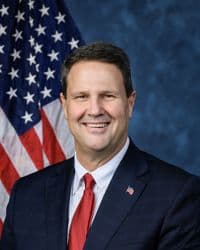
Jeff Crank
Republican · CO · Representative
Votes with party: 94.8% (671 recorded votes)
Full profile: /officials/C001137
Source: Congress.gov · FEC
Cosponsors (0)
Members who have signed on to support this bill since introduction. Source: Congress.gov.
No cosponsors on record. Bills can pass without cosponsors — this often means the sponsor introduced the bill alone, either because it's a messaging bill, a chairman's mark, or simply early in the legislative cycle.
Latest Action
The most recent step in the bill's legislative path. Committee Activity below shows referrals and reports; the full action-by-action history including floor proceedings lives at Congress.gov →
Committee Activity
Currently in
- House Committee on Ways and MeansReferred To · 2026-10-09
Plain-English Summary
Plain-English summary pending. Introduced on 2026-10-09. Check back soon — summaries are generated as bills progress through Congress.
Full Bill Text
Verbatim text published on Congress.gov via GovInfo. Use Cmd+F / Ctrl+F to search within this excerpt.
[Congressional Bills 119th Congress] [From the U.S. Government Publishing Office] [H.R. 10773 Introduced in House (IH)] <DOC> 119th CONGRESS 2d Session H. R. 10773 To amend the Internal Revenue Code of 1986 to prevent governmental interference in the operation of private and religious schools. _______________________________________________________________________ IN THE HOUSE OF REPRESENTATIVES October 9, 2026 Mr. Crank introduced the following bill; which was referred to the Committee on Ways and Means _______________________________________________________________________ A BILL To amend the Internal Revenue Code of 1986 to prevent governmental interference in the operation of private and religious schools. Be it enacted by the Senate and House of Representatives of the United States of America in Congress assembled, SECTION 1. SHORT TITLE. This Act may be cited as the ``Religious Education Liberty Assurance Act of 2026'' or ``RELA Act of 2026''. SEC. 2. ORGANIZATIONAL AND PARENTAL AUTONOMY. Section 25F of the Internal Revenue Code of 1986 is amended by redesignating subsection (h) as subsection (i) and by inserting after subsection (g) the following new subsection: ``(h) Prohibition of Control Over Scholarship Organizations.-- ``(1) In general.-- ``(A) Treatment.--A scholarship granting organization shall not, by virtue of participation under this section, be regarded as acting on behalf of any governmental entity. ``(B) No governmental control.--Nothing in this section shall be construed to permit, allow, encourage, or authorize any Federal, State, or local government entity, or officer or employee thereof, to mandate, direct, or control any aspect of any scholarship granting organization. ``(C) Maximum freedom.--To the extent permissible by law this section shall be construed to allow scholarship granting organizations maximum freedom to provide for the needs of the participants without governmental control. ``(2) Prohibition of control over non-public schools.-- ``(A) No governmental control.--Nothing in this section shall be construed to permit, allow, encourage, or authorize any Federal, State, or local government entity, or officer or employee thereof, to mandate, direct, or control any aspect of any private or religious elementary or secondary education institution. ``(B) No exclusion of private or religious schools.--No Federal, State, or local government entity, or officer or employee thereof, shall impose or permit the imposition of any conditions or requirements that would exclude or operate to exclude educational expenses at private or religious elementary and secondary education institutions from being considered qualified elementary or secondary education expenses for purposes of this section. ``(C) No exclusion of qualified expenses due to institution's religious character or affiliation.--No Federal, State, or local government entity, or officer or employee thereof, shall exclude, discriminate against, or otherwise disadvantage any elementary or secondary education institution with respect to qualified elementary or secondary education expenses at that institution based in whole or in part on the institution's religious character or affiliation, including religiously based or mission-based policies or practices. ``(3) Parental rights to use scholarships.--No Federal, State, or local government entity, or officer or employee thereof, shall disfavor or discourage the use of scholarships granted by participating scholarship granting organizations for qualified elementary or secondary education expenses at private or nonprofit elementary and secondary education institutions, including faith-based schools.''. <all>
Related legislation
Bills by the same sponsor or covering overlapping subjects.
- HR10657SPROUT Act of 2026Referred to Committee · 2026-10-01
- HRES1490Providing for the condemnation and denouncement of socialism in all its forms, and for other purposes.Passed House · 2026-09-01
- HR10084First Time Homebuyer Debt Reduction ActReferred to Committee · 2026-08-13
- HRES1443Amending the Rules of the House of Representatives to prohibit Members of the House from entering inappropriate relationships with House employees.Referred to Committee · 2026-07-21