To impose liability on State officers and employees who fail to prevent fraud, and for other purposes.
Sponsor
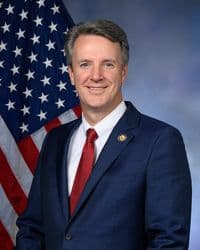
Full profile: /officials/C001118
Source: Congress.gov · FEC
Cosponsors (0)
Members who have signed on to support this bill since introduction. Source: Congress.gov.
No cosponsors on record. Bills can pass without cosponsors — this often means the sponsor introduced the bill alone, either because it's a messaging bill, a chairman's mark, or simply early in the legislative cycle.
Latest Action
The most recent step in the bill's legislative path. Committee Activity below shows referrals and reports; the full action-by-action history including floor proceedings lives at Congress.gov →
Referred to the Committee on the Judiciary, and in addition to the Committees on Agriculture, Ways and Means, Energy and Commerce, and Education and Workforce, for a period to be subsequently determined by the Speaker, in each case for consideration of such provisions as fall within the jurisdiction of the committee concerned.
2026-10-29
Source: Congress.gov
Committee Activity
Currently in
- House Committee on Education and WorkforceReferred To · 2026-10-29
- House Committee on Energy and CommerceReferred To · 2026-10-29
- House Committee on Ways and MeansReferred To · 2026-10-29
- House Committee on the JudiciaryReferred To · 2026-10-29
- House Committee on AgricultureReferred To · 2026-10-29
Plain-English Summary
Plain-English summary pending. Introduced on 2026-10-29. Check back soon — summaries are generated as bills progress through Congress.
Full Bill Text
Verbatim text published on Congress.gov via GovInfo. Use Cmd+F / Ctrl+F to search within this excerpt.
[Congressional Bills 119th Congress] [From the U.S. Government Publishing Office] [H.R. 10922 Introduced in House (IH)] <DOC> 119th CONGRESS 2d Session H. R. 10922 To impose liability on State officers and employees who fail to prevent fraud, and for other purposes. _______________________________________________________________________ IN THE HOUSE OF REPRESENTATIVES October 29, 2026 Mr. Cline introduced the following bill; which was referred to the Committee on the Judiciary, and in addition to the Committees on Agriculture, Ways and Means, Energy and Commerce, and Education and Workforce, for a period to be subsequently determined by the Speaker, in each case for consideration of such provisions as fall within the jurisdiction of the committee concerned _______________________________________________________________________ A BILL To impose liability on State officers and employees who fail to prevent fraud, and for other purposes. Be it enacted by the Senate and House of Representatives of the United States of America in Congress assembled, SECTION 1. SHORT TITLE. This Act may be cited as the ``Fraud Accountability and Mandatory Sentencing Act''. SEC. 2. PERSONAL LIABILITY FOR STATE OFFICERS AND EMPLOYEES. (a) Prohibition.--It shall be unlawful for any officer or employee of a State who has knowledge of fraud in the administration of or use of a covered benefit within that State, and the power to prevent or aid in preventing the continuing commission of the same, to fail or refuse so to do. (b) Enforcement.--The Attorney General may bring a civil action against an officer or employee who violates subsection (a) in a United States district court for appropriate relief, including-- (1) in the case of aggregate loss to a governmental entity of $500,000 or less, damages in an amount not exceeding the amount of aggregate loss resulting from such violation; and (2) in the case of aggregate loss to a governmental entity exceeding $500,000, damages in an amount not exceeding 3 times the amount of aggregate loss resulting from such violation. (c) Immunity.--No immunity that would otherwise be available as a result of a defendant acting within the scope of their office or employment at the time of the violation out of which the claim arose shall apply in any action under this section. (d) Definitions.--In this section: (1) Covered benefit.--The term ``covered benefit'' means any benefit under-- (A) the supplemental nutrition assistance program established under the Food and Nutrition Act of 2008 (7 U.S.C. 2011 et seq.); (B) the old-age, survivors, and disability insurance program under title II of the Social Security Act (42 U.S.C. 401 et seq.); (C) the State unemployment compensation programs receiving funding under title III of the Social Security Act (42 U.S.C. 501 et seq.); (D) the income assistance program under title XVI of the Social Security Act (42 U.S.C. 1381 et seq.); (E) the health insurance program under title XVIII of the Social Security Act (42 U.S.C. 1395 et seq.); (F) a State plan under title XIX of the Social Security Act (42 U.S.C. 1396 et seq.) (or waiver of such plan); (G) the program under the Child Care and Development Block Grant Act of 1990 (42 U.S.C. 9857 et seq.); or (H) any other program pursuant to which funds are made available to States. (2) Loss.-- (A) In general.--The term ``loss'' means the greater of actual loss, intended loss, or the gain that resulted from the fraudulent conduct. (B) Actual loss.--The term ``actual loss'' means the reasonably foreseeable pecuniary harm that resulted from the fraudulent conduct. (C) Intended loss.--The term ``intended loss'' means the pecuniary harm that the fraudulent actor purposely sought to inflict, including intended pecuniary harm that would have been impossible or unlikely to occur.…
Show the remaining 748 wordsHide the remaining 748 words
(D) Pecuniary harm.--The term ``pecuniary harm'' means harm that is monetary or that otherwise is readily measurable in money. (E) Reasonably foreseeable pecuniary harm.--The term ``reasonably foreseeable pecuniary harm'' means pecuniary harm that the fraudulent actor knew or, under the circumstances, reasonably should have known, was a potential result of the offense. SEC. 3. MANDATORY MINIMUM SENTENCES. (a) In General.--Subchapter A of chapter 227 of title 18, United States Code, is amended by inserting after section 3559 the following: ``Sec. 3559A. Mandatory minimum sentences for certain fraud offenses ``(a) Mandatory Minimum.--Notwithstanding any other provision of law, a defendant who has been found guilty of a covered fraud offense that involves a covered benefit shall be sentenced as follows with respect to criminal conduct that occurred after the date of enactment of this section: ``(1) For any violation involving loss of less than $40,000, not less than 1 year in prison, and not more than life. ``(2) For any violation involving loss of $40,000 or more but less than $250,000, not less than 2 years in prison, and not more than life. ``(3) For any violation involving loss of $250,000 or more but less than $5 million, not less than 5 years in prison, and not more than life. ``(4) For violations involving loss of $5,000,000 or more but less than $50 million, not less than 10 years in prison, and not more than life. ``(5) For violations involving loss of $50,000,000 or more but less than $100 million, not less than 15 years in prison, and not more than life. ``(6) For violations involving loss of $100,000,000 or more, not less than 20 years in prison, and not more than life. ``(b) Successive Violation.--A defendant who commits a covered fraud offense after the date on which a prior conviction for a covered fraud offence becomes final shall be sentenced to a term of imprisonment of not less than twice the applicable term under subsection (a). ``(c) No Prohibition.--Notwithstanding any other provision of law, a court may not place on probation or suspend the sentence of any person sentenced under this section. ``(d) Definitions.--In this section: ``(1) Covered benefit.--The term `covered benefit' means any benefit under-- ``(A) the supplemental nutrition assistance program established under the Food and Nutrition Act of 2008 (7 U.S.C. 2011 et seq.); ``(B) the old-age, survivors, and disability insurance program under title II of the Social Security Act (42 U.S.C. 401 et seq.); ``(C) the State unemployment compensation programs receiving funding under title III of the Social Security Act (42 U.S.C. 501 et seq.); ``(D) the income assistance program under title XVI of the Social Security Act (42 U.S.C. 1381 et seq.); ``(E) the health insurance program under title XVIII of the Social Security Act (42 U.S.C. 1395 et seq.); ``(F) a State plan under title XIX of the Social Security Act (42 U.S.C. 1396 et seq.) (or waiver of such plan); ``(G) the program under the Child Care and Development Block Grant Act of 1990 (42 U.S.C. 9857 et seq.); or ``(H) any other program pursuant to which funds are made available to States. ``(2) Covered fraud offense.--The term `covered fraud offense' means an offense under-- ``(A) section 201, 287, 371, 513, 641, 666(a)(1)(A), 1001, 1028, 1029, 1030, 1031, 1040, 1341, 1343, 1344, 1347, 1348, or 1349 of this title; ``(B) section 208 or 1632 of the Social Security Act (42 U.S.C. 408 or 1383a); ``(C) section 15 of the Food and Nutrition Act of 2008 (7 U.S.C. 2024); or ``(D) section 6102 of title 38. ``(3) Loss.-- ``(A) In general.--The term `loss' means the greater of actual loss, intended loss, or the gain that resulted from the fraudulent conduct. ``(B) Actual loss.--The term `actual loss' means the reasonably foreseeable pecuniary harm that resulted from the fraudulent conduct. ``(C) Intended loss.--The term `intended loss' means the pecuniary harm that the fraudulent actor purposely sought to inflict, including intended pecuniary harm that would have been impossible or unlikely to occur. ``(D) Pecuniary harm.--The term `pecuniary harm' means harm that is monetary or that otherwise is readily measurable in money. ``(E) Reasonably foreseeable pecuniary harm.--The term `reasonably foreseeable pecuniary harm' means pecuniary harm that the fraudulent actor knew or, under the circumstances, reasonably should have known, was a potential result of the offense.''. (b) Clerical Amendment.--The table of sections for chapter 227 of title 18, United States Code, is amended by inserting after section 3559 the following: ``3559A. Mandatory minimum sentences for certain fraud offenses.''. <all>
Related legislation
Bills by the same sponsor or covering overlapping subjects.
- HR10843VACRAReferred to Committee · 2026-10-19
- HR7730Bankruptcy Threshold Adjustment ActPassed House · 2026-10-14
- HR10016Veterans Entrepreneurship Act of 2026Referred to Committee · 2026-08-03
- HR9701Daughters of the American Revolution Membership Integrity Act.Referred to Committee · 2026-07-15