HR8473Referred to Committee
Veterinary Services to Improve Public Health in Rural Communities Act
Introduced
In Committee
3
Passed One Chamber4
Passed Both5
Signed into Law119th
Congress
2026-04-23
Introduced
0
Cosponsors
HR
ⓘType
Sponsor
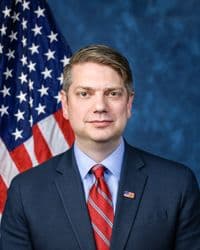
Nicholas J. Begich III
Republican · AK · Representative
Votes with party: 96.2% (573 recorded votes)
Full profile: /officials/B001323
Source: Congress.gov · FEC
Cosponsors (0)
Members who have signed on to support this bill since introduction. Source: Congress.gov.
No cosponsors on record. Bills can pass without cosponsors — this often means the sponsor introduced the bill alone, either because it's a messaging bill, a chairman's mark, or simply early in the legislative cycle.
Latest Action
The most recent step in the bill's legislative path. Committee Activity below shows referrals and reports; the full action-by-action history including floor proceedings lives at Congress.gov →
Committee Activity
Currently in
- House Committee on AgricultureReferred To · 2026-04-23
- House Committee on Natural ResourcesReferred To · 2026-04-23
- House Committee on Energy and CommerceReferred To · 2026-04-23
Previously
- Energy and Commerce CommitteeReferred To · 2026-04-23
- Natural Resources CommitteeReferred To · 2026-04-23
- Agriculture CommitteeReferred To · 2026-04-23
Plain-English Summary
Veterinary Services to Improve Public Health in Rural Communities Act This bill expands support for public health veterinary services (e.g., disease surveillance or vaccination) in tribal communities to address zoonotic infectious diseases (i.e., diseases that spread between humans and animals). Specifically, the bill authorizes the Department of Health and Human Services (HHS), acting through the Indian Health Service (IHS), to expend funds for public health veterinary services to prevent and control zoonotic disease infection and transmission in IHS areas where the risk for disease occurrence in humans and wildlife is endemic. HHS may assign or deploy veterinary public health officers from the U.S. Public Health Service (USPHS) Commissioned Corps to IHS areas. Additionally, HHS must submit a biennial report to Congress on the use of funds, the assignment and deployment of veterinary public health officers from the USPHS Commissioned Corps, data related to the monitoring and disease surveillance of zoonotic diseases, and related services. The bill also includes the IHS as a coordinating agency in the National One Health Framework. (This framework addresses zoonotic diseases and advances public health preparedness in the United States.) The bill requires the Department of Agriculture to conduct a feasibility study on the delivery of oral rabies vaccines to wildlife reservoir species that are connected to the transmission of rabies to tribal members living in Arctic regions of the United States. The study must (1) evaluate the efficacy of the oral rabies vaccines, and (2) make recommendations to improve the delivery of these vaccines.
Plain-English rewrite of the Congressional Research Service summary published on Congress.gov. Cached and reviewed.
Subjects
Native Americans
Full Bill Text
Verbatim text published on Congress.gov via GovInfo. Use Cmd+F / Ctrl+F to search within this excerpt.
[Congressional Bills 119th Congress] [From the U.S. Government Publishing Office] [H.R. 8473 Introduced in House (IH)] <DOC> 119th CONGRESS 2d Session H. R. 8473 To provide public health veterinary services to Indian Tribes and Tribal organizations for rabies prevention, and for other purposes. _______________________________________________________________________ IN THE HOUSE OF REPRESENTATIVES April 23, 2026 Mr. Begich introduced the following bill; which was referred to the Committee on Natural Resources, and in addition to the Committees on Energy and Commerce, and Agriculture, for a period to be subsequently determined by the Speaker, in each case for consideration of such provisions as fall within the jurisdiction of the committee concerned _______________________________________________________________________ A BILL To provide public health veterinary services to Indian Tribes and Tribal organizations for rabies prevention, and for other purposes. Be it enacted by the Senate and House of Representatives of the United States of America in Congress assembled, SECTION 1. SHORT TITLE. This Act may be cited as the ``Veterinary Services to Improve Public Health in Rural Communities Act''. SEC. 2. SENSE OF CONGRESS. It is the sense of Congress that the Indian Health Service of the Department of Health and Human Services is uniquely suited to empower Indian Tribes and Tribal organizations to address zoonotic disease threats in the communities they serve by providing public health veterinary services through a One Health approach that recognizes the interconnection between people, animals, plants, and their shared environment. SEC. 3. PUBLIC HEALTH VETERINARY SERVICES. Title II of the Indian Health Care Improvement Act is amended by inserting after section 223 (25 U.S.C. 1621v) the following: ``SEC. 224. PUBLIC HEALTH VETERINARY SERVICES. ``(a) Definitions.--In this section: ``(1) Public health veterinary services.--The term `public health veterinary services' includes any of the following: ``(A) Spaying and neutering services for domestic animals. ``(B) Diagnoses. ``(C) Surveillance. ``(D) Epidemiology. ``(E) Control. ``(F) Prevention. ``(G) Elimination. ``(H) Vaccination. ``(I) Any other related service or activity that reduces the risk of zoonotic disease transmission or antimicrobial resistance in humans, food, or animals. ``(2) Zoonotic disease.--The term `zoonotic disease' means a disease or infection that may be transmitted naturally from vertebrate animals to humans, or from humans to vertebrate animals. ``(b) Authorization for Veterinary Services.--The Secretary, acting through the Service, may expend funds, directly or pursuant to the Indian Self-Determination and Education Assistance Act (25 U.S.C. 5301 et seq.), for public health veterinary services to prevent and control zoonotic disease infection and transmission in Service areas where the risk for disease occurrence in humans and wildlife is endemic. ``(c) Public Health Officers; Coordination.--In providing public health veterinary services under subsection (b), the Secretary may-- ``(1) assign or deploy veterinary public health officers from the Commissioned Corps of the Public Health Service to Service areas; and ``(2) coordinate and implement activities with-- ``(A) the Director of the Centers for Disease Control and Prevention; and ``(B) the Secretary of Agriculture. ``(d) Report.--The Secretary shall submit to the Committee on Indian Affairs of the Senate, the Committee on Health, Education, Labor, and Pensions of the Senate, the Committee on Natural Resources of the House of Representatives, and the Committee on Energy and Commerce of the House of Representatives a biennial report on the use of funds, the assignment and deployment of veterinary public health officers from the Commissioned Corps of the Public Health Service, data related to the monitoring and disease surveillance of zoonotic diseases, and related services provided under this section.''. SEC. 4. APHIS WILDLIFE SERVICES STUDY ON ORAL RABIES VACCINES IN ARCTIC REGIONS OF THE UNITED STATES. Not later than 1 year after the date of enactment of this Act, the Secretary…
Show the remaining 118 wordsHide the remaining 118 words
of Agriculture shall conduct a feasibility study-- (1) on the delivery of oral rabies vaccines to wildlife reservoir species that are directly or indirectly connected to the transmission of rabies to Tribal members living in Arctic regions of the United States; and (2) that-- (A) evaluates the efficacy of the vaccines described in paragraph (1); and (B) makes recommendations to improve the delivery of those vaccines. SEC. 5. ONE HEALTH FRAMEWORK. Section 2235(b) of the Prepare for and Respond to Existing Viruses, Emerging New Threats, and Pandemics Act (42 U.S.C. 300hh-37(b)) is amended by striking ``and the Secretary of the Interior'' and inserting ``, the Secretary of the Interior, and the Director of the Indian Health Service''. <all>
Related legislation
Bills by the same sponsor or covering overlapping subjects.
- HR9138To require the Secretary of the Interior to transfer to the Secretary of the Navy administrative jurisdiction of certain land located on Adak Island, Alaska, and for other purposes.Referred to Committee · 2026-06-04
- HR41Unrecognized Southeast Alaska Native Communities Recognition and Compensation ActPassed House · 2026-06-03
- HR8401To amend the Marine Mammal Protection Act of 1972 to allow the transport, purchase, and sale of pelts of, and handicrafts, garments, and art produced from, Southcentral and Southeast Alaska northern sea otters that are taken for subsistence purposes.Referred to Committee · 2026-06-03
- HR5694ARTIST ActReferred to Committee · 2026-06-02