Kayleigh’s Law Act of 2026
Sponsor
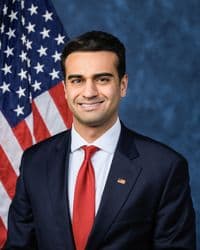
Full profile: /officials/H001098
Source: Congress.gov · FEC
Cosponsors (21)
Members who have signed on to support this bill since introduction. Source: Congress.gov.
- Andy Biggs (R-AZ-5)Original· 2026-04-23
- Barry Moore (R-AL-1)Original· 2026-04-23
- Brian Babin (R-TX-36)Original· 2026-04-23
- Daniel Meuser (R-PA-9)Original· 2026-04-23
- David J. Taylor (R-OH-2)Original· 2026-04-23
- David P. Joyce (R-OH-14)Original· 2026-04-23
- David Schweikert (R-AZ-1)Original· 2026-04-23
- Elijah Crane (R-AZ-2)Original· 2026-04-23
- Gary J. Palmer (R-AL-6)Original· 2026-04-23
- Juan Ciscomani (R-AZ-6)Original· 2026-04-23
- Kimberlyn King-Hinds (R-MP)Original· 2026-04-23
- Marlin A. Stutzman (R-IN-3)Original· 2026-04-23
- Nancy Mace (R-SC-1)Original· 2026-04-23
- Paul A. Gosar (R-AZ-9)Original· 2026-04-23
- Tim Burchett (R-TN-2)Original· 2026-04-23
- Troy Downing (R-MT-2)Original· 2026-04-23
- W. Gregory Steube (R-FL-17)Original· 2026-04-23
- Christopher H. Smith (R-NJ-4)· 2026-04-27
- Mike Ezell (R-MS-4)· 2026-04-27
- Brandon Gill (R-TX-26)· 2026-04-28
- Ken Calvert (R-CA-41)· 2026-06-03
Latest Action
The most recent step in the bill's legislative path. Committee Activity below shows referrals and reports; the full action-by-action history including floor proceedings lives at Congress.gov →
Committee Activity
Currently in
- House Committee on the JudiciaryReported By · 2026-07-06
Previously
- House Committee on the JudiciaryMarkup By · 2026-06-03
- Judiciary CommitteeReferred To · 2026-04-23
- House Committee on the JudiciaryReferred To · 2026-04-23
Plain-English Summary
Kayleigh’s Law Act of 2026 This bill establishes a federal statutory framework to require federal courts to issue an order prohibiting contact with a victim (i.e., a no-contact order) in the case of a defendant who is convicted of certain violent crimes or sex crimes. Specifically, in the case of a defendant convicted of a felony offense that is a crime of violence or that involves a sexual act or sexual conduct, on a motion by the victim or federal government, the court must issue a no-contact order. Under the framework, the no-contact order must be imposed at sentencing and be in effect for the lifetime of the defendant unless it is terminated or suspended in accordance with specified procedures. Additionally, no fee may be assessed or collected from a victim in connection with the issuance of a no-contact order.
Plain-English rewrite of the Congressional Research Service summary published on Congress.gov. Cached and reviewed.
Subjects
Full Bill Text
Verbatim text published on Congress.gov via GovInfo. Use Cmd+F / Ctrl+F to search within this excerpt.
[Congressional Bills 119th Congress] [From the U.S. Government Publishing Office] [H.R. 8481 Introduced in House (IH)] <DOC> 119th CONGRESS 2d Session H. R. 8481 To amend title 18, United States Code, to provide for the issuance of natural lifetime injunctions for certain victims. _______________________________________________________________________ IN THE HOUSE OF REPRESENTATIVES April 23, 2026 Mr. Hamadeh of Arizona (for himself, Mr. Biggs of Arizona, Mr. Burchett, Mr. Schweikert, Mr. Joyce of Ohio, Mr. Downing, Mr. Babin, Mr. Taylor, Ms. King-Hinds, Mr. Palmer, Ms. Mace, Mr. Stutzman, Mr. Crane, Mr. Gosar, Mr. Moore of Alabama, Mr. Ciscomani, Mr. Meuser, and Mr. Steube) introduced the following bill; which was referred to the Committee on the Judiciary _______________________________________________________________________ A BILL To amend title 18, United States Code, to provide for the issuance of natural lifetime injunctions for certain victims. Be it enacted by the Senate and House of Representatives of the United States of America in Congress assembled, SECTION 1. SHORT TITLE. This Act may be cited as the ``Kayleigh's Law Act of 2026''. SEC. 2. NATURAL LIFETIME INJUNCTIONS. (a) In General.--Chapter 238 of title 18, United States Code, is amended by adding at the end the following: ``Sec. 3773. Natural lifetime injunctions ``(a) In General.--In the case of any defendant convicted of a covered offense, the court shall, on motion of the Government or a victim, include in any sentence imposed on that defendant an order prohibiting contact with a victim. Such order shall remain in effect for the life of the defendant, subject to subsection (c). The imposition of such order shall be included in any sentencing proceeding. A violation of such order shall be punishable as a contempt of court. ``(b) Termination of Injunction.-- ``(1) In general.--An order issued under subsection (a) may be terminated or suspended only-- ``(A) on motion of the victim to whom such order pertains alleging that the conviction was the subject of a pardon or commutation; or ``(B) on motion of the defendant, alleging that the conviction was dismissed or overturned on appeal. ``(2) Hearing.--The court shall order a hearing on such motion, and may take evidence regarding the allegations included therein. ``(c) No Fee.--No fee may be assessed or collected from a victim in connection with the issuance of an order under subsection (a). ``(d) Definitions.--For purposes of this section: ``(1) The term `covered offense'-- ``(A) means-- ``(i) a crime of violence that is a felony; or ``(ii) a felony offense that includes as an element a sexual act or sexual conduct (as defined in section 2246); and ``(B) includes an offense under-- ``(i) section 1591; ``(ii) section 2241; ``(iii) section 2242; ``(iv) section 2243; ``(v) section 2244; ``(vi) section 2245; ``(vii) section 2251; ``(viii) section 2251A; ``(ix) section 2252; ``(x) section 2252A; ``(xi) section 2254; ``(xii) section 2255; ``(xiii) section 2260; ``(xiv) section 2421; ``(xv) section 2422; ``(xvi) section 2423; ``(xvii) section 2425; ``(xviii) section 2426; or ``(xix) section 2427. ``(2) The term `contact' means any direct of indirect communication, transmission, of physical interaction between two or more persons including communication or interaction by written, oral, electronic, digital, or physical means, whether initiated personally, through an intermediary, or by automated or technological systems. ``(e) Rule of Construction.--Nothing in this section may be construed to limit the application of an order under this section within the jurisdiction of any State.''. (b) Clerical Amendment.--The table of sections for such chapter is amended by adding at the end the following: ``3773. Natural lifetime injunctions.''. <all>
Related legislation
Bills by the same sponsor or covering overlapping subjects.
- HR10155To amend title 10, United States Code, to include certain prior active duty as a regular member of an Armed Force for reduced eligibility age for retirement as a member of the reserve components.Referred to Committee · 2026-08-27
- HR10091Mueller-Keating Memorial Highway ActReferred to Committee · 2026-08-13
- HRES1478Expressing the sense of the House of Representatives regarding United States policy recognizing the Simele Massacre of 1933.Referred to Committee · 2026-08-06
- HR3393To designate the facility of the United States Postal Service located at 12208 North 19th Avenue in Phoenix, Arizona, as the Officer Zane T. Coolidge Post Office.Passed House · 2026-08-06