HR8895Referred to Committee
No Rigged Grocery Prices Act
Introduced
In Committee
3
Passed One Chamber4
Passed Both5
Signed into Law119th
Congress
2026-05-19
Introduced
1
Cosponsors
HR
ⓘType
Sponsor
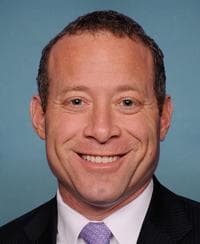
Josh Gottheimer
Democrat · NJ · Representative
Votes with party: 90.9% (474 recorded votes)
Full profile: /officials/G000583
Source: Congress.gov · FEC
Cosponsors (1)
Members who have signed on to support this bill since introduction. Source: Congress.gov.
Latest Action
The most recent step in the bill's legislative path. Committee Activity below shows referrals and reports; the full action-by-action history including floor proceedings lives at Congress.gov →
Committee Activity
Currently in
- House Committee on Energy and CommerceReferred To · 2026-05-19
Plain-English Summary
Food stores and delivery services like DoorDash would be banned from using personal information about customers to charge different prices to different people for the same products. The law would prevent companies from tracking your shopping habits, location, or purchase history to decide what price you see at checkout. This affects grocery shoppers and anyone who uses food delivery apps, as well as the retailers and delivery companies that currently use this pricing strategy.
AI-assisted summary generated from the official bill metadata (title, subjects, actions) sourced from Congress.gov. Cached and reviewed. Always verify against the official text linked below.
Full Bill Text
Verbatim text published on Congress.gov via GovInfo. Use Cmd+F / Ctrl+F to search within this excerpt.
[Congressional Bills 119th Congress] [From the U.S. Government Publishing Office] [H.R. 8895 Introduced in House (IH)] <DOC> 119th CONGRESS 2d Session H. R. 8895 To prohibit food retailers and third party delivery service providers from using technology that uses the personal data of a consumer to engage in dynamic pricing, and for other purposes. _______________________________________________________________________ IN THE HOUSE OF REPRESENTATIVES May 19, 2026 Mr. Gottheimer (for himself and Mr. Lawler) introduced the following bill; which was referred to the Committee on Energy and Commerce _______________________________________________________________________ A BILL To prohibit food retailers and third party delivery service providers from using technology that uses the personal data of a consumer to engage in dynamic pricing, and for other purposes. Be it enacted by the Senate and House of Representatives of the United States of America in Congress assembled, SECTION 1. SHORT TITLE. This Act may be cited as the ``No Rigged Grocery Prices Act''. SEC. 2. PROHIBITION AND REQUIREMENTS FOR FOOD RETAILERS AND THIRD PARTY DELIVERY SERVICE PROVIDERS RELATED TO DYNAMIC PRICING. (a) Prohibition.-- (1) In general.--Except as provided in paragraph (2), a covered entity may not use any technology that uses the personal data of a consumer to engage in dynamic pricing. (2) Exceptions.--Paragraph (1) does not apply with respect to any of the following: (A) An offer made to a consumer by a covered entity-- (i) that is-- (I) a promotional pricing offer, a loyalty program benefit, a reward program benefit, or any other similar membership benefit with respect to which any consumer may voluntarily enroll or consent to participate in; or (II) a temporary discount or price change related to retention of existing customers; or (ii) with respect to which the consumer consented to provide personal data or other information to the covered entity in exchange for such offer. (B) The price of food set by a covered entity based on objective costs (such as costs related to shipping or taxes) related to different consumers. (b) Requirements.-- (1) In general.--With respect to a covered entity that offers to a consumer the option to order a grocery item online, the covered entity shall disclose to the consumer-- (A) if the availability of the grocery item has changed; or (B) if the grocery item is weighed to determine the price of the such item. (2) Requirements for third party delivery service providers.--With respect to a third party delivery service provider that offers to a consumer the option to order a grocery item online, the third party delivery service provider shall obtain explicit approval from the consumer to substitute such grocery item before the third party delivery service provider or an agent thereof substitutes such item on behalf of the consumer. (c) Enforcement.-- (1) Unfair or deceptive acts or practices.--A violation of this section shall be treated as a violation of a regulation under section 18(a)(1)(B) of the Federal Trade Commission Act (15 U.S.C. 57a(a)(1)(B)) regarding unfair or deceptive acts or practices. (2) Powers of commission.--The Federal Trade Commission shall enforce this section in the same manner, by the same means, and with the same jurisdiction, powers, and duties as though all applicable terms and provisions of the Federal Trade Commission Act (15 U.S.C. 41 et seq.) were incorporated into and made a part of this Act. Any person who violates this section shall be subject to the penalties and entitled to the privileges and immunities provided in the Federal Trade Commission Act. (d) Definitions.--In this section: (1) Covered entity.--The term ``covered entity'' means any of the following: (A) A food retailer. (B) A third party delivery service provider. (2) Dynamic pricing.--The…
Show the remaining 158 wordsHide the remaining 158 words
term ``dynamic pricing'' means the practice of increasing the price of food offered for sale to a consumer based on the personal data or other information of such consumer. (3) Food retailer.--The term ``food retailer'' means a business that-- (A) is at least 15,000 square feet; and (B) sells food to consumers. (4) Third party delivery service provider.--The term ``third party delivery service provider'' means an entity that facilitates the delivery of food to a consumer. (5) Personal data.--The term ``personal data'' means any information that is linked or can be reasonably linked to an identified or identifiable consumer. SEC. 3. REPORT ON THE EMPLOYMENT EFFECTS OF ELECTRONIC SHELF LABELS. Not later than 1 year after the date of the enactment of this Act, the Secretary of Labor shall submit to Congress a report on any effect of grocery stores adopting the use of electronic shelf labels on the number of individuals employed by such grocery stores. <all>
Related legislation
Bills by the same sponsor or covering overlapping subjects.
- HR9059To direct the Assistant Attorney General to award grants to the National Police Athletic/Activities League to improve academic and social outcomes for youth and reduce both juvenile crime and the risk that youth will become victims of crime by providing productive activities conducted by law enforcement personnel during non-school hours.Referred to Committee · 2026-05-29
- HR8927To amend title 18, United States Code, to prohibit the doxxing of law enforcement officers, prosecutors, and judges, and for other purposes.Referred to Committee · 2026-05-20
- HCONRES75Directing the President, pursuant to section 5(c) of the War Powers Resolution, to remove the United States Armed Forces from hostilities against the Islamic Republic of Iran.Passed House · 2026-05-14
- HR8728Feed Our Kids Act of 2026Referred to Committee · 2026-05-11