BIO-SCALE Act
Sponsor
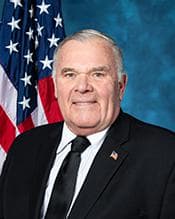
Full profile: /officials/B001307
Source: Congress.gov · FEC
Cosponsors (1)
Members who have signed on to support this bill since introduction. Source: Congress.gov.
Latest Action
The most recent step in the bill's legislative path. Committee Activity below shows referrals and reports; the full action-by-action history including floor proceedings lives at Congress.gov →
Referred to the Committee on Transportation and Infrastructure, and in addition to the Committee on Financial Services, for a period to be subsequently determined by the Speaker, in each case for consideration of such provisions as fall within the jurisdiction of the committee concerned.
2026-05-20
Source: Congress.gov
Committee Activity
Currently in
- House Committee on Financial ServicesReferred To · 2026-05-20
- House Committee on Transportation and InfrastructureReferred To · 2026-05-20
Plain-English Summary
The government would create special facilities to help bioindustry companies develop and test new technologies, moving innovations from the lab stage to real-world production. These facilities would support businesses working with biological materials and processes to create products like biofuels, chemicals, and medicines, helping them grow and compete more effectively. The proposal is currently being reviewed by congressional committees that handle transportation, infrastructure, and financial matters.
AI-assisted summary generated from the official bill metadata (title, subjects, actions) sourced from Congress.gov. Cached and reviewed. Always verify against the official text linked below.
Subjects
Full Bill Text
Verbatim text published on Congress.gov via GovInfo. Use Cmd+F / Ctrl+F to search within this excerpt.
[Congressional Bills 119th Congress] [From the U.S. Government Publishing Office] [H.R. 8918 Introduced in House (IH)] <DOC> 119th CONGRESS 2d Session H. R. 8918 To provide for the establishment of technology maturation facilities for the bioindustrial sector, and for other purposes. _______________________________________________________________________ IN THE HOUSE OF REPRESENTATIVES May 20, 2026 Mr. Baird (for himself and Ms. Houlahan) introduced the following bill; which was referred to the Committee on Transportation and Infrastructure, and in addition to the Committee on Financial Services, for a period to be subsequently determined by the Speaker, in each case for consideration of such provisions as fall within the jurisdiction of the committee concerned _______________________________________________________________________ A BILL To provide for the establishment of technology maturation facilities for the bioindustrial sector, and for other purposes. Be it enacted by the Senate and House of Representatives of the United States of America in Congress assembled, SECTION 1. SHORT TITLE. This Act may be cited as the ``Bioindustrial Infrastructure for Open Scale-up, Commercialization, and Accelerated Launch Ecosystems Act'' or the ``BIO-SCALE Act''. SEC. 2. TECHNOLOGY MATURATION FACILITY PROGRAM. (a) Definitions.--In this section: (1) Bioindustrial sector.--The term ``bioindustrial sector'' means industries involved in producing bio-based chemicals, fuels, materials, and other products through biological and biochemical processes. (2) Eligible entity.--The term ``eligible entity'' means public and private foundations and nonprofit organizations, including institutions of higher education, that-- (A) are incorporated in the United States; and (B) operate primarily in the United States. (3) Facility.--The term ``facility'' means a facility established under subsection (c). (4) Feedstock.--The term ``feedstock'' means raw material used as input for industrial processes to produce biofuels, chemicals, or materials, such as agricultural byproducts, microbial or algal biomass, synthetic biological products or components, and waste oils. (5) Open access.--The term ``open access'' means the use of infrastructure, data, or research resources that are-- (A) available without licensing or intellectual property barriers; and (B) accessible to public and private entities on an equitable basis. (6) Product-agnostic.--The term ``product-agnostic'', with respect to a facility, technology, or process means that the facility, technology, or process can accommodate a variety of end products without being limited to a specific output. (7) Secretary.--The term ``Secretary'' means the Secretary of Commerce, acting through the Assistant Secretary for Economic Development. (8) Technology maturation.--The term ``technology maturation'' means the development, testing, and scaling of technologies to a level of readiness suitable for commercialization or integration into industrial processes, including activities such as prototyping, pilot-scale testing and demonstration, and early-stage manufacturing and market entry. (b) Purpose.--The purpose of this section is to establish technology maturation facilities to provide world-class capabilities, positioning the United States as a leader in bioindustrial innovation and enabling participation in groundbreaking projects through state-of- the-art infrastructure. (c) Establishment.-- (1) In general.--The Secretary shall establish not less than 3 regional, nonprofit, open access, product-agnostic technology maturation facilities for the bioindustrial sector to ensure the integration of advanced and emerging capabilities such as solid-state, gas, and continuous fermentation methods, biomass processing equipment, and scalable commercial-grade fermentation tanks of capacity ranging from 1,500 to over 75,000 liters. (2) Operation.--In carrying out this section, the Secretary shall-- (A) use a competitive process to carry out paragraph (1) through the award of-- (i) planning grants or cooperative agreements to eligible entities for the design, construction, and operation of the facilities; and (ii) implementation grants or cooperative agreements to eligible entities that were awarded and completed a planning grant or cooperative agreement under clause (i); and (B) facilitate commercialization activities and technology transfer in coordination with any applicable programs of the Department of Energy and the Department of Defense. (d) Implementation…
Show the remaining 1,163 wordsHide the remaining 1,163 words
Plan.--Not later than 180 days after the date of enactment of this Act, the Secretary shall submit to Congress a report on plans to implement this section, including, at a minimum-- (1) finalized site selection criteria and a description of the decisionmaking process that will be used, including a timeline for selecting facilities; (2) funding allocation methodologies and a description of the decisionmaking process that was used in developing those methodologies; (3) design specifications for facilities, including a plan for consulting with entities outside of the Department of Commerce, as appropriate; (4) an outreach strategy for soliciting proposals and engaging key stakeholders across industry, academia, and government, including specific goals to advance the leadership of the United States in the biotechnological and bioindustrial sectors; (5) considerations for how facilities may-- (A) complement existing infrastructure of the Department of Energy, the Department of Defense, and other facilities; (B) ensure increased production levels by functioning as a connected network, including by providing fermentation capacity that covers the full range needed for precommercial scale-up; and (C) build on existing initiatives to increase local or regional job opportunities and economic growth and competitiveness; and (6) how the Secretary intends to coordinate with other Federal agencies, such as the Department of Energy and the Department of Defense, to ensure the effective usage of funds, development of capabilities, and prioritization of biotechnologies. (e) Proposals and Selection.-- (1) In general.--Not later than 1 year after the date of enactment of this Act, the Secretary shall-- (A) solicit proposals from eligible entities for the design, construction, and establishment of the facilities; and (B) select not less than 3 facilities. (2) Considerations.--In selecting facilities under paragraph (1)(B), the Secretary shall-- (A) ensure that the facilities are geographically distributed throughout the United States, with preference given to proposals for-- (i) facilities located near major feedstock sources; and (ii) facilities located in areas with established bioindustrial capabilities; (B) give preference to proposals for-- (i) facilities in regions with a demonstrated need for enhanced infrastructure, especially in rural areas; and (ii) facilities from eligible entities already engaged in biotechnological and bioindustrial activities. (f) Use of Funds.-- (1) In general.--Funds provided for a facility under this section shall be used for construction, equipment procurement, and initial operating expenses of the facility. (2) Deadline.--Funds provided for a facility under this section shall be expended by-- (A) not later than 2 years after the date on which the amounts were provided to the facility, in the case of a facility that has existing infrastructure and resources, as determined by the Secretary; and (B) not later than 3 years after the date on which the amounts were provided to the facility, in the case of a facility that is to be constructed. (g) Facility Goals and Activities.--A facility shall seek-- (1) to advance and promote technological innovation in bioindustrial processes, including fermentation, biomass processing, and downstream processing; (2) to strengthen national security by de-risking and accelerating the scaling up of emerging biotechnology processes and technologies; (3) to enhance the leadership of the United States in biotechnology through the promotion of innovation, economic growth, workforce development, and job creation; (4) to establish a secure digital infrastructure for data sharing and process analysis; and (5) to provide unique technical capabilities to sustain the cutting-edge position of the United States in biotechnology in order to enhance economic growth and international competitiveness. (h) Oversight and Interagency Coordination and Collaboration.--In carrying out this section, the Secretary shall-- (1) if applicable, oversee the design, construction, and establishment of the facilities to ensure the integration of advanced and emerging capabilities; (2) establish partnerships with industry, institutions of higher education, and other Federal agencies to maximize the impact and utilization of the facilities; (3) develop and implement policies to ensure equitable and open access to the facilities for public and private sector entities, with a focus on inclusion of rural communities; (4) pursue cost-sharing and co-funding arrangements or opportunities with private sector stakeholders to supplement Federal funding and promote financial sustainability; and (5) coordinate and consult with relevant stakeholders to identify suitable locations and capabilities objectives for the facilities, which stakeholders may include-- (A) other Federal agencies, such as the Department of Energy, including the National Laboratories; (B) the defense community, including the Department of Defense and BioMADE; (C) industry partners, including nonprofit organizations; (D) the agricultural community and relevant Federal agencies, including the Department of Agriculture; (E) the transportation sector and relevant Federal agencies, including the Department of Transportation; (F) Federal education and workforce development programs, including the National Science Foundation; (G) institutions of higher education; (H) rural community stakeholders; (I) State and local governments; and (J) international bodies with relevant scientific expertise. (i) Intellectual Property Protections.-- (1) Federal employee contributions.--Any intellectual property created by a Federal employee at a facility in the performance of the duties of that employee shall be considered to be part of the public domain. (2) Other entities.--Any intellectual property created by an individual at a facility who is not described in paragraph (1) shall be protected under applicable intellectual property laws, subject to the terms of the agreement that the individual has entered into with the Secretary. (3) Data sharing.--To the maximum extent practicable, the facilities shall establish secure, interoperable digital systems to facilitate data exchange across government, academia, and industry. (j) Reports.--Not less frequently than annually, the Secretary shall submit to Congress a report that includes-- (1) a description of the progress on the construction and operation of the facilities; (2) metrics on facility activities, including-- (A) data on usage and participation by public and private sector entities; (B) a description of ongoing and completed projects of the facilities related to scale-up and commercialization of biotechnologies; and (C) any additional relevant metrics, such as-- (i) workforce training and development, including engagement with local or regional academic institutions; and (ii) domestic and local job creation; (3) financial reports that detail expenditures and cost- sharing contributions of the facilities, including access to private capital; and (4) a description of any obstacles encountered by the facilities in carrying out facility activities and achieving the goals described in subsection (g). (k) Authorization of Appropriations.-- (1) In general.--There are authorized to be appropriated to the Secretary to carry out this section-- (A) $345,000,000 for the period of fiscal years 2026 through 2028; and (B) $117,000,000 for the period of fiscal years 2029 through 2030. (2) Administrative costs.--Of the amounts made available for each fiscal year under paragraph (1), the Secretary may use not more than 7.5 percent for the administrative and oversight costs of implementing this section. (l) Sunset.-- (1) In general.--Subject to paragraph (2), the authority to establish and operate a facility under this section shall terminate on the date that is 10 years after the date of enactment of this Act. (2) Continued operation.--The Secretary may allow a facility that demonstrates successful performance to continue to operate after the date described in paragraph (1), subject to ongoing oversight by the Secretary. <all>
Related legislation
Bills by the same sponsor or covering overlapping subjects.
- HR7024Hemp Planting Predictability ActReferred to Committee · 2026-05-20
- HR7010To amend the Agriculture, Rural Development, Food and Drug Administration, and Related Agency Appropriations Act, 2026, to delay the implementation of amendments made by such Act to the hemp production provisions of the Agricultural Marketing Act of 1946.Referred to Committee · 2026-05-20
- HR8648FORGE ActReferred to Committee · 2026-05-04
- HR8036Interagency Coordination in Export Controls Act of 2026Referred to Committee · 2026-04-22