HR8970Referred to Committee
Gambling Disorder Health Study Act
Introduced
In Committee
3
Passed One Chamber4
Passed Both5
Signed into Law119th
Congress
2026-05-21
Introduced
1
Cosponsors
HR
ⓘType
Sponsor
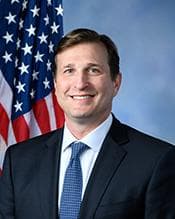
Daniel S. Goldman
Democrat · NY · Representative
Votes with party: 97.3% (510 recorded votes)
Full profile: /officials/G000599
Source: Congress.gov · FEC
Cosponsors (1)
Members who have signed on to support this bill since introduction. Source: Congress.gov.
Latest Action
The most recent step in the bill's legislative path. Committee Activity below shows referrals and reports; the full action-by-action history including floor proceedings lives at Congress.gov →
Committee Activity
Currently in
- House Committee on Energy and CommerceReferred To · 2026-05-21
Plain-English Summary
The federal government would fund research to better understand gambling disorder, including its causes, how it develops, and potential treatments. This would help doctors and public health officials develop better ways to prevent and treat people struggling with gambling addiction. The research would be overseen by the Department of Health and Human Services.
AI-assisted summary generated from the official bill metadata (title, subjects, actions) sourced from Congress.gov. Cached and reviewed. Always verify against the official text linked below.
Full Bill Text
Verbatim text published on Congress.gov via GovInfo. Use Cmd+F / Ctrl+F to search within this excerpt.
[Congressional Bills 119th Congress] [From the U.S. Government Publishing Office] [H.R. 8970 Introduced in House (IH)] <DOC> 119th CONGRESS 2d Session H. R. 8970 To direct the Secretary of Health and Human Services to conduct research to advance the understanding of gambling disorder, and for other purposes. _______________________________________________________________________ IN THE HOUSE OF REPRESENTATIVES May 21, 2026 Mr. Goldman of New York (for himself and Mr. Moore of Utah) introduced the following bill; which was referred to the Committee on Energy and Commerce _______________________________________________________________________ A BILL To direct the Secretary of Health and Human Services to conduct research to advance the understanding of gambling disorder, and for other purposes. Be it enacted by the Senate and House of Representatives of the United States of America in Congress assembled, SECTION 1. SHORT TITLE. This Act may be cited as the ``Gambling Disorder Health Study Act''. SEC. 2. FINDINGS. Congress finds that-- (1) gambling disorder was categorized as a behavioral addiction in 2013 in the Diagnostic and Statistical Manual of Mental Disorders (5th ed., text rev. 2022) published by the American Psychiatric Association; (2) although gambling disorder is categorized along with substance-related and addictive disorders that include alcohol, tobacco, and drug-related addictions, no Federal agency has been designated to fund and guide research, programs, or policies addressing gambling disorder in the United States on a national level; (3) this absence of Federal funding and guidance has resulted in a lack of research and resources available to address gambling disorder and gambling harm; (4) in Murphy v. National Collegiate Athletic Association, 584 U.S. 453 (2018), the Supreme Court overturned the Professional and Amateur Sports Protection Act (Public Law 102- 427), allowing States to legalize and regulate sports betting; and (5) following the Supreme Court's ruling in that case, 38 States, the District of Columbia, and Puerto Rico legalized some form of sports betting, consequently making sports betting and other forms of gambling more accessible and popular and garnering billions of dollars of revenue for the gambling industries. SEC. 3. RESEARCH ON GAMBLING DISORDER. (a) In General.--The Secretary of Health and Human Services (in this section referred to as the ``Secretary'') shall carry out a program (in this section referred to as the ``program'') under which the Secretary shall conduct research, either directly or through agreements with other public or nonprofit private entities, to advance the understanding of gambling disorder, including its origins, manifestations, and long-term effects. (b) Research Objectives.--The research to be conducted under subsection (a) shall include-- (1) efforts to identify the initial emergence or earliest documented cases of gambling disorder and the developments leading to its categorization as a behavioral addiction in the Diagnostic and Statistical Manual of Mental Disorders (5th ed., text rev. 2022); (2) investigation of the long-term psychological, social, economic, and behavioral impacts of gambling disorder on affected individuals, communities, and public discourse; (3) analysis of the effects of mobile, online, and app- based gambling technologies on the prevalence, development, and progression of gambling disorder; (4) examination of the implications of related technology mediated behavioral activities, including video games, social media, in-app purchases, and virtual reality platforms, on the prevalence, development, and progression of gambling disorder; (5) analysis of the contributing factors to, and the policy implications of, the development and spread of gambling disorder, including sports betting legalization, media exposure, political polarization, and social dynamics; (6) exploration of potential interventions, treatments, coping mechanisms, and strategies to mitigate the adverse effects of gambling disorder, as applicable; (7) analysis of the demographics of those individuals who are susceptible to gambling harm or already diagnosed with gambling disorder, as well as…
Show the remaining 420 wordsHide the remaining 420 words
the demographics of individuals who partake in individual gambling types; and (8) comparative analysis of the regulatory and public health frameworks of other economically developed countries with respect to gambling, including the effectiveness of any prevention policy approaches and risk reduction measures for individuals exhibiting signs of gambling disorder, and the circumstances under which such countries have modified or reversed policies that had liberalized gambling and the outcomes of those actions. (c) Participation of Federal Agencies and Other Entities.--The Secretary shall carry out subsection (a)-- (1) in consultation with the National Institutes of Health, the Assistant Secretary for Planning and Evaluation, the Comptroller General of the United States, and the National Academies of Science, Engineering, and Medicine; and (2) in collaboration with the heads of other Federal and State agencies, academic institutions, and relevant organizations. (d) Annual Report to Congress.--Not later than 2 years after the date of enactment of this Act, and annually thereafter during the term of the program, the Secretary shall submit to the Committee on Energy and Commerce of the House of Representatives and the Committee on Health, Education, Labor, and Pensions of the Senate a report on the progress of research conducted under this section, including-- (1) findings relating to the initial emergence, demographic analyses, public health impact, and long-term effects of gambling disorder and engagement with gambling types; and (2) recommendations for further research, public health actions, treatments, preventative measures, and public policies relating to gambling disorder and mitigating gambling harm. (e) Definitions.--In this section: (1) Gambling disorder.--The term ``gambling disorder'' has the meaning given such term in the Diagnostic and Statistical Manual of Mental Disorders (5th ed., text rev. 2022) (or a successor edition) and includes-- (A) pathological gambling; (B) gambling addiction; and (C) compulsive gambling. (2) Gambling type.--The term ``gambling type'' includes-- (A) lotteries and scratch-offs; (B) sports betting; (C) prediction markets; (D) casino games; (E) horse racing; (F) online gambling; (G) social gaming with virtual currency; (H) betting on esports; and (I) other activities that involve risking money or other stakes in a game or bet, as determined by the Secretary. (f) Authorization of Appropriations.--There is authorized to be appropriated to carry out this section for each of fiscal years 2027 through 2029 the amount that is 10 percent of the amount estimated by the Secretary of the Treasury as being equal to the amount of taxes received under section 4401(a)(1) of the Internal Revenue Code of 1986 during the preceding fiscal year. Such sums shall remain available until expended. <all>
Related legislation
Bills by the same sponsor or covering overlapping subjects.
- HR9058To amend the Public Health Service Act to establish a grant program to promote access to automated external defibrillators and cardiopulmonary resuscitation in eligible federally assisted multifamily housing, and for other purposes.Referred to Committee · 2026-05-29
- HR199325th Anniversary of 9/11 Commemorative Coin ActPassed House · 2026-05-21
- HR8814HUD Data Privacy Act of 2026Referred to Committee · 2026-05-14
- HR7427SAFE VISITS ActReferred to Committee · 2026-05-14