Regulate the Price of All Drugs Act
Sponsor
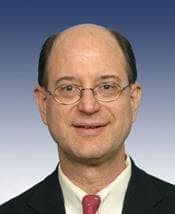
Full profile: /officials/S000344
Source: Congress.gov · FEC
Cosponsors (0)
Members who have signed on to support this bill since introduction. Source: Congress.gov.
No cosponsors on record. Bills can pass without cosponsors — this often means the sponsor introduced the bill alone, either because it's a messaging bill, a chairman's mark, or simply early in the legislative cycle.
Latest Action
The most recent step in the bill's legislative path. Committee Activity below shows referrals and reports; the full action-by-action history including floor proceedings lives at Congress.gov →
Referred to the Committee on Energy and Commerce, and in addition to the Committees on the Judiciary, and Financial Services, for a period to be subsequently determined by the Speaker, in each case for consideration of such provisions as fall within the jurisdiction of the committee concerned.
2026-05-26
Source: Congress.gov
Committee Activity
Currently in
- House Committee on Financial ServicesReferred To · 2026-05-26
- House Committee on the JudiciaryReferred To · 2026-05-26
- House Committee on Energy and CommerceReferred To · 2026-05-26
Plain-English Summary
The bill would give the federal government new powers to negotiate and set prices for prescription drugs, aiming to make medications more affordable for patients and reduce what Americans pay at the pharmacy. It would affect drug manufacturers, insurance companies, and anyone who takes prescription medications, potentially lowering out-of-pocket costs for patients while changing how pharmaceutical companies price their products. The proposal is currently being reviewed by three House committees to determine how it would work in practice.
AI-assisted summary generated from the official bill metadata (title, subjects, actions) sourced from Congress.gov. Cached and reviewed. Always verify against the official text linked below.
Full Bill Text
Verbatim text published on Congress.gov via GovInfo. Use Cmd+F / Ctrl+F to search within this excerpt.
[Congressional Bills 119th Congress] [From the U.S. Government Publishing Office] [H.R. 9040 Introduced in House (IH)] <DOC> 119th CONGRESS 2d Session H. R. 9040 To establish fair prices for prescription drugs, and for other purposes. _______________________________________________________________________ IN THE HOUSE OF REPRESENTATIVES May 26, 2026 Mr. Sherman introduced the following bill; which was referred to the Committee on Energy and Commerce, and in addition to the Committees on the Judiciary, and Financial Services, for a period to be subsequently determined by the Speaker, in each case for consideration of such provisions as fall within the jurisdiction of the committee concerned _______________________________________________________________________ A BILL To establish fair prices for prescription drugs, and for other purposes. Be it enacted by the Senate and House of Representatives of the United States of America in Congress assembled, SECTION 1. SHORT TITLE. This Act may be cited as the ``Regulate the Price of All Drugs Act''. SEC. 2. ESTABLISHING THE PRESCRIPTION DRUG REGULATORY COMMISSION. (a) In General.--There is established the Prescription Drug Price Regulatory Commission (in this section referred to as the ``Commission''). (b) Duties of Commission.-- (1) In general.--Not later than the fair price recommendation date with respect to a fair price applicability year, the Commission shall, with respect to each approved prescription drug, submit to the Secretary of Health and Human Services (in this section referred to as the ``Secretary'') a recommendation regarding the price that the Commission determines to be a fair price for such drug in order for the manufacturer of such drug to provide access to such price-- (A) to any fair price eligible individual who is dispensed such drug during such fair price applicability year (and to pharmacies, mail order services, and other dispensers, with respect to such individuals who are dispensed such drugs); and (B) to any hospital, physician, or other provider of services or supplier that furnishes or administers such drug to such an individual during such year. (2) Fair price revisions and waivers.--At any time during a fair price applicability year, the Commission may submit to the Secretary a recommendation-- (A) that the Secretary revise the fair price established for an approved prescription drug for such year under section 3(b); or (B) that the Secretary authorize a temporary waiver of such fair price under section 3(c). (3) Required factors for consideration.--In making a recommendation under paragraph (1) with respect to the fair price of an approved prescription drug, or a recommendation under paragraph (2) with respect to a revision or waiver of such fair price, the Commission shall take into account the following factors with respect to such drug: (A) The costs to the manufacturer of producing and distributing of such drug. (B) The cost-effectiveness of the drug and its therapeutic benefit (which may be determined on the basis of quality-adjusted life years, equal value of life years gained, or such other measure as the Commission may specify). (C) The anticipated demand for the drug during the fair price applicability year. (D) The costs and risks to the manufacturer involved in researching and developing such drug, and the return on investment that would provide adequate incentive to the manufacturer to continue research. (E) In the case that such drug is available for purchase in 1 or more comparable reference countries, the average price of such drug in such country. (F) Such other factors as the Secretary of Health and Human Services may specify through rulemaking. (c) Members of Commission.-- (1) In general.--The Commission shall be composed of 13 members as follows: (A) Seven members appointed by the President from individuals who are not officers or employees of…
Show the remaining 2,219 wordsHide the remaining 2,219 words
any government. (B) Six ex officio members appointed by the Secretary of Health and Human Services from each of the following agencies: (i) The Veterans Health Administration. (ii) The Defense Health Agency. (iii) The Centers for Medicare & Medicaid Services. (iv) The Food and Drug Administration. (v) The Centers for Disease Control and Prevention. (vi) The Federal Trade Commission. (2) Terms.--Each member shall be appointed for a term of 4 years, except that the Secretary may extend the term of any member for 1 additional year if the Secretary determines such extension appropriate. (d) Operation.--In carrying out the duties under subsection (b), the Commission is not subject to the provisions of chapter 10 of title 5, United States Code. (e) Authorization of Appropriations.--There are authorized to be appropriated such sums as may be necessary for each fiscal year to carry out the activities of the Commission. SEC. 3. PUBLICATION OF FAIR PRICES. (a) In General.--Not later than the fair price publication date with respect to a fair price applicability year, the Secretary of Health and Human Services (in this section referred to as the ``Secretary'') shall, with respect to each approved prescription drug, establish and publish the price that the Secretary determines to be a fair price for such drug in order for the manufacturer of such drug to provide access to such price-- (1) to any fair price eligible individual who is dispensed such drug during such fair price applicability year (and to pharmacies, mail order services, and other dispensers, with respect to such individuals who are dispensed such drugs); and (2) to hospitals, physicians, and other providers of services and suppliers that furnish or administer such drug to such an individual during such year. In establishing the fair price for each such drug, the Secretary shall take into account the recommendations made by the Prescription Drug Price Regulatory Commission (in this section referred to as the ``Commission'') under section 2(b)(1) for such drug and such year. (b) Revisions.--The Secretary may revise the fair price applicable to an approved prescription drug for a fair price applicability year after the fair price publication date with respect to such year has passed if-- (1) the Secretary has received a recommendation from the Commission that the fair price be so revised; (2) in the judgment of the Secretary, revising such fair price is necessary to account for significant changes to-- (A) supply (or projected supply) or demand (or projected demand) for such drug; or (B) any of the other factors described in section 2(b)(3) with respect to such drug; and (3) the Secretary notifies the manufacturer of such drug not less than 30 days before such revised fair price goes into effect. (c) Temporary Fair Price Waiver.-- (1) In general.--The Secretary may authorize a manufacturer of an approved prescription drug to provide access to such drug to a fair price eligible individual described in paragraph (1) of subsection (a) (or to a hospital, physician, or other provider of services or supplier described in paragraph (2) of such subsection with respect to such individual) at a price in excess of a fair price if, in the judgment of the Secretary, such authorization is necessary to maintain access to such drug for all fair price eligible individuals. (2) Duration of waiver.--An authorization under this subsection shall last for a period of 90 days. The Secretary may extend such authorization for 1 or more additional 90-day periods if the Secretary determines such extension is necessary. (d) Penalties for Noncompliance by a Manufacturer.-- (1) In general.--In addition to any other penalties prescribed by law, any manufacturer of an approved prescription drug that does not provide access during a fair price applicability year to a price that is equal to or less than the fair price for such drug for such year (or, in the case that an authorization under subsection (c) is in effect with respect to such manufacturer and drug, a price that is equal to or less than the price authorized under such subsection)-- (A) to a fair price eligible individual who is dispensed such drug during such fair price applicability year (and to pharmacies, mail order services, and other dispensers, with respect to such individuals who are dispensed such drugs); or (B) to a hospital, physician, or other provider of services or supplier that furnished or administered such drug to such an individual during such year; shall be subject to a civil penalty, for each year and for each drug for which the violation occurs, equal to 10 times the amount equal to the product of the number of units of such drug so furnished, dispensed, or administered during such year and the difference between the price for such drug made available for such year by such manufacturer with respect to such individual or hospital, physician, provider of services, or supplier and the fair price for such drug for such year (or the price authorized under subsection (c), as applicable). (2) Application.--The provisions of section 1128A of the Social Security Act (42 U.S.C. 1320a-7) (other than subsections (a) and (b)) shall apply to a civil monetary penalty under this section in the same manner as such provisions apply to a penalty or proceeding under section 1128A(a). SEC. 4. FAIR PRICES FOR PRESCRIPTION DRUGS REQUIRED. (a) Prohibition.--Section 301 of the Federal Food, Drug, and Cosmetic Act is amended by adding at the end the following: ``(jjj) Selling, or offering for sale, a drug (or biological product) at a price that exceeds the fair price published under section 3 of the Regulate the Price of All Drugs Act.''. (b) Enforcement by Federal Trade Commission.-- (1) Unfair or deceptive acts or practices.--A violation of section 301(jjj) of the Federal Food, Drug, and Cosmetic Act or a regulation promulgated under such subsection shall be treated as a violation of a regulation under section 18(a)(1)(B) of the Federal Trade Commission Act (15 U.S.C. 57a(a)(1)(B)) regarding unfair or deceptive acts or practices. (2) Powers of commission.--The Federal Trade Commission shall enforce subsection (jjj) of such section 301 and any regulation promulgated under such subsection in the same manner, by the same means, and with the same jurisdiction, powers, and duties as though all applicable terms and provisions of the Federal Trade Commission Act (15 U.S.C. 41 et seq.) were incorporated into and made a part of this section. Any person who violates such subsection or a regulation promulgated under such subsection shall be subject to the penalties and entitled to the privileges and immunities provided in the Federal Trade Commission Act. (c) Actions by States.-- (1) In general.--In any case in which the attorney general of a State, or an official or agency of a State, has reason to believe that an interest of the residents of such State has been or is threatened or adversely affected by an act or practice in violation of subsection (jjj) of such section 301 or a regulation promulgated under such subsection, the State, as parens patriae, may bring a civil action on behalf of the residents of the State in an appropriate district court of the United States to-- (A) enjoin such act or practice; (B) enforce compliance with such subsection or such regulation; (C) obtain damages, restitution, or other compensation on behalf of residents of the State; or (D) obtain such other legal and equitable relief as the court may consider to be appropriate. (2) Notice.--Before filing an action under this subsection, the attorney general, official, or agency of the State involved shall provide to the Federal Trade Commission a written notice of such action and a copy of the complaint for such action. If the attorney general, official, or agency determines that it is not feasible to provide the notice described in this paragraph before the filing of the action, the attorney general, official, or agency shall provide written notice of the action and a copy of the complaint to the Federal Trade Commission immediately upon the filing of the action. (3) Authority of federal trade commission.-- (A) In general.--On receiving notice under paragraph (2) of an action under this subsection, the Federal Trade Commission shall have the right-- (i) to intervene in the action; (ii) upon so intervening, to be heard on all matters arising therein; and (iii) to file petitions for appeal. (B) Limitation on state action while federal action is pending.--If the Federal Trade Commission or the Attorney General of the United States has instituted a civil action for violation of subsection (jjj) of such section 301 or a regulation promulgated under such subsection (referred to in this subparagraph as the ``Federal action''), no State attorney general, official, or agency may bring an action under this subsection during the pendency of the Federal action against any defendant named in the complaint in the Federal action for any violation of such subsection or regulation alleged in such complaint. (4) Rule of construction.--For purposes of bringing a civil action under this subsection, nothing in this Act shall be construed to prevent an attorney general, official, or agency of a State from exercising the powers conferred on the attorney general, official, or agency by the laws of such State to conduct investigations, administer oaths and affirmations, or compel the attendance of witnesses or the production of documentary and other evidence. (d) Private Right of Action.-- (1) In general.--A person injured by an act or practice in violation of subsection (jjj) of such section 301 or a regulation promulgated under such subsection may bring in an appropriate district court of the United States-- (A) an action to enjoin the violation; (B) an action to recover three times the amount of damages for actual monetary loss from the violation, or to receive up to $50,000 in damages for each such violation, whichever is greater; or (C) both such actions. (2) Willful or knowing violations.--If the court finds that the defendant acted willfully or knowingly in committing a violation described in paragraph (1), the court may, in its discretion, increase the amount of the award to an amount equal to not more than 3 times the amount available under paragraph (1)(B). (3) Costs and attorney's fees.--The court shall award to a prevailing plaintiff in an action under this subsection the costs of such action and reasonable attorney's fees, as determined by the court. (4) Limitation.--An action may be commenced under this subsection not later than 5 years after the date on which the person first discovered or had a reasonable opportunity to discover the violation. (5) Nonexclusive remedy.--The remedy provided by this subsection shall be in addition to any other remedies available to the person. SEC. 5. MARCH-IN RIGHTS FOR PATENT. If the owner of a patent sells a drug in the United States above the fair price published pursuant to section 3 or does not sell an adequate quantity to meet patient demand of a drug in the United States at the fair price published pursuant to section 3, the Secretary of Health and Human Services may assert the right to claim from the owner of any patent for such drug a nonexclusive, partially exclusive, or exclusive license in any field of use, upon terms that are reasonable under the circumstances. SEC. 6. USE OF THE DEFENSE PRODUCTION ACT. The President may use the authorities under title I, title III, and title VII of the Defense Production Act of 1950 to increase the domestic supply of a drug if the Commission has determined that-- (1) there are inadequate facilities or means of production in the United States to produce an amount of such drug that would satisfy patient demand for such drug; and (2) foreign supplies of such drug cannot be reliably and sustainability imported into the United States in such quantities as are necessary for such drug to be purchased at the fair price established for such drug under section 3. SEC. 7. DEFINITIONS. In this Act, the following definitions apply: (1) Approved prescription drug.--The term ``approved prescription drug'' means-- (A) a drug which may be dispensed only upon prescription and that is described in subparagraph (A)(i), (A)(ii), or (A)(iii) of section 1927(k)(2) of the Social Security Act (42 U.S.C. 1396r-8(k)(2)); (B) a biological product described in clauses (i) through (iii) of subparagraph (B) of such section; (C) insulin described in subparagraph (C) of such section and medical supplies associated with the injection of insulin (as defined in regulations of the Secretary); or (D) a vaccine licensed under section 351 of the Public Health Service Act. (2) Comparable reference country.--The term ``comparable reference country'' means any of the following countries: (A) Canada. (B) France. (C) Germany. (D) Italy. (E) Japan. (F) The United Kingdom. (3) Fair price applicability year.--The term ``fair price applicability year'' means a year (beginning with 2027). (4) Fair price eligible individual.--The term ``fair price eligible individual'' means, with respect to an approved prescription drug, an individual who is located in the United States at the time such drug is furnished or administered to such individual. (5) Fair price publication date.--The term ``fair price publication date'' means, with respect to a fair price applicability year, July 1 of the preceding year. (6) Fair price recommendation date.--The term ``fair price recommendation date'' means, with respect to a fair price applicability year, May 1 of the preceding year. <all>
Related legislation
Bills by the same sponsor or covering overlapping subjects.
- HR8803Iran War Oil Crisis Windfall Profits Tax ActReferred to Committee · 2026-05-13
- HR8670Stop Oil Exports to Lower Gas Prices ActReferred to Committee · 2026-05-07
- HR7806Direct File Act of 2026Referred to Committee · 2026-03-04
- HR7271Evan Anzoo Memorial ActReferred to Committee · 2026-01-27