HR9112Referred to Committee
To provide visuals artists the exclusive right to authorize the commercial exploitation, or public distribution in or affecting interstate commerce of a stylistic impersonation of that visual artist, and for other purposes.
Introduced
In Committee
3
Passed One Chamber4
Passed Both5
Signed into Law119th
Congress
2026-06-02
Introduced
2
Cosponsors
HR
ⓘType
Sponsor
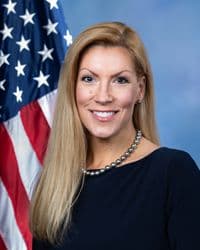
Beth Van Duyne
Republican · TX · Representative
Votes with party: 97.0% (574 recorded votes)
Full profile: /officials/V000134
Source: Congress.gov · FEC
Cosponsors (2)
Members who have signed on to support this bill since introduction. Source: Congress.gov.
Latest Action
The most recent step in the bill's legislative path. Committee Activity below shows referrals and reports; the full action-by-action history including floor proceedings lives at Congress.gov →
Committee Activity
Currently in
- House Committee on the JudiciaryReferred To · 2026-06-02
Plain-English Summary
This legislation would give visual artists legal protection against others commercially using their distinctive artistic style without permission, even if the work isn't an exact copy of their original pieces. The law would apply to cases where someone profits from or publicly distributes work that imitates an artist's recognizable style across state lines or online. This would affect artists, companies that license or sell art, and businesses that create AI-generated or human-made works inspired by established artistic styles.
AI-assisted summary generated from the official bill metadata (title, subjects, actions) sourced from Congress.gov. Cached and reviewed. Always verify against the official text linked below.
Full Bill Text
Verbatim text published on Congress.gov via GovInfo. Use Cmd+F / Ctrl+F to search within this excerpt.
[Congressional Bills 119th Congress] [From the U.S. Government Publishing Office] [H.R. 9112 Introduced in House (IH)] <DOC> 119th CONGRESS 2d Session H. R. 9112 To provide visuals artists the exclusive right to authorize the commercial exploitation, or public distribution in or affecting interstate commerce of a stylistic impersonation of that visual artist, and for other purposes. _______________________________________________________________________ IN THE HOUSE OF REPRESENTATIVES June 2, 2026 Ms. Van Duyne (for herself, Ms. Clarke of New York, and Mrs. Foushee) introduced the following bill; which was referred to the Committee on the Judiciary _______________________________________________________________________ A BILL To provide visuals artists the exclusive right to authorize the commercial exploitation, or public distribution in or affecting interstate commerce of a stylistic impersonation of that visual artist, and for other purposes. Be it enacted by the Senate and House of Representatives of the United States of America in Congress assembled, SECTION 1. SHORT TITLE. This Act may be cited as the ``Creative Rights Ensuring Artists' Technique and Originality are Reserved Act'' or the ``CREATOR Act''. SEC. 2. RIGHT AGAINST STYLISTIC IMPERSONATION. (a) Grant of Right.--Subject to the limitations and exclusions of this Act, each visual artist or right holder shall have the exclusive right to authorize the commercial exploitation, or public distribution in or affecting interstate commerce of a stylistic impersonation of that visual artist. (b) Nature of the Right.--The right established under this section-- (1) is a Federal intellectual property right distinct from copyright and trademark; (2) does not extend to ideas, concepts, genres, artistic movements, commonly used visual styles, or artistic methods that are not publicly associated with the work of a visual artist; (3) applies only to deliberate stylistic impersonation as defined in this Act; (4) shall not be construed to prohibit general artistic influence, independent human authorship, or non-material artificial intelligence assistance; and (5) is licensable and assignable, in whole or in part, on an exclusive basis by written agreement. (c) Duration and Registration.-- (1) Living visual artists.--For a living visual artist, the right shall subsist for the life of the visual artist. (2) Deceased visual artists.--For a deceased visual artist, the right shall subsist for 10 years after death and may be renewed in 5-year increments, up to a maximum of 50 years after death. (3) Renewal.--Renewal of a post-mortem right shall be effective only upon filing a notice with the Register of Copyrights identifying-- (A) the deceased artist; (B) the right holder; and (C) such additional information as the Register of Copyrights may reasonably require. (d) Directory of Post-Mortem Rights.--The Register of Copyrights shall maintain a publicly accessible online directory of registered post-mortem rights under this Act. (e) Rule of Construction.--Nothing in this Act shall be construed to limit the ability of a visual artist or right holder to authorize conduct that would otherwise constitute stylistic impersonation under this Act. SEC. 3. LIABILITY. (a) Conduct Giving Rise to Liability.--A person shall be liable under this Act only if, in or affecting interstate commerce, the person knowingly engages in one of the following acts without authorization: (1) Offering for sale, selling, licensing, publicly distributing, or otherwise commercially exploiting a stylistic impersonation of a visual artist. (2) Developing and expressly marketing for commercial distribution a product or service that is both-- (A) intentionally configured for the purpose of generating stylistic impersonations of one or more visual artists; and (B) promoted as capable of generating such stylistic impersonations. (b) Protection for General-Purpose Artificial Intelligence Systems.-- (1) In general.--The development, distribution, licensing, or provision of a general-purpose artificial intelligence system shall not give rise to liability under this Act unless the provider of…
Show the remaining 2,106 wordsHide the remaining 2,106 words
the system is both-- (A) intentionally configured the system for the purpose of generating stylistic impersonations of a specifically identified visual artist; and (B) expressly marketed the system as capable of generating such stylistic impersonations. (2) Exception for mere capability.--Mere capability of a system to generate outputs resembling the distinctive visual characteristics of a visual artist, or the independent actions of a user of a general-purpose artificial intelligence system, shall not give rise to liability absent the conduct described in paragraph (1). (c) Knowledge or Notice Requirement.-- (1) Persons other than online services.-- (A) In general.--A person other than an online service shall be liable under subsection (a) only if the person knew, or deliberately avoided confirming, that the work met the definition of stylistic impersonation of a specifically identified visual artist under this Act. (B) Limitation.--No person shall be deemed to have such knowledge solely by reason of the general capability of a system to generate outputs resembling the works of a visual artist. (2) Online services.--An online service shall not be liable for user-generated content unless, after receipt of a valid notice under section 5 or a court order, the service knowingly fails to act expeditiously to remove or disable access to the user-generated content identified in the notice as constituting a stylistic impersonation. SEC. 4. EXCLUSIONS. (a) Excluded Activities.--The following uses shall not constitute a violation of this Act, provided that such uses do not involve the commercial exploitation of a stylistic impersonation intended to mislead as to source, sponsorship, or approval-- (1) commentary, criticism, scholarship, research, or teaching; (2) parody or satire that comments upon or critiques the identified visual artist or the distinctive visual characteristics at issue; (3) historical, biographical, or documentary works, including reasonable fictionalization, where the use does not falsely suggest endorsement or authorization; (4) news reporting or public affairs commentary in which reference to the distinctive visual characteristics is materially relevant to the subject matter; and (5) uses resulting in fleeting, incidental, or negligible resemblance that do not reproduce a material combination of distinctive visual characteristics. (b) Obscenity.--Nothing in this section shall be construed to exempt from liability the use of a stylistic impersonation in material that is obscene under applicable law. SEC. 5. ONLINE SERVICE SAFE HARBORS. (a) Limitation on Liability for Online Services.--An online service shall not be liable for a violation under section 3 arising from user- generated content if the service-- (1) has designated an agent to receive notifications of claimed violations under this Act; (2) upon receipt of a valid notice under subsection (b), acts expeditiously to remove or disable access to the identified material; and (3) adopts and reasonably implements a policy providing for the termination, in appropriate circumstances, of repeat violators. (b) No Requirement To Monitor.--No online service shall be required to monitor user content proactively or to affirmatively seek facts indicating potential violations of this Act. (c) Notification Requirements.--A notification of claimed violation under this Act shall include-- (1) identification of the visual artist whose work is allegedly impersonated; (2) identification of the material claimed to constitute a stylistic impersonation; (3) a statement that the notifying party has a good-faith belief that the use is not authorized; and (4) information reasonably sufficient to permit the online service to contact the notifying party. (d) Counter-Notification and Restoration.-- (1) Submission.--A user whose material has been removed or disabled pursuant to a notification under this section may submit a counter-notification stating, under penalty of perjury, that the material was removed or disabled as a result of mistake or misidentification. (2) Notification.--Upon receipt of a valid counter- notification, the online service shall promptly notify the original notifying party. (3) Restoration.--The online service may restore the removed material not less than 10 business days and not more than 14 business days after receipt of the counter-notification unless the notifying party provides notice that a civil action has been filed seeking a court order restraining the user from engaging in the allegedly unlawful activity. (e) Misrepresentation and Abuse of Process.-- (1) Liability.--Any person who knowingly and materially misrepresents that material constitutes a stylistic impersonation shall be liable for-- (A) actual damages suffered by the alleged violator; (B) costs and reasonable attorneys' fees; and (C) statutory damages of not less than $5,000 per material misrepresentation. (2) Failure to conduct evaluation.--A failure to conduct a reasonable and good-faith evaluation of whether the material meets the definition of stylistic impersonation may constitute a knowing material misrepresentation. (3) Repeated bad-faith notifications.--Repeated bad-faith notifications may result in suspension of notice privileges under this Act. SEC. 6. CIVIL ACTIONS AND REMEDIES. (a) Civil Action.-- (1) In general.--A civil action under this Act may be brought by a right holder against a person who violates section 3. (2) Safe harbors.--A person whose conduct falls within the limitations or safe harbors provided in sections 3 or 5 shall not be liable under this Act. (b) Remedies.--In a civil action under this Act, the court may award the following: (1) Injunctive relief.--Temporary or permanent injunctive relief that is narrowly tailored to prevent ongoing or future violations of this Act. (2) Other relief.--At the election of the prevailing plaintiff, either-- (A) actual damages suffered by the right holder and any profits of the violator attributable to the violation; or (B) statutory damages as provided in paragraph (3). (3) Statutory damages.--Statutory damages may be awarded, in lieu of actual damages and profits, as follows: (A) For a commercial actor that intentionally engaged in stylistic impersonation: not less than $10,000 and not more than $100,000 per stylistic impersonation work commercially exploited. (B) For willful violations involving intentional targeting and commercial exploitation: not less than $50,000 and not more than $150,000 per work. (4) Considerations for statutory damages.--In determining statutory damages, the court or jury, as applicable, shall consider-- (A) the willfulness of the conduct; (B) the scale and duration of dissemination; (C) the commercial impact on the right holder; (D) the defendant's efforts to comply with this Act; and (E) whether the defendant qualifies for any limitation on liability under this Act. (c) No Award of Statutory Damages.--Statutory damages shall not be awarded where the defendant establishes that the conduct falls within a limitation, exclusion, or safe harbor under this Act. SEC. 7. RULES OF CONSTRUCTION. (a) Rule of Construction.--Nothing in this Act shall be construed-- (1) to limit, expand, or replace copyright protection under title 17, United States Code; (2) to grant exclusive rights over ideas, concepts, genres, artistic movements, or commonly used visual styles methods; (3) to impose a duty on any online service or provider of a general-purpose artificial intelligence system to monitor content proactively or to affirmatively seek facts indicating potential violations of this Act; (4) to prohibit lawful artistic influence, stylistic evolution, independent human authorship, or non-material use of artificial intelligence; (5) to create liability for the mere development, availability, or licensing of an artificial intelligence system absent intentional targeting as defined in this Act; or (6) to restrict speech protected by the First Amendment to the Constitution of the United States. (b) No Training Data Inference.--The mere capacity of an artificial intelligence system to generate outputs that resemble or incorporate distinctive visual characteristics publicly associated with a visual artist shall not give rise to any presumption, inference, or evidentiary showing that-- (1) the system was trained on any specific work of that visual artist; or (2) any particular dataset containing works associated with that visual artist was used in the training, fine-tuning, or operation of the system. (c) Limitation on Civil Action.--No civil action under this Act may be predicated solely on claims regarding the training data, training process, or internal parameters of an artificial intelligence system, except to the extent such claims are independently actionable under other applicable law. SEC. 8. PREEMPTION. (a) Limited Preemption.--This Act shall preempt State law causes of action only to the extent that such causes of action impose liability for conduct that constitutes stylistic impersonation as defined in this Act. (b) Preservation of Other Law.--Nothing in this Act shall be construed to preempt or limit-- (1) State or Federal copyright law; (2) State or Federal trademark or false endorsement law; (3) State right-of-publicity or misappropriation claims based on name, likeness, voice, or other protected personal attributes; or (4) State unfair competition or consumer protection laws that regulate deceptive or misleading commercial conduct independent of stylistic impersonation as defined in this Act. SEC. 9. SEVERABILITY. If any provision of this Act, or the application of such provision to any person or circumstance, is held invalid, the remainder of this Act and the application of its remaining provisions shall not be affected. SEC. 10. DEFINITIONS. In this Act: (1) Artificial intelligence system.--The term ``artificial intelligence system'' means a machine-based system that infers from input data how to generate visual expressive content in fixed or static form and that operates with a degree of autonomy beyond purely deterministic rule-based automation. (2) Artist.--The term ``artist'' means a human individual who has created and publicly distributed or exhibited original visual works of authorship. (3) Authorization.--The term ``authorization'' means express written permission granted by the applicable right holder for the commercial exploitation or public distribution of a stylistic impersonation. (4) Distinctive visual characteristics.--The term ``distinctive visual characteristics'' means identifiable visual elements, taken together, that are consistently present in a visual artist's publicly distributed works and that are publicly associated with that artist. (5) General-purpose artificial intelligence system.--The term ``general-purpose artificial intelligence system'' means an artificial intelligence system designed for a broad range of lawful uses and not primarily configured to generate works emulating the distinctive visual characteristics of a specifically identified visual artist. (6) Material.--The term ``material'' means significant in relation to the work as a whole and not merely incidental or de minimis. (7) Online service.--The term ``online service'' means a provider of an interactive computer service, as defined in section 230(f) of the Communications Act of 1934 (47 U.S.C. 230(f)), that hosts, transmits, indexes, or provides access to user-generated content. (8) Public distribution.--The term ``public distribution'' means making a work available to the public, whether for sale or otherwise, by offering it for sale, display, transmission, posting, publication on a website or online service, or other means of public dissemination. (9) Right holder.--The term ``right holder'' means-- (A) the visual artist; or (B) a person or entity that has lawfully acquired, by written assignment, inheritance, or operation of law, one or more of the exclusive right granted under this Act. (10) Specifically identified visual artist.--The term ``specifically identified visual artist'' means a visual artist whose name or one or more distinctive visual characteristics is expressly referenced in the prompting, configuration, marketing, or operation of an artificial intelligence system, or in the promotion of the resulting output. (11) Stylistic impersonation.-- (A) In general.--The term ``stylistic impersonation'' means a visual work generated in whole or in material part through the use of an artificial intelligence system that-- (i) was intentionally configured, prompted, marketed, or otherwise designed to emulate the distinctive visual characteristics publicly associated with a visual artist; and (ii) reproduces a combination of those distinctive visual characteristics in a manner likely to mislead a reasonable viewer as to the source, sponsorship, or approval of the work or to affect the commercial market for the visual artist's work. (B) Intentional design.--For purposes of subparagraph (A), intentional design may be established by evidence that the artificial intelligence system or its operator-- (i) expressly referenced the visual artist or their work in prompts, configuration settings, or user-facing interfaces; (ii) marketed or promoted the system or the resulting output as capable of imitating the visual artist's work; or (iii) configured the system for the purpose to produce outputs substantially reflecting the visual artist's distinctive visual characteristics. (C) Limitation.--The term ``stylistic impersonation'' does not include-- (i) works reflecting general artistic influence, genre conventions, or historical movements; (ii) works created through independent human authorship without deliberate targeting of a specifically identified visual artist's work; (iii) parody, satire, commentary, scholarship, or other expressive uses protected under section 4; or (iv) works generated by a general-purpose artificial intelligence system absent evidence of intentional targeting of a specifically identified visual artist's work. (12) Visual work.--The term ``visual work'' means a work consisting of a fixed or static visual image, including illustrations, photographs, graphic designs, paintings, drawings, or similar visual media, but does not include motion pictures, audiovisual works, or sound recordings. SEC. 11. EFFECTIVE DATE. (a) Effective Date.--This Act shall take effect 180 days after the enactment of the enactment of this Act. (b) Prospective Application.--This Act shall apply only to conduct occurring on or after the effective date. <all>
Related legislation
Bills by the same sponsor or covering overlapping subjects.
- HR9081Healthcare Freedom and Fairness ActReferred to Committee · 2026-05-29
- HR8873Recover COVID Unemployment Fraud in Banks ActReferred to Committee · 2026-05-29
- HR8883Protecting Seniors and Stopping Fraudsters ActReferred to Committee · 2026-05-21
- HR5498Small Business Health Options Awareness Act of 2025Referred to Committee · 2026-05-20