Preventing AI Censorship Act
Sponsor
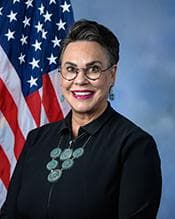
Full profile: /officials/H001096
Source: Congress.gov · FEC
Cosponsors (0)
Members who have signed on to support this bill since introduction. Source: Congress.gov.
No cosponsors on record. Bills can pass without cosponsors — this often means the sponsor introduced the bill alone, either because it's a messaging bill, a chairman's mark, or simply early in the legislative cycle.
Latest Action
The most recent step in the bill's legislative path. Committee Activity below shows referrals and reports; the full action-by-action history including floor proceedings lives at Congress.gov →
Committee Activity
Currently in
- House Committee on the JudiciaryReferred To · 2026-06-11
Plain-English Summary
Federal employees could be sued by individuals who believe their First Amendment rights were violated through the government's use or development of artificial intelligence systems. The bill would create a legal pathway for people to take action against the federal government if they claim AI tools were used to restrict their speech, religious practice, or other First Amendment protections. This would apply to situations where federal agencies deploy or create AI systems that allegedly infringe on these constitutional rights.
AI-assisted summary generated from the official bill metadata (title, subjects, actions) sourced from Congress.gov. Cached and reviewed. Always verify against the official text linked below.
Full Bill Text
Verbatim text published on Congress.gov via GovInfo. Use Cmd+F / Ctrl+F to search within this excerpt.
[Congressional Bills 119th Congress] [From the U.S. Government Publishing Office] [H.R. 9279 Introduced in House (IH)] <DOC> 119th CONGRESS 2d Session H. R. 9279 To provide for a right of action against Federal employees for violations of First Amendment rights relating to the use or development of artificial intelligence. _______________________________________________________________________ IN THE HOUSE OF REPRESENTATIVES June 11, 2026 Ms. Hageman introduced the following bill; which was referred to the Committee on the Judiciary _______________________________________________________________________ A BILL To provide for a right of action against Federal employees for violations of First Amendment rights relating to the use or development of artificial intelligence. Be it enacted by the Senate and House of Representatives of the United States of America in Congress assembled, SECTION 1. SHORT TITLE. This Act may be cited as the ``Preventing AI Censorship Act''. SEC. 2. RIGHT OF ACTION AGAINST FEDERAL EMPLOYEES FOR VIOLATIONS OF FIRST AMENDMENT RIGHTS WITH RESPECT TO ARTIFICIAL INTELLIGENCE. (a) In General.--A Federal employee who, under color of any statute, ordinance, regulation, custom, or usage, of the United States, engages in covered conduct thereby subjecting, or causing to be subjected, any citizen of the United States to the deprivation of any rights, privileges, or immunities secured by the First Amendment, shall be liable to the party injured in an action at law, suit in equity, or other proper proceeding for redress. (b) Exception.--This Act does not authorize a Federal employee to bring a suit against their Federal employer or the Federal Government for conduct that is within the scope of the employment relationship. Nothing in this Act shall be construed to limit any otherwise lawful law enforcement activity conducted pursuant to a valid warrant, court order, or other judicial authorization. (c) Attorney's Fees.--In any action or proceeding to enforce this Act, the court, in its discretion, may allow the prevailing party, other than the United States, a reasonable attorney's fee as part of the costs. (d) Rule of Construction.--Nothing in this Act may be construed to limit the ability of an injured party to seek damages, injunctive relief, or any other form of redress for the deprivation of any rights, privileges, or immunities secured by the First Amendment, or by any other provision of the Constitution. (e) Definitions.--In this section: (1) The term ``Federal employee'' means an individual, other than the President or the Vice President, who occupies a position in any agency or instrumentality of the executive branch (including any independent agency). (2) The term ``artificial intelligence'' has the meaning as outlined in section 5002 of the National Artificial Intelligence Initiative Act of 2020 (15 U.S.C. 9401). (3) The term ``artificial intelligence provider'' means any person or entity that develops, deploys, operates, hosts, or maintains artificial intelligence, whether for compensation or without charge. (4) The term ``covered conduct'' means-- (A) any action by a Federal employee to coerce, compel, direct, induce, or encourage an artificial intelligence provider to: (i) ban, suppress, remove, alter, or otherwise restrict content, outputs, or responses generated by artificial intelligence based on viewpoint, partisan affiliation, religious belief or practice, ideology, perceived truth or falsity, or perceived bias; (ii) modify the training data, model weights, fine-tuning procedures, system prompts, safety classifiers, or operational parameters of artificial intelligence for the purpose of filtering, distorting, or suppressing expression based on viewpoint, partisan affiliation, religious belief or practice, ideology, perceived truth or falsity, or perceived bias; (iii) deny, degrade, restrict, or alter access to artificial intelligence, or provide a materially inferior quality of service through artificial intelligence, to any person based on that person's viewpoint, political affiliation, religious belief or practice, ideology, perceived truth…
Show the remaining 123 wordsHide the remaining 123 words
or falsity, or perceived bias; or (iv) collect, retain, report, or disclose information about a user's prompts, queries, or interactions with artificial intelligence to any Federal agency or employee, where such collection, retention, or disclosure is undertaken for the purpose of, or with the reasonably foreseeable effect of, surveilling, chilling, or penalizing that user's lawful expression; or (B) any action by a Federal employee to directly interfere with an individual's lawful use of artificial intelligence. (f) Severability.--If any provision of this Act or the application of a provision of this Act to any person or circumstance is held to be unconstitutional, the remainder of this Act, and the application of the provisions to any person or circumstance, shall not be affected thereby. <all>
Related legislation
Bills by the same sponsor or covering overlapping subjects.
- HRES1374Expressing the sense of the House of Representatives that parents should be provided clear, accurate, and useful information about the content of video programming so they can make informed decisions for their children.Referred to Committee · 2026-06-18
- HR9278To amend title 5, United States Code, to provide that judicial review under the Administrative Procedure Act requires de novo trial of the facts when agency action seeks a sanction.Referred to Committee · 2026-06-11
- HR9277To amend title 5, United States Code, to provide that judicial review under the Administrative Procedure Act does not include any evidence that the court determines is not the product of reliable scientific principles and methods.Referred to Committee · 2026-06-11
- HR7695To provide that the final rule titled "Special Areas; Roadless Area Conservation" and issued on January 12, 2001 (66 Fed. Reg. 3244) shall have no force or effect and require the Secretary of Agriculture to construct certain roads on National Forest System lands, and for other purposes.Referred to Committee · 2026-05-21