To amend chapter 131 of title 5 to prohibit Members of Congress and their spouses and dependents from owning or trading stocks, and for other purposes.
Sponsor
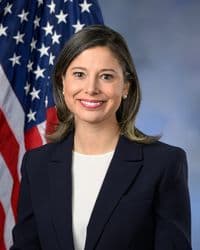
Full profile: /officials/G000604
Source: Congress.gov · FEC
Cosponsors (1)
Members who have signed on to support this bill since introduction. Source: Congress.gov.
Latest Action
The most recent step in the bill's legislative path. Committee Activity below shows referrals and reports; the full action-by-action history including floor proceedings lives at Congress.gov →
Referred to the Committee on Oversight and Government Reform, and in addition to the Committees on House Administration, and the Judiciary, for a period to be subsequently determined by the Speaker, in each case for consideration of such provisions as fall within the jurisdiction of the committee concerned.
2026-06-24
Source: Congress.gov
Committee Activity
Currently in
- House Committee on House AdministrationReferred To · 2026-06-24
- House Committee on Oversight and Government ReformReferred To · 2026-06-24
- House Committee on the JudiciaryReferred To · 2026-06-24
Plain-English Summary
Members of Congress, their spouses, and their dependents would be banned from buying, selling, or owning individual stocks under this proposal. The goal is to prevent lawmakers from potentially profiting from stock trades based on inside information they gain through their work in government. The measure would apply the same restrictions to family members living with or financially dependent on members of Congress.
AI-assisted summary generated from the official bill metadata (title, subjects, actions) sourced from Congress.gov. Cached and reviewed. Always verify against the official text linked below.
Full Bill Text
Verbatim text published on Congress.gov via GovInfo. Use Cmd+F / Ctrl+F to search within this excerpt.
[Congressional Bills 119th Congress] [From the U.S. Government Publishing Office] [H.R. 9429 Introduced in House (IH)] <DOC> 119th CONGRESS 2d Session H. R. 9429 To amend chapter 131 of title 5 to prohibit Members of Congress and their spouses and dependents from owning or trading stocks, and for other purposes. _______________________________________________________________________ IN THE HOUSE OF REPRESENTATIVES June 24, 2026 Ms. Goodlander (for herself and Mr. Fitzpatrick) introduced the following bill; which was referred to the Committee on Oversight and Government Reform, and in addition to the Committees on House Administration, and the Judiciary, for a period to be subsequently determined by the Speaker, in each case for consideration of such provisions as fall within the jurisdiction of the committee concerned _______________________________________________________________________ A BILL To amend chapter 131 of title 5 to prohibit Members of Congress and their spouses and dependents from owning or trading stocks, and for other purposes. Be it enacted by the Senate and House of Representatives of the United States of America in Congress assembled, SECTION 1. SHORT TITLE. This Act may be cited as the ``The Public Service Accountability Act''. SEC. 2. RESTRICTIONS ON TRADE AND OWNERSHIP OF COVERED INVESTMENTS. (a) Table of Contents.--The table of contents for chapter 131 of title 5, United States Code, is amended by adding at the end the following: subchapter iv--restrictions on trade and ownership of covered investments 13151. Definitions. 13152. Trade and ownership of covered investments. 13153. Penalties. (b) Restrictions.--Chapter 131 of title 5, United States Code, is amended by adding at the end a new subchapter: ``SUBCHAPTER IV--RESTRICTIONS ON TRADE AND OWNERSHIP OF COVERED INVESTMENTS ``Sec. 13151. Definitions ``In this subchapter: ``(1) Commodity.--The term `commodity'-- ``(A) has the meaning given the term in section 1a of the Commodity Exchange Act (7 U.S.C. 1a); and ``(B) does not include-- ``(i) a precious metal (as defined in section 1027.100 of title 31, Code of Federal Regulations); or ``(ii) insurance for which the insured holds a lawful insurable interest. ``(2) Covered individual.--The term `covered individual' means any of the following: ``(A) A Member of Congress and an officer or employee of Congress (as defined in section 13101). ``(B) A dependent child as defined in such section 13101 or a spouse of a Member of Congress. ``(C) A judicial employee and judicial officer (as those terms are defined in section 13101). ``(D) An officer or employee described in section 13103(f)(3). ``(E) A special Government employee (as that term is defined in section 202(a) of title 18). ``(F) A senior executive (as that term is defined in section 3132(a)). ``(G) Any individual employed in a position described under sections 5312 through 5316 of title 5 (relating to the Executive Schedule). ``(H) Any individual employed in a position of a confidential or policy-determining character under schedule C of subpart C of part 213 of title 5, Code of Federal Regulations, or successor regulation. ``(I) The President. ``(J) The Vice President. ``(K) A dependent child as defined in such section 13101 or a spouse of the President. ``(L) A dependent child as defined in such section 13101 or a spouse of the Vice President. ``(3) Covered investment.--The term `covered investment'-- ``(A) means an investment in a security, a commodity, a future, or any comparable economic interest acquired through synthetic means, such as the use of a derivative, including an option, warrant, or other similar means; and ``(B) does not include-- ``(i) a widely held investment fund described in section 13104(f)(8) that is diversified and publicly traded on a national or regional stock exchange; ``(ii) a United States Treasury bill, note, or bond; ``(iii) a State…
Show the remaining 948 wordsHide the remaining 948 words
or municipal government bill, note, or bond; ``(iv) any compensation received by the spouse or dependent child of a covered official from their employer; ``(v) an interest in a small business concern; ``(vi) an interest in a limited liability company created for the sole purpose of purchasing or holding real estate that serves as the personal residence of the Member of Congress; ``(vii) any share of Settlement Common Stock issued under section 7(g)(1)(A) of the Alaska Native Claims Settlement Act (43 U.S.C. 1606(g)(1)(A)); or ``(viii) any share of Settlement Common Stock, as defined in section 3 of the Alaska Native Claims Settlement Act (43 U.S.C. 1602). ``(4) Diversified.--The term `diversified', with respect to an investment fund, means such fund does not have a stated policy of concentrating its investments in any industry, business, single country other than the United States, or bonds of a single State within the United States except for the State in which the Member of Congress resides. ``(5) Future.--The term `future' means a financial contract obligating the buyer to purchase an asset or the seller to sell an asset, such as a physical commodity or a financial investment, at a predetermined future date and price. ``(6) Security.--The term `security' has the meaning given the term in section 3(a) of the Securities Exchange Act of 1934 (15 U.S.C. 78c(a)). ``(7) Small business concern.--The term `small business concern' has the meaning given that term under section 3 of the Small Business Act (15 U.S.C. 632). ``(8) Supervising ethics office.--The term `supervising ethics office' has the meaning given the term in section 13101. ``Sec. 13152. Trade and ownership of covered investments ``(a) Conduct During Federal Service.--Except as described in subsection (b)(1)(B) and subsections (d) and (e), no covered individual may-- ``(1) directly or indirectly, own or trade a covered investment; or ``(2) enter into, or offer to enter into, an agreement, contract, swap, or transaction that provides for any purchase, sale, payment, or delivery of an excluded commodity that is dependent on the occurrence, nonoccurrence, or the extent of the occurrence of a specific event or contingency. ``(b) Compliance.-- ``(1) Requirement.--To comply with subsection (a)-- ``(A) a covered individual may not purchase a covered investment; and ``(B) a covered individual shall divest of any covered investment by the effective date established in paragraph (2) at fair market value. ``(2) Effective date.--The effective date is established as follows: ``(A) 180 days for an individual who is a covered individual on the date of enactment of The Public Service Accountability Act. ``(B) 90 days within the date on which an individual becomes a covered individual if such date occurs after the date of enactment of The Public Service Accountability Act. ``(c) Certificates of Divestiture.-- ``(1) Application of certificate of divestiture program.-- For purposes of section 1043 of the Internal Revenue Code of 1986-- ``(A) this section shall be treated as a Federal conflict of interest statute; and ``(B) any covered individual described in subparagraphs (A), (B), (K), or (L) of section 13151(2) shall be treated as an eligible person described in section 1043(b)(1)(A) of such Code. ``(2) Issuance of certificate of divestiture.-- ``(A) In general.--Each supervising ethics office shall issue a certificate of divestiture to each covered individual required to divest under this subchapter upon submission of proof of compliance by such individual with the requirements to divest or any extensions granted by the supervising ethics office. ``(B) Eligibility.--Such certificate shall include an identification of each specific property eligible for the application of the certificate of divestiture program as determined by the supervising ethics office. ``(d) Trusts.--Any covered investment held in a qualified blind trust as defined in section 13104(f)(3) shall be divested in accordance with subsection (b)(1)(B) by the effective date established in subsection (b)(2). ``(e) Assets Acquired in Special Circumstances.--In the event that a covered individual acquires a covered investment after the date of enactment of the The Public Service Accountability Act other than by purchase (such as by marriage, inheritance, divorce settlement, or other circumstance), the covered individual shall have 90 days from the date on which such investment was acquired to divest such covered investment at fair market value. ``(f) Interpretative Guidance.--The supervising ethics office shall issue interpretive guidance on any relevant term not defined in this subchapter. ``Sec. 13153. Penalties ``(a) In General.-- ``(1) Penalties.--Any covered individual who violates the restrictions on trading or ownership of covered investments in section 13152 shall, at the direction of the supervising ethics office-- ``(A) pay a fine of equal to 10 percent of the value of the covered investment; and ``(B) disgorge the profits of any transaction that violates the provisions of this subchapter. ``(2) Payment of penalty to treasury.--A penalty imposed under paragraph (1)(B) shall be payable into the Treasury of the United States. ``(b) Payment Restrictions.--A Member of the Congress may not pay any of the penalties under this section by using amounts from the following sources: ``(1) The Members' Representational Allowance. ``(2) The Senators' Official Personnel and Office Expense Account. ``(3) Any contribution (as defined in section 301(8) of the Federal Election Campaign Act of 1971 (52 U.S.C. 30101(8))) accepted as a candidate, and any other donation received as support for activities of the individual as a holder of Federal office. ``(c) Publication.--Each supervising ethics office shall publish on a publicly available website a description of-- ``(1) each fine assessed by the supervising ethics office pursuant to this section; ``(2) the reason why each such fine was assessed; and ``(3) the result of each assessment.''. (c) Rule of Construction.--This Act and the amendments made by this Act shall not be construed to apply to any individual occupying a position under the General Schedule. <all>
Related legislation
Bills by the same sponsor or covering overlapping subjects.
- HR9464To prohibit the Secretary of Agriculture from closing any research and development facility of the Forest Service.Referred to Committee · 2026-06-25
- HR8613To providing access to certain memorials on Federal property during Government shutdown, and for other purposes.Referred to Committee · 2026-04-30
- HRES1229Supporting the designation of April 2026 as "National Native Plant Month".Referred to Committee · 2026-04-29
- HR7537Corporate Crimes Against Health Care ActReferred to Committee · 2026-02-12