Sustainable Homeownership Act
Sponsor
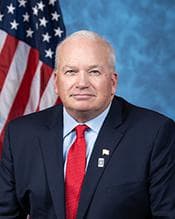
Full profile: /officials/F000471
Source: Congress.gov · FEC
Cosponsors (0)
Members who have signed on to support this bill since introduction. Source: Congress.gov.
No cosponsors on record. Bills can pass without cosponsors — this often means the sponsor introduced the bill alone, either because it's a messaging bill, a chairman's mark, or simply early in the legislative cycle.
Latest Action
The most recent step in the bill's legislative path. Committee Activity below shows referrals and reports; the full action-by-action history including floor proceedings lives at Congress.gov →
Committee Activity
Currently in
- House Committee on Financial ServicesReferred To · 2026-06-25
Plain-English Summary
This bill would change rules about what types of mortgages Fannie Mae and Freddie Mac (the government-backed companies that buy and sell home loans) are allowed to own and manage. The changes would affect how these companies operate and could impact homebuyers and the mortgage market by shifting which loans these organizations can purchase from banks and lenders.
AI-assisted summary generated from the official bill metadata (title, subjects, actions) sourced from Congress.gov. Cached and reviewed. Always verify against the official text linked below.
Full Bill Text
Verbatim text published on Congress.gov via GovInfo. Use Cmd+F / Ctrl+F to search within this excerpt.
[Congressional Bills 119th Congress] [From the U.S. Government Publishing Office] [H.R. 9460 Introduced in House (IH)] <DOC> 119th CONGRESS 2d Session H. R. 9460 To amend the Federal Home Loan Mortgage Corporation Act and the Federal National Mortgage Association Charter Act to specify requirements with respect to the ownership of certain mortgage assets for the Federal Home Loan Mortgage Corporation and the Federal National Mortgage Association, and for other purposes. _______________________________________________________________________ IN THE HOUSE OF REPRESENTATIVES June 25, 2026 Mr. Fitzgerald introduced the following bill; which was referred to the Committee on Financial Services _______________________________________________________________________ A BILL To amend the Federal Home Loan Mortgage Corporation Act and the Federal National Mortgage Association Charter Act to specify requirements with respect to the ownership of certain mortgage assets for the Federal Home Loan Mortgage Corporation and the Federal National Mortgage Association, and for other purposes. Be it enacted by the Senate and House of Representatives of the United States of America in Congress assembled, SECTION 1. SHORT TITLE. This Act may be cited as the ``Sustainable Homeownership Act''. SEC. 2. REQUIREMENTS OF OWNERSHIP OF CERTAIN MORTGAGE ASSETS. (a) Freddie Mac.-- (1) Mortgage operations.--Section 305 of the Federal Home Loan Mortgage Corporation Act (12 U.S.C. 1454) is amended-- (A) in subsection (a)(2)-- (i) by striking ``No conventional'' and inserting the following: ``Limits on purchases of high loan-to-value mortgages-- ``(A) In general.--No conventional''; (ii) in subparagraph (A), as amended by clause (i)-- (I) by striking ``value of'' and inserting ``lesser of appraised value or purchase price of''; (II) by striking ``not less than 10 per centum in the mortgage'' and inserting ``not less than the same percentage of the first-loss portion of the unpaid principal balance of the mortgage that is required to be insured or guaranteed as described in subsection (e)(1)''; (III) by striking ``for such period and''; (IV) by inserting ``not later than 120 days after the default of such mortgage'' after ``is in default''; and (V) by striking ``as determined by the Corporation'' and inserting ``, subject to the coverage and the qualified insurer requirements described in subsection (e)''; and (iii) by adding at the end the following: ``(B) Exception for refinancing.--Notwithstanding the first sentence of subparagraph (A), the Corporation may purchase a conventional mortgage with an outstanding principal balance exceeding 97 percent of the value of the property securing the mortgage if the Corporation or the Federal National Mortgage Association, during the 30 day period before the origination of such mortgage, replaced a mortgage with the same borrower secured by the same property and the new conventional mortgage-- ``(i) reduces payment amounts for the borrower; ``(ii) shortens the amortization term of the mortgage; or ``(iii) replaces variable rate mortgage with fixed rate mortgage for a minimum of a 60 month term.''; and (B) by adding at the end the following: ``(e) Insurance or Guarantee on Unpaid Principal Balance of a Mortgage.-- ``(1) Requirements.-- ``(A) In general.--With respect to the insurance or guarantee on the portion of the unpaid principal balance at the time of purchase of a mortgage which is in excess of 80 percent of the value of the property securing the mortgage that is required under subsection (a)(2)(A), the following requirements apply: ``(i) For a mortgage with an unpaid principal balance that is equal to an amount that is above 80 percent and not more than 85 percent of the value of the property-- ``(I) an amount that is not less than 12 percent of the portion of the unpaid principal balance of the mortgage shall be guaranteed or insured by a qualified insurer; or ``(II) if the…
Show the remaining 5,862 wordsHide the remaining 5,862 words
mortgage is a fixed- rate mortgage with a fully amortizing term of less than or equal to 20 years, an amount that is not less than 6 percent of the portion of the unpaid principal balance of the mortgage shall be guaranteed or insured by a qualified insurer. ``(ii) For a mortgage with an unpaid principal balance that is equal to an amount that is above 85 percent and not more than 90 percent of the value of the property-- ``(I) an amount that is not less than 25 percent of the portion of the unpaid principal balance of the mortgage shall be guaranteed or insured by a qualified insurer; or ``(II) if the mortgage is a fixed- rate mortgage with a fully amortizing term of less than or equal to 20 years, an amount that is not less than 12 percent the portion of the unpaid principal balance of the mortgage shall be guaranteed or insured by a qualified insurer. ``(iii) For a mortgage with an unpaid principal balance that is equal to an amount that is above 90 percent and not more than 95 percent of the value of the property-- ``(I) an amount that is not less than 30 percent the portion of the unpaid principal balance of the mortgage shall be guaranteed or insured by a qualified insurer; or ``(II) if the mortgage is a fixed- rate mortgage with a fully amortizing term of less than or equal to 20 years, an amount that is not less than 25 percent the portion of the unpaid principal balance of the mortgage shall be guaranteed or insured by a qualified insurer. ``(iv) For a mortgage with an unpaid principal balance that is equal to an amount that is above 95 percent and not more than 97 percent of the value of the property, an amount that is not less than 35 percent of the portion of the unpaid principal balance of the mortgage shall be guaranteed or insured by a qualified insurer. ``(B) Exceptions.-- ``(i) State agencies and certain mortgage programs.--With respect to a seller that is a State or political subdivision thereof, for mortgages purchased on behalf of a State or political subdivision thereof, and for mortgages acquired under section 1335 of the Federal Housing Enterprises Financial Safety and Soundness Act of 1992 (12 U.S.C. 4565), the following coverage requirements apply for unpaid principal balances at the time of purchase: ``(I) For a mortgage with an unpaid principal balance that is equal to an amount that is above 80 percent and not more than 85 percent of the value of the property, an amount that is not less than 6 percent the portion of the unpaid principal balance of the mortgage shall be guaranteed or insured by a qualified insurer. ``(II) For a mortgage with an unpaid principal balance that is equal to an amount that is above 85 percent and not more than 90 percent of the value of the property, an amount that is not less than 12 percent the portion of the unpaid principal balance of the mortgage shall be guaranteed or insured by a qualified insurer. ``(III) For a mortgage with an unpaid principal balance that is equal to an amount that is above 90 percent and not more than 95 percent of the value of the property, an amount that is not less than 16 percent of the portion of the unpaid principal balance of the mortgage shall be guaranteed or insured by a qualified insurer. ``(IV) For a mortgage with an unpaid principal balance that is equal to an amount that is above 95 percent and not more than 97 percent of the value of the property, an amount that is not less than 18 percent the portion of the unpaid principal balance of the mortgage shall be guaranteed or insured by a qualified insurer. ``(ii) Low income mortgagor.-- ``(I) In general.--For a mortgage with an unpaid principal balance at the time of purchase that is equal to an amount that is above 90 percent and not more than 97 percent of the value of the property, and for which the mortgagor of the mortgage is a low- income mortgagor, the Director of the Federal Housing Finance Agency may permit that an amount that is not less than 25 percent of the portion of the unpaid principal balance of the mortgage shall be guaranteed or insured by a qualified insurer. ``(II) Low-income mortgagor defined.-- ``(aa) In general.--The term `low-income mortgagor' means a mortgagor with a household income of not more than 80 percent of the area median income. ``(bb) Area median income qualification.--The Director of the Federal Housing Finance Agency may adjust the area median income qualification described in item (aa). ``(2) Qualified insurer.-- ``(A) In general.--To be a qualified insurer under this subsection, an insurer shall-- ``(i) be subject to any State insurance law or regulations that are applicable to insurance companies in the respective State in which the insurer operates; ``(ii) be subject to any eligibility standards as described in subparagraph (B); and ``(iii) be a private enterprise. ``(B) Eligibility standards from corporation.-- ``(i) In general.--The Corporation may set eligibility standards, as described in clause (ii), for qualified insurers. ``(ii) Imposition of standards.--Any eligibility standards imposed by the Corporation on qualified insurers shall be approved by the Director of the Federal Housing Finance Agency and subject to a 30 day notice and comment period for the public, including insurers to provide input on the proposed eligibility requirements or changes thereto. The Director may only approve such proposed eligibility requirements from the public comment period. ``(f) Holding of Assets.-- ``(1) In general.--The value of the covered assets held by the Corporation at any time may not exceed the greater of-- ``(A) 8 percent of the Corporation's total assets; or ``(B) an amount that the Secretary of the Treasury and the Director of the Federal Housing Finance Agency determine is necessary on a quarterly basis to-- ``(i) engage in the business of securitizing mortgage-backed securities guaranteed the Corporation; and ``(ii) comply with the liquidity requirements prescribed by the Director. ``(2) Covered assets defined.--In this subsection, the term `covered assets'-- ``(A) means mortgages, mortgage loans, mortgage- related securities, participation certificates, mortgage-backed commercial paper, obligations of real estate mortgage investment conduits, and any substantially similar assets; and ``(B) does not include loans for the construction of residential dwelling units. ``(g) Requirements Applying to the Purchase of Single-Family Residential Mortgages.-- ``(1) In general.--The Corporation may not vary the pricing or any other contractual term of the acquisition by the Corporation of any single-family residential mortgage (including by granting any variance) based on the size, charter type, or volume of business of the seller of such mortgage. ``(2) Equivalent offers.--The Corporation shall offer to purchase at all times, for equivalent cash consideration (subject to an appropriate adjustment for the value of any servicing rights retained by an approved seller-servicer and for the cost of bearing or otherwise managing any incremental credit, market, operational, liquidity, or other risk associated with the cash window), and on substantially similar terms, including pricing, any single-family residential mortgage that-- ``(A) is of a class of single-family residential mortgages that the Corporation offers to acquire for mortgage-backed securities guaranteed by the Corporation or other noncash consideration; ``(B) is offered for sale to the Corporation by a seller that has been approved to do business with the Corporation; and ``(C) has been originated and, if sold, sold in compliance with any underwriting or other similar restrictions prescribed by the Corporation or the Director of the Federal Housing Finance Agency as a conservator; ``(3) Simultaneous mortgage leins.--The Corporation may not purchase a single-family residential mortgage that was originated in combination with a subordinate lien secured against the same property if at the time of origination, such mortgage or such subordinate lien provided access to a home equity line of credit that, if used by the mortgagor could, in combination with the original principal obligation of such mortgage and the original principal obligation of such subordinate lien, exceed 80 percent of the value of such property.''. (2) Obligations and securities.--Section 306(l)(2)(C)(i) of the Federal Home Loan Mortgage Corporation Act (12 U.S.C. 1455(l)(2)(C)(i)) is amended to read as follows: ``(i) dedicated for-- ``(I) the purpose of deficit reduction; or ``(II) the purpose of supporting housing supply initiatives, including affordable and middle-income housing developments, as defined by the Secretary of the Treasury; and''. (3) Effective dates.--The amendments made by-- (A) paragraph (1) shall take effect on the date that is 180 days after the date of the enactment of this section; and (B) paragraph (2) shall take effect on the date of the enactment of this section. (b) Fannie Mae.-- (1) Mortgage operations.--Section 302 of the National Housing Act (12 U.S.C. 1717(b)(2))-- (A) in subsection (b)(2)-- (i) by striking ``For the'' and inserting the following: ``Limits on purchases of high loan-to-value mortgages-- ``(A) In general.--For the''; (ii) in subparagraph (A), as amended by clause (i)-- (I) by striking ``value of'' and inserting ``lesser of appraised value or purchase price of''; (II) by striking ``not less than 10 per centum in the mortgage'' and inserting ``not less than the same percentage of the first-loss portion of the unpaid principal balance of the mortgage that is required to be insured or guaranteed as described in subsection (d)(1)''; (III) by striking ``for such period and''; (IV) by inserting ``not later than 120 days after the default of such mortgage'' after ``is in default''; and (V) by striking ``as determined by the corporation'' and inserting ``, subject to the coverage and the qualified insurer requirements described in subsection (d)''; and (iii) by adding at the end the following: ``(B) Exception for refinancing.--Notwithstanding the second sentence of subparagraph (A), the corporation may purchase a conventional mortgage with an outstanding principal balance exceeding 97 percent of the value of the property securing the mortgage if the corporation or the Federal Home Loan Mortgage Corporation, during the 30 day period before the origination of such mortgage, replaced a mortgage with the same borrower secured by the same property and the new conventional mortgage-- ``(i) reduces payment amounts for the borrower; ``(ii) shortens the amortization term of the mortgage; or ``(iii) replaces variable rate mortgage with fixed rate mortgage for a minimum of a 60 month term.''; and (B) by adding at the end the following: ``(d) Insurance or Guarantee on Unpaid Principal Balance of a Mortgage.-- ``(1) Requirements.-- ``(A) In general.--With respect to the insurance or guarantee on the portion of the unpaid principal balance at the time of purchase of a mortgage which is in excess of 80 percent of the value of the property securing the mortgage that is required under subsection (b)(2)(A), the following requirements apply: ``(i) For a mortgage with an unpaid principal balance that is equal to an amount that is above 80 percent and not more than 85 percent of the value of the property-- ``(I) an amount that is not less than 12 percent of the portion of the unpaid principal balance of the mortgage shall be guaranteed or insured by a qualified insurer; or ``(II) if the mortgage is a fixed- rate mortgage with a fully amortizing term of less than or equal to 20 years, an amount that is not less than 6 percent of the portion of the unpaid principal balance of the mortgage shall be guaranteed or insured by a qualified insurer. ``(ii) For a mortgage with an unpaid principal balance that is equal to an amount that is above 85 percent and not more than 90 percent of the value of the property-- ``(I) an amount that is not less than 25 percent of the portion of the unpaid principal balance of the mortgage shall be guaranteed or insured by a qualified insurer; or ``(II) if the mortgage is a fixed- rate mortgage with a fully amortizing term of less than or equal to 20 years, an amount that is not less than 12 percent the portion of the unpaid principal balance of the mortgage shall be guaranteed or insured by a qualified insurer. ``(iii) For a mortgage with an unpaid principal balance that is equal to an amount that is above 90 percent and not more than 95 percent of the value of the property-- ``(I) an amount that is not less than 30 percent the portion of the unpaid principal balance of the mortgage shall be guaranteed or insured by a qualified insurer; or ``(II) if the mortgage is a fixed- rate mortgage with a fully amortizing term of less than or equal to 20 years, an amount that is not less than 25 percent the portion of the unpaid principal balance of the mortgage shall be guaranteed or insured by a qualified insurer. ``(iv) For a mortgage with an unpaid principal balance that is equal to an amount that is above 95 percent and not more than 97 percent of the value of the property, an amount that is not less than 35 percent of the portion of the unpaid principal balance of the mortgage shall be guaranteed or insured by a qualified insurer. ``(B) Exceptions.-- ``(i) State agencies and certain mortgage programs.--With respect to a seller that is a State or political subdivision thereof, for mortgages purchased on behalf of a State or political subdivision thereof, and for mortgages acquired under section 1335 of the Federal Housing Enterprises Financial Safety and Soundness Act of 1992 (12 U.S.C. 4565), the following coverage requirements apply for unpaid principal balances at the time of purchase: ``(I) For a mortgage with an unpaid principal balance that is equal to an amount that is above 80 percent and not more than 85 percent of the value of the property, an amount that is not less than 6 percent the portion of the unpaid principal balance of the mortgage shall be guaranteed or insured by a qualified insurer. ``(II) For a mortgage with an unpaid principal balance that is equal to an amount that is above 85 percent and not more than 90 percent of the value of the property, an amount that is not less than 12 percent the portion of the unpaid principal balance of the mortgage shall be guaranteed or insured by a qualified insurer. ``(III) For a mortgage with an unpaid principal balance that is equal to an amount that is above 90 percent and not more than 95 percent of the value of the property, an amount that is not less than 16 percent of the portion of the unpaid principal balance of the mortgage shall be guaranteed or insured by a qualified insurer. ``(IV) For a mortgage with an unpaid principal balance that is equal to an amount that is above 95 percent and not more than 97 percent of the value of the property, an amount that is not less than 18 percent the portion of the unpaid principal balance of the mortgage shall be guaranteed or insured by a qualified insurer. ``(ii) Low income mortgagor.-- ``(I) In general.--For a mortgage with an unpaid principal balance at the time of purchase that is equal to an amount that is above 90 percent and not more than 97 percent of the value of the property, and for which the mortgagor of the mortgage is a low- income mortgagor, the Director of the Federal Housing Finance Agency may permit that an amount that is not less than 25 percent of the portion of the unpaid principal balance of the mortgage shall be guaranteed or insured by a qualified insurer. ``(II) Low-income mortgagor defined.-- ``(aa) In general.--The term `low-income mortgagor' means a mortgagor with a household income of not more than 80 percent of the area median income. ``(bb) Area median income qualification.--The Director of the Federal Housing Finance Agency may adjust the area median income qualification described in item (aa). ``(2) Qualified insurer.-- ``(A) In general.--To be a qualified insurer under this subsection, an insurer shall-- ``(i) be subject to any State insurance law or regulations that are applicable to insurance companies in the respective State in which the insurer operates; ``(ii) be subject to any eligibility standards as described in subparagraph (B); and ``(iii) be a private enterprise. ``(B) Eligibility standards from corporation.-- ``(i) In general.--The corporation may set eligibility standards, as described in clause (ii), for qualified insurers. ``(ii) Imposition of standards.--Any eligibility standards imposed by the corporation on qualified insurers shall be approved by the Director of the Federal Housing Finance Agency and subject to a 30 day notice and comment period for the public, including insurers to provide input on the proposed eligibility requirements or changes thereto. The Director may only approve such proposed eligibility requirements from the public comment period. ``(e) Holding of Assets.-- ``(1) In general.--The value of the covered assets held by the corporation at any time may not exceed the greater of-- ``(A) 8 percent of the corporation's total assets; or ``(B) an amount that the Secretary of the Treasury and the Director of the Federal Housing Finance Agency determine is necessary on a quarterly basis to-- ``(i) engage in the business of securitizing mortgage-backed securities guaranteed the corporation; and ``(ii) comply with the liquidity requirements prescribed by the Director. ``(2) Covered assets defined.--In this subsection, the term `covered assets'-- ``(A) means mortgages, mortgage loans, mortgage- related securities, participation certificates, mortgage-backed commercial paper, obligations of real estate mortgage investment conduits, and any substantially similar assets; and ``(B) does not include loans for the construction of residential dwelling units. ``(f) Requirements Applying to the Purchase of Single-Family Residential Mortgages.-- ``(1) In general.--The corporation may not vary the pricing or any other contractual term of the acquisition by the corporation of any single-family residential mortgage (including by granting any variance) based on the size, charter type, or volume of business of the seller of such mortgage. ``(2) Equivalent offers.--The corporation shall offer to purchase at all times, for equivalent cash consideration (subject to an appropriate adjustment for the value of any servicing rights retained by an approved seller-servicer and for the cost of bearing or otherwise managing any incremental credit, market, operational, liquidity, or other risk associated with the cash window), and on substantially similar terms, including pricing, any single-family residential mortgage that-- ``(A) is of a class of single-family residential mortgages that the corporation offers to acquire for mortgage-backed securities guaranteed by the corporation or other noncash consideration; ``(B) is offered for sale to the corporation by a seller that has been approved to do business with the corporation; and ``(C) has been originated and, if sold, sold in compliance with any underwriting or other similar restrictions prescribed by the corporation or the Director of the Federal Housing Finance Agency as a conservator; ``(3) Simultaneous mortgage leins.--The corporation may not purchase a single-family residential mortgage that was originated in combination with a subordinate lien secured against the same property if at the time of origination, such mortgage or such subordinate lien provided access to a home equity line of credit that, if used by the mortgagor could, in combination with the original principal obligation of such mortgage and the original principal obligation of such subordinate lien, exceed 80 percent of the value of such property.''. (2) Obligations and securities.--Section 304(g)(2)(C)(i) of the National Housing Act (12 U.S.C. 1719(g)(2)(C)(i)) is amended to read as follows: ``(i) dedicated for-- ``(I) the purpose of deficit reduction; or ``(II) the purpose of supporting housing supply initiatives, including affordable and middle-income housing developments, as defined by the Secretary of the Treasury; and''. (3) Effective dates.--The amendments made by-- (A) paragraph (1) shall take effect on the date that is 180 days after the date of the enactment of this section; and (B) paragraph (2) shall take effect on the date of the enactment of this section. SEC. 3. ADJUSTMENTS TO LIMITATIONS OF MAXIMUM ORIGINAL PRINCIPAL OBLIGATION OF CONVENTIONAL MORTGAGES. (a) Freddie Mac.--Section 305(a)(2)(A) of the Federal Home Loan Mortgage Corporation Act, as amended by section 2, is further amended by striking ``Each adjustment'' and all that follows through ``exceed prior declines.'' and inserting the following: ``Each adjustment shall be made by adding each such amount (as it may have been previously adjusted) a percentage thereof equal to the lower of the percentage increase, during the most recent 12-month period ending before the time of determining such annual adjustment, in median household income published by the Bureau of the Census or the housing price index as determined by the Director of the Federal Housing Finance Agency.''. (b) Fannie Mae.--Section 302(b)(2)(A) of the National Housing Act, as amended by section 2, is further amended by striking ``Each adjustment'' and all that follows through ``exceed prior declines.'' and inserting the following: ``Each adjustment shall be made by adding each such amount (as it may have been previously adjusted) a percentage thereof equal to the lower of the percentage increase, during the most recent 12-month period ending before the time of determining such annual adjustment, in median household income published by the Bureau of the Census or the housing price index as determined by the Director of the Federal Housing Finance Agency.''. (c) FHA Loans.--Section 203(b)(2)(A) of the National Housing Act (12 U.S.C. 1709(b)(2)) is amended-- (1) by striking ``not to exceed the lesser of--'' and inserting the following: ``not to exceed 115 percent of the median house price in the area in 2026, as determined by the Secretary, which the Secretary shall adjust the maximum principal obligation permitted on an annual basis by adding to the amount described in the previous sentence a percentage thereof equal to the lower of the percentage increase, during the most recent 12-month period ending before the time of determining such annual adjustment, in median household income published by the Bureau of the Census or the housing price index as determined by the Director of the Federal Housing Finance Agency;''; and (2) by striking clauses (i) and (ii); SEC. 4. PRIOR APPROVAL OF ENTERPRISE PRODUCTS. (a) In General.--Section 1321 of the Federal Housing Enterprises Financial Safety and Soundness Act of 1992 (12 U.S.C. 4541) is amended-- (1) in subsection (c)-- (A) in paragraph (3)-- (i) by striking ``30-day'' and inserting ``60-day''; (ii) by striking ``During'' and inserting the following: ``(A) In general.--During''; and (iii) by adding at the end the following: ``(B) Extension of public comment period.--The Director may extend the public comment period described in subparagraph (A) by 30 days.''; and (B) in paragraph (4)-- (i) in subparagraph (A), by striking ``30'' and inserting ``60''; (ii) in subparagraph (B), by striking ``30- day'' and all that follows through ``product'' and inserting ``60-day period described in subparagraph (A), then the product is denied.''; and (iii) by striking subparagraph (C); (2) in subsection (e)(1)(C)-- (A) by striking ``to--'' and inserting ``to the activities described in subparagraphs (A) and (B).''; and (B) by striking clauses (i) and (ii); and (3) by adding at the end the following: ``(g) Public Disclosure of Determination.--In addition to information disclosed in the request for public comment under subsection (c), the Director shall publish on a public website and in the Federal Register any non-proprietary information related to a determination with respect a new product or new activity submission not later than 30 days after making such determination, including information related to the criteria for such determination.''. (b) Rulemaking.--Not later than 90 days after the date of the enactment of this section, the Director of the Federal Housing Finance Agency shall issue or revise rules to carry out the amendments of this section. SEC. 5. CORE CAPITAL DEFINITION. Section 1303(7) of the Federal Housing Enterprises Financial Safety and Soundness Act of 1992 (12 U.S.C. 4502(7)) is amended by inserting after subparagraph (D) the following: ``(E) Any other components or adjustments as determined appropriate by the Director for the purposes of-- ``(i) ensuring safety and soundness of an enterprise; and ``(ii) enhancing transparency and consistency with respect to financial industry standards.''. SEC. 6. RISK TRANSFER REQUIREMENTS. (a) Transfer of Risk.--Subpart A of part 2 of subtitle A of the Federal Housing Enterprises Financial Safety and Soundness Act of 1992 (12 U.S.C. 4541 et seq.) is amended by adding at the end the following: ``SEC. 1329. TRANSFER OF RISK. ``(a) In General.--Not later than 2 years after the date of the enactment of this section, the Director shall require each enterprise to transfer the vast majority of credit risk on single-family residential mortgages, as determined by the Director, starting at the first dollar after expected losses, using the most economically feasible mechanism to ensure that credit risk is transferred at all tranches of risk, as prompt as the market conditions will facilitate, to a diversified pool of investors and insurers, all on a safe and sound basis, to reduce the mortgage credit risk concentration at the enterprises at a cost that is considered reasonable and consistent with the level of guarantee fees being charged. ``(b) Credit Risk Transfer Targets and Publication.-- ``(1) Targets.--The Director shall, on an annual basis, issue and publish guidance that describes targets for credit risk transfer transactions. ``(2) Report to congress.--The Director shall, on an annual basis, submit to the Congress a report that describes the results of the previous year's credit risk transfers. ``(c) Credit Risk Transfer Structures.--The Federal Home Loan Mortgage Corporation and the Federal National Mortgage Association may use existing Credit Risk Transfer structures, including Credit Insurance Risk Transfer (`CIRT'), Agency Credit Insurance Structure (`ACIS'), Connecticut Avenue Security (`CAS'), or Structured Agency Credit Risk (`STACR'), and Seller/Servicer Risk Share arrangements, for the risk transfer that is required under subsection (a). ``(d) Economically Feasible Defined.--In this section, the term `economically feasible' means the ability to consummate a risk-transfer trade in a manner that results in the enterprise remaining profitable on its acquisition of the underlying collateral in which the risk is transferred.''. (b) Risk Based Capital Levels.--Section 1361(a)(1) of the Federal Housing Enterprises Financial Safety and Soundness Act of 1992 (12 U.S.C. 4611(a)(1)) is amended to read as follows: ``(1) Enterprises.--The Director shall, by regulation, establish risk-based capital requirements for the enterprises to ensure that the enterprises operate in a safe and sound manner, maintaining sufficient capital and reserves to support the risks that arise in the operations and management of the enterprises, and promote consistency between the capital treatment of credit risk transfer and comparable risk-transfer mechanism used by federally regulated financial institutions. The capital requirements shall align with the actual credit risk characteristics of mortgages and mortgage-backed securities, including loan-to-value ratios, borrower credit scores, debt-to-income ratios, and product structure, and avoid capital treatment that discourages or penalizes the use of prudent credit risk transfer mechanisms.''. SEC. 7. CAPITAL FRAMEWORK AND RETURN REGULATION FOR GOVERNMENT- SPONSORED ENTERPRISES. (a) Treasury Line of Credit and Periodic Commitment Fee.-- (1) Continuation of treasury support.--Notwithstanding section 8 of this Act, the lines of credit established under section 2.1 of the Senior Preferred Stock Purchase Agreements for each enterprise shall remain in effect. (2) Availability of unused credit facility.--Each enterprise shall retain access to any unused and outstanding balances of the lines of credit described in paragraph (1), which shall serve exclusively as a catastrophic risk backstop subordinate to any capital requirements made by the Director pursuant to section 1313B of the Federal Housing Enterprises Financial Safety and Soundness Act of 1992 (12 U.S.C. 4513b). (3) Commitment fee structure.--To retain access to the line of credit described in paragraph (1), each enterprise shall pay an annual commitment fee, the cost of which shall be determined by the Secretary of the Treasury, in consultation with the Director, based on prevailing market risk indicators, including-- (A) credit default swap spreads of comparable financial institutions; and (B) implied risk pricing in systemic risk assessments determined by the Board of Governors of the Federal Reserve System and the Director. (b) Establishment of Allowable Return on Equity Range.-- (1) Purpose of return on equity range.--For the purposes of ensuring financial stability and preventing excessive risk- taking, the Director, in consultation with the Secretary of the Treasury, shall establish a return on equity range requirement for the enterprises. (2) Return on equity range determination.--The Director shall initially establish the return on equity range between 9 and 13 percent, as determined through an economic assessment of financial market conditions. (3) Review and adjustments on return on equity range.--Not later than 5 years after the date of the enactment of this section, and not later than every 5 years thereafter, the Director-- (A) shall review and adjust as necessary the return on equity range established under this section; (B) may make adjustments to the range to a percentage that is outside the percentage range described in paragraph (2); and (C) shall make the adjustments through rulemaking. (c) Commitment Fee Adjustments and Capital Retention.-- (1) Commitment fee in normal operating conditions.--In any fiscal year in which an enterprise reports a return on equity range within the established range, the enterprise shall pay the commitment fee as determined under subsection (a)(3). (2) Capital retention when return on equity falls below the lower bound.--In any fiscal year in which an enterprise reports a return on equity range below the lower bound of the established range, the enterprise shall-- (A) be exempt from paying the commitment fee for such year; and (B) prioritize the retention of earnings to bolster capital reserves, unless the core capital levels of the enterprise meet or exceed the minimum requirements under any capital requirements made by the Director pursuant to section 1313B of the Federal Housing Enterprises Financial Safety and Soundness Act of 1992 (12 U.S.C. 4513b). (3) Excess earnings remittance when roe exceeds upper bound.--In any fiscal year in which an enterprise reports a return on equity range above the upper bound of the established range, the enterprise shall-- (A) pay the commitment fee as determined under subsection (a)(3); and (B) remit all net earnings exceeding the upper bound to the Secretary of the Treasury to compensate the Federal Government for its implicit risk-bearing role. (d) Dividend Restrictions Based on Capital Adequacy.-- (1) Dividend restriction for capital deficiency.--An enterprise may not issue dividends in any fiscal year in which the core capital of the enterprise falls below the minimum levels required under any capital requirements made by the Director pursuant to section 1313B of the Federal Housing Enterprises Financial Safety and Soundness Act of 1992 (12 U.S.C. 4513b). (2) Dividend allowance in low return on equity years with adequate capital.--If an enterprise core capital meets or exceeds the minimum capital requirements made by the Director pursuant to section 1313B of the Federal Housing Enterprises Financial Safety and Soundness Act of 1992 (12 U.S.C. 4513b), dividend payments may not be restricted, notwithstanding years in which the return on equity falls below the lower bound of the established range. (e) Implementation and Regulatory Oversight.-- (1) Rulemaking and oversight.--The Director, in consultation with the Secretary of the Treasury, shall issue rules to implement this section, including-- (A) the methodologies for calculating the commitment fee described in subsection (a)(3); (B) the procedures for setting and adjusting the return on equity range described in subsection (b); (C) the capital retention requirements described in subsection (c)(2); and (D) the mechanisms for remittances of excess earnings described in subsection (c)(3)(B). (2) Annual reporting to congress.--Not later than 1 year after the date of the enactment of this section, and annually thereafter, the Director shall submit to the Financial Services Committee of the House of Representatives and the Banking, Housing, and Urban Affairs Committee of the Senate a report that details-- (A) the financial performance of each enterprise; (B) the status of the lines of credit described in subsection (a), including the amount of unused credit available; (C) the effect of the return on equity range on housing finance stability and affordability; and (D) any recommendation for legislative or regulatory adjustments to enhance the oversight and risk management of the enterprises. (f) Definitions.--In this section: (1) Director.--The term ``Director'' means the Director of the Federal Housing Finance Agency. (2) Enterprise.--The term ``enterprise'' has the meaning given such term in section 1303 of the Federal Housing Enterprises Financial Safety and Soundness Act of 1992 (12 U.S.C. 4502). (3) Established range.--The term ``established range'' means the return on equity range established under subsection (b) and any adjustments made to such range under subsection (b)(3). (4) Return on equity.--The term ``return on equity'' means the annual net income of the enterprise divided by value of total shareholder equity of the enterprise, expressed as a percentage. (5) Senior preferred stock purchase agreement.--The term ``Senior Preferred Stock Purchase Agreement'' means, with respect to an enterprise, the Amended and Restated Senior Preferred Stock Purchase Agreements, dated September 26, 2008, amended May 6, 2009, further amended December 24, 2009, and further amended August 17, 2012, between the Secretary of the Treasury and such enterprise. SEC. 8. STOCK OF EACH ENTERPRISE; PLAN TO TERMINATE CONSERVATORSHIP. (a) Senior Preferred Stock Conversion.--The Secretary of the Treasury may convert the Senior Preferred Stocks of each enterprise into common equity. (b) No Resumption of Periodic Commitment Fee.--The Secretary of the Treasury shall not require the enterprises to adhere to the periodic commitment fee described in section 3.2 of the Senior Preferred Stock Purchase Agreements. (c) Exercise of Warrants for Common Stock.--The Secretary of the Treasury shall exercise the warrants for the purchase of common stock of the enterprises provided to the Secretary under the Senior Preferred Stock Purchase Agreements. (d) Preparation To Terminate Conservatorship.-- (1) Capital standards.--Not later than 90 after the date of the enactment of this section, the Director of the Federal Housing Finance Agency shall make a determination with respect to necessary capital standards for each enterprise to exit conservatorship. (2) Insufficient capital.--If an enterprise does not meet the capital standards described in paragraph (1), the Director of the Federal Housing Finance Agency shall-- (A) direct the enterprise to sell stock to meet capital standards; (B) define capital thresholds that determine the level of intervention by the Director; and (C) determine a timeline for the enterprise to reach necessary capital standards. (3) Commitment to restructure.--Not later than 1 year after the date of the enactment of this section, the Secretary of the Treasury and each enterprise shall restructure the investment and dividend amount of the Department of the Treasury with respect to each enterprise in a manner that facilitates the orderly exit from conservatorship. (e) Sale of Stocks.--Not later than 2 years after the date of the enactment of this section, the Secretary of the Treasury shall sell the stock from exercising its warrants described in subsection (c). (f) Definitions.--In this section: (1) Enterprise.--The term ``enterprise'' has the meaning given such term in section 1303 of the Federal Housing Enterprises Financial Safety and Soundness Act of 1992 (12 U.S.C. 4502). (2) Senior preferred stock purchase agreement.--The term ``Senior Preferred Stock Purchase Agreement'' means, with respect to an enterprise, the Amended and Restated Senior Preferred Stock Purchase Agreements, dated September 26, 2008, amended May 6, 2009, further amended December 24, 2009, and further amended August 17, 2012, between the Secretary of the Treasury and such enterprise. <all>
Related legislation
Bills by the same sponsor or covering overlapping subjects.
- HR9461Working Families Home Construction Act of 2026Referred to Committee · 2026-06-25
- HR9459To amend the Truth in Lending Act to modernize disclosure requirements, establish materiality standards and safe harbors for mortgage disclosures, simplify waiting period requirements, expand tolerances for annual percentage rate accuracy, and for other purposes.Referred to Committee · 2026-06-25
- HR9385PROTECT USA Act of 2026Referred to Committee · 2026-06-22
- HR9143Foreign Adversary Patent Disclosure ActReferred to Committee · 2026-06-04