HR9641Referred to Committee
To amend titles XVIII and XIX of the Social Security Act to require certain facilities to permit visits from an essential caregiver during certain periods.
Introduced
In Committee
3
Passed One Chamber4
Passed Both5
Signed into Law119th
Congress
2026-07-13
Introduced
1
Cosponsors
HR
ⓘType
Sponsor
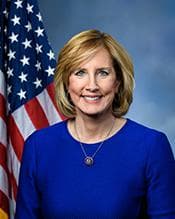
Claudia Tenney
Republican · NY · Representative
Votes with party: 98.8% (587 recorded votes)
Full profile: /officials/T000478
Source: Congress.gov · FEC
Cosponsors (1)
Members who have signed on to support this bill since introduction. Source: Congress.gov.
Latest Action
The most recent step in the bill's legislative path. Committee Activity below shows referrals and reports; the full action-by-action history including floor proceedings lives at Congress.gov →
Referred to the Committee on Energy and Commerce, and in addition to the Committee on Ways and Means, for a period to be subsequently determined by the Speaker, in each case for consideration of such provisions as fall within the jurisdiction of the committee concerned.
2026-07-13
Source: Congress.gov
Committee Activity
Currently in
- House Committee on Ways and MeansReferred To · 2026-07-13
- House Committee on Energy and CommerceReferred To · 2026-07-13
Plain-English Summary
The proposal would require nursing homes, hospitals, and other healthcare facilities that receive Medicare and Medicaid funding to allow patients to have visits from a designated essential caregiver during specified times, even during emergencies or public health crises. This would ensure that patients have consistent access to a trusted family member or caregiver for support and assistance with their care. The change would affect millions of patients in these facilities across the country and could help improve patient outcomes and emotional well-being.
AI-assisted summary generated from the official bill metadata (title, subjects, actions) sourced from Congress.gov. Cached and reviewed. Always verify against the official text linked below.
Full Bill Text
Verbatim text published on Congress.gov via GovInfo. Use Cmd+F / Ctrl+F to search within this excerpt.
119 HR 9641 IH: Essential Caregivers Act of 2026 U.S. House of Representatives 2026-07-13 text/xml EN Pursuant to Title 17 Section 105 of the United States Code, this file is not subject to copyright protection and is in the public domain. I119th CONGRESS2d SessionH. R. 9641IN THE HOUSE OF REPRESENTATIVESJuly 13, 2026Ms. Tenney (for herself and Mr. Larson of Connecticut) introduced the following bill; which was referred to the Committee on Energy and Commerce, and in addition to the Committee on Ways and Means, for a period to be subsequently determined by the Speaker, in each case for consideration of such provisions as fall within the jurisdiction of the committee concernedA BILLTo amend titles XVIII and XIX of the Social Security Act to require certain facilities to permit visits from an essential caregiver during certain periods. 1.Short titleThis Act may be cited as the Essential Caregivers Act of 2026. 2.Requiring certain facilities to permit visits from an essential caregiver during certain periods (a)Nursing facilities and skilled nursing facilities (1)In generalSections 1819(c) and 1919(c) of the Social Security Act (42 U.S.C. 1395i–3(c); 1396r(c)) are each amended— (A)in paragraph (3)— (i)in subparagraph (D), by striking and at the end; (ii)in subparagraph (E), by striking the period and inserting ; and; and (iii)by adding at the end the following new subparagraph: (F)implement and maintain, during any period during which regular visitation at such facility is suspended, the essential caregivers program described in paragraph (7).; and (B)by adding at the end the following new paragraph: (7)Essential caregivers program (A)In generalFor purposes of subparagraph (F) of paragraph (3), the essential caregivers program described in this paragraph is a program implemented by a facility described in such paragraph under which such facility must— (i)allow each resident of such facility the ability to elect 2 essential caregivers (as defined in subparagraph (D)) to have in-person access to such resident at such facility; (ii)allow each such resident to amend such election at any time; and (iii)subject to subparagraph (B), permit each such caregiver so elected by such resident in-person access to such resident. (B)Limitations on access (i)In generalThe Secretary may permit a facility described in subparagraph (A) to limit the access to an essential caregiver elected by a resident of such facility in accordance with guidance issued by the Secretary. Such guidance may— (I)permit such a facility to deny such a caregiver in-person access to such resident for the first 7 days during the period during which regular visitation at such facility is suspended (as described in paragraph (3)(F)), but only if, during the period during which such in-person access is denied, such facility provides such caregiver access to such resident through an audio-visual telecommunications system; (II)provide reasonable accommodations to protect the rights of a roommate of such resident; and (III)notwithstanding subclause (I)— (aa)allow such a facility to limit or deny such a caregiver in-person access to such resident if such caregiver displays symptoms of a serious infectious disease that poses a significant risk to the residents of such facility, but only until such time as such caregiver tests negative for such disease; (bb)allow such a facility to deny such a caregiver access to such resident if such caregiver fails to follow the safety protocols described in subparagraph (D); and (cc)allow only 1 such caregiver at a time in-person access to such resident. (ii)No limitation allowed for end-of-life careNotwithstanding clause (i), a facility described in subparagraph (A) may not deny an essential caregiver elected by a resident of such facility under subparagraph (A) in-person access to such resident, or limit the duration of such in-person access, if such…
Show the remaining 598 wordsHide the remaining 598 words
resident has in effect an election under section 1812(d). (C)Presumption of electionFor purposes of subparagraph (A), in the case of a resident who is unable, by reason of cognitive decline or mental disability, to make an election described in such subparagraph, a resident representative (as defined in section 483.5 of title 42, Code of Federal Regulations (or a successor regulation)) of such resident shall be permitted to make such election for such resident. (D)Essential caregiver definedFor purposes of this paragraph, the term essential caregiver means, with respect to a resident of a facility described in subparagraph (A), an individual who agrees to follow all protocols for physical safety and infection control established by such facility, which shall be clearly specified in writing and be not more restrictive than such protocols (including safety standards and entry requirements) applicable to staff of such facility. . (2)Timeline for investigation of complaintsSection 1128I(f)(2) of the Social Security Act (42 U.S.C. 1320a–7j(f)(2)) is amended by adding at the end the following new subparagraph: (C)Process for complaints relating to essential caregiver accessThe complaint resolution process established under subparagraph (B) shall provide that, in the case of a complaint relating to a violation of the requirements of section 1819(c)(3)(F) or section 1919(c)(3)(F)— (i)the State survey and certification agency shall prioritize the investigation of such complaint; and (ii)the deadline for notifying the complainant of the outcome of the investigation is not later than 3 days after such complaint is received.. (b)Long-term care hospitalsSection 1861(ccc)(4) of the Social Security Act (42 U.S.C. 1395x(ccc)(4)) is amended— (1)in subparagraph (B), by striking and at the end; (2)in subparagraph (C), by striking the period at the end and inserting ; and; and (3)by adding at the end the following new subparagraph: (D)the institution implements and maintains, during any period during which regular visitation at such institution is suspended, the essential caregivers program described in section 1819(c)(7) in the same manner as if such institution were a skilled nursing facility.. (c)Inpatient rehabilitation facilitiesSection 1866(a)(1) of the Social Security Act (42 U.S.C. 1395cc(a)(1)) is amended— (1)in subparagraph (X), by striking and at the end; (2)in subparagraph (Y), by striking the period at the end and inserting ; and; and (3)by inserting after subparagraph (Y) the following new subparagraph: (Z)in the case of an inpatient rehabilitation facility, to implement and maintain, during any period during which regular visitation at such facility is suspended, the essential caregivers program described in section 1819(c)(7) in the same manner as if such facility were a skilled nursing facility.. (d)Intermediate care facilities for individuals with intellectual disabilitiesSection 1905(d) of the Social Security Act (42 U.S.C. 1396d(d)) is amended— (1)in paragraph (2), by striking and at the end; (2)in paragraph (3), by striking the period at the end and inserting ; and; and (3)by adding at the end the following new paragraph: (4)the institution implements and maintains, during any period during which regular visitation at such institution is suspended, the essential caregivers program described in section 1919(c)(7) in the same manner as if such institution were a nursing facility.. (e)Nonapplicability of waiversSubparagraphs (A) and (B) of section 1135(b)(1) of the Social Security Act (42 U.S.C. 1320b–5(b)(1)) are each amended by inserting (other than the requirements of sections 1819(c)(3)(F), 1861(ccc)(4)(D), 1866(a)(1)(Z), 1905(d)(4), and 1919(c)(3)(F)) after requirements. (f)RegulationsThe Secretary of Health and Human Services shall promulgate regulations to carry out the amendments made by this section not later than 18 months after the date of the enactment of this section. (g)Effective dateThe amendments made by this section shall apply beginning 1 year after the date of the enactment of this section.
Related legislation
Bills by the same sponsor or covering overlapping subjects.
- HR9660To prohibit the use of funds by the intelligence community for research, development, or technical support performed by any National Laboratory that lacks certain security measures.Referred to Committee · 2026-07-13
- HR9601CANADA ActReferred to Committee · 2026-07-06
- HR9496End Tax Penalties on American Hostages ActReferred to Committee · 2026-07-01
- HR9487No Goodwill for Harming Women ActReferred to Committee · 2026-06-25