United States Coast Guard Corrosion Control Assistance Team Pilot Program Act
Sponsor
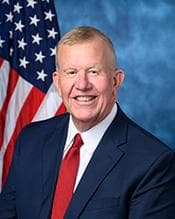
Full profile: /officials/E000235
Source: Congress.gov · FEC
Cosponsors (0)
Members who have signed on to support this bill since introduction. Source: Congress.gov.
No cosponsors on record. Bills can pass without cosponsors — this often means the sponsor introduced the bill alone, either because it's a messaging bill, a chairman's mark, or simply early in the legislative cycle.
Latest Action
The most recent step in the bill's legislative path. Committee Activity below shows referrals and reports; the full action-by-action history including floor proceedings lives at Congress.gov →
Committee Activity
Currently in
- House Committee on Transportation and InfrastructureReferred To · 2026-07-14
Plain-English Summary
The Coast Guard would launch a test program to help its local units prevent and manage rust and corrosion damage on equipment and facilities. This assistance would help reduce maintenance costs and extend the lifespan of Coast Guard assets like ships, buildings, and other infrastructure. The program would allow the Coast Guard to identify the most effective corrosion prevention methods before potentially expanding them service-wide.
AI-assisted summary generated from the official bill metadata (title, subjects, actions) sourced from Congress.gov. Cached and reviewed. Always verify against the official text linked below.
Full Bill Text
Verbatim text published on Congress.gov via GovInfo. Use Cmd+F / Ctrl+F to search within this excerpt.
119 HR 9674 IH: United States Coast Guard Corrosion Control Assistance Team Pilot Program Act U.S. House of Representatives 2026-07-14 text/xml EN Pursuant to Title 17 Section 105 of the United States Code, this file is not subject to copyright protection and is in the public domain. I119th CONGRESS2d SessionH. R. 9674IN THE HOUSE OF REPRESENTATIVESJuly 14, 2026Mr. Ezell introduced the following bill; which was referred to the Committee on Transportation and InfrastructureA BILLTo direct the Commandant of the Coast Guard to establish a pilot program to provide corrosion prevention and control assistance to Coast Guard field units, and for other purposes. 1.Short titleThis Act may be cited as the United States Coast Guard Corrosion Control Assistance Team Pilot Program Act. 2.Establishment of pilot program (a)EstablishmentNot later than 180 days after the date of enactment of this Act, the Commandant of the Coast Guard, acting through the Assistant Commandant for Acquisition, shall establish and carry out a pilot program, to be known as the United States Coast Guard Corrosion Control Assistance Team Pilot Program, to provide corrosion prevention and control assistance to Coast Guard field units. (b)ScopeIn carrying out the pilot program established under subsection (a), the Commandant shall— (1)provide on-site corrosion prevention and control technical advisory services and direct assistance to Coast Guard field units upon request; (2)develop and maintain a repository of corrosion prevention and control best practices and lessons learned applicable to Coast Guard maritime assets; (3)assess corrosion conditions and recommend corrective and preventive maintenance actions at Coast Guard units; (4)support training and education of Coast Guard personnel in corrosion prevention and control techniques; (5)coordinate with the Department of Defense Office of Corrosion Policy and Oversight and other relevant Federal agencies to leverage existing expertise, technical standards, and program data; and (6)collect data and metrics necessary to assess the effectiveness of the pilot program and inform future programmatic decisions. (c)Pilot program objectivesIn carrying out the pilot program established under subsection (a), the Commandant shall specifically seek to— (1)demonstrate the feasibility and effectiveness of a Coast Guard-specific corrosion control assistance capability; (2)apply lessons learned from the Navy’s Corrosion Control Assistance Team program and other Department of Defense corrosion programs to the unique operational environment of the Coast Guard; (3)quantify the impact of corrosion prevention and control interventions on Coast Guard asset readiness and service life; and (4)develop recommendations related Coast Guard anti-corrosion prevention and control initiatives. 3.ActivitiesIn carrying out the pilot program established under section 2, the Commandant may— (1)procure equipment, tools, and materials necessary for corrosion assessment and control activities; (2)train program personnel; (3)contract with non-Federal entities for technical expertise and advisory services; and (4)develop data systems and information management tools to support program operations. 4.Organization and staffing (a)Corrosion control assistance teams (1)In generalIn carrying out the pilot program established under section 2, the Commandant shall establish not fewer than 2 Corrosion Control Assistance Teams consisting of qualified corrosion prevention and control specialists. (2)Team compositionEach Corrosion Control Assistance Team shall consist of personnel with technical expertise in— (A)marine coatings and surface preparation; (B)cathodic protection systems; (C)coatings and corrosion control training; (D)corrosion control of C5I (Command and Control, Communications, Computers, Combat Systems, and Intelligence) systems; (E)corrosion engineering and failure analysis; and (F)preventive maintenance program development. (3)Qualifications (A)In generalMembers of the Corrosion Control Assistance Team shall possess relevant technical certifications, including corrosion control credentials from AMPP (including certified Coating Inspectors, Protective Coatings Specialists, Cathodic Protection Specialists, and Corrosion Specialists) and commensurate demonstrated expertise, as determined by the Commandant. (B)AccreditationFirms performing the work should be AMPP QP 5 Accredited. (b)Interagency coordinationIn establishing and staffing the pilot program, the Commandant may—…
Show the remaining 694 wordsHide the remaining 694 words
(1)enter into memoranda of understanding with the Secretary of the Navy, the Secretary of the Army, or the Secretary of the Air Force to detail military or civilian personnel with corrosion prevention and control expertise to the pilot program; (2)contract with private sector entities possessing relevant technical expertise; and (3)request technical support and subject matter expertise from the Department of Defense Office of Corrosion Policy and Oversight. 5.Reporting requirements (a)Interim reportNot later than 18 months after the date on which the pilot program commences operations, the Commandant shall submit to the Committee on Commerce, Science, and Transportation of the Senate and the Committee on Transportation and Infrastructure of the House of Representatives an interim report on the pilot program that includes— (1)a summary of field unit visits conducted and services provided; (2)preliminary data on the impact of program activities on asset readiness and maintenance costs; and (3)any significant challenges encountered in program implementation and proposed corrective actions. (b)Final reportNot later than 90 days before the date on which the pilot program is scheduled to terminate under section 6, the Commandant shall submit to the Committee on Commerce, Science, and Transportation of the Senate and the Committee on Transportation and Infrastructure of the House of Representatives a final report on the pilot program that includes— (1)a comprehensive assessment of the effectiveness of the pilot program in achieving the objectives described in section 4(c); (2)quantified metrics on improvements in asset service life and operational readiness attributable to pilot program activities; (3)lessons learned from the pilot program and from coordination with Department of Defense corrosion programs; (4)a detailed assessment of the feasibility and projected cost of a permanent, full-scale Coast Guard corrosion prevention and control program; and (5)a recommendation from the Commandant on whether to establish such a permanent program, and if so, a proposed program structure, staffing plan, and funding requirements. (c)PublicationThe Commandant shall make each report required under this section publicly available on a publicly accessible website of the Coast Guard. 6.Duration of pilot program (a)In generalThe pilot program shall terminate on the date that is 3 years after the date on which the pilot program commences operations. (b)ExtensionThe Commandant may extend the pilot program for a period of not more than 2 additional years if the Commandant determines, and notifies the committees specified in section 5 not later than 180 days before the termination date, that— (1)the pilot program has demonstrated sufficient effectiveness to warrant continuation; and (2)additional time is needed to collect data necessary to make a final determination on the establishment of a permanent program. 7.Consultation with Department of Defense (a)In generalIn carrying out the pilot program, the Commandant shall— (1)establish formal consultation mechanisms with the Office of Corrosion Policy and Oversight of the Department of Defense to access technical expertise, standards, and program data; (2)seek to leverage, to the maximum extent practicable, existing Department of Defense corrosion prevention and control tools, processes, and best practices; and (3)where appropriate, develop Coast Guard-specific adaptations of Department of Defense corrosion prevention and control standards and processes. (b)Navy CCAT consultationThe Commandant shall specifically seek to— (1)conduct a formal review of the structure, operations, and outcomes of the Navy’s Corrosion Control Assistance Team program prior to standing up the first Coast Guard Corrosion Control Assistance Team under this Act; (2)wherever practicable, adopt Navy Corrosion Control Assistance Team operational procedures and technical standards that are applicable to Coast Guard assets; and (3)establish a formal information sharing mechanism with the Navy Corrosion Control Assistance Team program to facilitate ongoing exchange of lessons learned and best practices. 8.Implementation planNot later than 1 year after the date of enactment of this Act, the Commandant shall submit to the Committee on Commerce, Science, and Transportation of the Senate and the Committee on Transportation and Infrastructure of the House of Representatives an implementation plan for the pilot program that includes— (1)identification of the Coast Guard districts or units to be served during the initial phase of the pilot program; (2)a proposed schedule for commencing pilot program operations; (3)a framework for measuring and reporting pilot program outcomes, including specific performance metrics; and (4)a description of planned consultation activities with the Department of Defense.
Related legislation
Bills by the same sponsor or covering overlapping subjects.
- HR9673MARA Act of 2026Referred to Committee · 2026-07-14
- HR9650Vessel Identification Protection Act of 2026Referred to Committee · 2026-07-13
- HR8542Offshore Parity Act of 2026Referred to Committee · 2026-06-03
- HCONRES98Expressing support for America's law enforcement professionals.Referred to Committee · 2026-05-12