PATH Act
Sponsor
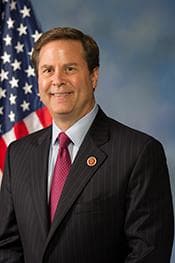
- Climate & Environment$11k
Full profile: /officials/N000188
Source: Congress.gov · FEC
Cosponsors (1)
Members who have signed on to support this bill since introduction. Source: Congress.gov.
Latest Action
The most recent step in the bill's legislative path. Committee Activity below shows referrals and reports; the full action-by-action history including floor proceedings lives at Congress.gov →
Committee Activity
Currently in
- House Committee on Education and WorkforceReferred To · 2026-07-14
Plain-English Summary
The Labor Department would fund and help create training programs that prepare people for apprenticeships in construction and building trades, with a focus on reaching people from low-income areas, rural communities, and other groups that have historically had fewer opportunities in these fields. These pre-apprenticeship programs would teach basic skills and help participants get ready to enter paid apprenticeships where they can earn while they learn a trade. The goal is to expand access to good-paying construction jobs for people who might otherwise face barriers to entering the industry.
AI-assisted summary generated from the official bill metadata (title, subjects, actions) sourced from Congress.gov. Cached and reviewed. Always verify against the official text linked below.
Full Bill Text
Verbatim text published on Congress.gov via GovInfo. Use Cmd+F / Ctrl+F to search within this excerpt.
119 HR 9684 IH: Pre-Apprenticeships To Hardhats Act U.S. House of Representatives 2026-07-14 text/xml EN Pursuant to Title 17 Section 105 of the United States Code, this file is not subject to copyright protection and is in the public domain. I119th CONGRESS2d SessionH. R. 9684IN THE HOUSE OF REPRESENTATIVESJuly 14, 2026Mr. Norcross (for himself and Mr. Fitzpatrick) introduced the following bill; which was referred to the Committee on Education and WorkforceA BILLTo direct the Secretary of Labor to support the development of pre-apprenticeship programs in the building and construction trades that serve underrepresented populations, including individuals from low income and rural census tracts. 1.Short titleThis Act may be cited as the Pre-Apprenticeships To Hardhats Act or the PATH Act. 2.DefinitionsIn this Act: (1)Area career and technical schoolThe term area career and technical school has the meaning given the term in section 3 of the Carl D. Perkins Career and Technical Education Act of 2006 (20 U.S.C. 2302). (2)Federally recognized Indian TribeThe term Federally recognized Indian Tribe has the meaning given the term Indian Tribe in section 4 of the Indian Self-Determination and Education Assistance Act (25 U.S.C. 5304). (3)High schoolThe term high school means a nonprofit institutional day or residential school in a State that— (A)provides secondary education, as determined under State law; (B)grants a diploma, as defined by the State; and (C)includes, at least, grade 12. (4)In-demand industry sector or occupationThe term in-demand industry sector or occupation has the meaning given the term in section 3 of the Workforce Innovation and Opportunity Act (29 U.S.C. 3102). (5)Local educational agency; state educational agencyThe terms local educational agency and State educational agency have the meanings given the terms in section 8101 of the Elementary and Secondary Education Act of 1965 (20 U.S.C. 7801). (6)Local and state workforce development boardsThe terms local workforce development board and State workforce development board have the meanings given the terms local board and State board, respectively, in section 3 of the Workforce Innovation and Opportunity Act (29 U.S.C. 3102). (7)Postsecondary educational institutionThe term postsecondary educational institution has the meaning given the term institution of higher education in section 102 of the Higher Education Act of 1965 (20 U.S.C. 1002). (8)Pre-apprenticeship programThe term pre-apprenticeship program means a program or set of strategies that— (A)is designed to prepare individuals to enter and succeed in a registered apprenticeship program in the building or construction trades; (B)is carried out by an eligible entity described in section 3(c) that has a documented partnership with at least 1 sponsor of a registered apprenticeship program; and (C)includes training (including a curriculum for the training) that— (i)is aligned with industry standards; (ii)is reviewed and approved annually by sponsors of the registered apprenticeship programs within the documented partnership; and (iii)will prepare an individual for a registered apprenticeship program by teaching the skills and competencies needed to enter such a registered apprenticeship program. (9)Registered apprenticeship programThe term registered apprenticeship program means a program registered under the Act of August 16, 1937 (commonly known as the National Apprenticeship Act; 50 Stat. 664, chapter 663; 29 U.S.C. 50 et seq.). (10)SecretaryThe term Secretary means the Secretary of Labor. (11)SponsorThe term sponsor means an employer, joint labor-management partnership, trade association, professional association, labor organization, or other entity that administers a registered apprenticeship program. (12)StateThe term State has the meaning given the term in section 3 of the Workforce Innovation and Opportunity Act (29 U.S.C. 3102). (13)Underrepresented populationThe term underrepresented population means a group of individuals who— (A)are members of a racial minority, women, military veterans, members of a Federally recognized Indian Tribe, or long-term unemployed; or (B)come from a…
Show the remaining 1,080 wordsHide the remaining 1,080 words
geographic area consisting of a single census tract or a group of census tracts, each of which meets the criteria for a low-income community, as defined in section 45D(e) of the Internal Revenue Code of 1986. 3.Supporting the development of pre-apprenticeship programs (a)In generalThe Secretary shall make grants on a competitive basis to eligible entities described in subsection (c) that submit applications under subsection (e) to provide the Federal share described in subsection (g) of the cost of carrying out projects under subsection (f) that support the development of pre-apprenticeship programs in the building and construction trades. (b)PeriodThe Secretary shall make initial grants under subsection (a) for periods of not more than 3 years, except that if an eligible entity demonstrates satisfactory performance under subsection (h) by the end of that third year, the Secretary may extend the grant period up to an additional 1 year for that entity. (c)Eligible entityTo be eligible to receive a grant from the Secretary under subsection (a), an entity shall be a nonprofit partnership that— (1)includes the equal participation of industry, including public or private employers, and labor organizations, including joint labor or management training programs, and may include State and local workforce development boards, community-based organizations, educational institutions (such as postsecondary educational institutions, local educational agencies, State educational agencies, high schools, and area career and technical schools), small businesses, cooperatives, State and local veterans agencies, and veterans service organizations; and (2)demonstrates— (A)experience in implementing and operating worker skills training and education programs; (B)the ability to identify and involve in training programs carried out under this grant, target populations of individuals who would benefit from training, and be actively involved in activities related to all building and construction trade crafts; and (C)the ability to help individuals achieve economic self-sufficiency. (d)PriorityIn awarding grants under subsection (a), the Secretary shall give priority to eligible entities that leverage additional public and private resources to fund programs under this Act, including cash or in-kind matches from participating employers. (e)ApplicationsTo be eligible to receive a grant from the Secretary under subsection (a), an eligible entity shall submit an application to the Secretary at such time, in such manner, and containing such information as the Secretary may require, including— (1)with respect to the proposed pre-apprenticeship program, a description of the training and curriculum described in section 2(8)(C) and how the proposed pre-apprenticeship program makes individuals who successfully complete the pre-apprenticeship program qualified to enter into an established registered apprenticeship program; (2)evidence that there are or will be sufficient openings available in such registered apprenticeship program to enable the sponsor of such registered apprenticeship program to place into a corresponding registered apprenticeship those individuals who successfully complete the pre-apprenticeship program; (3)information about the entity that demonstrates the existence of an active, advisory partnership between the partners described in subsection (c)(1) and the capacity of a training and education provider of the entity to provide the training and education services necessary for a pre-apprenticeship program; and (4)information about the proposed pre-apprenticeship program that demonstrates— (A)that the program is in an in-demand industry or occupation in the region in which the project is located; (B)the inclusion in the program of career exploration focused activities, such as career information activities, and résumé preparation; (C)if the entity carrying out the project includes a high school, that the model to be used for the program leads to a high school diploma for participants without such a diploma; (D)how the pre-apprenticeship program is aligned with and leverages resources of career and technical education programs, programs and services authorized under the Workforce Innovation and Opportunity Act (29 U.S.C. 3101 et seq.), or activities of entities that provide supportive services for participants in pre-apprenticeship programs; and (E)that the project aligns with an established registered apprenticeship program, including that the model used for the program leads to the attainment of skills and competencies necessary for entrance into the registered apprenticeship program for participants. (f)Use of funds (1)In generalAn eligible entity that receives a grant under subsection (a) shall use the grant funds to carry out a project that implements a pre-apprenticeship program, including the activities described in paragraphs (2) and (3). (2)Required activitiesThe eligible entity shall use such grant funds— (A)to pay for the cost of training or education associated with a pre-apprenticeship program for individuals from an underrepresented population; (B)for curriculum development that align with the requirements of the appropriate registered apprenticeship programs and learning assessments; (C)to maintain a connection between the pre-apprenticeship program and registered apprenticeship program; (D)for assessments of potential participants for, and enrollment of the participants in, the pre-apprenticeship program; and (E)to conduct evaluations described in subsection (h)(2). (3)Allowable activitiesThe eligible entity may use such grant funds for— (A)stipends for participants during work-based training in the program; and (B)coordination of activities under this subsection with activities carried out under the Carl D. Perkins Career and Technical Education Act of 2006 (20 U.S.C. 2301 et seq.) or the Workforce Innovation and Opportunity Act (29 U.S.C. 3101 et seq.). (g)Federal share (1)In generalThe Federal share of the cost described in subsection (a) shall be 75 percent of the total cost of the projects described in such subsection carried out by an eligible entity. (2)Non-federal shareThe eligible entity may contribute the non-Federal share of such cost in cash or in-kind, fairly evaluated, including plant, equipment, or services. (h)Performance (1)MeasuresThe Secretary shall identify a set of common measures that, at a minimum, include measures of entry into a registered apprenticeship program and that are aligned, as appropriate, with performance accountability measures described in section 116(c) of the Workforce Innovation and Opportunity Act (29 U.S.C. 3141(c)) for the local workforce development area and with corresponding measures under the Carl D. Perkins Career and Technical Education Act of 2006 (20 U.S.C. 2301 et seq.). (2)EvaluationsEach eligible entity that receives a grant to carry out a project under subsection (a) shall arrange for another qualified entity to conduct an evaluation, or shall participate in an evaluation sponsored by the Secretary, of the project using the identified common measures, and shall, to the extent practicable, cooperate with the evaluator in any evaluations of activities carried out under paragraph. (3)ExtensionsThe Secretary shall use the results of an evaluation for a project under paragraph (2) to determine whether to extend the grant period, or renew a grant, for the project under subsection (b). (i)Authorization of appropriationsThere is authorized to be appropriated to carry out this section $20,000,000 for fiscal year 2027 and each subsequent fiscal year.
Related legislation
Bills by the same sponsor or covering overlapping subjects.
- HRES1392Supporting the designation of a "National Learn to Swim Week" beginning on the 4th Sunday in June.Referred to Committee · 2026-06-25
- HR5408Faster Labor Contracts ActPassed House · 2026-06-10
- HRES1140Providing for consideration of the bill (H.R. 5408) to accelerate workplace time-to-contract under the National Labor Relations Act.Passed House · 2026-06-09
- HR7471Give America a Raise ActReferred to Committee · 2026-02-10