HR9695Referred to Committee
McCarty and Heideman Air Safety Enhancement Act
Introduced
In Committee
3
Passed One Chamber4
Passed Both5
Signed into Law119th
Congress
2026-07-15
Introduced
2
Cosponsors
HR
ⓘType
Sponsor
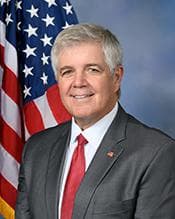
Cliff Bentz
Republican · OR · Representative
Votes with party: 98.0% (607 recorded votes)
Full profile: /officials/B000668
Source: Congress.gov · FEC
Cosponsors (2)
Members who have signed on to support this bill since introduction. Source: Congress.gov.
Latest Action
The most recent step in the bill's legislative path. Committee Activity below shows referrals and reports; the full action-by-action history including floor proceedings lives at Congress.gov →
Committee Activity
Currently in
- House Committee on Transportation and InfrastructureReferred To · 2026-07-15
Plain-English Summary
The Federal Aviation Administration would be required to review and update its rules and guidelines for aircraft operating at low altitudes to improve safety in that airspace. This affects drone operators, helicopter pilots, and other aircraft users who fly at lower elevations, as well as people and property on the ground that could be impacted by low-altitude flights. The changes could result in new or modified regulations that make low-altitude airspace operations safer and clearer for everyone involved.
AI-assisted summary generated from the official bill metadata (title, subjects, actions) sourced from Congress.gov. Cached and reviewed. Always verify against the official text linked below.
Full Bill Text
Verbatim text published on Congress.gov via GovInfo. Use Cmd+F / Ctrl+F to search within this excerpt.
119 HR 9695 IH: McCarty and Heideman Air Safety Enhancement Act U.S. House of Representatives 2026-07-15 text/xml EN Pursuant to Title 17 Section 105 of the United States Code, this file is not subject to copyright protection and is in the public domain. I119th CONGRESS2d SessionH. R. 9695IN THE HOUSE OF REPRESENTATIVESJuly 15, 2026Mr. Bentz (for himself, Ms. Hoyle of Oregon, and Mr. Crane) introduced the following bill; which was referred to the Committee on Transportation and InfrastructureA BILLTo require the Administrator of the Federal Aviation Administration to review and update Federal Aviation Administration regulations, policies, and guidance related to low-altitude airspace safety, and for other purposes. 1.Short titleThis Act may be cited as the McCarty and Heideman Air Safety Enhancement Act. 2.Review of FAA policies and regulations related to low-altitude airspace safety (a)Review (1)In generalNot later than 6 months after the date of enactment of this section, the Administrator of the Federal Aviation Administration (referred to in this section as the Administrator), in consultation with the stakeholders described in paragraph (3), shall review existing Federal Aviation Administration (referred to in this section as FAA) policies and regulations related to low-altitude airspace safety for the purpose of identifying appropriate policy, operational, or technical improvements, such as updated requirements related to markings on slacklines. (2)ConsiderationsIn conducting the review required under paragraph (1), the Administrator shall consider the following: (A)Whether existing FAA policies regarding obstruction marking and lighting clearly identify when slacklines, tight ropes, highlines, wires, and similar temporary obstructions should be marked, lighted, or otherwise identified and whether such policies are effective in reducing the risk of low-altitude aircraft strikes. (B)Whether the FAA can improve Notices to Airmen, obstacle data, or other aeronautical information products to better support consistent digital depiction across flight planning tools, electronic flight bags, avionics systems, and other associated tools utilized by industry, including information related to coordinates, radius-distance, maximum height above ground level, effective dates and times, responsible party information, and any marking, lighting, or identification required by the FAA. (C)Whether the FAA can improve coordination with relevant Federal, State, Tribal, and local land management agencies, including the National Park Service, the Bureau of Land Management, and the United States Forest Service, with respect to activities that may create low-altitude aviation hazards. (D)Whether the existing penalties for violations of low-altitude airspace requirements are sufficient to ensure the safety of such airspace. (E)Suggested improvements to FAA outreach to non-aviation communities whose activities may create hazards in the national airspace system to improve awareness of, and compliance with, applicable requirements and guidance. (3)ConsultationFor purposes of paragraph (1), the stakeholders described in this paragraph are representatives of the following: (A)Helicopter and powered-lift aircraft operators and pilots. (B)Air medical operators. (C)General aviation pilots and aircraft owners. (D)Agricultural aviation operators. (E)Uncrewed aircraft system operators. (F)Aviation safety experts with specific knowledge of vertical flight operations. (G)Any other stakeholder the Administrator determines appropriate. (b)Updated regulations, guidance, and policiesIf, upon conducting the review required under subsection (a), the Administrator determines that the policies described in subsection (a)(2)(A) do not adequately identify requirements related to markings or lightings for slacklines or other temporary obstructions, the Administrator shall, not later than 1 year after the date of enactment of this section, update FAA regulations, guidance, or policies as necessary. (c)BriefingNot later than 90 days after the completion of the review required under subsection (a), the Administrator shall brief the Committee on Commerce, Science, and Transportation and the Committee on Appropriations of the Senate and the Committee on Transportation and Infrastructure and the Committee on Appropriations of the House of Representatives regarding— (1)the findings of such review;…
Show the remaining 30 wordsHide the remaining 30 words
(2)the regulations, guidance, or policies to be updated pursuant to subsection (b); and (3)any recommendations for legislative action determined appropriate by the Administrator to improve the safety of low-altitude airspace.
Related legislation
Bills by the same sponsor or covering overlapping subjects.
- HR655Dalles Watershed Development ActPassed House · 2026-07-15
- HR9337Hydropower Licensing Affordability ActReferred to Committee · 2026-06-18
- HR8958To grant to Crook County, Oregon, a right-of-way for the construction of a new road in Juniper Canyon, and for other purposes.Referred to Committee · 2026-05-21
- HR8259Federal Water Projects Consultation Improvement Act of 2026Referred to Committee · 2026-04-29