HR9716Referred to Committee
PRIVACY Act
Introduced
In Committee
3
Passed One Chamber4
Passed Both5
Signed into Law119th
Congress
2026-07-15
Introduced
2
Cosponsors
HR
ⓘType
Sponsor
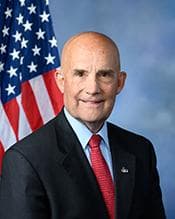
Keith Self
Republican · TX · Representative
Votes with party: 83.6% (617 recorded votes)
Full profile: /officials/S001224
Source: Congress.gov · FEC
Cosponsors (2)
Members who have signed on to support this bill since introduction. Source: Congress.gov.
Latest Action
The most recent step in the bill's legislative path. Committee Activity below shows referrals and reports; the full action-by-action history including floor proceedings lives at Congress.gov →
Referred to the Committee on the Judiciary, and in addition to the Committee on Oversight and Government Reform, for a period to be subsequently determined by the Speaker, in each case for consideration of such provisions as fall within the jurisdiction of the committee concerned.
2026-07-15
Source: Congress.gov
Committee Activity
Currently in
- House Committee on Oversight and Government ReformReferred To · 2026-07-15
- House Committee on the JudiciaryReferred To · 2026-07-15
Plain-English Summary
Federal law enforcement agencies would be prohibited from using surveillance equipment or data collected by state and local police—such as cameras, license plate readers, or facial recognition systems—without getting a warrant first. The bill would create a list of covered surveillance technologies to clarify which tools fall under this restriction, preventing federal agencies from bypassing warrant requirements by accessing information that local authorities have already gathered. This would limit how federal agencies like the FBI can access surveillance data without judicial approval.
AI-assisted summary generated from the official bill metadata (title, subjects, actions) sourced from Congress.gov. Cached and reviewed. Always verify against the official text linked below.
Full Bill Text
Verbatim text published on Congress.gov via GovInfo. Use Cmd+F / Ctrl+F to search within this excerpt.
[Congressional Bills 119th Congress] [From the U.S. Government Publishing Office] [H.R. 9716 Introduced in House (IH)] <DOC> 119th CONGRESS 2d Session H. R. 9716 To prohibit Federal law enforcement agencies from using or accessing State or local surveillance equipment or data to circumvent warrant requirements, to establish a Jurisdictional Wall List of covered technologies, and for other purposes. _______________________________________________________________________ IN THE HOUSE OF REPRESENTATIVES July 15, 2026 Mr. Self (for himself, Mr. Crane, and Mr. Clyde) introduced the following bill; which was referred to the Committee on the Judiciary, and in addition to the Committee on Oversight and Government Reform, for a period to be subsequently determined by the Speaker, in each case for consideration of such provisions as fall within the jurisdiction of the committee concerned _______________________________________________________________________ A BILL To prohibit Federal law enforcement agencies from using or accessing State or local surveillance equipment or data to circumvent warrant requirements, to establish a Jurisdictional Wall List of covered technologies, and for other purposes. Be it enacted by the Senate and House of Representatives of the United States of America in Congress assembled, SECTION 1. SHORT TITLE. This Act may be cited as the ``Protecting Rights in Video and Equipment Acquired Discovery Act'' or the ``PRIVACY Act''. SEC. 2. USE OF STATE OR LOCAL SURVEILLANCE DEVICES AND DATA BY FEDERAL LAW ENFORCEMENT AGENCIES. (a) Jurisdictional Wall List.-- (1) Establishment.--The Attorney General shall create and maintain a list of surveillance devices and technologies operated by State or local law enforcement agencies that collect surveillance data to be known as the ``Jurisdictional Wall List''. (2) Contents.--The list shall include, at a minimum-- (A) automated license plate readers; (B) cameras that capture images of a vehicle's occupants; (C) cameras that provide continuous coverage of a particular location; (D) long-range microphones; (E) electronic fingerprint detection technology; (F) field chemical scanners; and (G) any substantially similar technology determined appropriate by the Attorney General. (3) Periodic review.--At least every 90 days, the Attorney General shall review the list and determine whether to add, remove, or redesignate any devices or technologies. (4) Notice of additions.--The Attorney General shall publish in the Federal Register any addition to the list under paragraph (3), not less than 30 days prior to the effective date of such addition, including a description sufficient to identify the device or technology and its primary collection capabilities. (b) Warrant Requirement.--Except as provided in subsection (e), the head of a Federal law enforcement agency may not access, receive, query, direct, task, or otherwise obtain covered surveillance data without a warrant issued by a Federal judge. (c) Retention; Use as Evidence.-- (1) Retention limitation.--The head of a Federal law enforcement agency may not retain covered surveillance data obtained pursuant to subsection (b) for more than 30 days unless-- (A) the issuing court authorizes extended retention for good cause shown, not to exceed an additional 90 days; or (B) the data constitutes evidence in an ongoing prosecution for which charges have been filed, in which case the retention of such data shall be limited to the needs of the prosecution and subject to protective orders. (2) Suppression and inadmissibility.-- (A) In general.--If the head of a Federal law enforcement agency obtains covered surveillance data without a warrant in violation of subsection (b), or retains covered surveillance data lawfully obtained longer than permitted under paragraph (1), such data may not be admitted by the prosecution as evidence in any trial, hearing, or other proceeding in Federal court. (B) Not excluded from disclosure.--The Government may not exclude data described in subparagraph (A) from any disclosure obligation in a proceeding in…
Show the remaining 1,591 wordsHide the remaining 1,591 words
Federal Court solely on the basis of the manner in which such data was obtained. (C) Application of rule 16.--Data described in subparagraph (A) that is within the possession, custody, or control of the Government shall be subject to the disclosure requirements of Rule 16 of the Federal Rules of Criminal Procedure, including the requirement that the Government permit inspection, copying, or photographing of such materials when material to preparing the defense, intended for use in the Government's case in chief, or obtained from or belonging to the defendant. (D) Brady obligations.--Notwithstanding any other provision of law, the Government shall disclose to the defendant any information described in paragraph (A) that is favorable to the accused and material to guilt or punishment, including exculpatory or impeachment evidence, consistent with any applicable constitutional requirements. (E) No waiver of other remedies.--Nothing in this section shall be construed to limit a defendant's ability to seek suppression of evidence obtained by impermissible means or to pursue any other remedy available under the Constitution or laws of the United States. (3) Incidental collection.--If the head of a Federal law enforcement agency obtains covered surveillance data pursuant to subsection (b), and in the course of doing so, obtains covered surveillance data that exceeds the scope of the warrant, they shall minimize and dispose of such data, and may not use such data for any investigative or evidentiary purpose, except as otherwise required by law to prevent an imminent threat to life where no less intrusive alternative exists. (d) Record Keeping.--If the head of a Federal law enforcement agency obtains covered surveillance data pursuant to subsection (b), they shall maintain contemporaneous records of each access, query, acquisition, direction, or tasking, including the warrant number, issuing court, date ranges, devices or technologies involved, and any retention extensions, and shall make such records available for review by the Attorney General. (e) Exceptions; Defined Rights.-- (1) Emergency exception.-- (A) In general.--The requirements under this section shall not apply if the head of a Federal law enforcement agency reasonably believes that an emergency involving imminent danger of death or serious physical injury requires the immediate acquisition of covered surveillance data and that obtaining a warrant is impracticable. (B) Minimum data necessary.--Any covered surveillance data acquired under this paragraph shall be limited to the minimum amount of data necessary to prevent death or serious physical injury. (C) Disposal of data.--The head of a Federal law enforcement agency that acquires covered surveillance data under this paragraph shall document such acquisition not later than 24 hours after acquiring the data, and dispose of such data not later than 30 days after acquiring the data, unless the head of the agency obtains a warrant for such data in accordance with this section. (2) Consent.--The requirements under this section shall not apply if the person to whom the covered surveillance data pertains provides voluntary, informed, written consent to the head of the agency to access the data. SEC. 3. LIMITATIONS ON FEDERAL FUNDING FOR SURVEILLANCE DEVICES. (a) Prohibition.--No Federal funds may be used to purchase, acquire, or install a surveillance device or technology listed on the Jurisdictional Wall List. (b) Exceptions.--Subsection (a) shall not apply to the use of grant funds for-- (1) systems used solely as part of a federally funded highway for the collection of tolls; (2) school violence prevention programs, with respect to which the device or technology is limited in scope, operated with parental and community oversight, and subject to minimization and retention limits that are consistent with this Act; (3) grants under section 1701 of the Omnibus Crime Control and Safe Streets Act of 1968 (34 U.S.C. 10381), if the use of the device or technology is subject to minimization and retention limits that are consistent with this Act; or (4) portable systems operated for specific, case-bounded law enforcement purposes pursuant to a duly issued warrant, and subject to minimization and retention limits consistent with this Act. (c) Byrne Jag Amendment.--Section 501(a) of the Omnibus Crime Control and Safe Streets Act of 1968 (34 U.S.C. 10152(a)) is amended by adding at the end the following: ``(3) Limitation on use of grant.--A grant under this part may not be used to purchase, acquire, or install a surveillance device or technology on Jurisdictional Wall List established under section 2 of the Protecting Rights in Video and Equipment Acquired Discovery Act.''. SEC. 4. REPORTING TO CONGRESSIONAL COMMITTEES. (a) Semiannual Reports.--Beginning 180 days after the effective date of this Act, and every 180 days thereafter, the Attorney General shall submit to the Committees on the Judiciary of the House of Representatives and of the Senate a report detailing for the previous 180-day period-- (1) the number of incidents in which Federal law enforcement agencies accessed, received, queried, directed, tasked, or otherwise obtained covered surveillance data; (2) the number and nature of warrants obtained for the acquisition of such data, including the courts that issued such warrants, and the general categories of offenses for which the data was sought; (3) the number of emergency exception uses under section 2(e)(1), including justifications and outcomes; and (4) any instances in which a Federal law enforcement agency obtained covered surveillance data without a warrant in violation of subsection (b), or retained covered surveillance data lawfully obtained longer than permitted under paragraph (1), and any corrective actions taken by the agency. (b) Agency Reporting.--The head of each Federal law enforcement agency that obtains covered surveillance data shall provide such information as is necessary to the Attorney General for purposes of the reports under subsection (a). (c) Public Summary.--The Attorney General shall make an unclassified summary of each report publicly available. SEC. 5. MINIMIZATION STANDARDS. The Attorney General shall promulgate regulations-- (1) establishing minimization procedures applicable to the acquisition of covered surveillance data under this Act including-- (A) prompt deletion of non-pertinent data; (B) strict segregation of data to prevent the use of such data outside the scope of the warrant; and (C) a prohibition on using covered surveillance data to identify individuals engaged in protected First Amendment activity absent probable cause and a warrant; (2) providing for the auditing of Federal law enforcement agencies to ensure compliance with the requirements under this Act; and (3) providing for training for employees of Federal law enforcement agencies to ensure compliance with the requirements under this Act. SEC. 6. NO RETALIATORY USE. The head of a Federal law enforcement agency may not use covered surveillance data to monitor, track, or locate an individual based solely on the exercise of rights secured by the First Amendment to the Constitution. SEC. 7. RULES OF CONSTRUCTION. Nothing in this Act may be construed to-- (1) authorize any collection of surveillance data not otherwise permitted by law; (2) diminish State or local obligations to comply with the laws of the State or locality; or (3) limit any greater privacy protections afforded by other Federal or State law. SEC. 8. ENFORCEMENT. (a) Civil Action.--Any person with respect to whom the head of a Federal law enforcement agency obtains covered surveillance data in violation of this Act may bring a civil action in an appropriate United States district court against the United States, any Federal law enforcement agency, or officer or employee thereof acting in an official capacity, for declaratory and injunctive relief, actual damages, and reasonable attorney's fees and costs. Sovereign immunity is waived to the extent necessary to provide such relief. (b) Administrative Sanctions.--An employee of a Federal law enforcement agency who knowingly or recklessly violates this Act shall be subject to appropriate administrative sanctions, including suspension, termination, and referral to the Office of Professional Responsibility of the applicable Federal law enforcement agency. (c) Inspector General Oversight.--The Inspector General of each Federal law enforcement agency shall conduct periodic audits of the compliance of the relevant Federal law enforcement agency with this Act and shall report their findings and recommendations to the Attorney General and to the Committees on the Judiciary of the House of Representatives and of the Senate. SEC. 9. SEVERABILITY; CONSTITUTIONAL VALIDITY. (a) Severability.--If any provision of this Act, or the application of such provision to any person or circumstance, is held to be invalid, the remainder of this Act, and the application of the remaining provisions to any person or circumstance, shall not be affected. (b) Constitutional Validity.--Nothing in this Act shall be construed to limit, diminish, or expand the validity of the Constitution of the United States, including rights secured by the Fourth Amendment. (c) Other Law.--This Act does not limit requirements under chapters 119 and 121 of title 18, United States Code (commonly referred to as the ``Electronic Communications Privacy Act''), section 552a of title 5, United States Code. SEC. 10. DEFINITIONS. In this Act: (1) Surveillance data.--The term ``surveillance data'' means any image, video, audio, signal, location information, metadata, or derivative analytical output collected, generated, or stored by a surveillance device or technology. (2) Covered surveillance data.--The term ``covered surveillance data'' means surveillance data that is collected by a State or local law enforcement agency using any device or technology that is on the Jurisdictional Wall List as of the date of the collection of such data. (3) Federal law enforcement agency.--The term ``Federal law enforcement agency'' has the meaning given such term in section 2 of the Enhanced Border Security and Visa Entry Reform Act of 2002 (8 U.S.C. 1701). SEC. 11. EFFECTIVE DATE. This Act and the amendments made by this Act shall take effect on the date that is180 days after the date of enactment of this Act. <all>
Related legislation
Bills by the same sponsor or covering overlapping subjects.
- HR9567Preserving Our Constitution Act of 2026Referred to Committee · 2026-06-30
- HJRES198Proposing an amendment to the Constitution of the United States to repeal the seventeenth article of amendment.Referred to Committee · 2026-06-25
- HR8767Compensation Fund Recrediting ActReferred to Committee · 2026-06-25
- HR9366Eastern Frontier Defense Infrastructure Readiness ActReferred to Committee · 2026-06-18