To prohibit Federal agencies from purchasing or accessing automated surveillance systems that identify, track, or record individuals, and for other purposes.
Sponsor
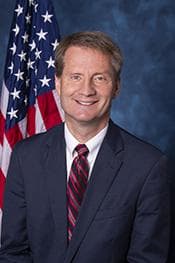
Full profile: /officials/B001309
Source: Congress.gov · FEC
Cosponsors (0)
Members who have signed on to support this bill since introduction. Source: Congress.gov.
No cosponsors on record. Bills can pass without cosponsors — this often means the sponsor introduced the bill alone, either because it's a messaging bill, a chairman's mark, or simply early in the legislative cycle.
Latest Action
The most recent step in the bill's legislative path. Committee Activity below shows referrals and reports; the full action-by-action history including floor proceedings lives at Congress.gov →
Committee Activity
Currently in
- House Committee on Oversight and Government ReformReferred To · 2026-07-21
Plain-English Summary
Federal agencies would be banned from buying or using surveillance technology that can identify, track, or record people without explicit legal authorization. This restriction would apply to facial recognition systems, license plate readers, and similar automated tools used by agencies like the FBI, ICE, and local police departments that receive federal funding. The measure aims to protect Americans' privacy by preventing widespread government surveillance while still allowing agencies to use these tools only when Congress specifically approves them for particular purposes.
AI-assisted summary generated from the official bill metadata (title, subjects, actions) sourced from Congress.gov. Cached and reviewed. Always verify against the official text linked below.
Full Bill Text
Verbatim text published on Congress.gov via GovInfo. Use Cmd+F / Ctrl+F to search within this excerpt.
[Congressional Bills 119th Congress] [From the U.S. Government Publishing Office] [H.R. 9800 Introduced in House (IH)] <DOC> 119th CONGRESS 2d Session H. R. 9800 To prohibit Federal agencies from purchasing or accessing automated surveillance systems that identify, track, or record individuals, and for other purposes. _______________________________________________________________________ IN THE HOUSE OF REPRESENTATIVES July 21, 2026 Mr. Burchett introduced the following bill; which was referred to the Committee on Oversight and Government Reform _______________________________________________________________________ A BILL To prohibit Federal agencies from purchasing or accessing automated surveillance systems that identify, track, or record individuals, and for other purposes. Be it enacted by the Senate and House of Representatives of the United States of America in Congress assembled, SECTION 1. SHORT TITLE. This Act may be cited as the ``Protection Against Mass Surveillance Act''. SEC. 2. PROHIBITION. (a) Federal Agencies.--No Federal agency may purchase, deploy, operate, access, or contract for any automated surveillance system that identifies, tracks, or records individuals through any of the following: (1) An automated license plate recognition system, including a Flock Safety camera. (2) Facial recognition technology. (3) Technology that uses biometric identification, including fingerprint, iris, retinal, voice, gait, or other personally identifiable biological characteristics. (4) Any technology that captures, analyzes, or retains a person's image, likeness, or other personally identifiable information for the purpose of conducting persistent or mass surveillance. (b) State and Local Governments.--A State, local, or Tribal government may not use Federal funds to purchase, deploy, operate, access, or contract for any automated surveillance system that identifies, tracks, or records individuals through any of the systems or technologies described in paragraphs (1) through (4) of subsection (a). SEC. 3. COLLECTED DATA. (a) Deletion.--The head of any Federal agency that obtains data in violation of section 2(a) shall delete such data not later than 30 days after it is obtained. (b) Inadmissibility.--Any data obtained by the Federal Government in violation of section 2(a) may not be admitted into evidence in any court or administrative proceeding. <all>
Related legislation
Bills by the same sponsor or covering overlapping subjects.
- HR9775Concealed Crime Prevention ActReferred to Committee · 2026-07-20
- HR9697Cyber Letters of Marque and Reprisal ActReferred to Committee · 2026-07-15
- HR9649Stop Retail Food Store SNAP Trafficking Act of 2026Referred to Committee · 2026-07-13
- HR9456SNAP Citizenship and Residency Act of 2026Referred to Committee · 2026-06-25