State Offices of Women’s Health Support and Expansion Act
Sponsor
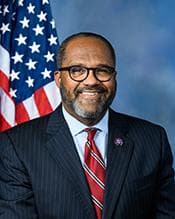
Full profile: /officials/C001125
Source: Congress.gov · FEC
Cosponsors (0)
Members who have signed on to support this bill since introduction. Source: Congress.gov.
No cosponsors on record. Bills can pass without cosponsors — this often means the sponsor introduced the bill alone, either because it's a messaging bill, a chairman's mark, or simply early in the legislative cycle.
Latest Action
The most recent step in the bill's legislative path. Committee Activity below shows referrals and reports; the full action-by-action history including floor proceedings lives at Congress.gov →
Committee Activity
Currently in
- House Committee on Energy and CommerceReferred To · 2026-07-22
Plain-English Summary
The federal government would provide grants to states to create and run dedicated offices focused on women's health issues, helping coordinate healthcare services and programs specifically for women. These state offices would work to improve women's access to preventive care, treatment, and health information across their regions. The funding would support states in addressing health concerns that disproportionately affect women and ensuring their healthcare needs are properly addressed.
AI-assisted summary generated from the official bill metadata (title, subjects, actions) sourced from Congress.gov. Cached and reviewed. Always verify against the official text linked below.
Full Bill Text
Verbatim text published on Congress.gov via GovInfo. Use Cmd+F / Ctrl+F to search within this excerpt.
[Congressional Bills 119th Congress] [From the U.S. Government Publishing Office] [H.R. 9842 Introduced in House (IH)] <DOC> 119th CONGRESS 2d Session H. R. 9842 To amend the Public Health Service Act to authorize grants to establish and maintain State offices of women's health, and for other purposes. _______________________________________________________________________ IN THE HOUSE OF REPRESENTATIVES July 22, 2026 Mr. Carter of Louisiana introduced the following bill; which was referred to the Committee on Energy and Commerce _______________________________________________________________________ A BILL To amend the Public Health Service Act to authorize grants to establish and maintain State offices of women's health, and for other purposes. Be it enacted by the Senate and House of Representatives of the United States of America in Congress assembled, SECTION 1. SHORT TITLE. This Act may be cited as the ``State Offices of Women's Health Support and Expansion Act''. SEC. 2. GRANT PROGRAM FOR ESTABLISHMENT AND MAINTENANCE OF STATE OFFICES OF WOMEN'S HEALTH. The Public Health Service Act is amended by inserting after section 229 (42 U.S.C. 237a) the following: ``SEC. 229A. GRANT PROGRAM FOR ESTABLISHMENT AND MAINTENANCE OF STATE OFFICES OF WOMEN'S HEALTH. ``(a) In General.--The Secretary, acting through the Deputy Assistant Secretary for Women's Health, shall award a grant to each eligible State for the establishment and maintenance of a State office of women's health. ``(b) Eligibility.--To be eligible to receive a grant under this section, the State shall submit to the Secretary an application in such form, in such manner, and containing such information and assurances as the Secretary considers appropriate. ``(c) Allowable Uses of Funds.--A State receiving a grant under this section shall use the grant to carry out 1 or more of the following activities: ``(1) To establish a State office of women's heath under the department of health of such State, or to maintain an existing State office of women's health. ``(2) To educate the public about women's health by taking the following actions: ``(A) Establishing appropriate forums, programs, or public education initiatives regarding women's health, with an emphasis on preventive health, early detection, chronic disease management, reproductive health, maternal health, and health promotion across the lifespan. ``(B) Identifying, coordinating, and establishing priorities for programs, services, and resources for women's health issues and concerns with an emphasis on preventive health, early detection, chronic disease management, reproductive health, maternal health, and health promotion across the lifespan. ``(C) Serving as a publicly accessible, centralized clearinghouse and a resource for women's health data, evidence-based best practices, available services, and strategies to address disparities and address women's health issues. ``(D) Collecting, analyzing, and disseminating relevant research and public health data conducted or compiled by State health departments, public institutions of higher education, federally qualified health centers, rural health clinics, nonprofit health organizations, and other public health entities, and providing such information to policymakers, providers, community-based organizations, and the public. ``(E) Developing and recommending funding and program activities to the head of the department of health of the State to educate the public on women's health initiatives on topics including-- ``(i) health needs throughout a woman's life; ``(ii) chronic conditions that significantly affect women, including heart disease, cancer, and osteoporosis; ``(iii) access to health care for women; ``(iv) poverty and women's health; ``(v) the leading causes of morbidity and mortality for women; ``(vi) health disparities of women; ``(vii) reproductive health; and ``(viii) maternal health, including maternal mortality and morbidity, the leading causes of maternal mortality and severe maternal morbidity in the State, such as racial and ethnic disparities in maternal health, and increasing awareness of evidence-based interventions available to reduce maternal mortality and morbidity. ``(F) Preparing materials for publication…
Show the remaining 913 wordsHide the remaining 913 words
and dissemination to the public on women's health. ``(G) Conducting public educational forums or education initiatives in the State to-- ``(i) raise public awareness about women's health issues; and ``(ii) educate the public about women's health programs, issues, and services. ``(H) Coordinating with other entities that focus on women's health or women's issues on the activities and programs of the office on women's health and prioritizing outreach and coordination in rural and medically underserved areas. ``(3) Addressing social determinants of health by supporting initiatives that address housing instability, transportation barriers, food insecurity, workforce participation, access to childcare, and other non-clinical factors impacting health outcomes. ``(4) Establishing and convening, not less than annually, a community stakeholder advisory panel that will help in developing all strategic priorities, funding recommendations, and public awareness activities under this section. Stakeholders shall be sought through a fair and statewide call that is aligned with the goals and objectives of the State office of women's health and reflective of residents of the State. The panel shall consist of-- ``(A) representatives from community-based organizations that represent the most impacted communities, including those serving rural women, low- income women, and women of color; ``(B) women's health care providers, including obstetricians and gynecologists; ``(C) representatives from federally qualified health centers, health centers funded under title X, and rural health facilities; ``(D) representatives from nonprofit organizations with expertise related to the health of women; ``(E) individuals with expertise in public health research and education; ``(F) representatives from patient and consumer health advocacy organizations; ``(G) State Medicaid officials; ``(H) individuals from communities most impacted by reproductive health disparities, as determined appropriate by the State department of health; and ``(I) representatives from relevant State-based medical societies with expertise in the health of women. ``(d) Prohibited Uses of Funds.--A grant under this section may not be used, directly or indirectly (including through a subgrant), to-- ``(1) intentionally discourage or dissuade individuals from seeking or obtaining reproductive health services, including-- ``(A) abortion, including medication abortion; ``(B) contraceptive care; ``(C) assisted reproductive care; ``(D) hormone therapy; ``(E) sex education; and ``(F) testing for sexually transmitted infections; ``(2) withhold or misrepresent scientifically and medically accurate, evidence-based information regarding contraceptive methods, including over-the-counter contraceptives and prescription contraceptives (such as intrauterine devices and emergency contraception); ``(3) withhold, suppress, or misrepresent evidence-based clinical information regarding medication abortion, including the use of mifepristone and misoprostol; ``(4) withhold, suppress, or misrepresent medically accurate, evidence-based sex education information; ``(5) withhold, suppress, or misrepresent medically accurate, evidence-based public health information or information on women's health across the lifespan, including information on vaccines; or ``(6) restrict the ability of any person to seek or access any lawful health service. ``(e) Allocation of Funding.--Each fiscal year, the Secretary shall allocate funding under this section by distributing-- ``(1) 50 percent of such funding equally among all eligible States; and ``(2) 50 percent of such funding based on a formula accounting for female population, maternal mortality rates, poverty rates among women, and rural population proportion in each eligible State. ``(f) Privacy Protection.--Data collected by a State office of women's health established pursuant to this section may not-- ``(1) be used by, or in collaboration with, any digital website, application, or other platform that stores or processes personal data and information on servers external to those owned or controlled by the individuals serviced; ``(2) be used for any civil action, criminal prosecution, investigation, or other proceeding; or ``(3) be disclosed, sold, or shared with any digital website, application, or other platform in any way that identifies an individual or their health care provider. ``(g) Medicaid Data Sharing.-- ``(1) In general.--A State department of health may, in coordination with the State Medicaid agency, establish a data sharing agreement to facilitate the exchange of high-level, aggregate, de-identified data for the purpose of-- ``(A) identifying gaps in women's health services covered under the State Medicaid program; and ``(B) developing evidence-based proposals for Medicaid section 1115 demonstration waivers or State plan amendments that would improve women's health outcomes across the spectrum of care and throughout the lifespan. ``(2) Privacy protections.--Any data shared under this subsection shall be-- ``(A) de-identified in accordance with the standards described in section 164.514 of title 45, Code of Federal Regulations; ``(B) aggregated at a level that prevents the identification of any individual; and ``(C) used solely for the public health purposes described in this subsection. ``(h) Reporting.--A State receiving a grant under this section shall require the head of each State office of women's health being funded through the grant to annually submit to the Secretary a report-- ``(1) describing the priorities and services needed for women's health in the State; ``(2) identifying areas in need of improvement in women's health in the State; ``(3) summarizing the public education activities, community forums, and outreach efforts conducted during the preceding fiscal year; ``(4) describing the activities and findings of the community stakeholder advisory panel established under subsection (c)(4), if applicable; ``(5) that includes aggregate, anonymized data sufficient to support evidence-based policymaking and agency regulatory actions, but does not include any personally identifiable information, protected health information, or data that can be used to identify individual patients or providers or to subject individuals to criminal liability; and ``(6) identifying measurable improvements achieved and remaining gaps in access and outcomes, including disaggregated data by race, ethnicity, income level, and geography. ``(i) Authorization of Appropriations.--To carry out this section, there are authorized to be appropriated $55,000,000 for each of fiscal years 2027 through 2031.''. <all>
Related legislation
Bills by the same sponsor or covering overlapping subjects.
- HR8874Homeland Security Capabilities Preservation Reporting Act of 2026Passed House · 2026-07-14
- HR5109To require the Administrator of the Transportation Security Administration of the United States to develop guidelines to improve returning citizens' access to the Transportation Worker Identification Credential program, to assist individuals in custody of Federal, State, and local prisons in pre-applying or preparing applications for Transportation Worker Identification Credential cards, and to assist individuals requesting an appeal or waiver of preliminary determination of ineligibility, and for other purposes.Reported by Committee · 2026-06-24
- HR9344EDUCATE Act of 2026Referred to Committee · 2026-06-18
- HR9312To amend the Immigration and Nationality Act to include the processing of crawfish as agricultural labor or services, and for other purposes.Referred to Committee · 2026-06-15