Responsible Artificial Intelligence for Veterans Act of 2026
Sponsor
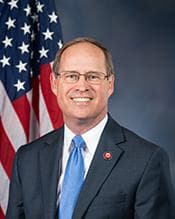
Full profile: /officials/M001210
Source: Congress.gov · FEC
Cosponsors (0)
Members who have signed on to support this bill since introduction. Source: Congress.gov.
No cosponsors on record. Bills can pass without cosponsors — this often means the sponsor introduced the bill alone, either because it's a messaging bill, a chairman's mark, or simply early in the legislative cycle.
Latest Action
The most recent step in the bill's legislative path. Committee Activity below shows referrals and reports; the full action-by-action history including floor proceedings lives at Congress.gov →
Committee Activity
Currently in
- House Committee on Veterans' AffairsReferred To · 2026-07-22
Plain-English Summary
The Department of Veterans Affairs would hire an independent research organization to evaluate how artificial intelligence systems are being used in veterans' healthcare to ensure they're working properly and safely. This evaluation would examine whether these AI tools are helping doctors make better decisions and providing good care to veterans without introducing errors or bias. The goal is to give Congress and VA leadership an honest assessment of whether the AI systems are actually benefiting veterans or if changes are needed.
AI-assisted summary generated from the official bill metadata (title, subjects, actions) sourced from Congress.gov. Cached and reviewed. Always verify against the official text linked below.
Full Bill Text
Verbatim text published on Congress.gov via GovInfo. Use Cmd+F / Ctrl+F to search within this excerpt.
[Congressional Bills 119th Congress] [From the U.S. Government Publishing Office] [H.R. 9862 Introduced in House (IH)] <DOC> 119th CONGRESS 2d Session H. R. 9862 To direct the Secretary of Veterans Affairs to seek to enter into an agreement with a federally funded research and development center for the conduct of an independent evaluation of artificial intelligence systems in use by the Veterans Health Administration, and for other purposes. _______________________________________________________________________ IN THE HOUSE OF REPRESENTATIVES July 22, 2026 Mr. Murphy introduced the following bill; which was referred to the Committee on Veterans' Affairs _______________________________________________________________________ A BILL To direct the Secretary of Veterans Affairs to seek to enter into an agreement with a federally funded research and development center for the conduct of an independent evaluation of artificial intelligence systems in use by the Veterans Health Administration, and for other purposes. Be it enacted by the Senate and House of Representatives of the United States of America in Congress assembled, SECTION 1. SHORT TITLE. This Act may be cited as the ``Responsible Artificial Intelligence for Veterans Act of 2026''. SEC. 2. INDEPENDENT EVALUATION OF ARTIFICIAL INTELLIGENCE SYSTEMS USED BY VETERANS HEALTH ADMINISTRATION. (a) Independent Evaluation.--Not later than 90 days after the date of the enactment of this Act, the Secretary of Veterans Affairs shall seek to enter into an agreement with a federally funded research and development center for the conduct of an independent evaluation of artificial intelligence systems deployed, in pilot, or in active development, for clinical use within the Veterans Health Administration. An evaluation conducted pursuant to such an agreement shall prioritize not fewer than five artificial intelligence systems that are deployed at scale or that present an elevated clinical, operational, or patient safety risk. (b) Matters for Evaluation.--An independent evaluation carried out under subsection (a) shall address each of the following with respect to the artificial intelligence systems evaluated: (1) The integration and operational readiness of the systems, including-- (A) the adequacy of technological infrastructure supporting deployment and scalability; (B) the interoperability of the systems with electronic health records, medical devices, pharmacy systems, and other relevant platforms; and (C) the effect of the system on clinical workflows, staffing models, and operational processes. (2) The governance, monitoring, and accountability of the systems, including-- (A) the clarity of responsibility for system outputs, errors, and adverse outcomes; (B) policies governing consent, data use, secondary use, and veteran data protections; (C) lifecycle management processes, including model updates, retraining, and version control; (D) oversight mechanisms, internal controls, and audit structures; and (E) compliance with applicable Federal privacy, cybersecurity, and health information laws. (3) The performance and model integrity of the systems, including-- (A) quantitative performance metrics, including accuracy, sensitivity, and specificity, as applicable; (B) the presence of disparate performance across demographic groups and the mitigation of bias; (C) reliability, repeatability, and reproducibility across facilities and veteran populations; (D) robustness to data variability and generalizability beyond training environments; and (E) transparency, explainability, and interpretability of model outputs sufficient to permit clinical oversight. (4) The safety and human oversight of the systems, including-- (A) the risk of patient harm, including failure modes and escalation pathways; (B) safeguards ensuring that the artificial intelligence system functions as a clinical decision- support tool and does not supplant clinical judgment; and (C) whether clinicians retain the authority and technical ability to override or contest system outputs. (5) The veteran-centric design and adoption of the systems, including-- (A) alignment of the system with the needs, accessibility requirements, and preferences of veterans; (B) usability within clinical workflows; (C) the availability of training resources and implementation support for clinical staff; and (D) the…
Show the remaining 862 wordsHide the remaining 862 words
degree of clinician and veteran trust in system outputs. (6) The cost and resource stewardship of the systems, including-- (A) acquisition, deployment, sustainment, and cloud or compute costs; (B) evidence of cost-effectiveness or cost-utility relative to clinical outcomes; and (C) resource implications for staffing, administrative burden, and system maintenance. (7) The transparency and documentation of the systems, including-- (A) whether system logic, data sources, training inputs, and decision pathways are sufficiently documented and auditable; and (B) whether such documentation is available for oversight review. (8) The scalability and effect of the systems, including-- (A) the clinical effectiveness of each system in real-world practice, including its performance across diverse veteran populations and care settings; (B) whether each system improves clinical efficiency, including reductions in administrative burden, wait times, or duplicative services; (C) the clinical utility of each system in supporting medical decision making and improving veteran care outcomes; and (D) where applicable, the environmental effect of deployment at scale, including energy consumption and sustainability implications. (c) Risk-Based Selection Criteria.--In selecting systems for evaluation pursuant to an agreement entered into under subsection (a), the federally funded research and development center shall prioritize artificial intelligence systems that-- (1) influence diagnosis, treatment decisions, triage, eligibility determinations, or benefits adjudication; (2) are deployed across multiple medical centers or impact a significant veteran population; (3) are deployed at scale across facilities, programs, or beneficiary populations such that errors, bias, or system failure could reasonably affect a significant number of veterans; (4) use predictive analytics, large language models, imaging analysis, or automated clinical decision-support tools; or (5) present material cybersecurity, privacy, or patient- safety risks. (d) Access to Information.--The Secretary shall ensure that a federally funded research and development center that enters into an agreement under subsection (a) is provided with access to relevant Department of Veterans Affairs information without delay and in a manner sufficient to permit completion of the evaluation within the timeframe required under subsection (e). Such information shall include, with respect to artificial intelligence systems used by the Veterans Health Administration-- (1) relevant contracts, technical documentation, validation studies, and model cards; (2) performance data and audit logs; (3) incident reports and corrective action plans; and (4) policies governing artificial intelligence governance, data use, and risk management. (e) Reporting Requirements.-- (1) Report on findings of evaluation.-- (A) In general.--An agreement entered into under subsection (a) shall specify that, not later than the date that is one year after the date of the agreement, a federally funded research and development center agrees to submit to the Secretary and to the Committees on Veterans' Affairs of the House of Representatives and the Senate a report that includes each of the following: (i) Findings for each evaluated system. (ii) Identification of material risks to patient safety, data security, equity, or clinical integrity. (iii) Recommendations for corrective action, governance improvements, or suspension of deployment where warranted. (iv) Identification of systemic gaps in the artificial intelligence governance framework of the Department. (B) Form.--The report required by subparagraph (A) shall be submitted in unclassified and unredacted form, but may include a classified annex. (2) Corrective action plan; department accountability.--Not later than 120 days after receipt of a report under paragraph (1), the Secretary shall submit to the Committees on Veterans' Affairs of the House of Representatives and the Senate a report that includes-- (A) a response of the Secretary addressing each finding and recommendation contained the report; and (B) a corrective action plan that includes-- (i) an identification of specific actions the Department will take to address each finding; (ii) an assignment of responsibility to appropriate Department officials; (iii) measurable milestones and deadlines for implementation; and (iv) an identification of any risk that the Secretary determines will remain unmitigated and the justification for such determination. (3) Comptroller general review.--Not later than 180 days after submission of the corrective action plan under paragraph (2), the Comptroller General of the United States shall-- (A) conduct a review of-- (i) the independent evaluation carried out pursuant to subsection (a); and (ii) the corrective action plan submitted under paragraph (2) and the initial efforts of the Secretary to carry out the plan; and (B) provide to the Committees on Veterans' Affairs of the House of Representatives and the Senate a briefing on the review that includes any recommendations of the Comptroller General for improvement. (4) Committee access and transparency.--The Secretary shall provide to the Committees on Veterans' Affairs of the House of Representatives and the Senate-- (A) the full independent evaluation produced pursuant to subsection (a), including all supporting analyses and technical appendices; and (B) any subsequent implementation updates to the corrective action plan submitted under paragraph (2), without redaction, except for information that is classified or otherwise protected by law. (f) Use of Existing Funds.--The Secretary shall carry out this section using amounts otherwise authorized and appropriated to the Department. No additional amounts are authorized to be appropriated to carry out this section. (g) Artificial Intelligence Defined.--In this section, the term ``artificial intelligence'' has the meaning given that term in section 5002(3) of the National Artificial Intelligence Initiative Act of 2020 (division E of Public Law 116-283; 134 Stat. 4523; 15 U.S.C. 9401 note). <all>
Related legislation
Bills by the same sponsor or covering overlapping subjects.
- HR4931National Park System Long-Term Lease Investment ActReferred to Committee · 2026-07-22
- HR9524Veterans Care and Cost Coordination Act of 2026Referred to Committee · 2026-07-17
- HR9504Tax Exempt Hospital Transparency ActReferred to Committee · 2026-07-01
- HR8553POPCaP Authorization Act of 2026Referred to Committee · 2026-06-12