To direct the Secretary of Health and Human Services to conduct a demonstration program to share savings with plans that invest in preventing the progression of kidney disease to end-stage renal disease.
Sponsor
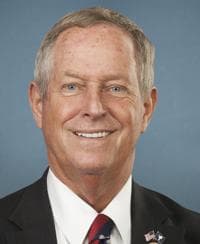
Full profile: /officials/W000795
Source: Congress.gov · FEC
Cosponsors (0)
Members who have signed on to support this bill since introduction. Source: Congress.gov.
No cosponsors on record. Bills can pass without cosponsors — this often means the sponsor introduced the bill alone, either because it's a messaging bill, a chairman's mark, or simply early in the legislative cycle.
Latest Action
The most recent step in the bill's legislative path. Committee Activity below shows referrals and reports; the full action-by-action history including floor proceedings lives at Congress.gov →
Referred to the Committee on Energy and Commerce, and in addition to the Committee on Ways and Means, for a period to be subsequently determined by the Speaker, in each case for consideration of such provisions as fall within the jurisdiction of the committee concerned.
2026-07-22
Source: Congress.gov
Committee Activity
Currently in
- House Committee on Ways and MeansReferred To · 2026-07-22
- House Committee on Energy and CommerceReferred To · 2026-07-22
Plain-English Summary
The federal government would test a program that rewards health insurance plans financially when they successfully prevent kidney disease patients from reaching end-stage renal disease, which requires dialysis or transplants. Plans that invest in preventive care and achieve better outcomes would share in the savings generated by avoiding expensive end-stage treatments. This demonstration would help determine whether giving insurers financial incentives to focus on kidney disease prevention could improve patient health while reducing overall healthcare costs.
AI-assisted summary generated from the official bill metadata (title, subjects, actions) sourced from Congress.gov. Cached and reviewed. Always verify against the official text linked below.
Full Bill Text
Verbatim text published on Congress.gov via GovInfo. Use Cmd+F / Ctrl+F to search within this excerpt.
[Congressional Bills 119th Congress] [From the U.S. Government Publishing Office] [H.R. 9891 Introduced in House (IH)] <DOC> 119th CONGRESS 2d Session H. R. 9891 To direct the Secretary of Health and Human Services to conduct a demonstration program to share savings with plans that invest in preventing the progression of kidney disease to end-stage renal disease. _______________________________________________________________________ IN THE HOUSE OF REPRESENTATIVES July 22, 2026 Mr. Wilson of South Carolina introduced the following bill; which was referred to the Committee on Energy and Commerce, and in addition to the Committee on Ways and Means, for a period to be subsequently determined by the Speaker, in each case for consideration of such provisions as fall within the jurisdiction of the committee concerned _______________________________________________________________________ A BILL To direct the Secretary of Health and Human Services to conduct a demonstration program to share savings with plans that invest in preventing the progression of kidney disease to end-stage renal disease. Be it enacted by the Senate and House of Representatives of the United States of America in Congress assembled, SECTION 1. SHORT TITLE; TABLE OF CONTENTS. (a) Short Title.--This Act may be cited as the ``PREVENT ESRD Act''. (b) Table of Contents.--The table of contents for this Act is as follows: Sec. 1. Short title; table of contents. Sec. 2. Findings. Sec. 3. Kidney disease listening session. Sec. 4. Multipayer kidney care medicare savings demonstration program. SEC. 2. FINDINGS. Congress finds the following: (1) Kidney disease impacts nearly 36,000,000 Americans, with many not getting the education, screening, or care that they need to delay or prevent progression to kidney failure or end-stage renal disease (ESRD). Indeed, 9 in 10 United States patients with kidney disease are unaware they have the disease. (2) Kidney disease accounts for $126,000,000,000 in direct health care spending each year, with an outsized impact on the Medicare program, which covers most patients once they progress to ESRD. Currently, Medicare spends more than $50,000,000,000 each year on treatment related to ESRD. (3) Given the tremendous burden that ESRD places on Medicare and the Nation's health care system, the Federal Government has a unique role to play in advancing policies intended to slow or prevent progression to ESRD. (4) A voluntary payment model that allows health insurance plans, including group health insurance and individual health insurance plans sold in the commercial market, to share in the savings they create for Medicare by preventing or delaying ESRD could help promote earlier screening and enhanced treatment for patients with kidney disease. SEC. 3. KIDNEY DISEASE LISTENING SESSION. Not later than 180 days after the date of enactment of this Act, the Secretary of Health and Human Services shall host a listening session to raise awareness regarding kidney disease and to identify policy solutions to improve rates of screening, diagnosis, and treatment of earlier stages of kidney disease in an effort to prevent or delay the onset of ESRD. The Secretary shall include experts in all elements of kidney disease, including clinical experts, patients and patient advocates, health plans, and innovators, as participants in the listening session. SEC. 4. MULTIPAYER KIDNEY CARE MEDICARE SAVINGS DEMONSTRATION PROGRAM. Title XVIII of the Social Security Act (42 U.S.C. 1395 et seq.) is amended by inserting after section 1866G (42 U.S.C. 1395cc-7) the following new section: ``SEC. 1866H. MULTIPAYER KIDNEY CARE MEDICARE SAVINGS DEMONSTRATION PROGRAM. ``(a) Implementation of Demonstration Program.-- ``(1) In general.--Not later than January 1, 2027, the Secretary of Health and Human Services shall implement a 10- year demonstration program (in this section referred to as the `Program') for the purpose of increasing access for qualifying kidney…
Show the remaining 2,172 wordsHide the remaining 2,172 words
disease enrollees to specified kidney care services to prevent the progression to end-stage renal disease (ESRD). ``(2) Specified kidney care services defined.-- ``(A) For the purposes of this section, the term `specified kidney care services' means items and services furnished to individuals diagnosed with kidney disease to prevent the progression to ESRD and that would be covered under this title if furnished to an individual entitled to part A or enrolled in part B, to include prescription drugs eligible for coverage under part D. ``(B) The Secretary shall specify the scope of specified kidney care services, which shall include at a minimum items and services within the following categories and align with the typical scope of benefits offered by insurers for each type of insurance coverage specified in paragraph (3): ``(i) Screening measures, including urinalysis (e.g., proteinuria and kidney- specific dipsticks), blood-based testing, genetic testing, and other forms of screening necessary to screen for and diagnose kidney disease. ``(ii) All drugs approved under section 355 of title 21, United States Code, and all biologicals licensed under section 262 of title 42, United States Code, by the Food and Drug Administration with an indication for slowing the decline or loss of kidney function or to reduce the risk of decline in kidney function. ``(ii) Nutrition services and education. ``(iii) Disease management support, including patient education, follow-up support to link diagnoses to care, genetic counseling, access to community health workers, and referrals to services to support health-related social needs. ``(iv) Consultation and evaluation regarding kidney health. ``(v) Other items and services specified by the Secretary. ``(C) The specified kidney care services shall include items and services furnished via telehealth if medically appropriate and consistent with other applicable requirements. ``(3) Eligible plans.--In this section, the term `eligible plan' means a group health plan (as defined under section 2791(b)(4) of the Public Health Service Act), a plan offered by a health insurance issuer (as defined under section 2791(b)(2) of such Act), a State Medicaid program, a Medicaid managed care plan, a plan that enrolls individuals under part C of this title, or any other type of plan specified by the Secretary. ``(4) Participating plans.--In this section, the term `participating plan' means an eligible plan that voluntarily applied for the Program, was selected to participate pursuant to an application and selection process established by the Secretary, and signs an agreement with the Secretary to participate in the Program. ``(5) Eligible enrollees.--In this section, the term `qualifying kidney disease enrollee' means an individual who is enrolled in a participating plan, has a current diagnosis of kidney disease, and meets such other criteria as the Secretary determines appropriate. ``(b) Program Design.-- ``(1) Program agreement.--Under the Program, the Secretary shall enter into agreements with participating plans, pursuant to which the participating plans-- ``(A) must implement certain activities, as specified by the Secretary, designed to ensure access to specified kidney care services, including to develop a screening plan to ensure regular screening of all enrollees for kidney disease during annual exams with primary care providers and otherwise; ``(B) must submit historical and plan year data, including protected health information, as necessary (as defined in regulations issued pursuant to section 17921(12) of title 42, United States Code), in a form and manner specified by the Secretary, subject to verification and audit by the Secretary, including-- ``(i) the prevalence and incidence of kidney disease and ESRD and the stage of chronic kidney disease (CKD) or other type of kidney disease; ``(ii) the rate of transition to the next stage of CKD (if applicable) and from CKD to ERSD among its enrollee population; ``(iii) the utilization of specified kidney care services by qualifying kidney disease enrollees; ``(iv) the quality of care and health outcomes among qualifying kidney disease enrollees; and ``(v) kidney disease screening rates for all plan enrollees and for specific at-risk subpopulations as the Secretary may specify, such as enrollees diagnosed with diabetes or hypertension and enrollees residing in rural areas; ``(C) must cover all specified kidney care services and must apply the lowest level of cost sharing under the plan's benefit design to such services and shall not apply utilization management to specified kidney care services that are drugs and biologicals in a manner more restrictive than the Food and Drug Administration-approved labeling; ``(D) must provide coverage without cost-sharing for all plan enrollees for screening for kidney disease; and ``(E) may be eligible to receive payment for a portion of the savings that accrue to Medicare, as estimated by the Secretary under subsection (c)(3), if the number of the plan's qualifying kidney disease enrollees who progress to the next stage of CKD or to ESRD is below the risk-adjusted benchmark established by the Secretary under subsection (c)(1)(C). ``(2) Termination.-- ``(A) Termination by the secretary.--The Secretary may terminate an agreement with a participating plan if the plan fails to comply with the terms of the program agreement described in paragraph (1). ``(B) Treatment of shared savings in the event of termination.--If the agreement between the Secretary and a participating plan is terminated in the middle of a year of the Program, the participating plan is not eligible for any shared savings payments under the Program for that year and the Secretary may recoup shared savings paid for a prior year. ``(3) Evaluation.--The Secretary shall design the Program in a manner to enable independent evaluation, using novel methods, of the extent to which the Program-- ``(A) preserves kidney function or otherwise delays the development of ESRD among qualifying kidney disease enrollees in participating plans and matched control groups from nonparticipating plans, with controls selected based on demographic, clinical, and geographic characteristics; and ``(B) reduces expenditures under the Medicare program, as estimated through a comparison between participating plans and appropriate control groups, adjusting for relevant demographic, clinical, and geographic factors. ``(4) Consultation.--In designing the Program, including in implementing the definition of specified kidney care services as described in subsection (a)(2), the Secretary shall, not later than 3 months after the date of enactment of this section, solicit public input in the form of a request for information and public listening sessions and shall consult with specialists in the field of kidney care, sponsors and administrators of eligible plans, and representatives of patient advocacy groups. ``(c) Shared Savings Payments.-- ``(1) Eligibility for shared savings payments.-- ``(A) In general.--Under the Program, subject to the prohibition in this subsection on avoidance of at- risk individuals and any other conditions established by the Secretary, for each year a participating plan has an agreement in effect under the Program, the plan shall be eligible to receive a shared savings payment under paragraph (3), provided that-- ``(i) the participating plan covers specified kidney care services, including kidney disease screening as described in subsection (a)(2)(B)(i); and ``(ii) the participating plan's CKD and ESRD progression rates, adjusted for enrollee characteristics, are below the benchmark described in subparagraph (B) by at least the minimum percentage specified by the Secretary. This minimum percentage shall reflect normal variation in kidney disease progression rates. ``(B) Benchmark.--For each year of the Program, the Secretary shall establish a benchmark for each participating plan based on-- ``(i) the plan's historical progression rates to the next stage of CKD or from CKD to ESRD over the most recent 3 years using data submitted by the plan, which may be subject to verification and audit by the Secretary to validate its accuracy; ``(ii) national and regional disease prevalence over the most recent 3 years; ``(iii) adjustments for enrollee characteristics; ``(iv) adjustments for increased screening rates during the plan's participation in the Program; and ``(v) such other factors as determined appropriate by the Secretary. The benchmark shall be reset at the start of each year of the Program. ``(2) Quality performance standards.--The Secretary shall establish quality performance standards to assess the quality of care furnished by participating plans. The Secretary shall seek to improve the quality of care furnished by participating plans over time by specifying higher standards, new measures, or both for purposes of assessing such quality of care. ``(3) Amount of shared savings payment.-- ``(A) For each year of the Program for each participating plan, the Secretary shall determine, and the Chief Actuary of the Centers for Medicare and Medicaid Services shall certify, the savings that accrue to Medicare as a result of the participating plan's performance exceeding the benchmark as calculated under paragraph (1)(B), for example as a result of an individual not obtaining Medicare eligibility under section 1881 on the basis of progressing to ESRD during that year. ``(B) Subject to performance with respect to the quality performance standards established by the Secretary under paragraph (2), if a participating plan meets the eligibility requirements described above for a given year of the Program, the participating plan shall be paid 25 percent of the Medicare savings amount described in subparagraph (A) for that plan. ``(4) Prohibition on avoidance of at-risk patients.--If the Secretary determines that a participating plan has taken action to avoid enrolling kidney disease patients at elevated risk of developing ESRD, or failed to adhere to the terms of the participation agreement specified in subsection (b)(1), or takes other actions in order to increase the likelihood of receiving shared savings payments under the Program, the Secretary may reduce, recoup, or deny shared savings payments or terminate the participating plan from the Program. ``(5) Optional advance investment payment.--The Secretary may provide, in an amount determined by the Secretary, an advance investment payment to each participating plan for each qualifying kidney disease enrollee for each year of the plan's participation with respect to such enrollee. A participating plan must use such advance investment payment to improve the quality, efficiency, or uptake of specified kidney care items and services furnished to beneficiaries, which may include coming into compliance with the plan's participation requirements under the Program described in this section. The participating plan must report to the Administrator of the Centers for Medicare and Medicaid Services how the plan used such funds not later than 180 days after the end of the relevant year in a form and manner specified by the Secretary. The total amount of any such advance investment payment in a given year shall be deducted from the shared savings payment received by the participating plan for the relevant year, if any, up to the amount of such shared savings in the event the amount of the advance investment payment exceeds the amount of the shared savings payment. ``(d) Prohibition on Duplicate Payments.--The Secretary shall ensure that no duplicate payments under this section are made by Medicare with respect to a qualifying kidney disease enrollee. ``(e) Monitoring, Evaluation, and Reporting by the Secretary.-- ``(1) Monitoring and evaluation.--The Secretary shall monitor and evaluate the Program on an ongoing basis and shall conduct an intermediate and final evaluation of the Program in accordance with the requirements described in subsection (b)(3). Each such evaluation shall determine the extent to which the purpose of increasing access for qualifying kidney disease enrollees to specified kidney care services to prevent the progression to ESRD has been accomplished under the Program. ``(2) Reporting.--The Secretary shall submit to Congress-- ``(A) not later than 3 years after the date of the implementation of the Program, a report with respect to the intermediate evaluation; and ``(B) a report with respect to the final evaluation not later than 6 years after such date. ``(f) Funding.-- ``(1) Administrative funding.--For purposes of administering and carrying out the Program, other than for payments for items and services furnished under this title, advance investment payment under subsection (c)(5), and shared savings payment under subsection (c)(3), in addition to funds otherwise appropriated, there shall be transferred to the Secretary for the Centers for Medicare and Medicaid Services Program Management Account from the Federal Hospital Insurance Trust Fund under section 1817 and the Federal Supplementary Medical Insurance Trust Fund under section 1841 (in proportions determined appropriate by the Secretary) $5,000,000 for each of fiscal years 2026 through 2038. Amounts transferred under this subsection for a fiscal year shall be available until expended. ``(2) Shared savings payments.--The shared savings payments and advance investment payments under the Program, for each of program years 2027 through 2037, shall be made from the Federal Hospital Insurance Trust Fund established under section 1817 and the Federal Supplementary Medical Insurance Trust Fund established under section 1841 in such proportion as the Secretary determines reflects the relative weight that benefits under part A and under part B represents of the actuarial value of the Medicare savings determined under subsection (c)(3) and the advance investment payments determined under subsection (c)(5). ``(g) Waiver and Implementation Authority.-- ``(1) The Secretary may implement provisions of this section by program instruction, agreement, or otherwise. ``(2) The Secretary may waive any requirement of titles XI or XVIII and of sections 1902(a)(1), 1902(a)(13), and 1903(m)(2)(A)(iii) of this Act as may be necessary to carry out the Program. ``(3) The Paperwork Reduction Act (44 U.S.C. 3501 et seq.) shall not apply to implementation and administration of the Program.''. <all>
Related legislation
Bills by the same sponsor or covering overlapping subjects.
- HRES1451Recognizing Charleston as the appropriate host city for the 2027 annual meeting of the Organization for Security and Cooperation in Europe Parliamentary Assembly.Referred to Committee · 2026-07-23
- HR8775Ending Predator Access to Union Power ActReferred to Committee · 2026-07-21
- HR9603Less Bureaucracy, Better International Education Oversight ActReferred to Committee · 2026-07-15
- HRES1424Expressing the profound sorrow of the House of Representatives on the death of the Honorable Lindsey Graham.Passed House · 2026-07-13