HR9989Referred to Committee
CITE Act of 2026
Introduced
In Committee
3
Passed One Chamber4
Passed Both5
Signed into Law119th
Congress
2026-07-30
Introduced
0
Cosponsors
HR
ⓘType
Sponsor
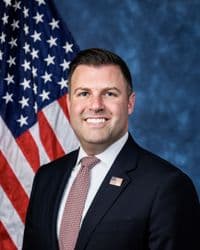
Ryan Mackenzie
Republican · PA · Representative
Votes with party: 94.3% (629 recorded votes)
Full profile: /officials/M001230
Source: Congress.gov · FEC
Cosponsors (0)
Members who have signed on to support this bill since introduction. Source: Congress.gov.
No cosponsors on record. Bills can pass without cosponsors — this often means the sponsor introduced the bill alone, either because it's a messaging bill, a chairman's mark, or simply early in the legislative cycle.
Latest Action
The most recent step in the bill's legislative path. Committee Activity below shows referrals and reports; the full action-by-action history including floor proceedings lives at Congress.gov →
Referred to the Committee on Oversight and Government Reform, and in addition to the Committee on House Administration, for a period to be subsequently determined by the Speaker, in each case for consideration of such provisions as fall within the jurisdiction of the committee concerned.
2026-07-30
Source: Congress.gov
Committee Activity
Currently in
- House Committee on House AdministrationReferred To · 2026-07-30
- House Committee on Oversight and Government ReformReferred To · 2026-07-30
Plain-English Summary
Candidates running for federal office would be required to either sell their publicly traded stocks or put them in a blind trust (where someone else manages them without the candidate knowing what's in the portfolio) before taking office. The goal is to prevent conflicts of interest where elected officials might make decisions that benefit their personal investments rather than the public interest. This would apply to anyone running for Congress, the presidency, or other federal positions.
AI-assisted summary generated from the official bill metadata (title, subjects, actions) sourced from Congress.gov. Cached and reviewed. Always verify against the official text linked below.
Full Bill Text
Verbatim text published on Congress.gov via GovInfo. Use Cmd+F / Ctrl+F to search within this excerpt.
[Congressional Bills 119th Congress] [From the U.S. Government Publishing Office] [H.R. 9989 Introduced in House (IH)] <DOC> 119th CONGRESS 2d Session H. R. 9989 To require candidates for Federal office to divest publicly traded securities or place such securities in a qualified blind trust upon filing for office, and for other purposes. _______________________________________________________________________ IN THE HOUSE OF REPRESENTATIVES July 30, 2026 Mr. Mackenzie introduced the following bill; which was referred to the Committee on Oversight and Government Reform, and in addition to the Committee on House Administration, for a period to be subsequently determined by the Speaker, in each case for consideration of such provisions as fall within the jurisdiction of the committee concerned _______________________________________________________________________ A BILL To require candidates for Federal office to divest publicly traded securities or place such securities in a qualified blind trust upon filing for office, and for other purposes. Be it enacted by the Senate and House of Representatives of the United States of America in Congress assembled, SECTION 1. SHORT TITLE. This Act may be cited as the ``Candidate Investment Transparency and Ethics Act of 2026'' or the ``CITE Act of 2026''. SEC. 2. DEFINITIONS. In this Act: (1) Candidate.--The term ``candidate'' means any individual who files a statement of candidacy or statement of organization with the Federal Election Commission or otherwise formally declares their intention to seek election to-- (A) the Office of President or Vice President of the United States; (B) the United States Senate; or (C) the United States House of Representatives. (2) Covered investment.--The term ``covered investment'' means any security issued by a publicly traded company, including-- (A) common or preferred stock; (B) bonds, debentures, or other debt instruments of a publicly traded issuer; (C) stock options, warrants, or convertible securities; and (D) exchange-traded funds and similar products that hold individual securities of publicly traded companies, except to the extent such funds qualify as exempt investments under paragraph (4). (3) Covered individual.--The term ``covered individual'' means a candidate and the spouse and dependent children of the candidate. (4) Exempt investments.--The term ``exempt investment'' means-- (A) widely diversified mutual funds; (B) index funds or exchange-traded funds that track a broad market index, including the S&P 500, the Dow Jones Industrial Average, or a comparable index; (C) widely diversified exchange-traded funds, including sector-based or thematic exchange-traded funds; (D) United States Treasury securities, obligations of the United States Government, or obligations of State or local governments; (E) certificates of deposit, money market funds, and cash equivalents; and (F) interests in a defined benefit pension plan or similar retirement arrangement not subject to individual investment direction. (5) Filing date.--The term ``filing date'' means the date on which a candidate files any document with the Federal Election Commission, a State election authority, or the Clerk of the House of Representatives or the Secretary of the Senate that formally initiates the candidacy. (6) Qualified blind trust.--The term ``qualified blind trust'' has the meaning given that term under section 13104(f)(3) of title 5, United States Code. (7) Supervising ethics office.--The term ``supervising ethics office'' means-- (A) the Committee on Ethics of the House of Representatives, for candidates for the House of Representatives; (B) the Select Committee on Ethics of the Senate, for candidates for the Senate; and (C) the Office of Government Ethics, for candidates for President or Vice President. SEC. 3. DIVESTITURE OR BLIND TRUST REQUIREMENT FOR CANDIDATES FOR FEDERAL OFFICE. (a) Requirement.--Not later than 90 days after the filing date, each covered individual shall-- (1) divest all covered investments held by the covered individual; or (2) place all covered investments held by the covered…
Show the remaining 616 wordsHide the remaining 616 words
individual into a qualified blind trust that meets the requirements of subsection (b). (b) Requirements for Qualified Blind Trust.--A qualified blind trust established pursuant to subsection (a)(2) shall-- (1) be established and administered in accordance with the requirements of section 13104(f) of title 5, United States Code; (2) be managed by an independent trustee who is not a relative, business associate, or political affiliate of the covered individual; (3) prohibit the covered individual from having any knowledge of, or influence over, the investment decisions made by the trustee; and (4) prohibit any communication between the covered individual and the trustee regarding the assets or transactions within the trust, except as required by law or for tax purposes. (c) Certification.--Not later than 90 days after the filing date, each covered individual shall file a written certification with the applicable supervising ethics office attesting that-- (1) the covered individual holds no covered investments other than exempt investments; or (2) all covered investments have been placed in a qualified blind trust in compliance with this section, including the name of the trustee and the financial institution administering the trust. (d) Spousal and Dependent Child Assets.--A covered individual shall make good faith efforts to ensure that the covered investments of a spouse or dependent child are divested or placed in a qualified blind trust pursuant to this section. If a spouse maintains legally independent finances and does not consent to such divestiture or placement, the candidate shall certify such fact to the supervising ethics office, which shall have authority to determine whether an exemption is warranted. SEC. 4. PROHIBITION ON ACQUISITION OF COVERED INVESTMENTS DURING CANDIDACY. (a) In General.--During the period beginning on the filing date and ending on the date on which the covered individual is no longer a candidate or no longer holds or is seeking Federal office, a covered individual may not purchase or otherwise acquire any new covered investment. (b) Exception.--Subsection (a) shall not apply to-- (1) the receipt of a covered investment as part of a will, trust distribution, or similar inheritance, provided that such investment is divested or placed in a qualified blind trust within 90 days of receipt; and (2) purchases made within a qualified blind trust established pursuant to section 3. SEC. 5. RULEMAKING. (a) In General.--Not later than 180 days after the date of the enactment of this Act, the Committee on Ethics of the House of Representatives, the Select Committee on Ethics of the Senate, and the Office of Government Ethics shall each issue regulations to carry out this Act with respect to candidates under their respective jurisdiction. (b) Contents.--The regulations issued under subsection (a) shall include-- (1) procedures for filing and reviewing certifications under section 3(c); (2) standards for determining whether a trust qualifies as a qualified blind trust for purposes of this Act; and (3) a process for covered individuals to request a hardship waiver, which may be granted only in extraordinary circumstances and shall be made publicly available. SEC. 6. RELATION TO OTHER LAW. (a) Stock Act.--Nothing in this Act shall be construed to limit the application of the STOCK Act of 2012 (Public Law 112-105) or any other applicable Federal law governing insider trading, conflicts of interest, or financial disclosure. (b) Ethics in Government Act.--This Act shall be construed in conjunction with, and not in derogation of, chapter 131 of title 5, United States Code, and the financial disclosure requirements applicable to Federal candidates. SEC. 7. EFFECTIVE DATE. This Act shall take effect on the date that is 180 days after the date of enactment of this Act and shall apply to any individual who files for Federal office on or after such effective date. <all>
Related legislation
Bills by the same sponsor or covering overlapping subjects.
- HRES1467Protecting Deliberative Process in the House ResolutionReferred to Committee · 2026-07-30
- HRES1462Recognizing the historic significance of Medicare on the 61st anniversary of its enactment.Referred to Committee · 2026-07-27
- HR8660Valuing Employee Stock Today ActReferred to Committee · 2026-07-21
- HR9723Fit Future ActReferred to Committee · 2026-07-21