HRES1637Referred to Committee
Recognizing the significance of equal pay and the pay disparity between disabled women and nondisabled men.
Introduced
In Committee
3
Passed One Chamber4
Passed Both5
Signed into Law119th
Congress
2026-10-22
Introduced
2
Cosponsors
HRES
ⓘType
Sponsor
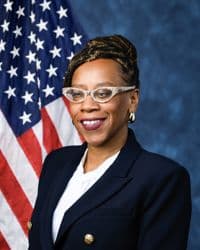
Lateefah Simon
Democrat · CA · Representative
Votes with party: 96.8% (661 recorded votes)
Full profile: /officials/S001231
Source: Congress.gov · FEC
Cosponsors (2)
Members who have signed on to support this bill since introduction. Source: Congress.gov.
Latest Action
The most recent step in the bill's legislative path. Committee Activity below shows referrals and reports; the full action-by-action history including floor proceedings lives at Congress.gov →
Committee Activity
Currently in
- House Committee on Education and WorkforceReferred To · 2026-10-22
Plain-English Summary
Plain-English summary pending. Introduced on 2026-10-22. Check back soon — summaries are generated as bills progress through Congress.
Full Bill Text
Verbatim text published on Congress.gov via GovInfo. Use Cmd+F / Ctrl+F to search within this excerpt.
[Congressional Bills 119th Congress] [From the U.S. Government Publishing Office] [H. Res. 1637 Introduced in House (IH)] <DOC> 119th CONGRESS 2d Session H. RES. 1637 Recognizing the significance of equal pay and the pay disparity between disabled women and nondisabled men. _______________________________________________________________________ IN THE HOUSE OF REPRESENTATIVES October 22, 2026 Ms. Simon (for herself, Ms. Pressley, and Ms. Randall) submitted the following resolution; which was referred to the Committee on Education and Workforce _______________________________________________________________________ RESOLUTION Recognizing the significance of equal pay and the pay disparity between disabled women and nondisabled men. Whereas more than 60 years after Congress enacted the Equal Pay Act of 1963 (29 U.S.C. 206 note; Public Law 88-38), an analysis of 2024 data from the Bureau of the Census shows that disabled women workers overall, including those working part-time and seasonally, are paid an average of 56 cents for every dollar paid to nondisabled men, and among full-time, year-round workers are paid 68 cents on the dollar; Whereas an analysis of 2024 data from the Bureau of the Census shows that among full-time, year-round workers-- (1) for every dollar paid to white, non-Hispanic, nondisabled men-- G (A) disabled Asian American, Native Hawaiian, and Pacific Islander women are paid 73 cents; G (B) disabled white, non-Hispanic women are paid 64 cents; G (C) disabled American Indian and Alaska Native women are paid 60 cents; G (D) disabled multiracial women are paid 60 cents; G (E) disabled Black women are paid 57 cents; and G (F) disabled Latinas are paid 53 cents; and (2) while disabled people overall experience a wage gap, disabled women, particularly many disabled women of color, face especially large gaps; Whereas of the 6 types of disability assessed in the American Community Survey-- (1) disabled women workers face a wage gap compared to nondisabled men regardless of type of disability; and (2) disabled women workers, including those working part-time and seasonally, who have difficulty with independent living experience the largest wage gap, typically paid just 39 cents for every dollar paid to nondisabled men in 2024; Whereas among all workers, including those working part-time and seasonally, disabled women veterans are paid an average of 66 cents for every dollar paid to nondisabled veteran men in 2024; Whereas the wage gap remains large for disabled women with more education, as disabled women with a bachelor's degree working full-time, year-round in 2024 are typically paid $61,000 per year, just 66 percent of what nondisabled men with the same educational attainment are typically paid, and $4,000 less than nondisabled men with some college education or an associate's degree; Whereas of disabled workers who live in institutional group quarters, including those working part-time or seasonally, disabled women are typically paid just $11,500 per year and disabled men are paid $12,000 per year, while nondisabled men are typically paid an average of $54,000 per year in 2024; Whereas disabled women experience occupational segregation and are overrepresented in low-paid health care, clerical, and social service jobs; Whereas segregated workplaces and the subminimum wage for disabled employees stifle competitive integrated employment for disabled women; Whereas many systemic barriers affect access to livable wages and employment opportunities for disabled women, including-- (1) discrimination; (2) public benefits work disincentives; (3) broken health care infrastructure; (4) increased employment-related costs; (5) inadequate vocational rehabilitation services; and (6) a lack of access to supported employment services; and Whereas LGBTQI+ disabled people face additional barriers to employment, and more inclusive data on LGBTQI+ disabled workers is needed to determine the added impact of these barriers on wages and workforce participation, particularly for trans and nonbinary disabled people…
Show the remaining 71 wordsHide the remaining 71 words
who are often excluded from data: Now, therefore, be it Resolved, That the House of Representatives-- (1) recognizes the pay disparity between disabled women and nondisabled men and the impact of that pay disparity on women, families, and the United States; and (2) reaffirms its commitment to supporting equal pay for disabled women, narrowing the gender, disability, and racial wage gaps and addressing the systemic barriers that drive those inequities. <all>
Related legislation
Bills by the same sponsor or covering overlapping subjects.
- HR10352504 Program Level Flexibility ActReported by Committee · 2026-10-09
- HR9934Housing BOOM ActReferred to Committee · 2026-07-23
- HRES1428Expressing support for Reproductive Justice on the 250th Anniversary of the United States of America.Referred to Committee · 2026-07-13
- HR8880Small Business Cybersecurity Assistance Evaluation Act of 2026Passed House · 2026-06-24