Strategic Grazing to Reduce Risk of Wildfire Act
Sponsor
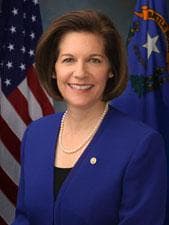
Full profile: /officials/C001113
Source: Congress.gov · FEC
Cosponsors (1)
Members who have signed on to support this bill since introduction. Source: Congress.gov.
Latest Action
The most recent step in the bill's legislative path. Committee Activity below shows referrals and reports; the full action-by-action history including floor proceedings lives at Congress.gov →
Placed on Senate Legislative Calendar under General Orders. Calendar No. 495.
2026-07-23
Source: Congress.gov
Committee Activity
Currently in
- Senate Committee on Energy and Natural ResourcesReported By · 2026-07-23
Previously
- Senate Committee on Energy and Natural ResourcesMarkup By · 2026-03-04
- Senate Committee on Energy and Natural ResourcesReferred To · 2025-06-05
Plain-English Summary
This bill would allow ranchers to graze livestock on federal public lands as a way to reduce wildfire risk by clearing excess vegetation and dead plant material that can fuel large fires. The program would help both land managers trying to prevent catastrophic wildfires and ranchers looking for grazing opportunities, while potentially reducing the need for expensive mechanical clearing or prescribed burns in fire-prone areas.
AI-assisted summary generated from the official bill metadata (title, subjects, actions) sourced from Congress.gov. Cached and reviewed. Always verify against the official text linked below.
Subjects
Full Bill Text
Verbatim text published on Congress.gov via GovInfo. Use Cmd+F / Ctrl+F to search within this excerpt.
[Congressional Bills 119th Congress] [From the U.S. Government Publishing Office] [S. 1981 Introduced in Senate (IS)] <DOC> 119th CONGRESS 1st Session S. 1981 To require the Secretary of Agriculture and the Secretary of the Interior to utilize grazing for wildfire risk reduction, and for other purposes. _______________________________________________________________________ IN THE SENATE OF THE UNITED STATES June 5, 2025 Ms. Cortez Masto (for herself and Mr. Curtis) introduced the following bill; which was read twice and referred to the Committee on Energy and Natural Resources _______________________________________________________________________ A BILL To require the Secretary of Agriculture and the Secretary of the Interior to utilize grazing for wildfire risk reduction, and for other purposes. Be it enacted by the Senate and House of Representatives of the United States of America in Congress assembled, SECTION 1. SHORT TITLE. This Act may be cited as the ``Strategic Grazing to Reduce Risk of Wildfire Act''. SEC. 2. UTILIZING GRAZING FOR WILDFIRE RISK REDUCTION. (a) Definitions.--In this section: (1) National forest system.--The term ``National Forest System'' has the meaning given the term in section 11(a) of the Forest and Rangeland Renewable Resources Planning Act of 1974 (16 U.S.C. 1609(a)). (2) Public lands.--The term ``public lands'' has the meaning given the term in section 103 of the Federal Land Policy and Management Act of 1976 (43 U.S.C. 1702). (3) Secretary concerned.--The term ``Secretary concerned'' means-- (A) the Secretary of Agriculture, with respect to National Forest System land; and (B) the Secretary of the Interior, with respect to public lands. (b) Strategy.-- (1) In general.--Not later than 18 months after the date of enactment of this Act, the Secretary concerned, in coordination with holders of permits to graze livestock on Federal land under the jurisdiction of the Secretary concerned and in consultation with other relevant stakeholders described in paragraph (3), shall develop a strategy to utilize livestock grazing as a wildfire risk reduction tool consistent with the laws applicable to the Secretary concerned. (2) Considerations.--The strategy developed under paragraph (1) shall consider-- (A) the use of grazing on vacant grazing allotments during instances of drought, wildfire, or other natural disasters that disrupt grazing on allotments already permitted; (B) the use of targeted grazing to reduce hazardous fuels, including on Federal land within the wildland urban interface (as defined in section 101 of the Healthy Forests Restoration Act of 2003 (16 U.S.C. 6511)), and other critical areas identified by the Secretaries concerned; (C) recommending the use of targeted grazing when providing technical assistance to communities and Indian Tribes in their efforts to reduce wildfire risk and implement wildfire management strategies; (D) the use of temporary permits to promote targeted fuels reduction and reduction of cheatgrass and other invasive annual grasses, including any potential need for the use of grazing outside permitted animal unit months and season of use, as appropriate for the explicit purposes of targeted fuels reduction of cheatgrass and other invasive annual grasses; (E) the use of targeted grazing to aid in controlling invasive annual grasses, including cheatgrass; (F) the use of targeted grazing in postfire recovery efforts, as appropriate; (G) an integrated use of advanced technologies such as virtual fencing to dynamically adjust livestock placement; (H) the use of grazing on Federal land in a manner that-- (i) avoids conflicts with other uses of that Federal land; and (ii) is consistent with any applicable land management plan; (I) a workforce development plan to ensure that Federal workers have the necessary skills to manage livestock grazing programs and deploy technologies; (J) the use of cooperative agreements with States, local governments, Indian Tribes, and local firefighting agencies to reduce hazardous fuels…
Show the remaining 129 wordsHide the remaining 129 words
and invasive annual grasses, including reimbursements authorized under other provisions of law, including under good neighbor agreements under section 8206 of the Agricultural Act of 2014 (16 U.S.C. 2113a); and (K) other applicable statutory or regulatory authorities, as determined by the Secretary concerned. (3) Consultation.--In developing the strategy under paragraph (1), the Secretary concerned shall consult with-- (A) applicable States; (B) applicable units of local government; (C) applicable Indian Tribes; (D) applicable utility authorities; (E) applicable firefighting agencies; (F) land management organizations; (G) outdoor recreation, conservation, and sportsmen organizations; and (H) other interested members of the applicable community. (c) Effect on Existing Grazing Programs.--Nothing in this section affects any livestock grazing program being carried out as of the date of enactment of this Act by the Secretary concerned. <all>
Related legislation
Bills by the same sponsor or covering overlapping subjects.
- S5111A bill to require validation of electronic filing identification numbers used to electronically file tax returns and other documents.Referred to Committee · 2026-07-23
- S4200Douglas County Economic Development and Conservation ActReferred to Committee · 2026-07-15
- S4383Geothermal Ombudsman for National Deployment and Optimal Reviews ActReferred to Committee · 2026-07-15
- SRES794A resolution expressing support for the designation of July 10, 2026, as Journeyman Lineworkers Recognition Day.Introduced · 2026-06-24