SMART Community Policing Act
Sponsor
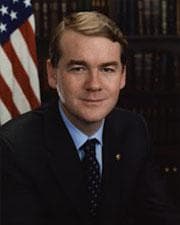
Full profile: /officials/B001267
Source: Congress.gov · FEC
Cosponsors (0)
Members who have signed on to support this bill since introduction. Source: Congress.gov.
No cosponsors on record. Bills can pass without cosponsors — this often means the sponsor introduced the bill alone, either because it's a messaging bill, a chairman's mark, or simply early in the legislative cycle.
Latest Action
The most recent step in the bill's legislative path. Committee Activity below shows referrals and reports; the full action-by-action history including floor proceedings lives at Congress.gov →
Committee Activity
Currently in
- Senate Committee on the JudiciaryReferred To · 2026-05-19
Plain-English Summary
The bill would provide federal funding to help police departments try new approaches to community policing, improve mental health services in their communities, and develop programs aimed at making neighborhoods safer. The money would support innovations and experiments in how law enforcement and communities work together to prevent crime and address underlying issues like mental illness. This would affect local police departments, mental health providers, and the communities they serve.
AI-assisted summary generated from the official bill metadata (title, subjects, actions) sourced from Congress.gov. Cached and reviewed. Always verify against the official text linked below.
Full Bill Text
Verbatim text published on Congress.gov via GovInfo. Use Cmd+F / Ctrl+F to search within this excerpt.
[Congressional Bills 119th Congress] [From the U.S. Government Publishing Office] [S. 4575 Introduced in Senate (IS)] <DOC> 119th CONGRESS 2d Session S. 4575 To amend the Omnibus Crime Control and Safe Streets Act of 1968 to provide funding for innovations in community policing, mental health care, and community safety, and for other purposes. _______________________________________________________________________ IN THE SENATE OF THE UNITED STATES May 19, 2026 Mr. Bennet introduced the following bill; which was read twice and referred to the Committee on the Judiciary _______________________________________________________________________ A BILL To amend the Omnibus Crime Control and Safe Streets Act of 1968 to provide funding for innovations in community policing, mental health care, and community safety, and for other purposes. Be it enacted by the Senate and House of Representatives of the United States of America in Congress assembled, SECTION 1. SHORT TITLE. This Act may be cited as the ``Supporting Mental Assistance Responder Teams Community Policing Act'' or the ``SMART Community Policing Act''. SEC. 2. PURPOSE. The purpose of this Act is to strengthen community policing programs to-- (1) de-escalate interactions with law enforcement officers to achieve better outcomes for non-violent individuals experiencing crisis or trauma relating to mental health issues, poverty, homelessness, and substance use disorders; (2) build collaborative partnerships to connect individuals with mental health services and community resources; and (3) produce better outcomes for communities and law enforcement officers by delivering the appropriate treatment and other support services to individuals in need. SEC. 3. ADDITIONAL AUTHORIZED USES OF COPS FUNDS. Section 1701(b) of title I of the Omnibus Crime Control and Safe Streets Act of 1968 (34 U.S.C. 10381(b)) is amended-- (1) in paragraph (24), by striking ``and'' at the end; (2) in paragraph (25), by striking the period at the end and inserting a semicolon; and (3) by adding at the end the following: ``(26) to establish or expand a mobile crisis team program to-- ``(A) hire skilled mental health professionals and paramedics to-- ``(i) respond to-- ``(I) certain 911 dispatch calls at the request of law enforcement officers; and ``(II) community members requesting assistance directly; ``(ii) stabilize encounters between law enforcement officers and individuals experiencing a mental or behavioral health crisis; and ``(iii) assume responsibility for securing mental health services for individuals, including individuals in crisis who may need further evaluation and treatment; ``(B) train law enforcement officers partnering with mental health professionals and paramedics; ``(C) use a mobile unit to facilitate the response of law enforcement officers and mental health professionals and paramedics to community members experiencing a mental or behavioral health crisis; and ``(D) hire other personnel; ``(27) to establish or expand a co-responder program under which-- ``(A) a trained law enforcement officer is paired with a behavioral health clinician or paramedic to-- ``(i) de-escalate situations involving a mental health crisis; ``(ii) connect individuals with mental illness to appropriate services; and ``(iii) provide other effective and efficient responses to individuals with mental illness; and ``(B) additional personnel, including law enforcement officers and case managers, may be hired; and ``(28) to establish or expand a case management and outreach team-- ``(A) to follow up with individuals experiencing a mental or behavioral health crisis to-- ``(i) connect those individuals with mental health services and community resources; and ``(ii) help those individuals abide by treatment plans and meet other responsibilities, such as work, school, and training; ``(B) to develop specific solutions for, and provide support resources to, individuals who frequently use emergency services to reduce repeat interactions between the individuals described in subparagraph (A) and law enforcement officers or mental health professionals and paramedics; and ``(C) which may be established…
Show the remaining 24 wordsHide the remaining 24 words
as a part of a mobile crisis team program under paragraph (26), a co- responder program under paragraph (27), or an independent team.''. <all>
Related legislation
Bills by the same sponsor or covering overlapping subjects.
- S4589OPEN ActReferred to Committee · 2026-05-20
- S4596TRUST ActReferred to Committee · 2026-05-20
- S4590KIDS ActReferred to Committee · 2026-05-20
- SRES680A resolution commemorating the 10th anniversary of the Columbine Day of Service and honoring the memories of the victims, survivors, and their families.Referred to Committee · 2026-05-14