Abolish Super PACs Act
Sponsor
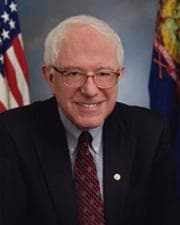
Source: Congress.gov · FEC
Cosponsors (0)
Members who have signed on to support this bill since introduction. Source: Congress.gov.
No cosponsors on record. Bills can pass without cosponsors — this often means the sponsor introduced the bill alone, either because it's a messaging bill, a chairman's mark, or simply early in the legislative cycle.
Latest Action
The most recent step in the bill's legislative path. Committee Activity below shows referrals and reports; the full action-by-action history including floor proceedings lives at Congress.gov →
Committee Activity
Currently in
- Senate Committee on Rules and AdministrationReferred To · 2026-05-20
Plain-English Summary
The proposal would cap how much money individuals and groups can donate to super PACs, which are organizations that spend unlimited funds on political advertisements and campaigns independent of candidates. Currently, super PACs can accept unlimited donations, but this bill would set reasonable contribution limits to reduce the influence of large donors in elections. The change would affect wealthy individuals, corporations, and other groups that fund these political organizations.
AI-assisted summary generated from the official bill metadata (title, subjects, actions) sourced from Congress.gov. Cached and reviewed. Always verify against the official text linked below.
Subjects
Full Bill Text
Verbatim text published on Congress.gov via GovInfo. Use Cmd+F / Ctrl+F to search within this excerpt.
[Congressional Bills 119th Congress] [From the U.S. Government Publishing Office] [S. 4602 Introduced in Senate (IS)] <DOC> 119th CONGRESS 2d Session S. 4602 To amend the Federal Election Campaign Act of 1971 to place reasonable limits on contributions to Super PACs which make independent expenditures, and for other purposes. _______________________________________________________________________ IN THE SENATE OF THE UNITED STATES May 20, 2026 Mr. Sanders introduced the following bill; which was read twice and referred to the Committee on Rules and Administration _______________________________________________________________________ A BILL To amend the Federal Election Campaign Act of 1971 to place reasonable limits on contributions to Super PACs which make independent expenditures, and for other purposes. Be it enacted by the Senate and House of Representatives of the United States of America in Congress assembled, SECTION 1. SHORT TITLE. This Act may be cited as the ``Abolish Super PACs Act''. SEC. 2. FINDINGS; PURPOSE. (a) Findings.--Congress finds as follows: (1) Contribution limits to political action committees (PACs), including those that make independent expenditures, help secure elections by limiting both the risk of corruption and the risk that significant contributions will create the appearance of corruption. (2) Since contribution limits on super PACs were lifted in 2010, the number, influence, and wealth of super PACs have exploded. Obtaining millions or billions of dollars in contributions to super PACs is now critical to the success of Federal candidates' campaigns. (3) As the influence of super PACs grows, so does the likelihood that they will serve as a conduit for corrupt agreements between contributor and candidate, whose communications are not subject to coordination limitations. (4) Between 2008 and 2020, the amount of independent expenditures increased more than 700 percent, and in 2024, more than $4.48 billion in independent expenditures were spent on United States elections. The money for these expenditures largely came from contributions to 2,459 registered super PACs. (5) In 2012, the first modern elections for Federal office held without contribution limits to super PACs, the top 1 percent of all individual super PAC contributors contributed 76.76 percent of all individual super PAC contributions, and that percentage rose to 96.94 percent in 2024. Recent elections have been influenced by individual contributors who gave more than $100 million to super PACs. (6) As bribery laws have long recognized, unlawful quid pro quo exchanges can occur where the bribe is funneled into a third party, such as a super PAC. See, e.g., section 201 of title 18, United States Code; U.S. v. Menendez, 291 F. Supp. 606, 621-23 (D. N.J. 2018). Law enforcement in several States have prosecuted cases that involve bribes directed to super PACs. However, bribery is notoriously difficult to prosecute, and these laws do not adequately protect American voters from corruption. (7) Without reasonable limitations on contributions, super PACs create an appearance of corruption. A bipartisan majority of Americans believe that large super PAC contributions are made in exchange for political favors, and that corruption is pervasive in the Federal Government. This is, as the Supreme Court recognized in Buckley v. Valeo, ``disastrous'' to ``confidence in the system of representative government'' 424 U.S. 1, 27 (1976). (8) Placing limits on super PAC contributions will also lessen the risk of foreign interference in United States elections, making it more difficult for foreign entities to funnel contributions to super PACs via third-party contributors. (9) SpeechNow.org v. FEC, 599 F.3d 686 (D.C. Cir. 2010), the appellate court case that voided existing contribution limits to super PACs, wrongly treated contributions as expenditures and wrongly assumed that because uncoordinated independent expenditures cannot give rise to quid pro quo corruption, that contributions to independent expenditure…
Show the remaining 371 wordsHide the remaining 371 words
committees similarly cannot give rise to corruption. But they can and do. (10) In the 14 years since SpeechNow unleashed billions of dollars in unregulated contributions, super PACs have obtained unprecedented wealth and value to candidate campaigns and can facilitate vast, nearly untraceable corrupt transactions. (11) Because Super PACs have become uniquely important to candidate campaigns and can accept millions and even hundreds of millions of dollars from single entities, candidates and contributors have reason and opportunity to guide corrupt contributions into super PACs, establishing a significant risk of corruption and creating an appearance of corruption that undermines the public's faith in their representatives and our political system. (12) Reasonable limits on contributions to super PACs are lawful and necessary to protect American democracy and American voters. (b) Purpose.--It is the purpose of this Act-- (1) to limit the risk of corrupt agreements between candidates and contributors by placing reasonable limits on contributions to political action committees that make independent expenditures; (2) to limit the appearance of corruption created by uncapped contributions to political action committees that make independent expenditures; and (3) to restore the public's faith in our elections. SEC. 3. LIMITATION ON CONTRIBUTIONS TO INDEPENDENT EXPENDITURE COMMITTEES. (a) Limitations.--Section 315(a)(1)(C) of the Federal Election Campaign Act of 1971 (52 U.S.C. 30116(a)(1)(C)) is amended by striking ``to any other political committee'' and inserting ``to an independent expenditure committee or any other political committee''. (b) Definition.--Section 301 of such Act (52 U.S.C. 30101) is amended by adding at the end the following: ``(27) Independent expenditure committee.-- ``(A) In general.--The term `independent expenditure committee' means a political committee which-- ``(i) makes independent expenditures aggregating $5,000 or more during a calendar year; or ``(ii) makes contributions to other independent expenditure committees aggregating $5,000 or more during a calendar year. ``(B) Treatment of separate accounts.--The term `independent expenditure committee' includes an account of a political committee which is established for the purpose of making independent expenditures or contributions to other committees making independent expenditures.''. (c) Effective Date.--The amendments made by this section shall apply with respect to contributions and independent expenditures made during the first calendar year which begins after the date of the enactment of this Act and each succeeding calendar year. <all>
Related legislation
Bills by the same sponsor or covering overlapping subjects.
- S4551Restoring Overtime Pay Act of 2026Referred to Committee · 2026-05-18
- S4518Universal School Meals Program Act of 2026Referred to Committee · 2026-05-13
- S4413Protecting America’s Workers ActReferred to Committee · 2026-04-28
- SJRES138A joint resolution providing for congressional disapproval of the proposed foreign military sale to the Government of Israel of certain defense articles and services.Referred to Committee · 2026-04-15