Arctic Security and Diplomacy Act
Sponsor
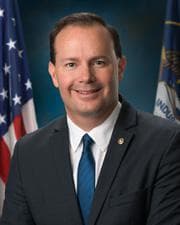
- Conservative Groups$383k
Full profile: /officials/L000577
Source: Congress.gov · FEC
Cosponsors (1)
Members who have signed on to support this bill since introduction. Source: Congress.gov.
Latest Action
The most recent step in the bill's legislative path. Committee Activity below shows referrals and reports; the full action-by-action history including floor proceedings lives at Congress.gov →
Placed on Senate Legislative Calendar under General Orders. Calendar No. 516.
2026-07-27
Source: Congress.gov
Committee Activity
Currently in
- Senate Committee on Foreign RelationsReported By · 2026-07-27
Previously
- Senate Committee on Foreign RelationsMarkup By · 2026-06-17
- Senate Committee on Foreign RelationsReferred To · 2026-06-08
Plain-English Summary
The legislation aims to strengthen U.S. military and security capabilities in the Arctic region, likely addressing concerns about increased activity from Russia and China in that area. The bill would affect military personnel, defense contractors, and potentially Arctic communities by directing resources toward infrastructure, technology, and strategic positioning in the far north. It has been sent to the Senate Foreign Relations Committee for review and debate.
AI-assisted summary generated from the official bill metadata (title, subjects, actions) sourced from Congress.gov. Cached and reviewed. Always verify against the official text linked below.
Subjects
Full Bill Text
Verbatim text published on Congress.gov via GovInfo. Use Cmd+F / Ctrl+F to search within this excerpt.
[Congressional Bills 119th Congress] [From the U.S. Government Publishing Office] [S. 4708 Introduced in Senate (IS)] <DOC> 119th CONGRESS 2d Session S. 4708 To improve the security of the Arctic, and for other purposes. _______________________________________________________________________ IN THE SENATE OF THE UNITED STATES June 8, 2026 Mr. Lee introduced the following bill; which was read twice and referred to the Committee on Foreign Relations _______________________________________________________________________ A BILL To improve the security of the Arctic, and for other purposes. Be it enacted by the Senate and House of Representatives of the United States of America in Congress assembled, SECTION 1. SHORT TITLE. This Act may be cited as the ``Arctic Security and Diplomacy Act''. SEC. 2. FINDINGS. Congress finds the following: (1) The Arctic is a critical domain for the security and sovereignty of the United States and faces elevated risks related to the threats of territorial expansion and violation, influence operations, sabotage of critical undersea infrastructure, and espionage by foreign adversaries, particularly the People's Republic of China and the Russian Federation. (2) The Russian Federation holds a significant portion of the Arctic, accounting for approximately 53 percent of the Arctic Ocean coastline, and has significantly expanded its military basing infrastructure and capabilities in the region. (3) In 2018, the People's Republic of China declared that it is a ``Near-Arctic State'' with significant interests in the Arctic and is attempting to become a ``polar great power'' through economic expansion, scientific investments, and dual- use civilian and military infrastructure. (4) The Russian Federation is cooperating with the People's Republic of China to establish a ``Polar Silk Road'' in the Arctic, and the two countries are working together to strengthen cooperation in polar shipbuilding and ship technology. (5) The People's Republic of China has made multiple attempts to gain strategic footholds in the Arctic, has research stations in Norway's Svalbard archipelago and in Iceland, and consistently attempts to co-opt and manipulate civilian science and research activities, university partnerships, and multilateral science and research initiatives throughout the Arctic. (6) The People's Republic of China has observer status on the Arctic Council, has significantly increased diplomatic engagement with Nordic countries, and uses investments in cooperative marine scientific research as a form of soft power in the Arctic. (7) The People's Republic of China engages in extensive marine surveying, much of which has dual-use risk for military applications, including seabed mapping, NATO asset monitoring, and other espionage-related activity. (8) In 2022, the Danish Security and Intelligence Service reported several attempts at espionage by the People's Republic of China against Denmark, Greenland, and the Faroe Islands. (9) In 2024, the Canadian Security Intelligence Service warned of espionage activity by the People's Republic of China and the Russian Federation, and the Canadian military discovered and removed buoys in the Arctic owned by the People's Republic of China. (10) In 2025, the head of the National Police Commission in Iceland warned that the China-Iceland Arctic Science Observatory poses dual-use risks and may be used for espionage. (11) The 2026 Annual Threat Assessment by the intelligence community describes the Russian Federation as ``our primary challenge in the Arctic . . . Moscow is seeking to expand and deepen its presence in the Arctic through increased maritime trade, natural resource extraction, and military activity,'' while warning that the People's Republic of China ``seeks to expand its Arctic presence using scientific research, investments, and commercial ventures along the Northern Sea Route.'' (12) The 2025 NATO Maritime Strategy highlighted the Russian Federation's military build-up in the Arctic and use of hybrid threats like sabotage against critical undersea infrastructure, while warning that the People's Republic…
Show the remaining 1,481 wordsHide the remaining 1,481 words
of China ``is pursuing a military build-up, including rapidly expanding its naval capabilities, increasing its use of dual- use military-scientific vessels and surging its presence in the High North and the Arctic, while remaining opaque about its intentions.'' (13) According to the Department of Homeland Security, an unprecedented number of military and research vessels of the People's Republic of China are operating in or near United States Arctic waters. (14) It is in the interests of Arctic countries to cooperatively limit the ability of the People's Republic of China to conduct further espionage in the Arctic. SEC. 3. DEFINITIONS. In this Act: (1) Agency.--The term ``agency'' has the meaning given the term ``Executive agency'' in section 105 of title 5, United States Code. (2) Appropriate committees of congress.--The term ``appropriate committees of Congress'' means-- (A) the Committee on Foreign Relations, the Committee on Homeland Security and Governmental Affairs, and the Select Committee on Intelligence of the Senate; and (B) the Committee on Foreign Affairs, the Committee on Homeland Security, and the Permanent Select Committee on Intelligence of the House of Representatives. (3) Arctic.--The term ``Arctic'' has the meaning given that term in section 112 of the Arctic Research and Policy Act of 1984 (15 U.S.C. 4111). (4) Covered activities.--The term ``covered activities'' means marine surveys that may pose dual-use risks for civilian and military applications, including-- (A) exploration of natural resources; (B) seabed mapping, hydrographic surveys, and oceanographic surveys; (C) data collection related to subsea assets and infrastructure; (D) operation of unmanned maritime systems; and (E) any other activity designated by the Secretary of State as posing a risk to national security. (5) Covered vessel.--The term ``covered vessel'' means a foreign vessel that-- (A) is a vessel of a foreign adversary; or (B) the Secretary of State reasonably believes to be associated with a foreign adversary in a manner that threatens the security of the United States. (6) Exclusive economic zone.--The term ``exclusive economic zone'' means, with respect to the United States, including the Commonwealth of Puerto Rico, the Commonwealth of the Northern Mariana Islands, Guam, American Samoa, the United States Virgin Islands, and any other territory or possession over which the United States exercises sovereignty, the zone seaward of and adjacent to the territorial sea, including the contiguous zone, and extending 200 nautical miles from the territorial sea baseline (except where otherwise limited by treaty or other agreement recognized by the United States) in which the United States has sovereign rights and jurisdiction. (7) Foreign adversary.--The term ``foreign adversary'' means any foreign government or foreign nongovernment person engaged in a long-term pattern or serious instances of conduct significantly adverse to the national security of the United States or the security and safety of United States persons, including-- (A) the Democratic People's Republic of Korea; (B) the Islamic Republic of Iran; (C) the People's Republic of China; and (D) the Russian Federation. (8) Foreign vessel.--The term ``foreign vessel'' means any vessel that is-- (A) owned, operated, or chartered by a foreign government; (B) owned or controlled by an entity organized under the laws of, headquartered in, or otherwise subject to the jurisdiction of a foreign country; or (C) registered under the flag of a foreign country. (9) Intelligence community.--The term ``intelligence community'' has the meaning given that term in section 3 of the National Security Act of 1947 (50 U.S.C. 3003). (10) Marine scientific research.--The term ``marine scientific research'' means any activity that is-- (A) undertaken in the ocean to expand knowledge of the marine environment and its processes, including data collection activities; and (B) regulated by the United States under the Presidential Proclamation on Revision to United States Marine Scientific Research Policy of September 2020. (11) Territorial sea.--The term ``territorial sea'' means the waters extending to 12 nautical miles from the baselines of the United States. (12) United states waters.--The term ``United States waters'' means-- (A) the territorial sea of the United States; (B) the exclusive economic zone of the United States; and (C) the continental shelf of the United States, as it pertains to marine scientific research and other activities on the seabed or subsoil. SEC. 4. STATEMENT OF POLICY. It is the policy of the United States-- (1) to limit espionage and influence operations by foreign adversaries in the Arctic and in United States waters; (2) to inform allied countries with a presence in the Arctic about the espionage and influence operations of foreign adversaries in the Arctic, including espionage through covered activities; (3) to condition support from the Federal Government for marine surveys on cooperation with counterespionage in the Arctic and in United States waters, including limitations on information sharing of data obtained through covered activities in the Arctic and in United States waters; and (4) to leverage all appropriate diplomatic means available to ensure the security of the Arctic and the sovereignty of United States waters through the enforcement of section 6, including through-- (A) demarches; (B) public condemnations; (C) diplomatic sanctions; (D) coordination of multilateral diplomatic pressure; (E) motions to remove an offending country from Arctic-related multilateral bodies and cooperatives; and (F) any other diplomatic means authorized by law. SEC. 5. STRATEGY. (a) In General.--Not later than 180 days after the date of the enactment of this Act, the Secretary of State, in coordination with the heads of the elements of the intelligence community and the Secretary of Homeland Security, shall produce a strategy to identify and combat espionage and influence operations by foreign adversaries in the Arctic. (b) Elements.--The strategy required by paragraph (1) shall include-- (1) identifying and countering espionage activities in the Arctic; (2) diplomatic methods to enforce section 6; and (3) as appropriate, enlistment of and coordination with allied countries that have a presence in the Arctic to combat espionage by foreign adversaries. SEC. 6. MARINE SCIENTIFIC RESEARCH IN UNITED STATES WATERS. (a) In General.--No foreign scientist may conduct a maritime scientific research project in United States waters without prior consent from the United States Government provided in accordance with this section and with appropriate international customs as determined by the Secretary of State. (b) Requirements; Applications.--The Secretary of State, in coordination with the heads of the elements of the intelligence community and the Secretary of Homeland Security, shall-- (1) require foreign vessels to obtain prior consent to conduct maritime scientific research in United States waters; and (2) implement a process for reviewing applications for such consent. (c) Information Sharing.--To facilitate the process for reviewing applications to conduct maritime scientific research under this section, the head of each agency shall share information related to such maritime scientific research with the Department of State unless otherwise prohibited by law. (d) Prohibition on Covered Vessels.--Except as provided in subsection (e), the Secretary of State shall not approve any application submitted under this section for any covered vessel. (e) National Interest Waiver.-- (1) In general.--The Secretary of State may waive the prohibition in subsection (d) on an individual basis if the Secretary determines that doing so is the national interest of the United States. (2) Notice required.--Not later than 5 days after any issuance of a waiver under paragraph (1), the Secretary of State shall submit to the appropriate committees of Congress written notice describing the waiver. (f) Congressional Notification.--Not later than 15 days after the date of any violation of subsection (a), the Secretary of State shall notify the appropriate committees of Congress of such violation, including-- (1) the country affiliation of the foreign scientist; (2) the nature of the violation; and (3) subsequent action by the Federal Government to address the violation. SEC. 7. REPORT. (a) In General.--Not later than 1 year after the date of the enactment of this Act, the Secretary of State, in coordination with the heads of the elements of the intelligence community and the Secretary of Homeland Security, shall submit to the appropriate committees of Congress a report on espionage and influence operations by foreign adversaries in the Arctic and in United States waters. (b) Elements.--The report required by subsection (a) shall include the following: (1) An assessment of the extent to which covered activities support espionage and influence operations by foreign adversaries in the Arctic and in United States waters. (2) A description of United States Government support for covered activities in the Arctic that involve foreign adversaries, including-- (A) funding; (B) public-private partnerships; (C) maritime security; (D) technical assistance; (E) information sharing; and (F) any other form of material or technical support. (3) A description of efforts by the Secretary of State to enlist allied countries with a presence in the Arctic to combat espionage in the Arctic by foreign adversaries. (4) Recommendations for combating such espionage. (c) Form.--The report required by subsection (a) shall be submitted in unclassified form but may contain a classified annex. (d) Availability.--The report required by subsection (a) shall be made available on request to any Member of Congress. <all>
Related legislation
Bills by the same sponsor or covering overlapping subjects.
- S5372A bill to amend title 18, United States Code, to provide for the issuance of natural lifetime injunctions for certain victims.Referred to Committee · 2026-08-07
- S5371A bill to close loopholes in the immigration laws that serve as incentives to aliens to attempt to enter the United States unlawfully, and for other purposes.Referred to Committee · 2026-08-07
- S5338A bill to amend the Energy Policy and Conservation Act to prohibit the Secretary of Energy from prescribing any new or amended energy conservation standards for a product that is not technologically feasible and economically justified, and for other purposes.Referred to Committee · 2026-08-06
- S3331A bill to designate the facility of the United States Postal Service located at 50 East 100 North in Moab, Utah, as the "2nd Lieutenant Mitch Williams Post Office".Referred to Committee · 2026-08-06