S4751Referred to Committee
End Tuberculosis Now Act of 2026
Introduced
In Committee
3
Passed One Chamber4
Passed Both5
Signed into Law119th
Congress
2026-06-11
Introduced
1
Cosponsors
S
ⓘType
Sponsor
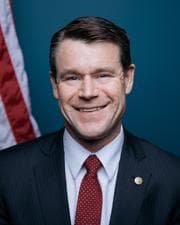
Todd Young
Republican · IN · Senator
Votes with party: 74.1% (835 recorded votes)
Full profile: /officials/Y000064
Source: Congress.gov · FEC
Cosponsors (1)
Members who have signed on to support this bill since introduction. Source: Congress.gov.
Latest Action
The most recent step in the bill's legislative path. Committee Activity below shows referrals and reports; the full action-by-action history including floor proceedings lives at Congress.gov →
Committee Activity
Currently in
- Senate Committee on Foreign RelationsReferred To · 2026-06-11
Plain-English Summary
The proposal would direct U.S. resources toward fighting tuberculosis around the world through prevention programs, treatment access, and research into cures. It affects global health efforts, international aid recipients, and public health organizations working in countries where tuberculosis is common. The bill aims to reduce TB infections and deaths in developing nations while potentially protecting Americans from this infectious disease spreading across borders.
AI-assisted summary generated from the official bill metadata (title, subjects, actions) sourced from Congress.gov. Cached and reviewed. Always verify against the official text linked below.
Full Bill Text
Verbatim text published on Congress.gov via GovInfo. Use Cmd+F / Ctrl+F to search within this excerpt.
[Congressional Bills 119th Congress] [From the U.S. Government Publishing Office] [S. 4751 Introduced in Senate (IS)] <DOC> 119th CONGRESS 2d Session S. 4751 To prevent, treat, and cure tuberculosis globally. _______________________________________________________________________ IN THE SENATE OF THE UNITED STATES June 11, 2026 Mr. Young (for himself and Mrs. Shaheen) introduced the following bill; which was read twice and referred to the Committee on Foreign Relations _______________________________________________________________________ A BILL To prevent, treat, and cure tuberculosis globally. Be it enacted by the Senate and House of Representatives of the United States of America in Congress assembled, SECTION 1. SHORT TITLE. This Act may be cited as the ``End Tuberculosis Now Act of 2026''. SEC. 2. ASSISTANCE TO COMBAT TUBERCULOSIS. (a) In General.--Section 104B of the Foreign Assistance Act of 1961 (22 U.S.C. 2151b-3) is amended to read as follows: ``SEC. 104B. ASSISTANCE TO COMBAT TUBERCULOSIS. ``(a) Findings.--Congress finds the following: ``(1) The international spread of tuberculosis (referred to in this section as `TB') and the deadly impact of TB's continued existence constitute a continuing challenge. ``(2) Additional tools and resources are required to effectively diagnose, prevent, and treat TB. ``(3) Effectively resourced TB programs can serve as a critical platform for preventing and responding to future infectious airborne and respiratory disease pandemics. ``(4) The America First Global Health Strategy sets out ambitious goals to address TB that are aligned with global goals to reduce incidences and mortality rates of TB. ``(b) Policy.-- ``(1) Major objectives regarding tuberculosis.--It is a major objective of the foreign assistance program of the United States to help end the TB public health emergency through accelerated actions-- ``(A) to support the diagnosis and treatment of all adults and children with all forms of TB; and ``(B) to prevent new TB infections from occurring. ``(2) Other policies regarding tuberculosis.--It is the policy of the United States, in countries in which the United States has established a foreign assistance program under this Act, particularly in countries with the highest rates of TB and other countries with high rates of infection and transmission of TB-- ``(A) to reduce mortality, incidence, and health costs caused by TB, including by providing support for-- ``(i) developing and using innovative new technologies and therapies (including molecular diagnostics) to increase active case finding and rapidly diagnose and treat children and adults with all forms of TB (including latent TB), alleviate suffering, and ensure TB treatment and preventative therapy completion; ``(ii) expanding diagnosis and treatment for individuals with all forms of TB (including children) and expanding prophylaxis treatment to at-risk individuals (including children), household contacts, individuals with latent TB, and individuals living with HIV; ``(iii) ensuring high-quality TB care by closing gaps in care cascades, implementing continuous quality improvement at all levels of care, and providing related patient support; ``(iv) sustainable procurement of TB commodities to avoid interruptions in supply; and ``(v) avoiding the procurement of TB commodities of unknown quality and the payment of excessive TB commodity costs; and ``(B) to ensure, to the greatest extent practicable, that United States funding supports activities that simultaneously emphasize-- ``(i) the development of comprehensive person-centered programs, including diagnosis, treatment, and prevention strategies to ensure that-- ``(I) all individuals sick with TB receive quality diagnosis and treatment through active case finding; and ``(II) individuals at high risk for TB infection are identified and treated with prophylaxis treatment in a timely manner; ``(ii) robust TB infection control practices are implemented in all congregate settings, including hospitals and prisons; ``(iii) the deployment of diagnostic and treatment capacity-- ``(I) in areas with the highest TB burdens; and ``(II) for highly at-risk and impoverished populations,…
Show the remaining 2,206 wordsHide the remaining 2,206 words
including for patient support; ``(iv) program monitoring and evaluation based on critical TB indicators, including indicators relating to infection control, the numbers of patients accessing TB treatment and patient support, and prophylaxis treatment for those at risk, including all close contacts, and treatment outcomes for all forms of TB; ``(v) training and engagement of health care workers on the use of new diagnostic tools and therapies as they become available, and increased support for training frontline health care workers to support expanded TB active case finding, contact tracing, and patient support; ``(vi) coordination with domestic agencies and organizations to support an aggressive research agenda to develop vaccines as well as new tools to diagnose, treat, and prevent TB globally; ``(vii) linkages with the private sector on-- ``(I) research and development of a vaccine, and on new tools for diagnosis and treatment of TB; ``(II) improving current tools for diagnosis and treatment of TB, including telehealth solutions for prevention and treatment; ``(III) training healthcare professionals on the use of the newest and most effective diagnostic and therapeutic tools; and ``(IV) transparency and accountability; ``(viii) the reduction of barriers to treatment and diagnosis costs, including through-- ``(I) training health workers to ensure integration into country's wider healthcare system; ``(II) requiring that all relevant grants and funding agreements include access and affordability provisions; ``(III) supporting campaigns for TB patients regarding local TB care for prevention, diagnosis, and treatment; ``(IV) monitoring cost barriers to accessing TB care for prevention, diagnosis, and treatment; and ``(V) increasing support for patient-led and community-led TB outreach efforts; ``(ix) support for local and country-level, sustainable accountability mechanisms to measure local progress and ensure commitments made by governments and relevant stakeholders are met; and ``(x) support for the inclusion of TB diagnosis, treatment, and prevention activities into primary health care, as appropriate. ``(c) Authorization.-- ``(1) In general.--The President is authorized to furnish assistance, on such terms and conditions as the President may determine necessary to carry out this section, for the prevention, treatment, control, and elimination of TB. ``(2) Priority for assistance.--In furnishing assistance under paragraph (1), the President shall prioritize-- ``(A) building and strengthening TB programs-- ``(i) to increase the diagnosis and treatment of individuals who are sick with TB; and ``(ii) to ensure that such individuals have access to quality diagnosis and treatment; ``(B) direct, high-quality care for all forms of TB, including diagnosis, coordination of active case finding, treatment of all forms of TB disease and infection, patient support, and TB prevention; ``(C) treating individuals co-infected with HIV, other immune compromising co-morbidities, and other high-risk individuals with TB who may be at risk of stigma; ``(D) strengthening the capacity of health systems to detect, prevent, and treat TB, including MDR-TB and XDR-TB; ``(E) researching and developing innovative diagnostics, drug therapies, and vaccines, and program- based research; ``(F) ensure integration of lab systems for molecular diagnostic networks for monitoring and response for productive use of laboratory capacities and healthcare facilities; ``(G) supporting the procurement of cost-effective and quality TB diagnostics and treatments, including annual support for the Global Drug Facility, and assisting local country capacity building and sustainability to control all forms of TB; and ``(H) ensuring TB programs can serve as key platforms for supporting national respiratory pandemic response with respect to existing and new infectious respiratory diseases. ``(d) Establishment of Goals.--The President, in consultation with the appropriate congressional committees and in pursuit of the policies described in subsection (a), shall establish goals to-- ``(1) detect, cure, and prevent all forms of TB globally during the period beginning on January 1, 2027, and ending on December 31, 2030, specifically by working to-- ``(A) reduce, by 2030-- ``(i) the TB incidence rate by 80 percent (from 2015 levels); and ``(ii) the TB mortality rate by 90 (from 2015 levels) percent; ``(B) ensure that-- ``(i) 90 percent of incident TB cases are diagnosed and initiated on treatment; ``(ii) 90 percent of incident drug resistant-TB cases are diagnosed and initiated on treatment; and ``(iii) there is 90 percent treatment success rate for drug sensitive-TB and drug resistant-TB; and ``(C) provide TB preventive treatment to 30,000,000 individuals; and ``(2) update the National Action Plan for Combating Multidrug-Resistant Tuberculosis. ``(e) Coordination.-- ``(1) In general.--The President shall consult, as appropriate, with partner nations and relevant international organizations, nongovernmental organizations, and the private sector with respect to the development and implementation of a coordinated and complementary United States global TB response program. ``(2) Bilateral assistance.--In providing bilateral assistance under this section, the President, acting through the Secretary of State, shall-- ``(A) catalyze support for research and development of new tools to prevent, diagnose, treat, and control TB worldwide, particularly to reduce the incidence of, and mortality from, all forms of drug-resistant TB; ``(B) consider the incidence of TB infections when determining assistance priorities to countries and regions; ``(C) ensure United States programs and activities focus on finding individuals with active TB and provide cost-effective and quality diagnosis and treatment, including through sustainable digital health solutions, and reaching individuals at high risk with prophylaxis treatment; and ``(D) ensure coordination among relevant Federal departments and agencies that engage in international activities relating to TB-- ``(i) to ensure accountability and transparency; ``(ii) to reduce duplication of efforts; and ``(iii) to ensure appropriate incorporation and coordination of TB prevention, diagnosis, and treatment into other United States- supported health programs. ``(f) Assistance for Tuberculosis Partnerships.--The President, acting through the Secretary of State, is authorized-- ``(1) to provide resources to monitor and disseminate epidemiological information about tuberculosis, drug resistant TB, MDR-TB, and XDR-TB; ``(2) to provide resources directly to countries with high rates of TB-- ``(A) to directly improve the capacity of such countries to prevent, diagnose, and treat TB on a local level; and ``(B) to develop and implement the national strategies and plans of such countries to control TB and eliminate MDR-TB and XDR-TB using the goals described in subsection (d)(1); ``(3) to leverage the contributions of donors to facilitate the activities described in paragraphs (1) and (2) while increasing the capacity of the United States to monitor and disseminate relevant information; and ``(4) to utilize longstanding United States partnerships and resources to address TB domestically and internationally. ``(g) Reports.-- ``(1) Annual report on activities regarding tuberculosis.-- Not later than December 15 of each year until the earlier of the date on which the goals specified in subsection (d)(1) are met or December 31, 2032, the President shall submit a report to the appropriate congressional committees that describes United States foreign assistance to control TB and the impact of such assistance, including-- ``(A) the number of individuals with active TB that were diagnosed and treated, including the rate of treatment completion and the number of individuals receiving patient support; ``(B) the number of individuals with MDR-TB and XDR-TB that were diagnosed and treated, including the rate of treatment completion, in countries receiving bilateral foreign assistance from the United States for programs to control TB; ``(C) the number of individuals trained by the United States Government in TB surveillance and control; ``(D) the number of individuals with active TB identified as a result of engagement with the private sector and other nongovernmental partners in countries receiving United States bilateral foreign assistance for TB control programs; ``(E) a description of the amount of funds provided, activities carried out, and any collaboration and coordination of United States anti-TB efforts with partner nations and relevant international organizations, nongovernmental organizations, and the private sector, including the amount of funding provided to such entities; ``(F) a description of the collaboration and coordination between the relevant Federal departments and agencies, including the Centers for Disease Control and Prevention and the Office of the Global AIDS Coordinator, to combat TB and, as appropriate, include treatment of TB in primary care; ``(G) the constraints on implementation of programs posed by health workforce shortages, health system limitations, barriers to digital health implementation, other challenges to successful implementation, and strategies to address such constraints, including local commitments to sustain TB control efforts; ``(H) a breakdown of expenditures for patient care supporting TB diagnosis, treatment, and prevention, including procurement of drugs and other TB commodities, drug management, training in diagnosis and treatment, health systems strengthening that directly impacts the provision of TB prevention, diagnosis, treatment, and research; and ``(I) for each country and each project site receiving bilateral United States assistance for the purpose of TB prevention, treatment, and control-- ``(i) the number of individuals screened for TB disease (including screenings utilizing quality new rapid diagnostic tests) and the number evaluated for TB infection using active case finding outside of health facilities; ``(ii) the number of individuals with active TB disease that were diagnosed (including diagnoses made through using quality new rapid diagnostic tests) and treated with safe and effective oral regimens, including the rate of treatment completion and the number receiving patient support; ``(iii) the number of adults and children, including individuals with HIV and close contacts, who are evaluated for TB infection, the number of adults and children started on treatment for TB infection, and the number of adults and children completing such treatment, disaggregated by sex and, if possible, income or wealth quintile; ``(iv) the establishment of effective TB infection control in all relevant congregant settings, including hospitals, clinics, and prisons; ``(v) a description of progress in implementing measures to reduce TB incidence, including actions-- ``(I) to expand active case finding and contact tracing to reach vulnerable groups; and ``(II) to expand TB prophylaxis treatment, engagement of the private sector, and diagnostic capacity; ``(vi) a description of progress to expand diagnosis, prevention, and treatment for all forms of TB, including in pregnant women, children, and individuals and groups at greater risk of TB, including migrants, prisoners, miners, and individuals exposed to silica, disaggregated by sex; ``(vii) the rate of successful completion of TB treatment for adults and children, disaggregated by sex, and the number of individuals receiving support for treatment completion; ``(viii) the number of individuals, disaggregated by sex, receiving treatment for MDR-TB, including the proportion of those individuals who are being treated with safer and more effective oral regimens, and any factors impeding the scale up of treatment, and a description of progress to expand community- based MDR-TB care; ``(ix) a description of TB commodity procurement challenges, including shortages, stockouts, or failed tenders for TB drugs or other TB commodities; ``(x) the proportion of health facilities with specimen referral linkages to quality diagnostic networks, including established testing sites and reference labs, to ensure maximum access and referral for second-line drug resistance testing, and a description of the turnaround time for test results; ``(xi) the number of individuals trained by the United States Government and its implementing partners to deliver high-quality TB diagnostic, preventative, monitoring, treatment, and care; ``(xii) a description of how supported activities are coordinated with-- ``(I) country national TB plans and strategies; and ``(II) TB control efforts supported by the Global Fund to Fight AIDS, Tuberculosis, and Malaria, and other international assistance programs and funds, including in the areas of program development and implementation; ``(xiii) for the first 3 years of the report required under this paragraph, a description of the progress in recovering from the negative impact of COVID-19 on TB, including-- ``(I) whether there has been the development and implementation of a comprehensive plan to recover TB activities from diversion of resources; ``(II) the continued use of bidirectional TB-COVID testing; and ``(III) progress on increased diagnosis and treatment of active TB; and ``(xiv) for each country receiving United States bilateral assistance for the purpose of TB prevention, treatment, and control, the United States will track country government co- investment in TB prevention, treatment, and control. ``(2) Annual report on tuberculosis research and development.--The President, acting through the Secretary of State, and in coordination with the heads of other relevant Federal departments and agencies, shall, not later than 1 year after the date of the enactment of the End Tuberculosis Now Act of 2026, and annually thereafter until December 31, 2032, submit a report to the appropriate congressional committees that-- ``(A) describes the current progress and challenges to the development of new tools for TB prevention, treatment, and control; ``(B) identifies critical gaps and emerging priorities for research and development, including rapid and point-of-care diagnostics, shortened treatments and prevention methods, telehealth solutions for prevention and treatment, and vaccines; and ``(C) describes research investments by type, funded entities, and level of investment. ``(3) Evaluation report.--Not later than 4 years after the date of the enactment of the End Tuberculosis Now Act of 2026, the Comptroller General of the United States shall submit a report to the appropriate congressional committees that evaluates the performance and impact of programs supported by United States bilateral assistance funding on the prevention, diagnosis, treatment, and care of TB, including recommendations for improving such programs. ``(h) Definitions.--In this section: ``(1) Appropriate congressional committees.--The term `appropriate congressional committees' means-- ``(A) the Committee on Foreign Relations of the Senate; and ``(B) the Committee on Foreign Affairs of the House of Representatives. ``(2) MDR-TB.--The term `MDR-TB' means multi-drug-resistant tuberculosis. ``(3) XDR-TB.--The term `XDR-TB' means extensively drug- resistant tuberculosis.''. (b) Sunset.--The amendment made by subsection (a) shall cease to have any force or effect beginning on January 1, 2033. <all>
Related legislation
Bills by the same sponsor or covering overlapping subjects.
- S4770Web of Biological Data Act of 2026Referred to Committee · 2026-06-11
- S4653A bill to amend the Internal Revenue Code of 1986 to allow a deduction for loan interest payments made with respect to certain vehicles.Referred to Committee · 2026-06-02
- S4657Modern, Clean, and Safe Trucks Act of 2026Referred to Committee · 2026-06-02
- S4629Government Bailout Prevention ActReferred to Committee · 2026-05-21