Generative AI Terrorism Risk Assessment Act
Sponsor
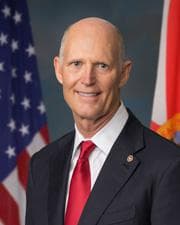
- Conservative Groups$380k
Full profile: /officials/S001217
Source: Congress.gov · FEC
Cosponsors (2)
Members who have signed on to support this bill since introduction. Source: Congress.gov.
Latest Action
The most recent step in the bill's legislative path. Committee Activity below shows referrals and reports; the full action-by-action history including floor proceedings lives at Congress.gov →
Read twice and referred to the Committee on Homeland Security and Governmental Affairs.
2026-06-11
Source: Congress.gov
Committee Activity
Currently in
- Senate Committee on Homeland Security and Governmental AffairsReferred To · 2026-06-11
Plain-English Summary
The government would be required to study and report each year on how terrorists might use artificial intelligence tools to carry out attacks against the United States. This affects national security officials and policymakers who need to understand emerging threats and prepare defenses accordingly. The bill aims to help the Department of Homeland Security stay ahead of potential dangers posed by advanced AI technology in the hands of bad actors.
AI-assisted summary generated from the official bill metadata (title, subjects, actions) sourced from Congress.gov. Cached and reviewed. Always verify against the official text linked below.
Full Bill Text
Verbatim text published on Congress.gov via GovInfo. Use Cmd+F / Ctrl+F to search within this excerpt.
[Congressional Bills 119th Congress] [From the U.S. Government Publishing Office] [S. 4762 Introduced in Senate (IS)] <DOC> 119th CONGRESS 2d Session S. 4762 To require the Secretary of Homeland Security to conduct annual assessments on threats to the United States posed by the use of generative artificial intelligence for terrorism, and for other purposes. _______________________________________________________________________ IN THE SENATE OF THE UNITED STATES June 11, 2026 Mr. Scott of Florida (for himself and Ms. Lummis) introduced the following bill; which was read twice and referred to the Committee on Homeland Security and Governmental Affairs _______________________________________________________________________ A BILL To require the Secretary of Homeland Security to conduct annual assessments on threats to the United States posed by the use of generative artificial intelligence for terrorism, and for other purposes. Be it enacted by the Senate and House of Representatives of the United States of America in Congress assembled, SECTION 1. SHORT TITLE. This Act may be cited as the ``Generative AI Terrorism Risk Assessment Act''. SEC. 2. DEFINITIONS. In this Act: (1) Appropriate congressional committees.--The term ``appropriate congressional committees'' means-- (A) the Committee on Homeland Security and Governmental Affairs, the Select Committee on Intelligence, and the Committee on Commerce, Science, and Transportation of the Senate; and (B) the Committee on Homeland Security, the Permanent Select Committee on Intelligence, and the Committee on Energy and Commerce of the House of Representatives. (2) Artificial intelligence.--The term ``artificial intelligence'' has the meaning given the term in section 5002 of the National Artificial Intelligence Initiative Act of 2020 (15 U.S.C. 9401). (3) Generative artificial intelligence.--The term ``generative artificial intelligence'' means the class of artificial intelligence models that emulate the structure and characteristics of input data in order to generate derived synthetic content, including images, videos, audio, text, and other digital content. (4) Foreign terrorist organization.--The term ``terrorist organization'' means any entity designated as a foreign terrorist organization pursuant to section 219 of the Immigration and Nationality Act (8 U.S.C. 1189). (5) Fusion center.--The term ``fusion center'' has the meaning given the term in section 210A(k) of the Homeland Security Act of 2002 (6 U.S.C. 124h). (6) Intelligence community.--The term ``intelligence community'' has the meaning given the term in section 3(4) of the National Security Act of 1947 (50 U.S.C. 3003(4)). (7) National network of fusion centers.--The term ``National Network of Fusion Centers'' means a decentralized arrangement of fusion centers intended to enhance the ability of individual State and local fusion centers to leverage the capabilities and expertise of all such fusion centers for the purpose of enhancing analysis and homeland security information sharing nationally. (8) Secretary.--The term ``Secretary'' means the Secretary of Homeland Security. (9) Terrorism.--The term ``terrorism'' has the meaning given the term in section 2 of the Homeland Security Act of 2002 (6 U.S.C. 101). SEC. 3. SENSE OF CONGRESS REGARDING THE USE OF GENERATIVE ARTIFICIAL INTELLIGENCE APPLICATIONS FOR TERRORIST ACTIVITY. It is the sense of Congress that-- (1) the heightened terrorism threat landscape and the increasing utilization of generative artificial intelligence by foreign terrorist organizations represent a national security threat, and the challenges posed by that threat are not well understood; and (2) the Department of Homeland Security, in consultation with the Office of the Director of National Intelligence, must take steps to recognize, assess, and address the national security threat described in paragraph (1), thereby reducing risks to the people of the United States. SEC. 4. ANNUAL ASSESSMENTS ON TERRORISM THREATS TO THE UNITED STATES POSED BY THE USE OF GENERATIVE ARTIFICIAL INTELLIGENCE FOR TERRORISM. (a) Assessments.-- (1) In general.--Not later than 1 year after the date of enactment of this Act,…
Show the remaining 548 wordsHide the remaining 548 words
and annually thereafter for 5 years, the Secretary, in consultation with the Director of National Intelligence, shall submit to the appropriate congressional committees an assessment of terrorism threats to the United States posed by the use of generative artificial intelligence for terrorism. (2) Contents.--Each terrorism threat assessment under paragraph (1) shall include the following: (A) An analysis of incidents during the immediately preceding calendar year in which a foreign terrorist organization or individual has used or attempted to use generative artificial intelligence to carry out the following: (i) Spread violent extremist messaging and facilitate the ability to radicalize and recruit individuals to violence. (ii) Enhance the ability of the foreign terrorist organization or individual to develop or deploy chemical, biological, radiological, or nuclear weapons. (B) Recommendations on appropriate measures to counter terrorism threats to the United States posed by the foreign terrorist organization or individual. (3) Coordination.--Each terrorism threat assessment under paragraph (1)-- (A) shall be coordinated by the Secretary to ensure compliance with applicable law and protections relating to the privacy, civil rights, and civil liberties of individuals; and (B) may be informed by existing products of the Department of Homeland Security, as appropriate. (4) Form.-- (A) In general.--Each terrorism threat assessment under paragraph (1) shall be submitted in unclassified form, but may include a classified annex. (B) Publication.-- (i) In general.--The Secretary shall post on a publicly available website of the Department of Homeland Security the unclassified portion of each terrorism threat assessment under paragraph (1). (ii) Limitation.--Each unclassified portion described in clause (i) shall not contain information that-- (I) is designated as For Official Use Only; or (II) otherwise would not be publicly available pursuant to section 552 of title 5, United States Code (commonly known as the ``Freedom of Information Act''), or other applicable law. (5) Briefing.--Not later than 30 days after the submission of each terrorism threat assessment under paragraph (1)-- (A) the Secretary shall brief the appropriate congressional committees regarding the assessment; and (B) the head of any other relevant Federal department or agency shall join the Secretary for a briefing described in subparagraph (A) if the appropriate congressional committee, in consultation with the Secretary, determines it is appropriate. (b) Information Sharing.-- (1) In general.--The Secretary shall-- (A) review information relating to terrorism threats to the United States posed by the use of generative artificial intelligence for terrorism that is gathered by State and major urban area fusion centers and the National Network of Fusion Centers; (B) incorporate the information described in subparagraph (A), as appropriate, into the information of the Department of Homeland Security relating to the use of generative artificial intelligence for terrorism; and (C) ensure the dissemination to State and major urban area fusion centers and the National Network of Fusion Centers of the information described in subparagraph (A). (2) Coordination.--In carrying out paragraph (1), the entities described in paragraph (3) shall share with the Secretary information regarding terrorism threats to the United States posed by the use of generative artificial intelligence for terrorism. (3) Entitles described.--The entities described in this paragraph are the following: (A) The Office of the Director of National Intelligence. (B) The Federal Bureau of Investigation. (C) Members of the intelligence community. (D) Any other relevant Federal department or agency the Secretary determines necessary. <all>
Related legislation
Bills by the same sponsor or covering overlapping subjects.
- S4834A bill to limit expenditures for foreign student work authorizations, and for other purposes.Referred to Committee · 2026-06-18
- SRES444A resolution condemning the dictator of the People's Republic of China, Xi Jinping, for deceit, undermining prospects for peace and security, and orchestrating crimes against humanity.Referred to Committee · 2026-06-16
- SRES770A resolution designating June 6, 2026, as National Naloxone Awareness Day.Introduced · 2026-06-15
- SRES769A resolution honoring the memory of the victims of the heinous attack at the Pulse nightclub on June 12, 2016.Referred to Committee · 2026-06-11