Renewable Energy Choice Act
Sponsor
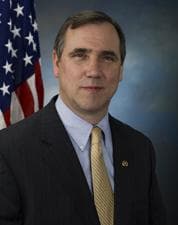
Full profile: /officials/M001176
Source: Congress.gov · FEC
Cosponsors (0)
Members who have signed on to support this bill since introduction. Source: Congress.gov.
No cosponsors on record. Bills can pass without cosponsors — this often means the sponsor introduced the bill alone, either because it's a messaging bill, a chairman's mark, or simply early in the legislative cycle.
Latest Action
The most recent step in the bill's legislative path. Committee Activity below shows referrals and reports; the full action-by-action history including floor proceedings lives at Congress.gov →
Read twice and referred to the Committee on Energy and Natural Resources.
2026-06-11
Source: Congress.gov
Committee Activity
Currently in
- Senate Committee on Energy and Natural ResourcesReferred To · 2026-06-11
Plain-English Summary
States and local governments would be prevented from blocking or restricting renewable energy projects based on the type of renewable source being used, meaning they couldn't reject solar, wind, geothermal, or other clean energy installations simply because of what kind of renewable energy is involved. This would affect state and local officials, renewable energy companies, and property owners who want to develop clean energy projects. The bill aims to remove barriers that could slow down the expansion of renewable energy infrastructure across the country.
AI-assisted summary generated from the official bill metadata (title, subjects, actions) sourced from Congress.gov. Cached and reviewed. Always verify against the official text linked below.
Full Bill Text
Verbatim text published on Congress.gov via GovInfo. Use Cmd+F / Ctrl+F to search within this excerpt.
[Congressional Bills 119th Congress] [From the U.S. Government Publishing Office] [S. 4772 Introduced in Senate (IS)] <DOC> 119th CONGRESS 2d Session S. 4772 To prohibit States and local governments from prohibiting or limiting the connection, reconnection, modification, installation, transportation, distribution, or expansion of a renewable energy service based on the type or source of energy to be delivered, and for other purposes. _______________________________________________________________________ IN THE SENATE OF THE UNITED STATES June 11, 2026 Mr. Merkley introduced the following bill; which was read twice and referred to the Committee on Energy and Natural Resources _______________________________________________________________________ A BILL To prohibit States and local governments from prohibiting or limiting the connection, reconnection, modification, installation, transportation, distribution, or expansion of a renewable energy service based on the type or source of energy to be delivered, and for other purposes. Be it enacted by the Senate and House of Representatives of the United States of America in Congress assembled, SECTION 1. SHORT TITLE. This Act may be cited as the ``Renewable Energy Choice Act''. SEC. 2. DEFINITION OF RENEWABLE ENERGY. In this Act, the term ``renewable energy'' includes-- (1) wind; (2) solar; (3) energy storage; and (4) geothermal. SEC. 3. LIMITATION ON REGULATION OF RENEWABLE ENERGY CHOICE. A State or local government, including any instrumentality or regulatory agency of a State or local government, may not adopt, implement, or enforce a law, regulation, ordinance, building code, standard, or policy that prohibits or limits, or has the effect of directly or indirectly prohibiting or limiting, the connection, reconnection, modification, installation, transportation, distribution, or expansion of, or access to, an energy service based on the type or source of renewable energy sold in interstate commerce to be delivered to an end-user of that energy service, including by-- (1) permanently banning renewable energy projects; (2) executing a moratorium on renewable energy projects for a period greater than 6 months, including any extensions; (3) limiting project height to less than 525 feet; (4) creating a setback requirement greater than 1,000 feet; (5) setting a sound limit below 50 decibels; (6) refusing to enter into a road use agreement; or (7) charging a permitting fee the cost of which deviates from the average fee imposed on other energy projects of similar capacity. <all>
Related legislation
Bills by the same sponsor or covering overlapping subjects.
- S4803A bill to amend the Truth in Lending Act to include a home equity investment loan in the definition of a residential mortgage loan for the purposes of that Act, and for other purposes.Referred to Committee · 2026-06-17
- S4259Blue Skies for Taiwan Act of 2026Referred to Committee · 2026-06-17
- S4804A bill to require the Federal National Mortgage Association and the Federal Home Loan Mortgage Corporation to each establish a pilot program for personal property manufactured home loan purchases.Referred to Committee · 2026-06-17
- S4774Fraudulent Artificial Intelligence Regulations (FAIR) Elections Act of 2026Referred to Committee · 2026-06-11