Venezuela Democratic Transition Act
Sponsor
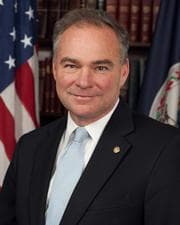
Full profile: /officials/K000384
Source: Congress.gov · FEC
Cosponsors (0)
Members who have signed on to support this bill since introduction. Source: Congress.gov.
No cosponsors on record. Bills can pass without cosponsors — this often means the sponsor introduced the bill alone, either because it's a messaging bill, a chairman's mark, or simply early in the legislative cycle.
Latest Action
The most recent step in the bill's legislative path. Committee Activity below shows referrals and reports; the full action-by-action history including floor proceedings lives at Congress.gov →
Committee Activity
Currently in
- Senate Committee on Foreign RelationsReferred To · 2026-06-17
Plain-English Summary
The federal government would develop a plan to help support democratic elections in Venezuela and would punish individuals involved in serious human rights abuses there through economic sanctions. These penalties would target people responsible for violations like torture, unlawful detention, or suppression of political freedoms. The measure aims to pressure the Venezuelan government to respect basic human rights and allow citizens to participate in free and fair elections.
AI-assisted summary generated from the official bill metadata (title, subjects, actions) sourced from Congress.gov. Cached and reviewed. Always verify against the official text linked below.
Full Bill Text
Verbatim text published on Congress.gov via GovInfo. Use Cmd+F / Ctrl+F to search within this excerpt.
[Congressional Bills 119th Congress] [From the U.S. Government Publishing Office] [S. 4809 Introduced in Senate (IS)] <DOC> 119th CONGRESS 2d Session S. 4809 To require the Secretary of State to develop a strategy for supporting free and fair elections in Venezuela, to impose sanctions on individuals who are complicit in gross violations of internationally recognized human rights in Venezuela, and for other purposes. _______________________________________________________________________ IN THE SENATE OF THE UNITED STATES June 17, 2026 Mr. Kaine introduced the following bill; which was read twice and referred to the Committee on Foreign Relations _______________________________________________________________________ A BILL To require the Secretary of State to develop a strategy for supporting free and fair elections in Venezuela, to impose sanctions on individuals who are complicit in gross violations of internationally recognized human rights in Venezuela, and for other purposes. Be it enacted by the Senate and House of Representatives of the United States of America in Congress assembled, SECTION 1. SHORT TITLE. This Act may be cited as the ``Venezuela Democratic Transition Act''. SEC. 2. FINDINGS; SENSE OF CONGRESS. (a) Findings.--Congress finds that-- (1) the Venezuelan parliamentary election held on December 6, 2020, and the Venezuelan parliamentary election held on May 25, 2025, were fraudulent and widely condemned; (2) the Venezuelan presidential election held on July 28, 2024, violated Venezuelan law and international standards; (3) the Venezuelan regime led by Nicolas Maduro falsely claimed victory in the 2024 presidential election and intensified violent repression against the leaders and supporters of the opposition presidential candidate; and (4) Nicolas Maduro lost the 2024 presidential election and his regime lacks legitimacy to represent the Venezuelan people. (b) Sense of Congress.--It is the sense of Congress that the United States should-- (1) continue to recognize Edmundo Gonzalez Urrutia as Venezuela's legitimate President-elect; (2) support the democratic opposition; (3) facilitate free and fair presidential elections in 2026 with full opposition participation; and (4) ensure that any energy agreements with Venezuela are made only in consultation with the democratic opposition movement. SEC. 3. DEFINITIONS. In this Act: (1) Admission; admitted; alien.--The terms ``admission'', ``admitted'', and ``alien'' have the meanings given such terms in section 101 of the Immigration and Nationality Act (8 U.S.C. 1101). (2) Appropriate congressional committees.--The term ``appropriate congressional committees'' means-- (A) the Committee on Foreign Relations of the Senate; (B) the Committee on the Judiciary of the Senate; (C) the Committee on Banking, Housing, and Urban Affairs of the Senate; (D) the Committee on Foreign Affairs of the House of Representatives; (E) the Committee on the Judiciary of the House of Representatives; and (F) the Committee on Financial Services of the House of Representatives. (3) Gross violations of internationally recognized human rights.--The term ``gross violations of internationally recognized human rights'' has the meaning given that term in section 502B(d) of the Foreign Assistance Act of 1961 (22 U.S.C. 2304(d)). (4) United states person.--The term ``United States person'' means-- (A) a United States citizen or an alien lawfully admitted for permanent residence to the United States; (B) an entity organized under the laws of the United States or any jurisdiction within the United States, including a foreign branch of such an entity; or (C) any person located in the United States. (5) Venezuelan person.--The term ``Venezuelan person'' means-- (A) a citizen or national of Venezuela; or (B) an entity organized under the laws of Venezuela or otherwise subject to the jurisdiction of the Government of Venezuela. SEC. 4. STRATEGY FOR SUPPORTING FREE AND FAIR ELECTIONS IN VENEZUELA. The Secretary of State shall develop and submit to Congress a strategy that-- (1) updates, with input from the appropriate congressional…
Show the remaining 998 wordsHide the remaining 998 words
committees, the Democratic Transition Framework for Venezuela, which was originally published by the Department of State on March 31, 2020; (2) uses all available diplomatic tools-- (A) to facilitate a new presidential election in Venezuela in 2026 that complies with international standards for a free, fair, and transparent electoral process; (B) to end the Maduro-Rodriguez regime's usurpation of presidential authorities; (C) to restore democracy and the rule of law in Venezuela; (D) to free political prisoners and prisoners of conscience from incarceration in Venezuela; and (E) to facilitate the consistent delivery of humanitarian assistance to the people of Venezuela; (3) outlines benchmarks towards a democratic transition in Venezuela; (4) provides a detailed assessment of Venezuelan government institutions, political prisoners, detention and torture centers, armed groups, and laws used to repress political opposition; (5) outlines the next steps that need to be taken in Venezuela-- (A) to coordinate international sanctions; (B) to close torture centers; (C) to ensure the Venezuelan military respects the results of free and fair presidential elections; (D) to establish mechanisms for institutional reform; (E) to guarantee the safe return of opposition leaders, including Maria Corina Machado; and (F) to provide pathways for transitional justice and accountability; and (6) requires transparency and monthly reporting to the appropriate congressional committees with respect to the transition to democracy in Venezuela, including-- (A) closely monitoring energy-related negotiations; and (B) tracking progress made toward achieving certain democratic benchmarks. SEC. 5. IMPOSITION OF SANCTIONS WITH RESPECT TO HUMAN RIGHTS VIOLATIONS IN VENEZUELA. (a) In General.--The President shall impose the sanctions described in subsection (b) with respect to Venezuelan persons the President determines are complicit in gross violations of internationally recognized human rights in Venezuela. (b) Sanctions Described.--The sanctions described in this subsection are the following: (1) Blocking of property.--The President shall exercise all of the powers granted by the International Emergency Economic Powers Act (50 U.S.C. 1701 et seq.) to the extent necessary to block and prohibit all transactions in all property and interests in property of a person described in subsection (a), if such property and interests in property are in the United States, come within the United States, or are or come within the procession or control of a United States person. (2) Aliens inadmissible for visas, admission, or parole.-- In the case of an alien described in subsection (a), the alien is-- (A) inadmissible to the United States; (B) ineligible for a visa or other documentation to enter the United States; and (C) otherwise ineligible to be admitted or paroled into the United States or to receive any other benefit under the Immigration and Nationality Act (8 U.S.C. 1101 et seq.). (c) Exceptions.-- (1) Exception relating to importation of goods.-- (A) In general.--A requirement to block and prohibit all transactions in all property and interests in property under this section shall not include the authority or a requirement to impose sanctions on the importation of goods. (B) Good.--In this paragraph, the term ``good'' means any article, natural or manmade substance, material, supply, or manufactured product, including inspection and test equipment, and excluding technical data. (2) Exception to comply with united nations headquarters agreement and law enforcement activities.--Sanctions under subsection (b)(2) shall not apply with respect to the admission of an alien to the United States if admitting or paroling the alien into the United States is necessary-- (A) to permit the United States to comply with the Agreement regarding the Headquarters of the United Nations, signed at Lake Success June 26, 1947, and entered into force November 21, 1947, between the United Nations and the United States, or other applicable international obligations of the United States; or (B) to carry out or assist authorized law enforcement activity in the United States. (3) Exception to comply with intelligence activities.-- Sanctions under this section shall not apply to any activity subject to the reporting requirements under title V of the National Security Act of 1947 (50 U.S.C. 3091 et seq.) or any authorized intelligence activities of the United States. (d) Waivers.-- (1) National security waiver.--The President may waive the application of sanctions under this section if the President-- (A) determines such a waiver is in the national security interests of the United States; and (B) submits to the appropriate congressional committees a report on the waiver and the reasons for the waiver. (2) Humanitarian waiver.-- (A) In general.--Sanctions under this section shall not apply to-- (i) the conduct or facilitation of a transaction for the provision of agricultural commodities, food, medicine, medical devices, humanitarian assistance, or for humanitarian purposes; or (ii) transactions that are necessary for or related to the activities described in clause (i). (B) Definitions.--In this paragraph: (i) Agricultural commodity.--The term ``agricultural commodity'' has the meaning given that term in section 102 of the Agricultural Trade Act of 1978 (7 U.S.C. 5602). (ii) Medical device.--The term ``medical device'' has the meaning given the term ``device'' in section 201 of the Federal Food, Drug, and Cosmetic Act (21 U.S.C. 321). (iii) Medicine.--The term ``medicine'' has the meaning given the term ``drug'' in section 201 of the Federal Food, Drug, and Cosmetic Act (21 U.S.C. 321). (3) Democratic transition.--The President may waive the application of sanctions under this section upon receiving certifications from the Secretary of State and the Secretary of the Treasury that a democratic transition has occurred in Venezuela. (e) Implementation; Penalties.-- (1) Implementation.--The President may exercise all authorities provided under sections 203 and 205 of the International Emergency Economic Powers Act (50 U.S.C. 1702 and 1704) to carry out this section. (2) Penalties.--A person that violates, attempts to violate, conspires to violate, or causes a violation of this section or any regulation, license, or order issued to carry out this section shall be subject to the penalties set forth in subsections (b) and (c) of section 206 of the International Emergency Economic Powers Act (50 U.S.C. 1705) to the same extent as a person that commits an unlawful act described in subsection (a) of that section. <all>
Related legislation
Bills by the same sponsor or covering overlapping subjects.
- S4900A bill to reauthorize the North Korean Human Rights Act of 2004, and for other purposes.Referred to Committee · 2026-06-24
- S4899A bill to require the Secretary of State to establish the Initiative on Foreign Investment Screening, and for other purposes.Referred to Committee · 2026-06-24
- SJRES185A joint resolution to direct the removal of United States Armed Forces from hostilities within or against the Islamic Republic of Iran that have not been authorized by Congress.Referred to Committee · 2026-06-24
- S4889A bill to award grants for the creation, recruitment, training and education, retention, and advancement of the direct care workforce and to award grants to support family caregivers.Referred to Committee · 2026-06-24