S4864Referred to Committee
PUPIL Act
Introduced
In Committee
3
Passed One Chamber4
Passed Both5
Signed into Law119th
Congress
2026-06-23
Introduced
2
Cosponsors
S
ⓘType
Sponsor
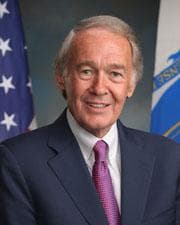
Edward J. Markey
Democrat · MA · Senator
Votes with party: 85.2% (845 recorded votes)
Full profile: /officials/M000133
Source: Congress.gov · FEC
Cosponsors (2)
Members who have signed on to support this bill since introduction. Source: Congress.gov.
Latest Action
The most recent step in the bill's legislative path. Committee Activity below shows referrals and reports; the full action-by-action history including floor proceedings lives at Congress.gov →
Read twice and referred to the Committee on Health, Education, Labor, and Pensions.
2026-06-23
Source: Congress.gov
Committee Activity
Currently in
- Senate Committee on Health, Education, Labor, and PensionsReferred To · 2026-06-23
Plain-English Summary
The federal government would conduct a comprehensive study on paraprofessionals and education support staff—workers like teacher's aides, counselors, and school nurses—to examine their roles, working conditions, and impact on student outcomes. The study would help policymakers understand how these workers contribute to schools and what challenges they face in their jobs. This research could inform future decisions about funding, training, and support for these education workers.
AI-assisted summary generated from the official bill metadata (title, subjects, actions) sourced from Congress.gov. Cached and reviewed. Always verify against the official text linked below.
Full Bill Text
Verbatim text published on Congress.gov via GovInfo. Use Cmd+F / Ctrl+F to search within this excerpt.
[Congressional Bills 119th Congress] [From the U.S. Government Publishing Office] [S. 4864 Introduced in Senate (IS)] <DOC> 119th CONGRESS 2d Session S. 4864 To direct a study on paraprofessionals and education support staff. _______________________________________________________________________ IN THE SENATE OF THE UNITED STATES June 23, 2026 Mr. Markey (for himself, Mr. Padilla, and Mr. Booker) introduced the following bill; which was read twice and referred to the Committee on Health, Education, Labor, and Pensions _______________________________________________________________________ A BILL To direct a study on paraprofessionals and education support staff. Be it enacted by the Senate and House of Representatives of the United States of America in Congress assembled, SECTION 1. SHORT TITLE. This Act may be cited as the ``Providing Understanding of Paraprofessionals in Learning Act'' or the ``PUPIL Act''. SEC. 2. DEFINITIONS. In this Act: (1) ESEA.--The terms ``professional development'', ``Secretary'', and ``State'' have the meanings given the terms in section 8101 of the Elementary and Secondary Education Act of 1965 (20 U.S.C. 7801). (2) Education support staff.--The term ``education support staff'' (also sometimes known as ``classified school employees'' or ``education support professionals'') includes professionals who work in early childhood education settings or schools that serve children in prekindergarten through grade 12 in clerical and administrative services, transportation services, food and nutrition services, custodial and maintenance services, health and student services, technical services, and skilled trades. (3) Paraprofessional.--The term ``paraprofessional'' has the meaning given that term in section 3201 of the Elementary and Secondary Education Act of 1965 (20 U.S.C. 7011). SEC. 3. FINDINGS. Congress finds the following: (1) Paraprofessionals and education support staff are invaluable members of the education system and school community. (2) More than 2,000,000 paraprofessionals and education support staff are the frontline workers who transform public elementary and secondary schools in the United States from brick and mortar buildings to places of learning and support for more than 54,000,000 students across the United States. (3) Many paraprofessionals and education support staff are, as a matter of practice, laid off at the end of each school year and rehired annually, and lack job security. (4) Over 500,000 paraprofessionals provide essential support for children with disabilities to access a free appropriate public education in the least restrictive environment. (5) While paraprofessionals and education support staff are often the most diverse subset of school employees, are more likely to have grown up in the communities they serve, and are trusted school community members for many students and parents, the voices of paraprofessionals and education support staff are not always reflected in school policies. SEC. 4. STUDY ON THE PARAPROFESSIONAL AND EDUCATION SUPPORT STAFF WORKFORCE. (a) In General.--Not later than 90 days after the date of enactment of this Act, the Secretary shall seek to enter into a contract with the National Academies of Sciences, Engineering, and Medicine to conduct a study examining the paraprofessional and education support staff workforce that serve children in prekindergarten through grade 12 in the United States enrolled at public elementary schools or secondary schools. Such study shall contain the elements described in subsection (b) and shall assess the characteristics, roles, effectiveness, preparation, compensation, and career pathways of paraprofessionals and education support staff, as well as the policies and investments that shape the paraprofessional and education support staff workforce. (b) Elements.--The study described in subsection (a) shall-- (1) examine-- (A) the demographic, educational, and professional characteristics of the paraprofessional and education support staff workforce that serve children in prekindergarten through grade 12; (B) pathways into the paraprofessional and education support staff roles and patterns of recruitment, retention, and tenure; and (C) minimum qualification and credentialing requirements, including variations…
Show the remaining 524 wordsHide the remaining 524 words
across States and local educational agencies and compliance with the certification and licensure requirements of section 1111(g)(2)(J) of the Elementary and Secondary Education Act of 1965 (20 U.S.C. 6311(g)(2)(J)), and for paraprofessionals serving children with disabilities, compliance with section 612(a)(14)(B) of the Individuals with Disabilities Education Act (20 U.S.C. 1412(a)(14)(B)); (2) review the roles and responsibilities that paraprofessionals and education support staff assume across prekindergarten through grade 12 settings and student populations; (3) evaluate the available evidence on the impact of paraprofessional and education support staff on student academic, social-emotional, and behavioral outcomes, and identify the conditions under which paraprofessionals and education support staff are most effective, including considerations of training, supervision, role clarity, and instructional context; (4) analyze compensation structures, including salaries, benefits, and employment conditions, and document variation across States, local educational agencies, and school contexts, and identify evidence-informed approaches to improving compensation, stability, and overall job quality; (5) assess the availability, quality, and effectiveness of professional development opportunities for paraprofessionals and education support staff, and identify strategies to strengthen those opportunities; (6) examine career advancement pathways, including model programs and policies that support progression to certified teaching and other educational roles; (7) identify Federal, State, and local policy levers and investments that influence the recruitment, preparation, effectiveness, advancement, and retention of the paraprofessional and education support staff workforce, and recommend actionable strategies to strengthen and sustain such workforce in ways that support educational quality and student outcomes; (8) identify data gaps and areas where additional research is needed; (9) with respect to each classification established under subsection (c)-- (A) analyze the average starting salary for each such classification and the average salary for each such classification; and (B) compare those starting and average salaries by classification and location, to the cost of living or livable wages for the respective locations in which those education support staff and paraprofessionals reside; (10) examine relevant employment models and workforce arrangements, including-- (A) the use and prevalence of contracted, privatized, or outsourced education support staff and paraprofessionals; and (B) the implications of those employment models and workforce arrangements on workforce stability, training, supervision, and working conditions, the alignment of those models and arrangements with school goals, and the effects of those models and arrangements on educational quality and student outcomes; and (11) make recommendations for Congress, Federal agencies, States, local educational agencies, and other relevant stakeholders, based on the findings of the study. (c) Position Classifications.--In carrying out the study under this section, the National Academies of Sciences, Engineering, and Medicine shall establish classifications for the different education support staff and paraprofessional positions, and with respect to each element of the study, as described in subsection (b), disaggregate data based on those classifications, to the extent practicable. (d) Report.--The agreement under subsection (a) shall direct the National Academies of Sciences, Engineering, and Medicine to complete the study under this section, and transmit to Congress and make publicly available a report on the results of the study, not later than 24 months after the date of entry into the agreement. (e) Authorization of Appropriations.--There are authorized to be appropriated to carry out this Act $2,000,000. <all>
Related legislation
Bills by the same sponsor or covering overlapping subjects.
- SRES796A resolution recognizing the upcoming 250th anniversary of the United States of America and reaffirming the commitment of the Senate to the Nation's founding ideals of liberty, equality, and opportunity for all immigrant communities in the United States.Referred to Committee · 2026-06-24
- S4908A bill to require the Administrator of the National Highway Traffic Safety Administration to initiate a process to reevaluate corporate average fuel economy standards, and for other purposes.Referred to Committee · 2026-06-24
- S4941A bill to expand access to methadone through alternative care models using pharmacies.Referred to Committee · 2026-06-24
- S4831A bill to prohibit, or require disclosure of, the surveillance, monitoring, and collection of certain worker data by employers, and for other purposes.Referred to Committee · 2026-06-18