A bill to help local educational agencies reduce chronic absenteeism and create safe learning environments in public elementary schools and secondary schools, and for other purposes.
Sponsor
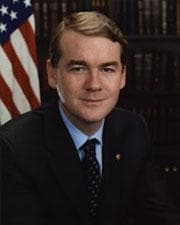
Full profile: /officials/B001267
Source: Congress.gov · FEC
Cosponsors (0)
Members who have signed on to support this bill since introduction. Source: Congress.gov.
No cosponsors on record. Bills can pass without cosponsors — this often means the sponsor introduced the bill alone, either because it's a messaging bill, a chairman's mark, or simply early in the legislative cycle.
Latest Action
The most recent step in the bill's legislative path. Committee Activity below shows referrals and reports; the full action-by-action history including floor proceedings lives at Congress.gov →
Read twice and referred to the Committee on Health, Education, Labor, and Pensions.
2026-06-23
Source: Congress.gov
Committee Activity
Currently in
- Senate Committee on Health, Education, Labor, and PensionsReferred To · 2026-06-23
Plain-English Summary
Schools would receive federal funding and support to address chronic absenteeism—when students miss too many days of school—and to improve safety in their buildings. The money could be used for programs that help keep students engaged and attending class regularly, as well as initiatives to make school environments safer for both students and staff. This would primarily affect public elementary and secondary schools, students, teachers, and school administrators.
AI-assisted summary generated from the official bill metadata (title, subjects, actions) sourced from Congress.gov. Cached and reviewed. Always verify against the official text linked below.
Full Bill Text
Verbatim text published on Congress.gov via GovInfo. Use Cmd+F / Ctrl+F to search within this excerpt.
[Congressional Bills 119th Congress] [From the U.S. Government Publishing Office] [S. 4872 Introduced in Senate (IS)] <DOC> 119th CONGRESS 2d Session S. 4872 To help local educational agencies reduce chronic absenteeism and create safe learning environments in public elementary schools and secondary schools, and for other purposes. _______________________________________________________________________ IN THE SENATE OF THE UNITED STATES June 23, 2026 Mr. Bennet introduced the following bill; which was read twice and referred to the Committee on Health, Education, Labor, and Pensions _______________________________________________________________________ A BILL To help local educational agencies reduce chronic absenteeism and create safe learning environments in public elementary schools and secondary schools, and for other purposes. Be it enacted by the Senate and House of Representatives of the United States of America in Congress assembled, SECTION 1. SHORT TITLE. This Act may be cited as the ``Keep Kids in School Act''. SEC. 2. DEFINITIONS. In this Act: (1) ESEA terms.--The terms ``elementary school'', ``local educational agency'', ``secondary school'', and ``State educational agency'' have the meanings given those terms in section 8101 of the Elementary and Secondary Education Act of 1965 (20 U.S.C. 7801). (2) Chronic absenteeism.--The term ``chronic absenteeism'' means students at a public elementary school or secondary school who are absent, for any excused or unexcused reason, for 10 percent or more of the days for which the student is enrolled in a public school during a school year. (3) Secretary.--The term ``Secretary'' means the Secretary of Education. (4) State.--The term ``State'' means each of the 50 States of the United States, the District of Columbia, the Commonwealth of Puerto Rico, American Samoa, the Commonwealth of the Northern Mariana Islands, Guam, and the United States Virgin Islands. SEC. 3. GRANT PROGRAM. (a) Program Authorized.-- (1) In general.--From amounts made available to carry out this section, the Secretary shall award grants to State educational agencies to enable the State educational agencies to award subgrants to local educational agencies to provide assistance to public elementary schools and secondary schools served by the local educational agencies to reduce the chronic absenteeism rate at the schools and foster safe learning environments. (2) Preference.--In awarding grants to State educational agencies under paragraph (1), the Secretary shall give preference to States with high rates of chronic absenteeism or those serving the most vulnerable student populations. (b) Applications.-- (1) State educational agencies.--A State educational agency desiring a grant under this section shall submit to the Secretary an application at such time, in such manner, and containing such information as the Secretary may require. (2) Local educational agencies.--A local educational agency desiring a subgrant under this section shall submit to the State educational agency in the State in which the local educational agency is located an application at such time, in such manner, and containing such information as the State educational agency may require. (c) Use of Funds.-- (1) By states.--A State educational agency receiving a grant under this section shall use the grant funds to award subgrants to local educational agencies in the State. (2) By local educational agencies.--A local educational agency receiving a subgrant under this section shall use subgrant funds to reduce chronic absenteeism rates and to create safe learning environments in public elementary schools and secondary schools served by the local educational agency. Such activities may include-- (A) hiring additional counselors, mental health professionals, social workers, or family liaisons; (B) providing stipends to teachers to perform home visits for students who are chronically absent; (C) supporting programming to address chronic absenteeism and to improve safety in learning environments; (D) transportation costs, such as buses; (E) research and data collection so schools and local…
Show the remaining 250 wordsHide the remaining 250 words
educational agencies can track absenteeism rates, patterns, and root causes throughout the school year; or (F) other activities or methods that have been shown to reduce the chronic absenteeism rate. (d) Reports.--Not later than 3 years after the date a local educational agency receives a subgrant under this section, the local educational agency shall prepare and submit to the State educational agency a report regarding the impact of the subgrant funds and whether each of the elementary schools or secondary schools supported under the subgrant reduced their chronic absenteeism rate. The State educational agency shall submit reports received from local educational agencies to the Secretary. SEC. 4. STUDY REGARDING CHRONIC ABSENTEEISM AND SAFE LEARNING ENVIRONMENTS. (a) Study.--The Comptroller General of the United States shall conduct a study on chronic absenteeism and safety in learning environments in public elementary schools and secondary schools of the United States. (b) Contents of Study.--In carrying out the study under subsection (a), the Comptroller General shall examine chronic absenteeism and research the extent to which evidence-based interventions can reduce chronic absenteeism rates and improve student achievement and student well-being. (c) Report.--Not later than 1 year after the date of enactment of this Act, the Comptroller General shall prepare and submit a report regarding the study conducted under subsection (a) and the conclusions and recommendations generated from the study to the Committee on Health, Education, Labor, and Pensions of the Senate, the Committee on Education and Workforce of the House of Representatives, and the Secretary. <all>
Related legislation
Bills by the same sponsor or covering overlapping subjects.
- S4875A bill to amend the Public Health Service Act to establish a program to develop innovative antimicrobial drugs targeting the most challenging pathogens and most threatening infections, and for other purposes.Referred to Committee · 2026-06-23
- S4866A bill to amend the Farm Security and Rural Investment Act of 2002 to expand investment in farmers' markets and farmers' market nutrition programs to strengthen communities and improve access to healthy food, and for other purposes.Referred to Committee · 2026-06-23
- S4865A bill to prohibit discrimination against individuals with disabilities who need long-term services and supports, and for other purposes.Referred to Committee · 2026-06-23
- S4862A bill to direct the Secretary of Agriculture to consider certain acreage not planted due to a lack of irrigation water to be eligible for prevented planting payments, and for other purposes.Referred to Committee · 2026-06-23