Safeguarding Against Fabricated Exploitation Through Artificial Intelligence Act of 2026
Sponsor
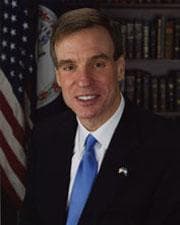
Full profile: /officials/W000805
Source: Congress.gov · FEC
Cosponsors (0)
Members who have signed on to support this bill since introduction. Source: Congress.gov.
No cosponsors on record. Bills can pass without cosponsors — this often means the sponsor introduced the bill alone, either because it's a messaging bill, a chairman's mark, or simply early in the legislative cycle.
Latest Action
The most recent step in the bill's legislative path. Committee Activity below shows referrals and reports; the full action-by-action history including floor proceedings lives at Congress.gov →
Read twice and referred to the Committee on Homeland Security and Governmental Affairs.
2026-07-21
Source: Congress.gov
Committee Activity
Currently in
- Senate Committee on Homeland Security and Governmental AffairsReferred To · 2026-07-21
Plain-English Summary
The federal government would be banned from using certain types of artificial intelligence systems in its operations and decision-making processes. This affects federal agencies and employees who currently use or plan to use AI tools, potentially slowing down some government functions while protecting against risks the bill's sponsors believe these AI models pose. The measure is currently under review by the Senate committee responsible for government operations and security.
AI-assisted summary generated from the official bill metadata (title, subjects, actions) sourced from Congress.gov. Cached and reviewed. Always verify against the official text linked below.
Full Bill Text
Verbatim text published on Congress.gov via GovInfo. Use Cmd+F / Ctrl+F to search within this excerpt.
[Congressional Bills 119th Congress] [From the U.S. Government Publishing Office] [S. 5057 Introduced in Senate (IS)] <DOC> 119th CONGRESS 2d Session S. 5057 To prohibit the use of certain artificial intelligence models across the Federal Government, and for other purposes. _______________________________________________________________________ IN THE SENATE OF THE UNITED STATES July 21, 2026 Mr. Warner introduced the following bill; which was read twice and referred to the Committee on Homeland Security and Governmental Affairs _______________________________________________________________________ A BILL To prohibit the use of certain artificial intelligence models across the Federal Government, and for other purposes. Be it enacted by the Senate and House of Representatives of the United States of America in Congress assembled, SECTION 1. SHORT TITLE. This Act may be cited as the ``Safeguarding Against Fabricated Exploitation Through Artificial Intelligence Act of 2026''. SEC. 2. PROHIBITION ON THE USE OF CERTAIN ARTIFICIAL INTELLIGENCE MODELS ACROSS THE FEDERAL GOVERNMENT. (a) Definitions.--In this section: (1) Administrator.--The term ``Administrator'' means the Administrator of General Services. (2) Appropriate congressional committees.--The term ``appropriate congressional committees'' means the Committee on Commerce, Science, and Transportation of the Senate, the Committee on the Judiciary of the Senate, the Committee on Homeland Security and Governmental Affairs of the Senate, the Committee on Oversight and Government Reform of the House of Representatives, the Committee on Energy and Commerce of the House of Representatives, and the Committee on the Judiciary of the House of Representatives. (3) Artificial intelligence model.--The term ``artificial intelligence model'' means a capability or combined series of capabilities that can generate realistic image or video outputs for a given set of objectives, prompts, or input. (4) Artificial intelligence risk management framework.--The term ``Artificial Intelligence Risk Management Framework'' means the Artificial Intelligence Risk Management Framework, or any successor document, and any associated guidance or publications issued under section 22A of the National Institute of Standards and Technology Act (15 U.S.C. 278h-1). (5) Child pornography.--The term ``child pornography'' has the meaning given the term in section 2256 of title 18, United States Code. (6) Child sexual abuse material.--The term ``child sexual abuse material''-- (A) means child pornography; and (B) an intimate visual depiction of an individual who is less than 18 years of age. (7) Covered application.--The term ``covered application'' means an artificial intelligence model that the Administrator of General Services or the head of a Federal agency determines-- (A) is not in compliance with-- (i) the standards document of the National Institute of Standards and Technology numbered ``NIST AI 600-1'' and entitled ``Artificial Intelligence Risk Management Framework: Generative Artificial Intelligence Profile'' with respect to non-consensual intimate imagery or child sexual abuse material within ``obscene, degrading, and/or abusive content''; or (ii) a comparably robust successor standard or framework with respect to synthetic child sexual abuse material or non-consensual intimate images of adults; (B) is subject to a determination by a Federal court that the artificial intelligence model has generated content depicting child pornography; or (C) is subject to a determination by a Federal court that the artificial intelligence model has generated non-consensual intimate visual depictions of an identifiable adult. (8) Developer.--The term ``developer'' means a person that develops an artificial intelligence model, including any person that materially modifies and subsequently distributes an artificial intelligence model. (9) Federal agency.--The term ``Federal agency'' has the meaning given the term ``agency'' in section 3502 of title 44, United States Code. (10) Intimate visual depiction.--The term ``intimate visual depiction'' has the meaning given the term in section 1309 of the Violence Against Women Act Reauthorization Act of 2022 (15 U.S.C. 6851). (11) Technical control.--The term ``technical control'' means a technical control, or series of technical…
Show the remaining 1,490 wordsHide the remaining 1,490 words
controls, to prevent the ability of any publicly released version of an artificial intelligence model to generate child pornography. (b) Establishment of Performance Benchmarks.-- (1) Performance benchmark.-- (A) In general.--Not later than 90 days after the date of enactment of this Act, the Director of the National Institute of Standards and Technology shall initiate a process to establish performance benchmarks, consistent with the Artificial Intelligence Risk Management Framework Generative Artificial Intelligence Profile, to prevent the generation of obscene, degrading, and abusive content, including synthetic child sexual abuse material and non-consensual intimate images of adults. (B) Updates.--The Director of the National Institute of Standards and Technology shall update, on a periodic basis, the performance benchmarks established under subparagraph (A) to address changes in technology and circumvention practices. (2) Testing program.--Not later than 180 days after the date of the enactment of this Act, the Director of the National Institute of Standards and Technology shall establish a voluntary vendor test program consistent with the performance benchmarks established under subparagraph (A). (c) Prohibition on Federal Acquisition or Use of Covered Applications.-- (1) In general.--The head of a Federal agency may not procure a covered application or use such application on an information technology system operated by such Federal agency or by a contractor of such Federal agency. (2) Implementation.-- (A) Initial removal.--Not later than 180 days after the date of enactment of this Act, the head of each Federal agency shall-- (i) remove any covered application from each information technology system operated by the Federal agency; and (ii) ensure that each contractor of the Federal agency removes any covered application from each information technology system operated by the contractor. (B) Subsequent removals.--Not later than 180 days after the date on which the Administrator or the head of a Federal agency determines that an artificial intelligence model constitutes a covered application, including as a result of a review performed under paragraph (3), the head of each Federal agency shall carry out the requirements of clauses (i) and (ii) of subparagraph (A) with respect to the covered application. (3) Continuous evaluation of available products and services.-- (A) General services administration.--Effective on the date that is 1 year after the date of enactment of this Act, and not less frequently than every 90 days thereafter, the Administrator shall review each product or service offered within a contract vehicle or purchasing program maintained by the General Services Administration to determine whether the product or service includes a covered application. (B) Agency procurement review.--Effective on the date that is 1 year after the date of enactment of this Act, and not less frequently than annually thereafter, the Chief Acquisition Officer or a senior procurement executive of each Federal agency shall review each product or service used by the Federal agency to determine whether the product or service constitutes a covered application. (d) Safeguards.-- (1) In general.--If an artificial intelligence model that is determined to constitute a covered application lacks a vendor capable of making necessary technical modifications to the artificial intelligence model in order to remove the status of the artificial intelligence model as a covered application, including for the purpose of subsection (e), the head of each Federal agency may implement additional technical and compliance safeguards, including those described in Reducing Risks Posed by Synthetic Content (NIST AI 100-4) or any successor publication, with respect to the artificial intelligence model that effectively prevent the use of the an artificial intelligence model for the generation of child pornography or non-consensual intimate visual depictions of an identifiable adult. (2) Certification required.--With respect to the head of a Federal agency who implements safeguards described in paragraph (1) on a covered application, not later than 30 days after the date of such implementation, the head of the Federal agency shall issue a public certification that those safeguards are sufficient to prevent the misuse of the covered application for the generation of child pornography or non-consensual intimate visual depictions of an identifiable adult. (3) Congressional notification.--Not later than 7 days after the date on which the head of a Federal agency issues a certification under paragraph (2), the head of the Federal agency shall submit to the appropriate congressional committees a notification of the certification that identifies the safeguards described in paragraph (1). (e) Cure.--If the Administrator or the head of a Federal agency determines that an artificial intelligence model constitutes a covered application, the Administrator or the head of the Federal agency may offer the vendor of the artificial intelligence model an opportunity to modify the artificial intelligence model in order to remove the status of the artificial intelligence model as a covered application at the cost of the vendor to avoid the removal required under subsection (c)(2). (f) Prohibition; Private Right of Action.-- (1) Prohibition on products and services for circumvention.--No person may deliberately manufacture, import, or offer to the public a technology, product, service, device, component, or part thereof that-- (A) is primarily designed or produced and promoted for the purpose of circumventing, removing, or tampering with a technical control; (B) has only limited commercially significant or expressive purpose or use other than to circumvent, remove, or tamper with a technical control and is promoted for a purpose described in subparagraph (A); or (C) is marketed by the person or another party acting in concert with the person with the knowledge of the person for use in circumventing, removing, or tampering with a technical control. (2) Private right of action.-- (A) In general.--The following persons may commence a civil action in an appropriate district court of the United States: (i) An individual whose image or likeness is contained in any child pornography. (ii) An individual who has been injured by a developer failing to implement sufficiently robust technical controls to prevent their image or likeness from being used to generate child pornography, or been injured by any person who has generated child pornography with the image or likeness of that individual, in violation of paragraph (1). (iii) A developer whose technical controls are subverted by a person in violation of paragraph (1). (B) Powers of the court.--In an action brought under subparagraph (A), the court-- (i) may grant temporary and permanent injunctions on such terms as it determines reasonable to prevent or restrain a violation, but in no event shall impose a prior restraint on free speech or the press protected under the First Amendment to the Constitution of the United States; (ii) at any time while an action is pending, may order the impounding, on such terms as it determines reasonable, of any device or product that is in the custody or control of the alleged violator and that the court has reasonable cause to believe was involved in a violation; (iii) may award damages under subparagraph (C); (iv) in its discretion may allow the recovery of costs by or against any party other than the United States or an officer thereof; (v) in its discretion may award reasonable attorney's fees to the prevailing party; and (vi) may, as part of a final judgment or decree finding a violation, order the remedial modification or the destruction of any device or product involved in the violation that is in the custody or control of the violator or has been impounded under clause (ii). (C) Award of damages.-- (i) In general.--Except as otherwise provided in this section, a person committing a violation of this section is liable for either-- (I) the actual damages and any additional profits of the violator, as provided in clause (ii), or (II) statutory damages, as provided in clause (iii). (ii) Actual damages.--In an action brought under this paragraph, the court shall award to the complaining party the actual damages suffered by the party as a result of the violation, and any profits of the violator that are attributable to the violation and are not taken into account in computing the actual damages, if the complaining party elects such damages at any time before final judgment is entered. (iii) Statutory damages.--At any time before final judgment is entered in a case brought under this paragraph, a complaining party may elect to recover an award of statutory damages of $50,000. (D) Repeated violations.--In any action brought under this paragraph in which the injured party sustains the burden of proving, and the court finds, that a person has violated this section within 3 years after a final judgment was entered against the person for another such violation, the court may increase the award of damages up to triple the amount that would otherwise be awarded, as the court considers just. (E) Innocent violations.--In an action brought under this paragraph, the court in its discretion may reduce or remit the total award of damages in any case in which the violator sustains the burden of proving, and the court finds, that the violator was not aware and had no reason to believe that its acts constituted a violation. <all>
Related legislation
Bills by the same sponsor or covering overlapping subjects.
- S815A bill to designate the outdoor amphitheater at the Blue Ridge Music Center in Galax, Virginia, as the "Rick Boucher Amphitheater".Reported by Committee · 2026-07-23
- S5055A bill to establish a National Workforce Transition Board to support training and education activities for workers, in response to the adoption of artificial intelligence and emerging technology, and for other purposes.Referred to Committee · 2026-07-21
- S5054Data Center Tax Accountability and Disclosure Act of 2026Referred to Committee · 2026-07-21
- S5051AI AGENT Act of 2026Referred to Committee · 2026-07-21