A bill to establish a grant program to promote wildfire resilience investments and a pilot program to reduce the cost burden of insurance premiums, and for other purposes.
Sponsor
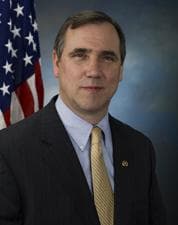
Full profile: /officials/M001176
Source: Congress.gov · FEC
Cosponsors (0)
Members who have signed on to support this bill since introduction. Source: Congress.gov.
No cosponsors on record. Bills can pass without cosponsors — this often means the sponsor introduced the bill alone, either because it's a messaging bill, a chairman's mark, or simply early in the legislative cycle.
Latest Action
The most recent step in the bill's legislative path. Committee Activity below shows referrals and reports; the full action-by-action history including floor proceedings lives at Congress.gov →
Committee Activity
Currently in
- Senate Committee on FinanceReferred To · 2026-07-23
Plain-English Summary
The bill would create a federal grant program to help communities invest in wildfire prevention and resilience measures, such as forest management and building protections. It would also establish a pilot program to help reduce insurance premium costs for people and businesses in wildfire-prone areas. These programs aim to make it more affordable for property owners to protect themselves against wildfires while encouraging communities to take preventive steps.
AI-assisted summary generated from the official bill metadata (title, subjects, actions) sourced from Congress.gov. Cached and reviewed. Always verify against the official text linked below.
Full Bill Text
Verbatim text published on Congress.gov via GovInfo. Use Cmd+F / Ctrl+F to search within this excerpt.
[Congressional Bills 119th Congress] [From the U.S. Government Publishing Office] [S. 5106 Introduced in Senate (IS)] <DOC> 119th CONGRESS 2d Session S. 5106 To establish a grant program to promote wildfire resilience investments and a pilot program to reduce the cost burden of insurance premiums, and for other purposes. _______________________________________________________________________ IN THE SENATE OF THE UNITED STATES July 23, 2026 Mr. Merkley introduced the following bill; which was read twice and referred to the Committee on Finance _______________________________________________________________________ A BILL To establish a grant program to promote wildfire resilience investments and a pilot program to reduce the cost burden of insurance premiums, and for other purposes. Be it enacted by the Senate and House of Representatives of the United States of America in Congress assembled, SECTION 1. SHORT TITLE. This Act may be cited as the ``Wildfire Insurance Affordability Act''. SEC. 2. WILDFIRE RISK REDUCTION GRANT PROGRAM. (a) Definitions.--In this section: (1) Eligible recipient.--The term ``eligible recipient''-- (A) means the Department of Insurance or comparable agency of a State of the United States, the District of Columbia, any commonwealth or territory of the United States, or an Indian Tribe; and (B) includes a subgrantee of a recipient described in subparagraph (A) that is a local fire department, rural fire protection district, or other similar entity. (2) Indian tribe.--The term ``Indian Tribe'' has the meaning given that term in section 4 of the Indian Self- Determination and Education Assistance Act (25 U.S.C. 5304). (b) Establishment.-- (1) In general.--Not later than 90 days after the date of enactment of this Act, the United States Fire Administrator shall establish the Wildfire Risk Reduction Grant Program to provide formula grants to eligible recipients to promote wildfire resilience, including to support home hardening, defensible space, and other wildfire mitigation investments to owner-occupied primary residences, multifamily residential properties with less than five units, and affordable housing facilities. (2) Formula.--The United States Fire Administrator shall distribute amounts under the Wildfire Risk Reduction Grant Program as follows: (A) 25 percent distributed among all eligible recipients, in amounts proportionate to the population of each such eligible recipient, as determined by the United States Fire Administrator, the Secretary of the Department of the Interior, and the Chief of the Forest Service, using census data. (B) 50 percent distributed among each eligible recipient, as a risk adjustment, to increase the eligible recipient's allocation based on-- (i) frequency of severe fires within the eligible recipient; (ii) population and number of structures located within the wildfire urban interface, using census data; and (iii) overall heightened wildfire risk as determined under the National Risk Index of the Federal Emergency Management Agency. (C) 25 percent distributed among each eligible recipient, as an equity adjustment, to increase the eligible recipient's allocation based on the relative need for fire risk mitigation assistance among low- income households and rural communities, based on-- (i) median household income (by county), using census data; (ii) presence of Indian Tribes; and (iii) other factors, as determined by the United States Fire Administrator, the Secretary of the Department of the Interior, and the Chief of the Forest Service. (c) Uses of Grant Awards.-- (1) In general.--Eligible recipients may use grants awarded under subsection (b) to provide grants to nonprofit organizations, local governments, and individuals for any of the following purposes: (A) Supporting residential fire resilience and mitigation programs throughout the eligible recipient. (B) With respect to residential properties: (i) Improving the durability and fire resistance of a roof covering (to a minimum of a class A rating). (ii) Protecting propane tanks or other external fuel sources. (iii) Installing roof coverings, sheathing, flashing, roof…
Show the remaining 960 wordsHide the remaining 960 words
and attic vents, eaves, or gutters that conform to ignition-resistant construction standards. (iv) Installing wall components for wall assemblies that conform to ignition-resistant construction standards. (v) Installing exterior walls, doors, windows, or other exterior dwelling unit elements that conform to ignition-resistant construction standards. (vi) Replacing existing exterior deck or fence components with materials that conform to ignition-resistant construction standards. (vii) Installing structure-specific water hydration systems, including fire mitigation systems such as interior sprinkler systems. (viii) Installing automatic shutoff valves for gas lines. (ix) Procuring services and equipment to create buffers around a dwelling unit through the removal or reduction of flammable vegetation, the removal of exterior deck or fence components, removal of ignition-prone landscape features. (x) Performing other fire mitigation procedures identified by the United States Fire Administrator, the Secretary of the Department of the Interior, or the Chief of the Forest Service, including fuel management techniques such as fuel or fire breaks. (xi) Installing or retrofitting structural components of exterior openings to reduce wildfire smoke or airborne particulates, including by sealing or weatherstripping windows, exterior doors, pet doors, or other exterior openings, or making other structural improvements identified by the United States Fire Administrator, the Secretary of Interior, and the Chief of the Forest Service to reduce wildfire smoke damage. (C) Other activities that increase safety and reduce residential wildfire risk, as determined by the United States Fire Administrator, in consultation with the Chief of the Forest Service and Secretary of the Interior. (2) Meeting industry standards.--With respect to any grant awarded to improve a household under paragraph (1), the grant award shall be used for activities that qualify the household under the guidance and certification process of the Insurance Institute for Business and Home Safety, the Firewise USA standards of the National Fire Protection Association, or a comparable industry standard, as determined by the administering State agency. (3) Administrative costs.--An eligible recipient may use not more than 10 percent of the amount of the grant awarded under subsection (b) for the administrative costs of the eligible recipient. (d) Limitation.--The maximum grant under this section shall be $10,000 per household. (e) Report Required.--The United States Fire Administrator shall collect from each eligible recipient receiving a grant under this section a report on the use of the grant that includes performance metrics and information on mitigation cost savings. SEC. 3. HOMEOWNER'S WILDFIRE INSURANCE PREMIUM ASSISTANCE VOUCHER PILOT PROGRAM. (a) Establishment.--Not later than 180 days after the date of enactment of this Act, the United States Fire Administrator, in consultation with the Chief of the Forest Service and the Secretary of the Interior, shall establish a pilot program to provide means-tested voucher-based premium assistance for wildfire insurance to eligible households in the form of grants to States that would distribute vouchers to qualifying households. (b) Qualifying Household Defined.--For purposes of this section, a ``qualifying household'' means a household-- (1) residing in a residential dwelling with an elevated wildfire risk, as determined by the State insurance commissioner using the National Risk Index of the Federal Emergency Management Agency or a State-approved risk index; (2) that has completed risk reduction investments toward an industry standard for fire safety under section 2(c)(2); and (3) with a household income equal to or less than 80 percent of the area median income, using the most recent census data, for the area in which the property is located. (c) Value of Voucher.--The value of any voucher distributed under subsection (a) shall be determined by the State insurance commissioner. (d) Administrative Costs.--The pilot program established under subsection (a) may use not more than 10 percent of the amounts made available for the program for administrative costs. (e) Reports.--Not later than 1 year after the date of enactment of this Act, and annually thereafter, the United States Fire Administrator, in coordination with the administering agencies of each State receiving a grant under the pilot program under subsection (a), shall submit to Congress a report on the results of the pilot program and an assessment of whether the pilot program has reduced the cost burden of insurance premiums and retained private insurers in State markets. (f) Sunset.--This section shall cease to have force or effect on the date that is five years after the date of establishment of the pilot program under subsection (a). SEC. 4. EXCLUSION OF AMOUNTS RECEIVED FROM GRANT PROGRAMS. (a) In General.--Section 139 of the Internal Revenue Code of 1986 is amended by redesignating subsection (h) as subsection (i) and by inserting after subsection (g) the following new subsection: ``(h) State-Based Catastrophe Loss Mitigation Programs.-- ``(1) In general.--Gross income shall not include any amount received by or paid for the benefit of an individual as a qualified catastrophe mitigation payment under a program established by-- ``(A) a State or any political subdivision or public instrumentality thereof, ``(B) a joint powers authority, or ``(C) an entity created by State law to ensure the availability of an adequate market of last resort for essential property insurance or basic property insurance, over which a State agency or State department of insurance has regulatory oversight, for the purpose of making such payments. ``(2) Qualified catastrophe mitigation payment.--For purposes of this section, the term `qualified catastrophe mitigation payment' means any amount received under a grant under section 2 or 3 of the Wildfire Insurance Affordability Act. ``(3) No increase in basis.--Rules similar to the rules of subsection (g)(3) shall apply in the case of this subsection.''. (b) Conforming Amendments.-- (1) Section 139(d) of the Internal Revenue Code of 1986 is amended by striking ``and qualified'' and inserting ``, qualified catastrophe mitigation payments, and qualified''. (2) Section 139(i) of such Code (as redesignated by subsection (a)) is amended by striking ``or qualified'' and inserting ``, qualified catastrophe mitigation payment, or qualified''. <all>
Related legislation
Bills by the same sponsor or covering overlapping subjects.
- S5184A bill to amend the Richard B. Russell National School Lunch Act to establish a summer meal delivery vehicle pilot program, and for other purposes.Referred to Committee · 2026-07-30
- S1874Title VIII Nursing Workforce Reauthorization Act of 2026Reported by Committee · 2026-07-28
- S4259Blue Skies for Taiwan Act of 2026Reported by Committee · 2026-07-27
- S5071Children's Safe Welcome Act of 2026Referred to Committee · 2026-07-22