S5187Referred to Committee
PHD Talent Act of 2026
Introduced
In Committee
3
Passed One Chamber4
Passed Both5
Signed into Law119th
Congress
2026-07-30
Introduced
1
Cosponsors
S
ⓘType
Sponsor
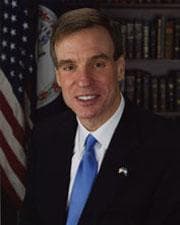
Mark R. Warner
Democrat · VA · Senator
Votes with party: 77.3% (843 recorded votes)
Full profile: /officials/W000805
Source: Congress.gov · FEC
Cosponsors (1)
Members who have signed on to support this bill since introduction. Source: Congress.gov.
Latest Action
The most recent step in the bill's legislative path. Committee Activity below shows referrals and reports; the full action-by-action history including floor proceedings lives at Congress.gov →
Read twice and referred to the Committee on Energy and Natural Resources.
2026-07-30
Source: Congress.gov
Committee Activity
Currently in
- Senate Committee on Energy and Natural ResourcesReferred To · 2026-07-30
Plain-English Summary
The Department of Energy would create a new program that brings together universities, national labs, other federal science agencies, and private companies to help students earn science and engineering doctorates faster. This partnership approach aims to build up America's supply of scientists and engineers by making graduate education more efficient and connected to real-world research and industry needs. The program would affect graduate students pursuing advanced degrees in science and engineering fields, as well as the institutions and companies involved in training them.
AI-assisted summary generated from the official bill metadata (title, subjects, actions) sourced from Congress.gov. Cached and reviewed. Always verify against the official text linked below.
Full Bill Text
Verbatim text published on Congress.gov via GovInfo. Use Cmd+F / Ctrl+F to search within this excerpt.
[Congressional Bills 119th Congress] [From the U.S. Government Publishing Office] [S. 5187 Introduced in Senate (IS)] <DOC> 119th CONGRESS 2d Session S. 5187 To require the Secretary of Energy to establish a program to strengthen the domestic science and engineering workforce through partnerships among institutions of higher education, National Laboratories, other Federal science agencies, and industry to support accelerated doctoral programs, and for other purposes. _______________________________________________________________________ IN THE SENATE OF THE UNITED STATES July 30, 2026 Mr. Warner (for himself and Mr. Young) introduced the following bill; which was read twice and referred to the Committee on Energy and Natural Resources _______________________________________________________________________ A BILL To require the Secretary of Energy to establish a program to strengthen the domestic science and engineering workforce through partnerships among institutions of higher education, National Laboratories, other Federal science agencies, and industry to support accelerated doctoral programs, and for other purposes. Be it enacted by the Senate and House of Representatives of the United States of America in Congress assembled, SECTION 1. SHORT TITLE. This Act may be cited as the ``Promoting High-skilled Doctoral Talent Act of 2026'' or the ``PHD Talent Act of 2026''. SEC. 2. FINDINGS. Congress finds the following: (1) A persistent shortfall in the number of domestic students entering and completing science, technology, engineering, and mathematics doctoral programs impedes the capacity of the United States for global leadership in research excellence and technology innovation. (2) Artificial intelligence, quantum information science, advanced computing, biotechnology, advanced energy systems, and other critical or emerging technologies are transforming scientific discovery and national competitiveness. (3) A robust domestic science, technology, engineering, and mathematics talent pipeline capable of preparing scientists and engineers with expertise both within their scientific discipline and in the application of artificial intelligence and advanced computational methods is critical for maintaining a strong workforce across the United States research and technology development ecosystem, including the National Laboratories, other Federal science agencies, institutions of higher education, and industry. (4) The Department of Energy maintains a unique scientific enterprise, including the National Laboratories, user facilities, advanced computing infrastructure, and partnerships with institutions of higher education and industry, positioning the Department of Energy to strengthen the domestic science and engineering workforce of the United States. SEC. 3. DEFINITIONS. In this Act: (1) Accelerated doctoral program.--The term ``accelerated doctoral program'' means a program offered by an institution of higher education that-- (A) provides 1 or more pathways through which a student may complete a doctoral degree in a critical or emerging technology area in an accelerated timeframe that is at least 1 academic year shorter than the average timeframe ordinarily required to complete comparable doctoral programs at that institution of higher education, while maintaining applicable standards of academic excellence, research quality, accreditation, dissertation oversight, and degree completion; (B) may include an integrated baccalaureate-to- doctorate pathway that-- (i) enables students participating in the program, while completing the baccalaureate degree portion of the program, to complete graduate-level coursework that-- (I) may be credited toward both the baccalaureate and graduate degree requirements, consistent with applicable accreditation requirements; (II) makes a student's progression into the doctoral degree portion of the program contingent upon successful completion of specified milestones and admission into a graduate program of study; (III) upon a participating student's successful completion of the baccalaureate degree portion of the program and the student's acceptance and transition into the doctoral degree portion of the program, provides funding to the student, which may be through a variety of opportunities, that covers not less than 3 years of the doctoral portion of the program; and (IV) enables a student who is not accepted into,…
Show the remaining 1,548 wordsHide the remaining 1,548 words
or does not complete, the doctoral degree portion of the program to earn a baccalaureate degree or a master's degree, based on the student's level of completion of the program; and (ii) supports timely progression into the doctoral degree portion of the program; and (C) incorporates structured professional development for each student participating in the program that includes-- (i) evidence-based research mentorship practices; (ii) career development support; (iii) opportunities for engagement and real-world experience through research rotations; and (iv) education, training, and research rotations designed to develop dual competency. (2) Critical or emerging technology area.--The term ``critical or emerging technology area'' means any of the following areas: (A) Advanced computing. (B) Advanced engineering materials. (C) Advanced gas turbine engine technologies. (D) Advanced and networked sensing and signature management. (E) Advanced manufacturing. (F) Artificial intelligence. (G) Biotechnologies. (H) Clean energy generation and storage. (I) Data privacy, data security, and cybersecurity technologies. (J) Directed energy. (K) Highly automated, autonomous, and uncrewed systems and robotics. (L) Human-machine interfaces. (M) Hypersonics. (N) Integrated communication and networking technologies. (O) Positioning, navigation, and timing technologies. (P) Quantum information and enabling technologies. (Q) Semiconductors and microelectronics. (R) Space technologies and systems. (S) Any additional area of study that the Secretary, based on existing Federal workforce data and after consultation with the heads of relevant Federal science and other agencies, determines-- (i) is important to the national security, economic competitiveness, scientific leadership, or energy security of the United States; and (ii) has a demonstrated need for additional domestic workers with doctoral-level expertise. (3) Dual competency.--The term ``dual competency'' means the demonstrated competency of a student in-- (A) the student's primary science, technology, engineering, or mathematics discipline; and (B) the application of artificial intelligence, advanced computing, data science, machine learning, or related computational methods to research in that discipline. (4) Eligible student.--The term ``eligible student'' means an individual who is-- (A) a citizen or national of the United States; or (B) an alien lawfully admitted for permanent residence in the United States. (5) National laboratory.--The term ``National Laboratory'' has the meaning given the term in section 2 of the Energy Policy Act of 2005 (42 U.S.C. 15801). (6) Participating institution.--The term ``participating institution'' means an institution of higher education (as defined in section 101(a) of the Higher Education Act of 1965 (20 U.S.C. 1001(a))) that enters into an agreement with the Secretary to participate in the Program. (7) Program.--The term ``Program'' means the Department of Energy Strategic Scientific Workforce Pilot Program established under section 4(a). (8) Research rotation.--The term ``research rotation'' means a structured research experience at a National Laboratory, Department of Energy user facility, other Federal research facility, or participating industry research facility. (9) Secretary.--The term ``Secretary'' means the Secretary of Energy, acting through the Under Secretary for Science. SEC. 4. DEPARTMENT OF ENERGY STRATEGIC SCIENTIFIC WORKFORCE PILOT PROGRAM. (a) In General.--Not later than 1 year after the date of enactment of this Act, the Secretary shall establish a 5-year pilot program, to be known as the ``Department of Energy Strategic Scientific Workforce Pilot Program'', to strengthen the domestic science and engineering workforce through grants awarded on a competitive basis to participating institutions to enable the participating institutions to establish, carry out, or support-- (1) accelerated doctoral programs; (2) partnerships with National Laboratories; (3) partnerships with industry; and (4) other activities authorized under this section that directly support eligible students participating in accelerated doctoral programs supported under the Program. (b) Award Determinations.--The Secretary may make an award under the Program only if the Secretary determines, based on existing Federal workforce data, information submitted by the applicant, and consultation with relevant National Laboratories, Federal agencies, and industry partners, that-- (1) there is a demonstrated need for additional domestic workers with doctoral-level expertise in the critical or emerging technology area to be supported; (2) the proposed program addresses an identified barrier to the recruitment, enrollment, retention, or completion of domestic doctoral students; (3) the award is reasonably likely to increase the number of domestic students completing doctoral degrees in that area; (4) doctoral-level training is appropriate for the workforce need identified by the applicant; and (5) the proposed activities would not unnecessarily duplicate an existing Federal program. (c) Application.--A participating institution desiring a grant under the Program shall submit to the Secretary an application at such time, in such manner, and containing such information as the Secretary may require. (d) Support and Assistance.--Under the Program, the Secretary shall-- (1) provide technical assistance to help participating institutions-- (A) design the curriculum for an accelerated doctoral program supported under the Program; and (B) develop institutional processes to align course credit mechanisms, financial aid, and academic policies for students in accelerated doctoral programs supported under the Program with relevant Federal guidelines and program and institution accreditation requirements; and (2) identify best practices for supporting the sustainability of the accelerated doctoral programs supported under the Program. (e) Participating Institutions.--As a condition of participation in the Program, each participating institution shall-- (1) retain responsibility for admissions decisions, academic supervision, degree requirements, dissertation oversight, and the conferral of doctoral degrees; (2) provide participating students with an academically rigorous doctoral education designed to reduce unnecessary time-to-degree while maintaining standards of academic excellence and research quality; (3) provide education and training to develop dual competency; (4) provide faculty mentorship, academic advising, and research support; (5) facilitate research rotations, as appropriate; (6) ensure that each student whose tuition, required fees, stipend, fellowship, research expenses, research rotation, or other individual costs are paid in whole or in part with funds under the Program is an eligible student; (7) provide direct financial assistance under the Program only to eligible students participating in, or selected to participate in, accelerated doctoral programs supported under the Program; and (8) ensure that funds provided under the Program supplement and do not supplant Federal, State, institutional, philanthropic, or private funds otherwise available for doctoral education or research. (f) Partnership Authority.-- (1) In general.--In carrying out the Program, the Secretary may enter into grants, cooperative agreements, memoranda of understanding, or other agreements with-- (A) participating institutions; (B) National Laboratories; (C) industry; (D) nonprofit organizations; (E) States; and (F) such other entities as the Secretary determines to be appropriate. (2) Financial and in-kind contributions.--The Secretary may encourage and accept financial or in-kind contributions to support activities carried out under the Program from-- (A) States; (B) institutions of higher education; (C) industry; and (D) philanthropic organizations. (g) Pilot Fellowship Programs.-- (1) In general.--In order to facilitate the establishment or expansion of the Program, the Secretary may establish and administer 1 or more pilot fellowship programs to strengthen the domestic science and engineering workforce in critical or emerging technology areas in which there is a demonstrated need for additional domestic workers with doctoral-level expertise, as determined by the Secretary under subsection (b). (2) Activities.--A pilot fellowship program established under this subsection may-- (A) support eligible students participating in, or selected to participate in, accelerated doctoral programs at participating institutions; (B) provide financial assistance-- (i) directly to eligible students described in subparagraph (A); or (ii) through participating institutions for the purpose of providing direct financial support to eligible students described in that subparagraph; (C) support the development of dual competency; (D) facilitate research rotations; (E) support mentorship and professional development; and (F) include such other activities as the Secretary determines appropriate to carry out the purposes of this section, subject to the condition that those activities-- (i) directly support eligible students described in subparagraph (A); and (ii) do not unnecessarily duplicate an existing Federal fellowship or graduate research program. (3) Eligibility.--Financial assistance or any other direct assistance pursuant to a pilot fellowship program under this subsection shall be awarded only to eligible students described in paragraph (2)(A). (4) Institutional administration.--A participating institution may receive funds under this subsection only-- (A) to administer assistance on behalf of an eligible student described in paragraph (2)(A); or (B) to carry out an activity described in paragraph (2) that directly supports an eligible student described in paragraph (2)(A). (5) Preservation of existing support.--A participating institution may not reduce financial support that otherwise would have been provided to a student because the student receives a fellowship under this subsection. (h) Reports.--Not later than 1 year after the date of enactment of this Act, and annually thereafter, the Secretary shall submit to Congress a report regarding the Program, including longitudinal tracking of the students participating in accelerated doctoral programs supported under the Program to identify trends and analyze developments in such programs across the United States. (i) Authorization of Appropriations.--There is authorized to be appropriated to carry out this Act $250,000,000 for the period of fiscal years 2028 through 2032, to remain available until expended. (j) Sunset.-- (1) In general.--The Secretary may not make a new award under the Program after the date that is 5 years after the date on which the first award under the Program is made. (2) Continued payments.--The Secretary may continue payments after the date described in paragraph (1) only-- (A) to fulfill commitments made to eligible students before that date; and (B) to complete required evaluations and reports. (3) Congressional authorization required.--The Program may not be continued beyond the date described in paragraph (1) or expanded beyond the scope authorized by this Act without prior authorization by Congress. <all>
Related legislation
Bills by the same sponsor or covering overlapping subjects.
- S5223A bill to prohibit the purchase or sale of securities while aware of nonpublic information contained in certain social media accounts controlled by Government officials, and for other purposes.Referred to Committee · 2026-08-03
- S5217A bill to amend the Consolidated Appropriations Act, 2017 to extend the availability of identity protection coverage to individuals whose personally identifiable information was compromised during recent data breaches at Federal agencies, and for other purposes.Referred to Committee · 2026-08-03
- S815A bill to designate the outdoor amphitheater at the Blue Ridge Music Center in Galax, Virginia, as the "Rick Boucher Amphitheater".Reported by Committee · 2026-07-23
- S5054Data Center Tax Accountability and Disclosure Act of 2026Referred to Committee · 2026-07-21