SRES920Referred to Committee
A resolution expressing concern about the growing problem of book banning, and the proliferation of threats to freedom of expression in the United States.
Introduced
In Committee
3
Passed One Chamber4
Passed Both5
Signed into Law119th
Congress
2026-09-29
Introduced
18
Cosponsors
SRES
ⓘType
Sponsor
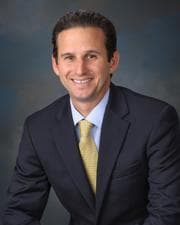
Brian Schatz
Democrat · HI · Senator
Votes with party: 85.1% (904 recorded votes)
Full profile: /officials/S001194
Source: Congress.gov · FEC
Cosponsors (18)
Members who have signed on to support this bill since introduction. Source: Congress.gov.
- Alex Padilla (D-CA)Original· 2026-09-29
- Angela D. Alsobrooks (D-MD)Original· 2026-09-29
- Angus S. King Jr. (I-ME)Original· 2026-09-29
- Ben Ray Luján (D-NM)Original· 2026-09-29
- Bernard Sanders (I-VT)Original· 2026-09-29
- Chris Van Hollen (D-MD)Original· 2026-09-29
- Christopher Murphy (D-CT)Original· 2026-09-29
- Cory A. Booker (D-NJ)Original· 2026-09-29
- Edward J. Markey (D-MA)Original· 2026-09-29
- Jack Reed (D-RI)Original· 2026-09-29
- Jeff Merkley (D-OR)Original· 2026-09-29
- John Fetterman (D-PA)Original· 2026-09-29
- Mazie K. Hirono (D-HI)Original· 2026-09-29
- Raphael G. Warnock (D-GA)Original· 2026-09-29
- Richard Blumenthal (D-CT)Original· 2026-09-29
- Richard J. Durbin (D-IL)Original· 2026-09-29
- Ron Wyden (D-OR)Original· 2026-09-29
- Sheldon Whitehouse (D-RI)Original· 2026-09-29
Latest Action
The most recent step in the bill's legislative path. Committee Activity below shows referrals and reports; the full action-by-action history including floor proceedings lives at Congress.gov →
Committee Activity
Currently in
- Senate Committee on the JudiciaryReferred To · 2026-09-29
Plain-English Summary
Plain-English summary pending. Introduced on 2026-09-29. Check back soon — summaries are generated as bills progress through Congress.
Subjects
Arts, Culture, Religion
Full Bill Text
Verbatim text published on Congress.gov via GovInfo. Use Cmd+F / Ctrl+F to search within this excerpt.
[Congressional Bills 119th Congress] [From the U.S. Government Publishing Office] [S. Res. 920 Introduced in Senate (IS)] <DOC> 119th CONGRESS 2d Session S. RES. 920 Expressing concern about the growing problem of book banning, and the proliferation of threats to freedom of expression in the United States. _______________________________________________________________________ IN THE SENATE OF THE UNITED STATES September 29, 2026 Mr. Schatz (for himself, Mr. Padilla, Mr. Reed, Mr. Van Hollen, Mr. Sanders, Mr. Wyden, Mr. King, Mr. Merkley, Ms. Hirono, Ms. Alsobrooks, Mr. Durbin, Mr. Murphy, Mr. Booker, Mr. Blumenthal, Mr. Markey, Mr. Whitehouse, Mr. Warnock, Mr. Fetterman, and Mr. Lujan) submitted the following resolution; which was referred to the Committee on the Judiciary _______________________________________________________________________ RESOLUTION Expressing concern about the growing problem of book banning, and the proliferation of threats to freedom of expression in the United States. Whereas the overwhelming majority of voters in the United States oppose book bans; Whereas an overwhelming majority of voters in the United States support educators teaching about the civil rights movement, the history and experiences of Native Americans, enslaved Africans, immigrants facing discrimination, and the ongoing effects of racism; Whereas an overwhelming majority of Americans are confident that the public schools of their communities select appropriate books for students to read; Whereas, in 1969, the Supreme Court of the United States held in Tinker v. Des Moines Independent Community School District, 393 U.S. 503 (1969), that students do not ``shed their constitutional rights to freedom of speech or expression at the schoolhouse gate''; Whereas, in 1982, a plurality of the Supreme Court of the United States wrote in Board of Education, Island Trees Union Free School District No. 26 v. Pico, 457 U.S. 853 (1982), that schools may not remove library books based on ``narrowly partisan or political grounds'', as this kind of censorship will result in ``official suppression of ideas''; Whereas the First Amendment to the Constitution of the United States protects freedom of speech and the freedom to read and write; Whereas Article 19 of the Universal Declaration of Human Rights states that ``everyone has the right to freedom of opinion and expression; this right includes freedom to hold opinions without interference and to seek, receive and impart information and ideas through any media and regardless of frontiers''; Whereas PEN America has identified more than 10,000 instances of individual books banned between July 2025 and June 2026; Whereas books banned between July 2025 and June 2026 include more than 6,000 unique titles, censoring the works of more than 3,000 authors, illustrators, and translators; Whereas the majority of book bans were enacted without following the best practice guidelines for book challenges outlined by the American Library Association, the National Coalition Against Censorship, and the National Council of Teachers of English; Whereas the unimpeded sharing of ideas and the freedom to read are essential to a strong democracy; Whereas books do not require readers to agree with topics, themes, or viewpoints, but instead allow readers to explore and engage with differing perspectives to form and inform their own views; Whereas suppressing the freedom to read and denying access to literature, history, and knowledge are repressive and anti-democratic tactics used by authoritarian regimes against their people; Whereas book bans violate the rights of students, families, residents, and citizens based on the political, ideological, and cultural preferences of the specific individuals or groups imposing the bans; Whereas book bans have multifaceted, harmful consequences on-- (1) students, who have a right to access a diverse range of stories and perspectives, especially students from historically marginalized backgrounds whose communities are often targeted by thought control measures; (2)…
Show the remaining 1,162 wordsHide the remaining 1,162 words
educators and librarians, who are operating in some States in an increasingly punitive and surveillance-oriented environment and experience a chilling effect in their work; (3) authors whose works are targeted and suppressed; (4) parents who want their children to attend public schools that remain open to curiosity, discovery, and the freedom to read; and (5) community members who want free access to a range of uncensored information and knowledge from their public libraries; Whereas classic and award-winning literature and books that have been part of school curricula for decades have been challenged, removed from libraries pending review, or outright banned from schools, including-- (1) ``Brave New World'' by Aldous Huxley; (2) ``The Handmaid's Tale'' by Margaret Atwood; (3) ``Anne Frank's Diary: The Graphic Adaptation'' adapted by Ari Folman; (4) ``Their Eyes Were Watching God'' by Zora Neal Hurston; and (5) ``To Kill a Mockingbird'' by Harper Lee; Whereas books, particularly those written by and about outsiders, newcomers, and individuals from marginalized backgrounds, are facing a heightened risk of being banned; Whereas, according to PEN America, a disproportionate number of books banned or otherwise restricted in the United States have LGBTQ+ characters or themes that recognize the equal humanity and dignity of all individuals despite differences, including-- (1) ``And Tango Makes Three'' by Justin Richardson and Peter Parnell; and (2) ``This Book Is Gay'' by Juno Dawson; Whereas many books, both fiction and nonfiction, that have been targeted for bans or restrictions in the United States are books about race or racism, or that feature characters of color, including-- (1) ``The Story of Ruby Bridges'' by Robert Coles and illustrated by George Ford; (2) ``Letter from Birmingham Jail'' by Martin Luther King, Jr.; (3) ``Thank You, Jackie Robinson'' by Barbara Cohen; (4) ``Malala: A Hero For All'' by Shana Corey; (5) ``Fry Bread: A Native American Family Story'' by Kevin Noble Maillard; (6) ``Hair Love'' by Matthew A. Cherry; (7) ``Good Trouble: Lessons From the Civil Rights Playbook'' by Christopher Noxon; and (8) ``We Are All Born Free: The Universal Declaration of Human Rights in Pictures'' by Amnesty International; Whereas the Comic Book Legal Defense Fund has reported a dramatic surge in challenges at libraries and schools to the inclusion of graphic novels that depict the diversity of civic life in the United States and the painful and complex history of racism, homophobia, anti-Asian bias, and antisemitism embedded in the human experience, including-- (1) ``New Kid'' by Jerry Craft; (2) ``Maus'' by Art Spiegelman; (3) ``American Born Chinese'' by Gene Luen Yang; and (4) ``Drama'' by Raina Telgemeier; Whereas books addressing death, grief, mental illness, and suicide are targeted alongside nonfiction books that discuss feelings and emotions written for teenage and young adult audiences that frequently confront these topics; Whereas, during congressional hearings on April 7, 2022, May 19, 2022, and September 12, 2023, students, parents, teachers, librarians, and school administrators testified to the chilling and fear-spreading effects that book bans have on education and the school environment; Whereas, since 2021, State legislation censoring certain content within schools and libraries has been enacted across the country, resulting in more than 30,000 book bans; Whereas an increasing amount of book censorship goes unreported and may be higher than is able to be reported due to mass removals implementing vaguely written State legislation and a lack of transparency about district-based removals; Whereas, according to PEN America, from July 2025 to June 2026, 24 States across the country limited access to certain books for limited or indefinite periods of time, including-- (1) Florida, where at least 2,304 books have been banned or restricted in 33 school districts; (2) Texas, where at least 1,781 books have been banned or restricted in 7 school districts; (3) Tennessee, where at least 1,622 books have been banned or restricted in 8 school districts; (4) Idaho, where at least 150 books have been banned or restricted in 1 school district; and (5) Iowa, where at least 113 books have been banned or restricted in 4 school districts; Whereas the President of the United States has repeatedly expressed support for the censorship of certain subjects such as gender, sexuality, and race through public statements and executive orders; Whereas, following these executive orders in 2025, Department of Defense Education Activity (referred to in this preamble as ``DoDEA'') schools removed books related to diversity, equity, and inclusion, ``gender ideology'', and anything that would suggest ``that America's founding documents are racist or sexist'', resulting in the censorship of classroom instruction and student activities, as well as the removal of at least 596 books in DoDEA schools; Whereas, following the same executive orders, the Department of Defense directed all military academies to identify and remove books from their libraries that include themes related to race, ``gender ideology'', and other ``divisive concepts'' that the Administration considers ``incompatible with the department's core mission'', which led to the temporary removal of nearly 400 books from the Nimitz Library of the United States Naval Academy, including ``I Know Why The Caged Bird Sings'' by Maya Angelou; Whereas grants administered by the National Endowment for the Arts, the National Endowment for the Humanities, and other Federal agencies have been terminated or revoked for using language related to race, gender, and LGBTQ+ identity or addressing social inequality; Whereas the President of the United States has further signed executive orders targeting the Smithsonian Institution, an independent Federal trust instrumentality of the United States which has served as a global model for scholarship and public engagement documenting the full and complex history of the United States, for promoting ``improper ideology''; and Whereas the Office of Civil Rights of the Department of Education has claimed book bans are a ``hoax'', ended investigations of alleged discrimination related to book banning, and fired the staff person in charge of addressing the book banning crisis: Now, therefore, be it Resolved, That the Senate-- (1) supports the designation of the week of October 4 through October 10, 2026, as ``Banned Books Week''; (2) expresses concern about the spreading problem of book banning and the proliferating threats to freedom of expression in the United States; (3) reaffirms the commitment of the United States to supporting the freedom of expression of writers that is protected under the First Amendment to the Constitution and the freedom of all individuals in the United States to read books without government censorship; (4) calls on local governments and school districts to follow best practice guidelines when addressing challenges to books; (5) calls on local governments and school districts to protect the rights of students to learn and the ability of educators and librarians to teach, including by providing students with the opportunity to read a wide array of books reflecting the full breadth and diversity of viewpoints and perspectives; and (6) calls for the repeal of executive orders and rescission of directives that have enacted content-based and viewpoint- based restrictions on the freedom to read and learn in United States public schools and libraries. <all>
Related legislation
Bills by the same sponsor or covering overlapping subjects.
- S3383Unlocking Native Lands and Opportunities for Commerce and Key Economic Developments Act of 2025Passed Senate · 2026-10-05
- S5614Beyond the Box for Higher Education Act of 2026Referred to Committee · 2026-09-30
- S5664FUTURE of Workers ActReferred to Committee · 2026-09-30
- SJRES218A joint resolution proposing an amendment to the Constitution of the United States to abolish the electoral college and to provide for the direct election of the President and Vice President of the United States.Referred to Committee · 2026-09-29