A resolution expressing support for the designation of the week of October 24, 2026, to October 31, 2026, as "Bat Week".
Sponsor
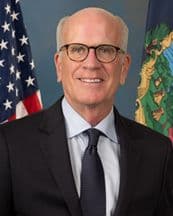
Full profile: /officials/W000800
Source: Congress.gov · FEC
Cosponsors (1)
Members who have signed on to support this bill since introduction. Source: Congress.gov.
Latest Action
The most recent step in the bill's legislative path. Committee Activity below shows referrals and reports; the full action-by-action history including floor proceedings lives at Congress.gov →
Submitted in the Senate, considered, and agreed to without amendment and with a preamble by Unanimous Consent. (consideration: CR S5299; text: CR S5270-5271)
2026-09-30
Source: Congress.gov
Plain-English Summary
Plain-English summary pending. Introduced on 2026-09-30. Check back soon — summaries are generated as bills progress through Congress.
Full Bill Text
Verbatim text published on Congress.gov via GovInfo. Use Cmd+F / Ctrl+F to search within this excerpt.
[Congressional Bills 119th Congress] [From the U.S. Government Publishing Office] [S. Res. 941 Agreed to Senate (ATS)] <DOC> 119th CONGRESS 2d Session S. RES. 941 Expressing support for the designation of the week of October 24, 2026, to October 31, 2026, as ``Bat Week''. _______________________________________________________________________ IN THE SENATE OF THE UNITED STATES September 30, 2026 Mr. Welch (for himself and Mr. Booker) submitted the following resolution; which was considered and agreed to _______________________________________________________________________ RESOLUTION Expressing support for the designation of the week of October 24, 2026, to October 31, 2026, as ``Bat Week''. Whereas bats are vital to the sustainability of natural ecosystems, national economies, and human health by controlling damaging insect pests, pollinating plants that produce fruits and vegetables, dispersing seeds to ensure healthy functioning forests and fields, and saving farmers in the United States more than $3,700,000,000 in pest control every year; Whereas bats have captured the human imagination through backyard sightings, folklore, art, myths, and legends, making outreach and education about the importance of bats instrumental; Whereas bats are present throughout the world, except in extremely cold regions, and are the second-largest order of mammals with over 1,400 species; Whereas white-nose syndrome, a fungal disease that has killed millions of bats in North America, has now spread to 41 States and 12 species of hibernating bats; Whereas the disease has caused significant declines in populations of the tricolored bat, the little brown bat, and the northern long-eared bat, which is listed as endangered by the United States Fish and Wildlife Service under the Endangered Species Act of 1973 (16 U.S.C. 1531 et seq.); Whereas the Department of the Interior, through the United States Fish and Wildlife Service, the United States Geological Survey, the National Park Service, and the Bureau of Land Management, is leading the international response to the disease in partnership with the United States Forest Service and more than 150 Federal and State agencies, Tribes, nongovernmental organizations, and universities; Whereas the United States Geological Survey and the United States Fish and Wildlife Service co-lead the multinational, multiagency North American Bat Monitoring Program, which, since 2015, has consolidated nearly 94,000,000 records from partners in 49 States, 9 Canadian Provinces, and 20 Tribal organizations, demonstrating the power of collaborative conservation science to monitor changes in North American bat populations; Whereas the United States Geological Survey conducts scientific research on bats that helps resource managers and policymakers make informed decisions regarding the conservation of bats across North America; and Whereas, in the past decade, the international partnership of States, Tribes, Federal agencies, nongovernmental organizations, and other institutions has made extraordinary progress to understand white-nose syndrome, slow the spread of the disease, and develop treatments that hold promise for ending this epidemic: Now, therefore, be it Resolved, That the Senate-- (1) expresses support for the designation of the week of October 24, 2026, to October 31, 2026, as ``Bat Week''; (2) encourages the observance of Bat Week with appropriate events and activities; (3) acknowledges the important role bats play as pollinators and pest control for agriculture; and (4) intends to-- (A) continue working to conserve bat species and their habitat; and (B) work to defeat the disease known as white-nose syndrome. <all>
Related legislation
Bills by the same sponsor or covering overlapping subjects.
- S5525Banning Toxics from Plastic Bottles Act of 2026Referred to Committee · 2026-09-24
- S5472Supporting Small Affordable Housing Developers ActReferred to Committee · 2026-09-23
- S5434American Renewable Energy Act of 2026Referred to Committee · 2026-09-17
- S5281Consumer Advocacy and Protection Act of 2026Referred to Committee · 2026-08-06