HR10195Referred to Committee
Mali Security Partnership and Counterterrorism Act
Introduced
In Committee
3
Passed One Chamber4
Passed Both5
Signed into Law119th
Congress
2026-08-31
Introduced
1
Cosponsors
HR
ⓘType
Sponsor
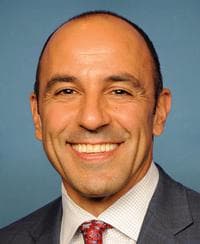
Jimmy Panetta
Democrat · CA · Representative
Votes with party: 93.6% (653 recorded votes)
Full profile: /officials/P000613
Source: Congress.gov · FEC
Cosponsors (1)
Members who have signed on to support this bill since introduction. Source: Congress.gov.
Latest Action
The most recent step in the bill's legislative path. Committee Activity below shows referrals and reports; the full action-by-action history including floor proceedings lives at Congress.gov →
Committee Activity
Currently in
- House Committee on Foreign AffairsReferred To · 2026-08-31
Plain-English Summary
Plain-English summary pending. Introduced on 2026-08-31. Check back soon — summaries are generated as bills progress through Congress.
Full Bill Text
Verbatim text published on Congress.gov via GovInfo. Use Cmd+F / Ctrl+F to search within this excerpt.
[Congressional Bills 119th Congress] [From the U.S. Government Publishing Office] [H.R. 10195 Introduced in House (IH)] <DOC> 119th CONGRESS 2d Session H. R. 10195 To require the Secretary of State to develop a strategy for countering the expansion of al-Qaeda in Mali, and for other purposes. _______________________________________________________________________ IN THE HOUSE OF REPRESENTATIVES August 31, 2026 Mr. Panetta (for himself and Mr. Wilson of South Carolina) introduced the following bill; which was referred to the Committee on Foreign Affairs _______________________________________________________________________ A BILL To require the Secretary of State to develop a strategy for countering the expansion of al-Qaeda in Mali, and for other purposes. Be it enacted by the Senate and House of Representatives of the United States of America in Congress assembled, SECTION 1. SHORT TITLE. This Act may be cited as the ``Mali Security Partnership and Counterterrorism Act''. SEC. 2. FINDINGS. Congress finds the following: (1) The al-Qaeda-linked group Jama'at Nusrat al-Islam wal- Muslimeen (JNIM) has significantly expanded its reach across central Mali and the broader Sahel, conducting large-scale attacks against security forces and establishing influence in contested regions. (2) Militant groups including JNIM and the Islamic State Sahel Province have consolidated territorial control across Mali, escalating violence, destabilizing state authority, and extending operations into littoral West African states. (3) JNIM's campaign in Mali has included economic disruption tactics that have paralyzed key trade and transport routes, undermined government authority, and contributed to national shortages and economic distress. (4) The withdrawal of traditional international counterterrorism forces, coupled with weakened regional counterterrorism cooperation, has created a security vacuum that extremist networks are exploiting to expand and entrench themselves. (5) The Sahel region has become a global epicenter of terrorism-related violence, with extremist activity in that region accounting for a disproportionate share of worldwide terrorist attacks and deaths and with expanded militant networks posing spillover risks to neighboring coastal countries. SEC. 3. REPORT ON AL-QAEDA'S EXPANSION AND ILLEGAL FINANCING IN MALI. (a) Report.--Not later than 180 days after the date of the enactment of this Act, the Secretary of State, in coordination with the heads of other appropriate Federal departments and agencies, shall submit to the Committee on Foreign Affairs of the House of Representatives and the Committee on Foreign Relations of the Senate a report on the scope and trajectory of al-Qaeda's presence and influence in Mali, and the role of gold trafficking, informal taxation, and illicit trade networks in Mali in financing terrorist and violent extremist organizations. Such report shall also include-- (1) an evaluation of al-Qaeda's territorial influence, including areas of de facto control, operational freedom, or governance activities; (2) an analysis of cross-border operations and coordination with extremist elements in Burkina Faso and Niger, including logistics, command-and-control linkages, and mobility corridors; (3) an assessment of recruitment pipelines, including the exploitation of local grievances, ethnic tensions, economic vulnerabilities, and displacement; (4) an evaluation of financing mechanisms, including taxation, extortion, illicit trade, and external support networks; (5) an analysis of trends indicating whether al-Qaeda is consolidating, expanding, or fragmenting its presence in Mali; (6) an assessment of how illegal gold production, transit, and export networks are exploited by terrorist organizations, including al-Qaeda-affiliated groups, for revenue generation; (7) an analysis of the use of coercive taxation, protection payments, or control of mining sites by such organizations; (8) an identification of key transit routes, facilitators, and financial intermediaries involved in the illegal gold trade linked to extremist financing; (9) an assessment of existing United States and international efforts to disrupt illegal mineral-based financing and recommendations for strengthening such efforts; and (10) an assessment of current sanctions against entities in Mali, including…
Show the remaining 111 wordsHide the remaining 111 words
the effects of such sanctions on the capacity of the Government of Mali to combat terrorist networks. (b) Diplomatic Strategy.--In addition to the matters described in subsection (a), the report required under that subsection shall also include a United States diplomatic strategy for countering al-Qaeda influence in Mali, including-- (1) proposed bilateral and multilateral diplomatic initiatives to constrain al-Qaeda's freedom of movement and influence; (2) engagement with regional partners and international organizations to improve cross-border coordination and information sharing; (3) efforts to address governance, economic, and security conditions that facilitate extremist recruitment and financing; and (4) metrics for evaluating the effectiveness of United States diplomatic engagement in countering al-Qaeda's expansion. <all>
Related legislation
Bills by the same sponsor or covering overlapping subjects.
- HR5334Lindsey O. Graham Sanctioning Russia and Iran Act of 2026Passed House · 2026-08-10
- HR9927Farmers Lifeline to Overcoming Disasters (FLOOD) ActReferred to Committee · 2026-07-23
- HR1266Combating Illicit Xylazine ActReferred to Committee · 2026-07-21
- HR4288To name the Department of Veterans Affairs community-based outpatient clinic in San Jose, California, as the "Corporal Patrick D. Tillman VA Clinic".Passed House · 2026-07-16