HR10495Referred to Committee
CATFISH Act of 2026
Introduced
In Committee
3
Passed One Chamber4
Passed Both5
Signed into Law119th
Congress
2026-09-17
Introduced
0
Cosponsors
HR
ⓘType
Sponsor
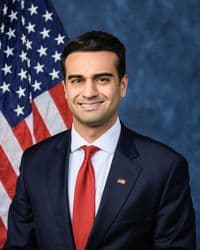
Abraham J. Hamadeh
Republican · AZ · Representative
Votes with party: 95.5% (665 recorded votes)
Full profile: /officials/H001098
Source: Congress.gov · FEC
Cosponsors (0)
Members who have signed on to support this bill since introduction. Source: Congress.gov.
No cosponsors on record. Bills can pass without cosponsors — this often means the sponsor introduced the bill alone, either because it's a messaging bill, a chairman's mark, or simply early in the legislative cycle.
Latest Action
The most recent step in the bill's legislative path. Committee Activity below shows referrals and reports; the full action-by-action history including floor proceedings lives at Congress.gov →
Referred to the Committee on the Judiciary, and in addition to the Committees on Financial Services, and Agriculture, for a period to be subsequently determined by the Speaker, in each case for consideration of such provisions as fall within the jurisdiction of the committee concerned.
2026-09-17
Source: Congress.gov
Committee Activity
Currently in
- House Committee on AgricultureReferred To · 2026-09-17
- House Committee on the JudiciaryReferred To · 2026-09-17
- House Committee on Financial ServicesReferred To · 2026-09-17
Plain-English Summary
Plain-English summary pending. Introduced on 2026-09-17. Check back soon — summaries are generated as bills progress through Congress.
Full Bill Text
Verbatim text published on Congress.gov via GovInfo. Use Cmd+F / Ctrl+F to search within this excerpt.
[Congressional Bills 119th Congress] [From the U.S. Government Publishing Office] [H.R. 10495 Introduced in House (IH)] <DOC> 119th CONGRESS 2d Session H. R. 10495 To amend title 18, United States Code, to establish enhanced penalties for certain frauds, and for other purposes. _______________________________________________________________________ IN THE HOUSE OF REPRESENTATIVES September 17, 2026 Mr. Hamadeh of Arizona introduced the following bill; which was referred to the Committee on the Judiciary, and in addition to the Committees on Financial Services, and Agriculture, for a period to be subsequently determined by the Speaker, in each case for consideration of such provisions as fall within the jurisdiction of the committee concerned _______________________________________________________________________ A BILL To amend title 18, United States Code, to establish enhanced penalties for certain frauds, and for other purposes. Be it enacted by the Senate and House of Representatives of the United States of America in Congress assembled, SECTION 1. SHORT TITLE. This Act may be cited as the ``Combating Abusive Tactics, Fraud, and Impersonation Scams Harming Seniors Act of 2026'' or the ``CATFISH Act of 2026''. SEC. 2. FINDINGS. Congress finds the following: (1) The senior citizens of the United States have spent lifetimes earning the retirement they now live in. The savings, home equity, and Social Security and Medicare benefits that sustain older Americans represent decades of labor, discipline, and deferred reward--hard-won property that should not become a target of opportunity for international criminal syndicates or for the domestic fraud ecosystem that feeds them. (2) According to the Federal Trade Commission, Americans aged 60 and over reported losing approximately $2,400,000,000 to fraud in 2024, a fourfold increase from the approximately $600,000,000 reported in 2020. (3) The Federal Trade Commission further estimates that, accounting for chronic underreporting, the true annual losses sustained by older Americans may reach as high as $81,500,000,000--losses that largely represent retirement savings, home equity, and inheritances that can never be recovered. (4) Individual losses exceeding $100,000--often driven by romance fraud, investment fraud, and government-impersonation schemes--account for 68 percent of all dollars reported lost by older Americans, confirming that the fraud crisis facing seniors is not a problem of nuisance-level theft but of retirement-erasing financial destruction. (5) In 2024, according to the Federal Bureau of Investigation's Internet Crime Complaint Center, confidence and romance fraud generated more than 17,000 complaints and at least $672,000,000 in reported losses nationally. Older Americans bore a disproportionate share of the harm: victims aged 60 and older filed more than 147,000 complaints of internet-enabled crime, reported aggregate losses of approximately $4,800,000,000 (a 43 percent year-over-year increase), averaged approximately $83,000 per reported loss, and included approximately 7,500 victims who each reported individual losses of $100,000 or more. Of the losses reported by victims aged 60 and older, $389,000,000 was attributable to confidence and romance fraud specifically. (6) The Department of the Treasury, through its Financial Crimes Enforcement Network, and the Commodity Futures Trading Commission have each publicly identified the hybrid romance- and-investment fraud commonly known as ``pig butchering''--a scheme overwhelmingly operated by transnational criminal organizations based in Southeast Asia--as a predominant threat to American consumers, with losses from cryptocurrency-related investment fraud alone reaching an estimated $5,800,000,000 in 2024. (7) Cryptocurrency kiosks, commonly referred to as Bitcoin ATMs, have proliferated across the United States from approximately 4,250 machines in January 2020 to approximately 32,000 machines by mid-2024, concentrated in convenience stores, gas stations, and grocery stores outside the supervisory architecture that governs traditional financial institutions. According to the Federal Trade Commission, consumers reported losing more than $65,000,000 to scams routed through these kiosks in the first six months of 2024 alone, with Americans aged 60 and…
Show the remaining 2,073 wordsHide the remaining 2,073 words
older reporting 71 percent of those losses and reporting such losses at a rate more than three times that of younger adults. (8) Gift cards remain among the most common payment methods demanded by perpetrators of romance and confidence fraud targeting older Americans, with scammers routinely directing senior victims to purchase prepaid cards--frequently in amounts exceeding $500--at the checkout counters of national retailers while remaining on the phone with the perpetrator throughout the transaction. (9) The Financial Crimes Enforcement Network and Federal banking regulators have issued extensive guidance identifying the red-flag indicators of elder financial exploitation, but that guidance remains voluntary, unevenly adopted, and unaccompanied by meaningful enforcement, leaving the seniors whose savings those institutions hold without the baseline protection that comparable anti-money-laundering and fraud- prevention frameworks routinely afford in other contexts. (10) Congress has an enduring obligation to the Americans who have spent their working lives contributing to Social Security and Medicare, and who have entrusted their life savings to this Nation's financial institutions, to ensure that those institutions and the retailers that serve as payment conduits are required to detect and report, and encouraged to disrupt, the fraud schemes that are stripping older Americans of the retirement they have earned. SEC. 3. ENHANCED EFFORTS TO COMBAT ROMANCE FRAUD TARGETING INDIVIDUALS AGE 60 OR OLDER. (a) Enhanced Criminal Penalties for Certain Romance Fraud.-- (1) In general.--Chapter 63 of part I of title 18, United States Code, is amended by adding at the end the following: ``Sec. 1353. Enhanced penalties for certain romance fraud ``(a) In General.--A person who is convicted of an offense under section 1341, 1342, 1343, or 1344 that is committed in furtherance of a romance fraud targeting an individual who, at any time during the period of such fraud, is age 60 or older-- ``(1) shall be imprisoned for a term of up to 10 years in addition to any term of imprisonment imposed for such offense; and ``(2) shall be fined not more than $1,000,000 in addition to any fine imposed for such offense. ``(b) Definition.--In this section, the term `romance fraud' means a scheme in which an individual establishes a romantic or other intimate relationship with another individual for the primary purpose of defrauding such other individual.''. (2) Conforming amendment.--The table of sections for such chapter is amended by adding at the end the following: ``1353. Enhanced penalties for certain romance fraud.''. (b) Training for Covered Financial Institutions and Covered Retailers.-- (1) In general.--The Attorney General, acting through the Director of the Federal Bureau of Investigation, shall develop and implement programs-- (A) to train covered financial institutions regarding-- (i) methods for identifying and preventing romance fraud targeting senior customers; and (ii) strategies for educating senior customers of such covered financial institutions regarding romance fraud; and (B) to train employees of covered retailers to intervene when a senior customer purchases a gift card with a value greater than $500 by-- (i) providing such customer with oral and written advisories regarding romance fraud; (ii) recommending that such customer call the National Elder Fraud Hotline maintained by the Department of Justice; and (iii) at such customer's request, providing such customer with reasonable assistance in calling such National Elder Fraud Hotline. (2) Sample written advisory.--Not later than 180 days after the date of enactment of this Act, the Federal Trade Commission shall publish a sample written advisory for use under paragraph (1)(B)(i). (c) Requirements for Covered Financial Institutions.-- (1) Mandatory reporting.--Each covered financial institution shall report to the Secretary of the Treasury any of the following events: (A) An account belonging to a senior customer shows-- (i) unusual changes in contact information; (ii) new connections to emails, phone numbers, or accounts for digital payments or for the trading of digital assets that may be controlled by individuals or entities outside the United States; (iii) unusual or frequent large withdrawals or wire transfers, including withdrawals from an automated teller machine; (iv) unusual or frequent non-sufficient fund activity; (v) unusual or frequent nonpayment for services; (vi) unusual debit card transactions; or (vii) other unusual activity. (B) A senior customer-- (i) appears-- (I) distressed; (II) fearful; (III) anxious to follow the directions of another individual; or (IV) unable to answer basic questions about account activity associated with such senior customer; (ii) mentions that an online friend or romantic partner is asking such senior customer to-- (I) receive and forward money; or (II) open a bank account for a business opportunity; (iii) appears, during a transaction, to be taking direction from another individual with whom such senior customer is speaking on a cell phone; (iv) mentions a need to send money immediately due to a purported emergency of a loved one when the account intended to receive such money belongs to a person that appears to be unrelated to such senior customer; (v) expresses a fear of being evicted or being placed in a nursing home if such senior customer does not send money to another individual; (vi) lacks knowledge about such senior customer's financial status; (vii) shows a sudden reluctance to discuss financial matters; (viii) purchases large numbers of-- (I) gift cards; or (II) prepaid access cards; (ix) demonstrates interest in, or engages in transactions relating to, digital assets in a manner that deviates from such customer's previous behavior with respect to such assets; (x) sends multiple checks or wire transfers with suspicious descriptions, including-- (I) ``tech support services''; (II) ``winnings''; and (III) ``taxes''; (xi) receives and transfers money to an individual with whom such senior customer has never interacted face-to-face; (xii) closes an account without regard to penalties; or (xiii) suddenly changes financial management or estate planning arrangements. (C) An individual-- (i) shows excessive interest in a senior customer's finances or assets; (ii) attempts to prevent an employee of such financial institution from speaking directly with a senior customer; or (iii) attempts to conduct financial transactions on behalf of a senior customer without proper authority. (2) Content of reports.--A covered financial institution submitting a report under paragraph (1) shall include in such report the following: (A) The name and contact information of any employee of such covered financial institution who observed the event leading to such report. (B) The age of the senior customer involved in such event. (C) The city and State of residence of such senior customer. (D) Any contact information of such senior customer that is known to such covered financial institution. (E) The amounts involved in any transactions related to such event. (F) A description of the response to such event undertaken by such covered financial institution, including-- (i) whether such covered financial institution closed any account in response to such event; (ii) whether such covered financial institution provided a warning to such senior customer that such senior customer may have been the victim of fraud; (iii) whether such senior customer was prohibited from initiating new transactions; and (iv) whether such financial institution has refunded to such customer any amounts involved in a transaction related to such event. (G) Documentation of such event, including-- (i) any relevant photographs; and (ii) any relevant video footage. (H) The name of any law enforcement agency to which such covered financial institution reported such event. (3) Other requirements.-- (A) Enhanced internal controls.--Each covered financial institution shall establish procedures to mitigate romance fraud targeting senior customers including-- (i) transaction monitoring procedures; (ii) procedures that enable a senior customer to designate an individual who may be contacted if such covered financial institution suspects that such senior customer may have been a victim of romance fraud; (iii) procedures for referring a senior customer who may have been a victim of romance fraud to the National Elder Fraud Hotline maintained by the Department of Justice; and (iv) procedures for receiving and responding to reports relating to a romance fraud targeting a senior customer. (B) Employee training.--Each covered financial institution shall provide training for employees of such covered financial institution relating to romance fraud targeting senior customers, which shall include training on-- (i) detecting and preventing such romance fraud, including detecting the events described in paragraph (1); and (ii) appropriate actions to take upon observing such romance fraud, including observing an event described in paragraph (1). (C) Reporting to law enforcement agencies.--Each covered financial institution shall provide instructions to senior customers of such covered financial institution for reporting romance fraud targeting such customers to-- (i) local law enforcement agencies; (ii) the Federal Trade Commission; (iii) the Internet Crime Complaint Center of the Federal Bureau of Investigation; (iv) the United States Postal Inspection Service; (v) the Social Security Administration; and (vi) other appropriate Federal, State, and local government agencies. (D) Information concerning romance fraud.--Each covered financial institution shall provide to senior customers of such covered financial institution information concerning-- (i) trending romance frauds; and (ii) methods for avoiding such trending frauds. (d) Civil Penalty.-- (1) In general.--Each covered banking agency may bring a civil action for a penalty in an amount not to exceed $50,000 for each violation of subsection (c). (2) Safe harbor.--No covered financial institution or employee thereof shall be liable in any civil action under paragraph (1) for actions taken in good-faith reliance on policies or procedures of such covered financial institution that are reasonably designed to comply with the requirements of subsection (c). (3) Effective date.--This subsection shall take effect on the date that is 1 year after the date of enactment of this Act. (e) Study on Romance Fraud Remedies.--Not later than 180 days after the date of enactment of this Act, the Comptroller General of the United States shall conduct a study on-- (1) existing remedies available to a victim of romance fraud; (2) situations that are not addressed by the remedies referred to in paragraph (1); (3) the feasibility of expanding access to the Crime Victims Fund for victims of romance fraud; and (4) options for new Federal and State programs to support victims of romance fraud. (f) Rule Making.-- (1) In general.--Not later than 180 days after the date of enactment of this Act, the Secretary of the Treasury, in consultation with each covered banking agency, shall issue a rule to establish minimum standards for compliance with the requirements under subsection (c). (2) Risk and proportionality requirements.--The standards under paragraph (1) shall account for-- (A) differences among covered financial institutions in the risks faced by senior customers of such institutions of becoming victims of a romance fraud; and (B) differences in size among covered financial institutions. (g) Guidance.--Not later than 180 days after the date of enactment of this Act, the Secretary of the Treasury, in consultation with each covered banking agency, shall issue guidance-- (1) describing best practices for preventing and disrupting romance fraud; and (2) encouraging covered financial institutions to use transaction holds and disbursement delays to prevent financial losses to senior customers due to romance fraud. (h) Definitions.--In this section: (1) Covered financial institution.--The term ``covered financial institution'' means-- (A) with respect to a Federal banking agency, an institution for which such Federal banking agency is the appropriate Federal banking agency (as defined in section 3 of the Federal Deposit Insurance Act (12 U.S.C. 1813)); (B) with respect to the Bureau of Consumer Financial Protection, a covered person (as defined in section 1002 of the Consumer Financial Protection Act of 2010 (12 U.S.C. 5481)); (C) with respect to the National Credit Union Administration, an insured credit union (as defined in section 101 of the Federal Credit Union Act (12 U.S.C. 1752)); and (D) a provider of digital assets. (2) Covered banking agency.--The term ``covered banking agency'' means-- (A) a Federal banking agency; (B) the Bureau of Consumer Financial Protection; (C) the National Credit Union Administration; and (D) the Commodity Futures Trading Commission. (3) Covered retailer.--The term ``covered retailer'' means any retailer with 500 or more full-time equivalent employees. (4) Digital asset.--The term ``digital asset'' means any digital representation of value that is recorded on a cryptographically secured distributed ledger. (5) Federal banking agency.--The term ``Federal banking agency'' has the meaning given such term in section 3 of the Federal Deposit Insurance Act (12 U.S.C. 1813). (6) Romance fraud.--The term ``romance fraud'' a scheme in which an individual establishes a romantic or other intimate relationship with another individual for the primary purpose of defrauding such other individual. (7) Senior customer.--The term ``senior customer'' means a customer who is age 60 or older at the time of an event that giving rise to a reporting obligation under this section. <all>
Related legislation
Bills by the same sponsor or covering overlapping subjects.
- HR8481Kayleigh’s Law Act of 2026Passed House · 2026-09-14
- HR3393To designate the facility of the United States Postal Service located at 12208 North 19th Avenue in Phoenix, Arizona, as the "Officer Zane T. Coolidge Post Office".Passed House · 2026-09-14
- HR10155To amend title 10, United States Code, to include certain prior active duty as a regular member of an Armed Force for reduced eligibility age for retirement as a member of the reserve components.Referred to Committee · 2026-08-27
- HR10091Mueller-Keating Memorial Highway ActReferred to Committee · 2026-08-13