To provide support for scaling up global access to multiple micronutrient supplements and other cost effective maternal and child interventions, and for other purposes.
Sponsor
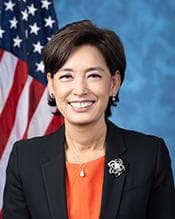
Full profile: /officials/K000397
Source: Congress.gov · FEC
Cosponsors (2)
Members who have signed on to support this bill since introduction. Source: Congress.gov.
Latest Action
The most recent step in the bill's legislative path. Committee Activity below shows referrals and reports; the full action-by-action history including floor proceedings lives at Congress.gov →
Committee Activity
Currently in
- House Committee on Foreign AffairsReferred To · 2026-07-02
Plain-English Summary
The legislation would fund programs to increase access to vitamin and mineral supplements for pregnant women and children in developing countries, along with other proven health interventions that are inexpensive to deliver. The money would support efforts to reduce malnutrition and improve health outcomes for mothers and young children in low-income nations around the world. This would primarily affect international aid organizations, health programs in developing countries, and the vulnerable populations they serve.
AI-assisted summary generated from the official bill metadata (title, subjects, actions) sourced from Congress.gov. Cached and reviewed. Always verify against the official text linked below.
Full Bill Text
Verbatim text published on Congress.gov via GovInfo. Use Cmd+F / Ctrl+F to search within this excerpt.
[Congressional Bills 119th Congress] [From the U.S. Government Publishing Office] [H.R. 9583 Introduced in House (IH)] <DOC> 119th CONGRESS 2d Session H. R. 9583 To provide support for scaling up global access to multiple micronutrient supplements and other cost effective maternal and child interventions, and for other purposes. _______________________________________________________________________ IN THE HOUSE OF REPRESENTATIVES July 2, 2026 Mrs. Kim (for herself, Ms. Titus, and Mr. Lawler) introduced the following bill; which was referred to the Committee on Foreign Affairs _______________________________________________________________________ A BILL To provide support for scaling up global access to multiple micronutrient supplements and other cost effective maternal and child interventions, and for other purposes. Be it enacted by the Senate and House of Representatives of the United States of America in Congress assembled, SECTION 1. SHORT TITLE. This Act may be cited as the ``Healthy Mothers, Healthy Babies Act of 2026''. SEC. 2. FINDINGS. Congress finds the following: (1) Investments in effective programs to prevent maternal and child deaths directly advance United States foreign policy and economic interests by promoting stability, increased economic growth and market access and improved diplomatic relations with partner countries. (2) Global maternal and child deaths remain unacceptably high. In 2023, a woman died of pregnancy related causes every 2 minutes. Millions of children under 5 continue to die every year from preventable causes, with preterm birth, birth complications, and childhood diseases, like pneumonia and diarrhea, accounting for more than half of all under-5 deaths worldwide. (3) These deaths are largely preventable through proven, low-cost interventions such as-- (A) skilled care before, during, and after birth; (B) treatment of childhood infectious diseases; (C) adequate nutrition for pregnant women and children; and (D) immunization. (4) Immunization is a cornerstone of child survival, protecting children from deadly diseases, including diarrheal disease, pneumonia, measles, polio, diphtheria, pertussis, and meningitis. It remains one of the most cost-effective interventions, delivering a return of at least $26 for every $1 invested. The United States Government's partnership with Gavi, the Global Vaccine Alliance, is a major driver in reducing the number of childhood deaths from vaccine preventable diseases in lower-income countries, with Gavi's immunization campaigns averting nearly 21,000,000 child deaths since 2000. (5) Continued United States leadership in maternal and child health could help save millions more lives by 2030, accelerating progress toward ending preventable child and maternal deaths worldwide. (6) At just $4 per pregnancy, multiple micronutrient supplement (MMS) prenatal vitamins combine 15 essential vitamins and minerals into a single, lifesaving tablet, dramatically improving birth outcomes and reducing maternal anemia. (7) Despite the immense benefits, most women around the world lack access to modern prenatal vitamins. (8) Previous guidance from the MMS Global Investment Roadmap suggests that there are at least 260,000,000 pregnant women in high-burden countries who lack access to MMS prenatal vitamins, and providing access for these women to MMS over the next 5 years would save 600,000 lives, improve birth outcomes for 5,000,000 babies, and prevent anemia in over 15,000,000 pregnant women. (9) 20 years of research and 70 rigorous trials prove modern MMS prenatal vitamins are superior to iron-folic acid tablets in every way-slashing low birthweight by an extra 79 percent, stillbirths by 27 percent, and infant deaths by 29 percent. (10) A coalition of philanthropies has come together to commit $250,000,000 to MMS prenatal vitamins, providing leverage to United States Government investments. (11) MMS prenatal vitamins are American-made, supporting American factory jobs, and highlighting American ingenuity and compassion. SEC. 3. STATEMENT OF POLICY. The following shall be the policy of the United States: (1) To advance foreign policy, national security and economic interests, by strategically…
Show the remaining 921 wordsHide the remaining 921 words
supporting partner countries to invest in maternal and child survival and health programs. The United States shall make maternal and child survival a key objective of United States global health and foreign assistance strategies and programs. (2) To support programs that reduce preventable death among mothers, newborns, and children and enable them to thrive, which promotes more stable and prosperous societies and advances the United States diplomatic and commercial position with partner countries. United States assistance programs for maternal and child health shall seek to-- (A) reduce preventable child and maternal mortality in priority countries to 12 percent or lower of total deaths by 2030; and (B) increase coverage levels for the target set of life-saving interventions listed in subsection 4 within 10 to 15 priority countries to a level of at least 70 percent by 2030. (3) To prioritize scaling up investments in the procurement and delivery of MMS prenatal vitamins as a highly cost- effective intervention to address maternal and child health and malnutrition. (4) To prioritize the highest impact prevention and treatment interventions targeted towards prenatal, delivery, postnatal, newborn and child care, including prevention and management of complications and infections during pregnancy, access to skilled birth attendants, breastfeeding support, care of small or sick newborns, screening and treatment for malnutrition, vitamin A and other micronutrient supplements, child immunization, and treatments for childhood diseases including diarrhea and pneumonia. SEC. 4. INITIATIVE TO SCALE UP MULTIPLE MICRONUTRIENT SUPPLEMENT COVERAGE. (a) In General.--The relevant foreign assistance agency shall select foreign countries as priority countries for purposes of increasing the number of women receiving MMS coverage, including prenatal vitamins. (b) Criteria.--The selection of priority countries shall be based on the following: (1) The prevalence of malnourished pregnant and lactating women and children under the age of 5. (2) The presence of high-need, underserved, marginalized, vulnerable, or impoverished communities. (3) The enabling environment for improved maternal and child health, including presence of national maternal and child health plans and demonstration of strong political commitment. (4) Any other criteria that the relevant foreign assistance agency determines to be appropriate. (c) Update.--The relevant foreign assistance agency shall update the selection of priority countries not later than 5 years after the date of the enactment of this Act. (d) Report.-- (1) In general.--Not later than 1 year after the date of the enactment of this Act, and annually thereafter for 5 years, the relevant foreign assistance agency shall submit to the appropriate congressional committees a report that describes progress made towards scaling up MMS coverage. (2) Matters to be included.--The report required by paragraph (1) shall include the following: (A) A summary of progress made towards achieving increased coverage levels for MMS. (B) A detailed summary of the criteria used in selecting priority countries for receiving MMS prenatal vitamins. (C) In priority countries-- (i) a detailed summary of MMS scale up programs and activities in the previous fiscal year, including a breakdown of the countries to which resources have been allocated and an estimated number of pregnant women reached with MMS coverage; and (ii) a description of the coordination of MMS programs with other health and development programs. (D) A description of other donor country and host country financial commitments and efforts to increase MMS coverage, and how the United States is engaging with donor country and host country governments to increase those commitments and efforts along with other interventions to improve nutrition outcomes. (E) An identification of constraints on implementation of programs and activities and lessons learned from programs and activities from the previous fiscal years. (F) A summary of how United States assistance programs to increase MMS coverage levels have advanced United States foreign policy and national security priorities with partner countries. (e) Authorization of Appropriations.--There is authorized to be appropriated to carry out this section up to $150,000,000 for each of the fiscal years 2026 through 2030 from amounts in the Global Health Programs Account of the Department of State. SEC. 5. MATERNAL AND CHILD HEALTH STRATEGY AND REPORT. (a) Strategy.--The relevant foreign assistance agency shall establish and publish a 5-year Maternal and Child Health strategy with specific targets for increasing coverage levels for priority interventions and priority countries. The strategy should prioritize investments in the delivery of interventions with the greatest cost- effectiveness and measurable outcome of lives saved and disability averted. (b) Report.--Not later than 1 year after the date of the enactment of this Act, and annually thereafter for 5 years, the relevant foreign assistance agency shall submit to the appropriate congressional committees a report that describes progress made towards scaling up Maternal and Child Health interventions. The report shall include the following: (1) Program funding allocations and obligations disaggregated by country and by program area intervention on an annual basis. (2) Baseline data for the 2 fiscal years preceding the date of enactment, including funding levels, performance indicators, and programmatic outcomes. (3) A plan for how priority interventions will be delivered and implemented, ensuring interventions are reaching mothers and children. (4) A standard set of performance and outcome indicators for maternal and child health programs. (5) A common set budget tags or codes, consistent across United States agencies and programs, to track funding allocations and obligations by country, year, and intervention area. SEC. 6. RELEVANT FOREIGN ASSISTANCE AGENCY DEFINED. In this Act, the term ``relevant foreign assistance agency'' means the department or agency designated as primarily responsible for implementing United States foreign assistance under part I of the Foreign Assistance Act of 1961 (22 U.S.C. 2151 et seq.). <all>
Related legislation
Bills by the same sponsor or covering overlapping subjects.
- HR9331STOP Payments Fraud Act of 2026Referred to Committee · 2026-06-30
- HR5402Credit Access and Inclusion Act of 2025Referred to Committee · 2026-06-30
- HR3350To designate the facility of the United States Postal Service located at 340 East 1st Street in Tustin, California, as the "Ursula Ellen Kennedy Post Office Building".Passed House · 2026-06-29
- HR9434REG Act of 2026Referred to Committee · 2026-06-24