HR9592Referred to Committee
American Space Leadership for the 21st Century Act
Introduced
In Committee
3
Passed One Chamber4
Passed Both5
Signed into Law119th
Congress
2026-07-06
Introduced
1
Cosponsors
HR
ⓘType
Sponsor
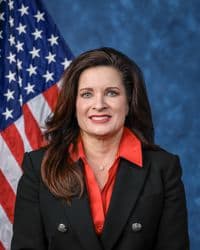
Sheri Biggs
Republican · SC · Representative
Votes with party: 91.6% (592 recorded votes)
Full profile: /officials/B001325
Source: Congress.gov · FEC
Cosponsors (1)
Members who have signed on to support this bill since introduction. Source: Congress.gov.
Latest Action
The most recent step in the bill's legislative path. Committee Activity below shows referrals and reports; the full action-by-action history including floor proceedings lives at Congress.gov →
Committee Activity
Currently in
- House Committee on Foreign AffairsReferred To · 2026-07-06
Plain-English Summary
The bill would give the Secretary of State new powers to address threats to American space security, such as protecting satellites and space infrastructure from hostile actions by other countries. It would also require the State Department to regularly brief Congress on space security issues so lawmakers stay informed about potential dangers and the government's response plans. The measure aims to strengthen U.S. capabilities in space while keeping Congress involved in decisions about how to protect American interests in orbit.
AI-assisted summary generated from the official bill metadata (title, subjects, actions) sourced from Congress.gov. Cached and reviewed. Always verify against the official text linked below.
Full Bill Text
Verbatim text published on Congress.gov via GovInfo. Use Cmd+F / Ctrl+F to search within this excerpt.
[Congressional Bills 119th Congress] [From the U.S. Government Publishing Office] [H.R. 9592 Introduced in House (IH)] <DOC> 119th CONGRESS 2d Session H. R. 9592 To authorize the Secretary of State to take certain actions to counter and reduce threats to the space security of the United States, to require the Secretary of State to provide certain consultations to Congress on the space security of the United States, and for other purposes. _______________________________________________________________________ IN THE HOUSE OF REPRESENTATIVES July 6, 2026 Mrs. Biggs of South Carolina (for herself and Mr. Bera) introduced the following bill; which was referred to the Committee on Foreign Affairs _______________________________________________________________________ A BILL To authorize the Secretary of State to take certain actions to counter and reduce threats to the space security of the United States, to require the Secretary of State to provide certain consultations to Congress on the space security of the United States, and for other purposes. Be it enacted by the Senate and House of Representatives of the United States of America in Congress assembled, SECTION 1. SHORT TITLE. This Act may be cited as the ``American Space Leadership for the 21st Century Act''. SEC. 2. SENSE OF CONGRESS. It is the sense of Congress that-- (1) maintaining space as a secure, stable, and accessible domain is vital to United States national security, economic prosperity, and technological leadership; (2) the United States should coordinate diplomatic, economic, and security tools to ensure space remains secure and accessible for future use; (3) it is in the interest of the United States to cooperate with its allies and partners to promote space security of the United States and its allies and partners, including through information sharing, coordination, and development of interoperable space capabilities; (4) United States space companies are a soft power tool for the nation, providing unique capabilities that support the needs of allies and partners, while extending American influence, enhancing United States security and resiliency in space, and benefiting the United States economy; (5) threats to United States space capabilities are growing in scale, speed, and sophistication, risking space-enabled services that underpin national security and power United States economic growth; and (6) the prohibition on the placement of nuclear weapons and other weapons of mass destruction in space, as outlined in the Outer Space Treaty of 1967 (entered into force with respect to the United States on October 10, 1967), is important for the continued use of space by all nations. SEC. 3. COUNTERING THREATS TO SPACE SECURITY OF THE UNITED STATES. (a) In General.--The Secretary of State, acting through the Under Secretary for Arms Control and International Security, shall lead the diplomatic engagements of the Department of State to mitigate threats to the space security of the United States. (b) Responsibilities.--Under subsection (a), the Under Secretary, in coordination with the head of any other relevant bureau of the Department of State or other Federal department or agency, may-- (1) assess current threats to the space interests of the United States and anticipate future threats from low earth orbit through cislunar space, including by leveraging allied and partner capabilities to assess and attribute actions in space; (2) characterize and communicate threats with allies and partners, where determined appropriate, including risks posed by civil, military, or commercial cooperation with the People's Republic of China or the Russian Federation; (3) coordinate with allies and partners, including by identifying strategic locations where additional space infrastructure or military cooperation would promote the space security of the United States and its allies and partners; and (4) lead the efforts of the Department of State to promote international norms of…
Show the remaining 1,043 wordsHide the remaining 1,043 words
behavior in space that are favorable to the national security and foreign policy priorities of the United States. SEC. 4. SPACE RISK REDUCTION MEASURES. (a) In General.--The Secretary of State, acting through the Under Secretary for Arms Control and International Security, may pursue international norms and transparency and confidence-building measures on issues of space arms control and military-related space policy issues. (b) Risk Reduction.--The Under Secretary, in coordination with the head of any other Federal department or agency, may pursue international risk reduction efforts for the purposes of-- (1) shaping international norms in space to deter actions in space that would disrupt the space systems of the United States and its allies and partners; (2) enhancing the ability of the United States and its allies and partners to assess, attribute, and respond to destabilizing actions in space, including by helping the United States identify if a country places or plans to place a nuclear weapon or nuclear-capable delivery vehicle in space; (3) increasing the strategic costs to an adversary for disruptive actions in space; (4) improving communication among allies and partners to reduce the risk of miscommunication or miscalculation regarding threat reduction activities in space; (5) reducing the risk of miscommunication and miscalculation with the People's Republic of China or the Russian Federation; (6) enhancing international cooperation on space domain awareness; and (7) mitigating the intentional creation of debris in space. SEC. 5. INTERNATIONAL AGREEMENTS RELATED TO OUTER SPACE. (a) In General.--The Secretary of State, in consultation with the heads of any other Federal department or agency such secretary determines appropriate, is authorized to enter into international agreements with allies and partners that enhance United States outer space security-- (1) for the purposes of-- (A) information sharing, promoting international access, as appropriate and practical, to United States Government or commercial outer space capabilities, systems, or services; or (B) achieving the responsibilities set forth in section 3(b); and (2) which are mutually beneficial and consistent with the national security or foreign policy priorities of the United States. (b) Congressional Consultation.--The Secretary of State shall consult with the appropriate congressional committees when considering entering into an agreement under subsection (a). (c) Congressional Notification.--The Secretary of State shall notify the appropriate congressional committees of its intent to enter into an agreement under subsection (a) not later than 15 days before the date on which such secretary enters into such agreement. (d) Rule of Construction.--Nothing in this section shall be construed to affect the normal procedures for seeking advice and consent from the Senate on treaties within the meaning of Article II of the United States Constitution. SEC. 6. SPACE SECURITY DIALOGUES. The Secretary of State, in coordination with the Secretary of Defense and the head of any other Federal department or agency, may initiate space security dialogues with key allies and partners of the United States, which may be held in conjunction with civil and commercial space dialogues, as a forum to discuss efforts to improve allied and partner contributions to collective space security, including by-- (1) identifying opportunities to integrate space security issues into collective defense and deterrence concepts; (2) determining priority areas for investment in space systems that are interoperable and complementary to space systems of the United States; (3) identify and pursue mechanisms to leverage collective industrial base strengths of allied and partner countries to promote secure and resilient supply chains; (4) identify opportunities where promoting United States space companies can address security and resiliency needs of allies and partners; and (5) coordinating approaches to diplomatic engagements in international forums on space security issues, including risk reduction efforts, norm-building activities, and engagements in standards-setting organizations that enhance stability and deterrence. SEC. 7. CONSULTATIONS ON THREATS TO UNITED STATES SPACE SECURITY. (a) In General.--No later than 90 days after the date of the enactment of this Act, and annually thereafter for 3 years, the Secretary of State, acting through the Under Secretary for Arms Control and International Security, shall consult the appropriate congressional committees on the current and emerging threats to the space security of the United States. The consultations may include-- (1) information on any roles and responsibilities of the Department of State pursuant to Executive Order 14369 (90 Fed. Reg. 60537; relating to ensuring American space superiority); (2) threats posed to the space interests of the United States and its allies and partners from the military or dual- use space systems of the adversaries of the United States; (3) an assessment of such adversaries' intentions in the space domain and their posture toward developing international norms or bilateral or multilateral risk reduction mechanisms in space; (4) the Department of State's efforts to prevent such adversaries from endangering the space systems of the United States, including through efforts with allies and partners and shaping international norms for behavior in space; (5) information on any country's plans or intent to put a nuclear weapon in space; (6) the intent of the People's Republic of China or the Russian Federation to use ground-based or in-orbit counterspace systems against the space assets of the United States or efforts to hold such assets at risk; (7) the status of international discussions on space arms control or related space security issues, including transparency and confidence building measures and space security dialogues undertaken under section 6; (8) an identification of any existing barriers, including policies, processes, or authorities that limit the ability of United States companies to cooperate with allies and partners, and information on the steps the Secretary of State is taking to address such barriers; and (9) actions taken in the preceding year, or planned coordination for the proceeding year, with allies and partners to safeguard the space security interests of the United States and its allies and partners. (b) Adversary Changes.--Not later than 30 days after the date on which the Secretary of State determines that there has been a significant change to the space posture, intention, or capability of an adversary of the United States, the Secretary shall notify and consult the appropriate congressional committees on such change. SEC. 8. APPROPRIATE CONGRESSIONAL COMMITTEES DEFINED. In this Act, the term ``appropriate congressional committees'' means-- (1) the Committee on Foreign Affairs of the House of Representatives; and (2) the Committee on Foreign Relations of the Senate. <all>
Related legislation
Bills by the same sponsor or covering overlapping subjects.
- HR9421To prohibit a REMS-certified provider from prescribing mifepristone without an in-person visit and a medical license in the State in which the patient resides, and for other purposes.Referred to Committee · 2026-06-24
- HR9328Improving Travel for Military Members ActReported by Committee · 2026-06-24
- HR8213Defending Women in the Workplace ActReferred to Committee · 2026-04-09
- HR8040No Mercy for Terrorists Act of 2026Referred to Committee · 2026-03-24