HRES1365Referred to Committee
Recognizing Avoidant/Restrictive Food Intake Disorder (ARFID) as a serious feeding and eating disorder and acknowledging the urgent need to advance awareness, early identification, research, and equitable access to care.
Introduced
In Committee
3
Passed One Chamber4
Passed Both5
Signed into Law119th
Congress
2026-06-11
Introduced
2
Cosponsors
HRES
ⓘType
Sponsor
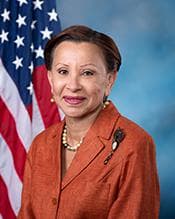
Nydia M. Velázquez
Democrat · NY · Representative
Votes with party: 97.2% (563 recorded votes)
Full profile: /officials/V000081
Source: Congress.gov · FEC
Cosponsors (2)
Members who have signed on to support this bill since introduction. Source: Congress.gov.
Latest Action
The most recent step in the bill's legislative path. Committee Activity below shows referrals and reports; the full action-by-action history including floor proceedings lives at Congress.gov →
Referred to the Committee on Energy and Commerce, and in addition to the Committee on Education and Workforce, for a period to be subsequently determined by the Speaker, in each case for consideration of such provisions as fall within the jurisdiction of the committee concerned.
2026-06-11
Source: Congress.gov
Committee Activity
Currently in
- House Committee on Education and WorkforceReferred To · 2026-06-11
- House Committee on Energy and CommerceReferred To · 2026-06-11
Plain-English Summary
This resolution calls on the federal government to recognize Avoidant/Restrictive Food Intake Disorder (ARFID), a serious condition where people severely limit the types or amounts of food they eat, as an important public health issue. The resolution asks for increased efforts to raise awareness about ARFID, improve early detection, fund research into the disorder, and ensure that patients have fair access to treatment and care. ARFID affects children and adults who struggle with eating and can lead to serious nutritional deficiencies and other health problems.
AI-assisted summary generated from the official bill metadata (title, subjects, actions) sourced from Congress.gov. Cached and reviewed. Always verify against the official text linked below.
Full Bill Text
Verbatim text published on Congress.gov via GovInfo. Use Cmd+F / Ctrl+F to search within this excerpt.
[Congressional Bills 119th Congress] [From the U.S. Government Publishing Office] [H. Res. 1365 Introduced in House (IH)] <DOC> 119th CONGRESS 2d Session H. RES. 1365 Recognizing Avoidant/Restrictive Food Intake Disorder (ARFID) as a serious feeding and eating disorder and acknowledging the urgent need to advance awareness, early identification, research, and equitable access to care. _______________________________________________________________________ IN THE HOUSE OF REPRESENTATIVES June 11, 2026 Ms. Velazquez (for herself, Mr. Tonko, and Ms. Norton) submitted the following resolution; which was referred to the Committee on Energy and Commerce, and in addition to the Committee on Education and Workforce, for a period to be subsequently determined by the Speaker, in each case for consideration of such provisions as fall within the jurisdiction of the committee concerned _______________________________________________________________________ RESOLUTION Recognizing Avoidant/Restrictive Food Intake Disorder (ARFID) as a serious feeding and eating disorder and acknowledging the urgent need to advance awareness, early identification, research, and equitable access to care. Whereas Avoidant/Restrictive Food Intake Disorder (ARFID) is a clinically recognized feeding and eating disorder, as defined in the Diagnostic and Statistical Manual of Mental Disorders (DSM-5), characterized by a persistent failure to meet appropriate nutritional and/or energy needs; Whereas ARFID is not associated with body image disturbance, but instead may involve sensory sensitivities, lack of interest in eating, or fear of aversive consequences such as choking, vomiting, severe allergic reactions, or gastrointestinal distress; Whereas ARFID results in clinically significant medical and functional impairment, including substantial nutritional deficiencies, impaired growth and development, dependence on enteral feeding or nutritional supplementation, and marked psychosocial disruption; Whereas ARFID commonly emerges in early childhood and may persist into adolescence and adulthood without timely recognition and intervention; Whereas converging scientific evidence demonstrates that ARFID has a strong biological and genetic basis, with the Child and Adolescent Twin Study in Sweden finding the heritability as high as approximately 79 percent; Whereas ARFID is associated with neurodevelopmental conditions, including autism spectrum disorder; Whereas children who have ARFID are 14 times more likely to have autism and 11 percent of autistic children meet the criteria for ARFID; Whereas ARFID may develop or intensify following traumatic or fear-based eating experiences, including choking, vomiting, severe allergic reactions, or other adverse gastrointestinal events; Whereas ARFID affects individuals across all racial, ethnic, gender, and socioeconomic backgrounds, and current scientific evidence does not establish ARFID as a disorder limited to or primarily affecting any single demographic group; Whereas disparities in recognition, diagnosis, and access to care persist due to variations in awareness, screening practices, and availability of specialized multidisciplinary services; Whereas lack of awareness among health care providers, educators, and the public contributes to delayed diagnosis, mischaracterization of symptoms, and barriers to evidence-based treatment; and Whereas early identification within pediatric and primary care settings, including during routine developmental and well-child evaluations, coupled with standardized screening and timely referral to multidisciplinary feeding, nutritional, and behavioral health specialists, can help alleviate long-term medical and developmental harm: Now, therefore, be it Resolved, That the House of Representatives-- (1) recognizes Avoidant/Restrictive Food Intake Disorder (ARFID) as a serious feeding and eating disorder that results in clinically significant health and developmental consequences; (2) acknowledges the urgent national need to improve early recognition, accurate diagnosis, and access to appropriate, multidisciplinary care for individuals affected by ARFID; (3) supports the advancement of research to further define the biological, genetic, and neurodevelopmental underpinnings of ARFID and to develop effective, evidence-based interventions; (4) calls upon Federal agencies, States, territories, and localities to strengthen early screening practices, clinical training, and referral pathways within pediatric and primary care systems; (5) urges educational institutions to implement appropriate accommodations and supports for students…
Show the remaining 47 wordsHide the remaining 47 words
affected by ARFID, including within school meal environments, consistent with applicable Federal and State laws; and (6) supports the expansion of community-based, multidisciplinary services, including feeding therapy, nutrition services, speech therapy, occupational therapy, and behavioral health care, to ensure equitable access for affected individuals and families. <all>
Related legislation
Bills by the same sponsor or covering overlapping subjects.
- HCONRES106To direct the removal of United States Armed Forces from hostilities within or against the Republic of Cuba that have not been authorized by Congress.Referred to Committee · 2026-05-22
- HR2804Protecting Small Business Competitions Act of 2025Referred to Committee · 2026-05-20
- HCONRES99Directing the President, pursuant to section 5(c) of the War Powers Resolution, to remove United States Armed Forces from hostilities with Iran.Referred to Committee · 2026-05-12
- HJRES169Providing for congressional disapproval under chapter 8 of title 5, United States Code, of the rule submitted by the Bureau of Consumer Financial Protection relating to the withdrawal of the rule relating to "Consumer Financial Protection Circular 2024-05: Improper Overdraft Opt-In Practices".Referred to Committee · 2026-04-30